
Staying Overnight on the Alpine Tateyama Route: a 2-Day, 1-Night Autumn Itinerary
A comparison of Hotel Tateyama, Midagahara Hotel, and lodges around Murodo, plus tips for catching sunsets over the sea of clouds, starry skies, and a perfectly still Mikurigaike at dawn.
Aug 12, 2026·✍️ olablog·⏱ 17 min read
A comparison of Hotel Tateyama, Midagahara Hotel, and lodges around Murodo, plus tips for catching sunsets over the sea of clouds, starry skies, and a perfectly still Mikurigaike at dawn.
Tap a region to browse articles
Around four in the afternoon, the last highland bus leaves Murodo. You watch the line of people boarding, hear the announcement over the loudspeaker one final time, and then the vast plateau at an elevation of about 2,450 m suddenly becomes… completely deserted. The only people left are the staff at the mountain lodges and those lucky enough—or quick enough—to have booked an overnight stay along the Alpine Tateyama–Kurobe Route.
I once did Tateyama the way most people do it: a “one-day dash across the entire route,” leaving Toyama early in the morning and dragging myself back to Nagano in the evening, legs aching and camera full of hurried snapshots taken amid the crowds. It was still beautiful, but it felt more like checking places off a list than actually enjoying the journey. When I returned for a second visit in autumn, I decided to spend a night in the mountains—and that decision completely changed the experience: a sunset turning the entire sea of clouds below crimson, a sky so thick with stars that you could spot shooting stars without staring upward for long, and a perfectly still, mirror-like Mikurigaike in the early morning, with not another person in sight.
I wrote this for anyone planning an autumn trip to Tateyama and wondering whether to stay overnight along the route: a specific 2-day, 1-night itinerary, a comparison of the three main accommodation options—Hotel Tateyama, Midagahara Hotel, and the lodges around Murodo—plus backup options for staying in Omachi or Toyama if you cannot find a room in the mountains.
Why Tateyama in Autumn Is Worth an Overnight Stay
The Alpine Tateyama–Kurobe Route connects Toyama, on the Sea of Japan side, with Omachi, Nagano, on the Pacific side, crossing the Northern Alps using all kinds of transport: trains, cable cars, highland buses, a ropeway, and a tunnel electric bus. The route is generally open from around mid-April to the end of November, and autumn is one of its two busiest seasons—the other being the “snow wall” season from April to June.
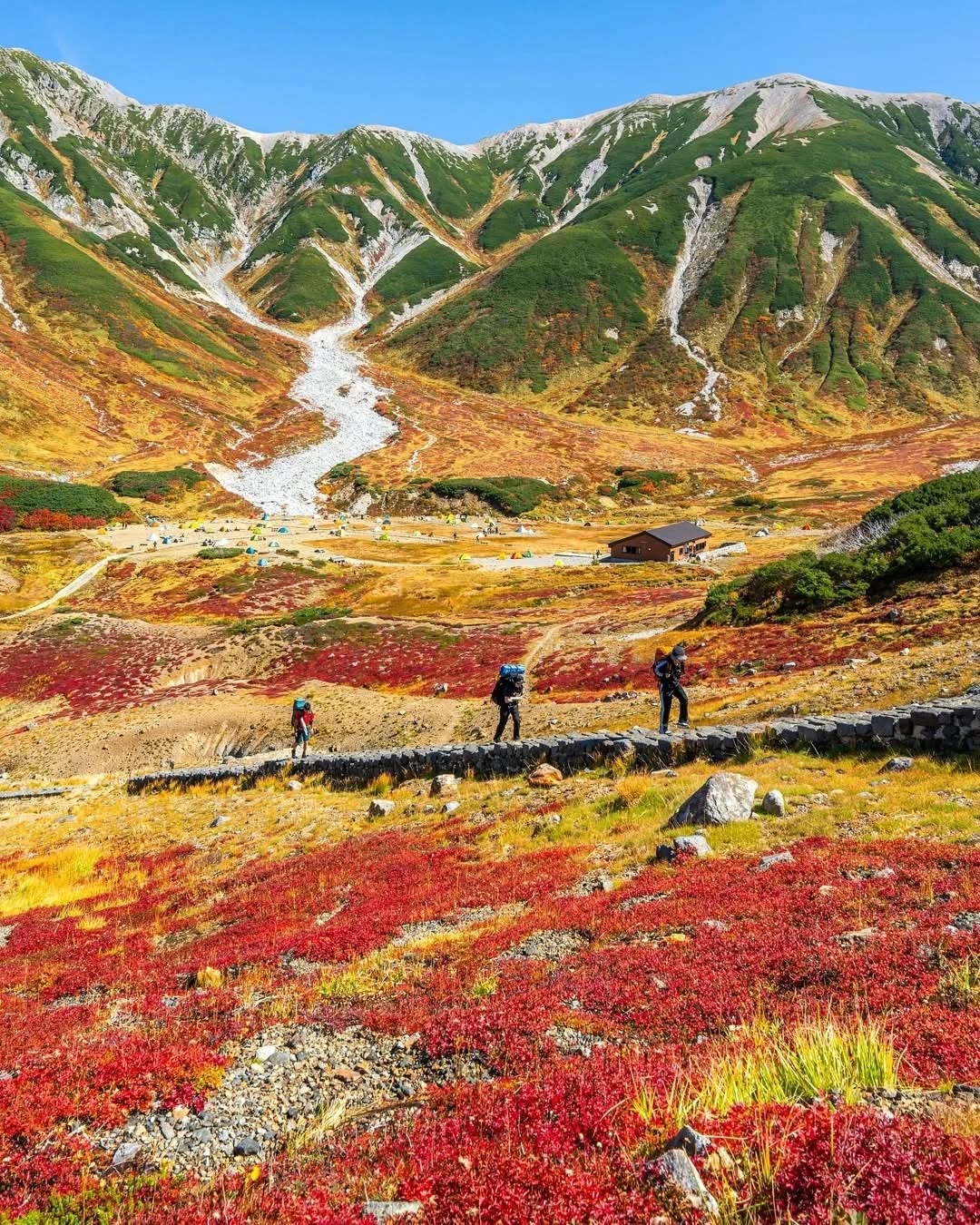
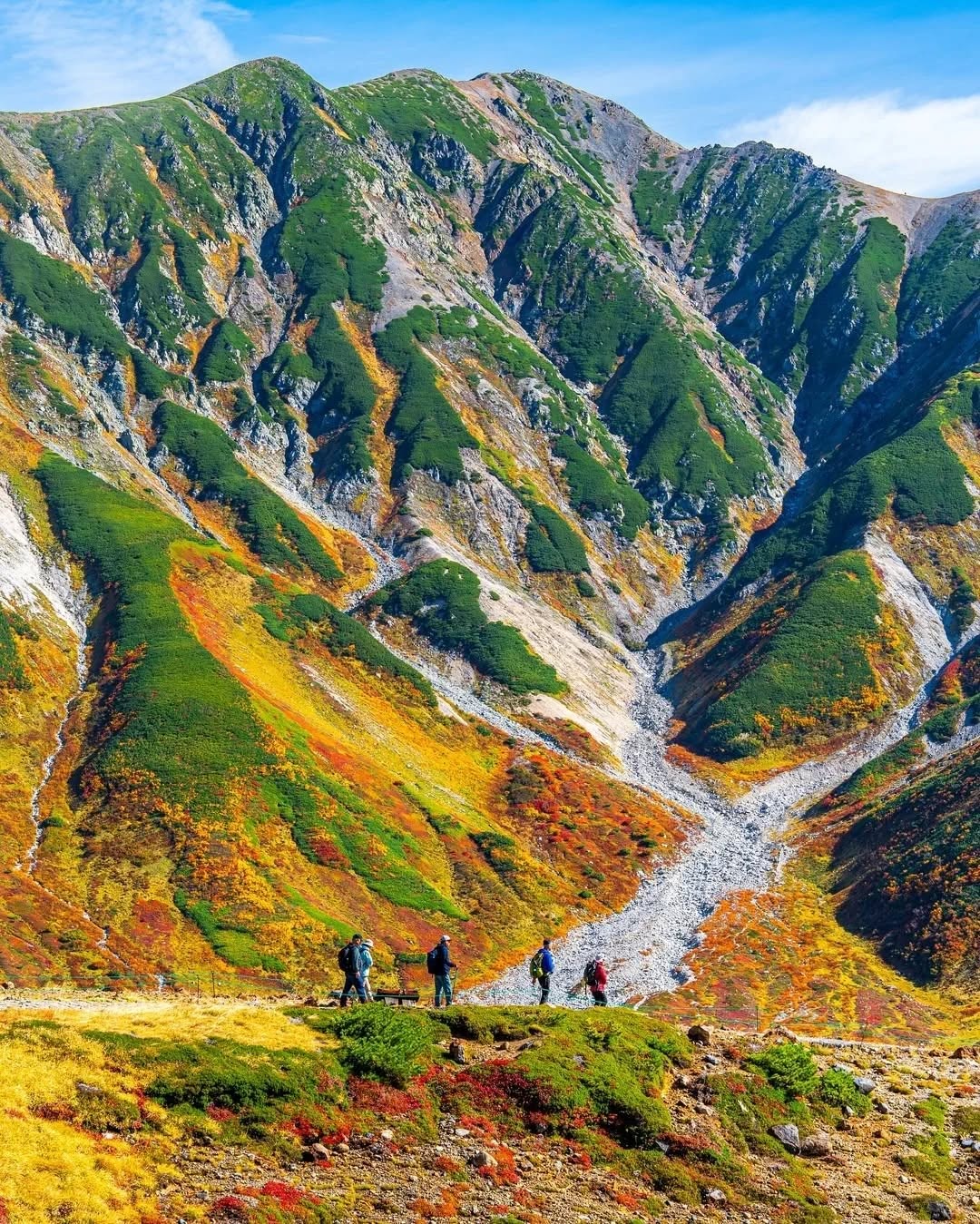
The special appeal of autumn here is what the Japanese call the “three layers of autumn foliage.” Because the route stretches from elevations of a few hundred meters up to nearly 2,500 m, the leaves do not change all at once; the colors gradually “flow” from the mountaintops down toward the foothills. Around Murodo, autumn colors usually peak from late September to early October; at Midagahara, from early to mid-October; while the primeval forest around Bijodaira reaches its peak later, from mid- to late October. This means that during a single journey, you may see the mountaintops dusted with the first snow of the season, the middle slopes glowing red with nanakamado mountain ash, and the forests below still caught between green and yellow.
But precisely because it is so beautiful, autumn is also the busiest season. From around 9 a.m. to 3 p.m., Murodo feels more like a transit station than a high-altitude plateau: groups stream along the paved paths, and long lines form for the ropeway at Daikanbō. Staying overnight along the route is the only way to “have” this place during its two most beautiful time windows—the late afternoon after the last bus has departed, and early morning before the first bus delivers the day’s visitors.
Suggested 2-Day, 1-Night Itinerary
The itinerary below follows the Toyama → Nagano direction, with an overnight stay in the Murodo area. You can just as easily reverse the direction; the logic remains the same.
Day 1: From Toyama to Murodo, Taking Your Time Through the Three Layers of Foliage
In the morning, take a train from Dentetsu-Toyama Station on the Toyama Chihō Railway to Tateyama Station. The ride takes about an hour and follows a scenic valley for much of the way. From Tateyama Station, a cable car takes you up to Bijodaira in a few minutes. From there, a highland bus takes about 50 minutes to reach Murodo—the stretch considered the backbone of the autumn scenery. The bus passes through the Bijodaira forest, goes by Shōmyō Falls, considered the tallest waterfall in Japan and visible from a distance from the bus, then opens onto the Midagahara Plateau before climbing to Murodo.
A tip from someone who has done it: do not travel straight through without stopping. If you are spending the night at Murodo, you have plenty of time, so get off at Midagahara for an hour or two. There is a network of wooden walkways looping through the highland marshland, which is recognized as a Ramsar wetland. In autumn, the grasses turn a brilliant gold, and small pools known as “gaki no ta” reflect the blue sky. Most importantly, it is much quieter than Murodo. Bus tickets along the route allow you to get off partway at designated stops, but it is best to confirm the rules when you buy your ticket.
Arrive at Murodo in the early afternoon, check in or leave your luggage at your accommodation, then spend the afternoon walking around Mikurigaike. The basic loop takes about an hour and follows an easy paved path. If you still have energy and the weather is good, continue toward Raichōzawa or head in the direction of Murodō-yama for panoramic views. Note that access to the Jigokudani geothermal area—the “Valley of Hell”—may be restricted depending on volcanic gas levels. Follow the signs and do not try to push through.
A Night in the Mountains: Sunset, a Sea of Clouds, and the Stars
This is the most rewarding part of the entire trip, and I will discuss it in detail in the section on overnight-stay privileges below. For now, just keep one thing in mind: dinner at mountain accommodations is usually served at a fixed and fairly early time. Plan around sunset, which in autumn is usually around 5 to half past 5 p.m., depending on the date. Arrange to eat before or after, rather than missing the most beautiful moment of the day because you are sitting in the dining room.
Day 2: Mikurigaike at Dawn, Then Down Toward Kurobe and Ogizawa
Get up before sunrise. In the mountains during autumn, early-morning temperatures can drop to around or below 0 degrees, with frost whitening the grass, so dress warmly before heading out to Mikurigaike. If the air is still, you will understand why I say that spending a night here is worth every penny.
Have breakfast, check out, and begin the second half of the route: take the Tateyama tunnel electric bus from Murodo to Daikanbō, then descend toward Kurobedaira by ropeway. This ropeway has no support towers between its two stations, and in autumn the view below is an entire mountainside splashed with red and gold. Many people consider it the most beautiful viewpoint on the route. From Kurobedaira, take the underground cable car down to Lake Kurobe, then walk across Kurobe Dam—the famous arch dam that typically releases water for tourists from late June to around mid-October. If you go in early autumn, you may still catch the torrent exploding into white spray and rainbows. Finally, take the Kanden tunnel electric bus to Ogizawa, then a local bus down to Shinano-Ōmachi Station.
Because the ropeway and cable car sections on the Kurobe side can become severely congested during peak season—you may even have to wait for your numbered turn—you should leave Murodo in the morning rather than lingering until noon. Overnight guests have a major advantage here: you can take the earliest electric bus and get ahead of the day’s crowds by several hours.
One important logistical tip: the route offers same-day luggage delivery between its two ends. For example, you can leave your suitcase at Tateyama Station and pick it up at Ogizawa or at a hotel on the Nagano side. Conditions and drop-off and pickup hours vary by season, so check the Alpine Route’s official website before you go—but this is almost a “must” if you are crossing the route with a large suitcase.
Choosing Where to Stay Along the Route: Hotel Tateyama, Midagahara Hotel, or a Lodge Around Murodo?
All three options are located directly along the route, which means that wherever you stay, you get the privilege of being there in the early morning and late afternoon. The differences come down to amenities, atmosphere, and proximity to Mikurigaike.
Hotel Tateyama: the Most Convenient, Directly Connected to Murodo Station
Hotel Tateyama is located inside the Murodo Station complex and is promoted as the resort hotel at the highest elevation in Japan, at approximately 2,450 m. Its biggest advantage is that you barely need to take your luggage outdoors: step off the bus and you are in the lobby. The rooms are genuine hotel rooms, with beds and mattresses and private bathrooms in many room categories. Depending on the package, dinner may be French cuisine or kaiseki. The hotel also often holds guided stargazing activities for guests on clear nights.
The trade-off is that it is the most expensive option, and rooms during the autumn foliage season often sell out very early—sometimes as soon as reservations open for the season. If you are traveling with elderly parents or want a night in the mountains without giving up comfort, this is the number-one choice. But if you want an authentic mountain atmosphere, it can feel a little too much like a hotel in the city.
Midagahara Hotel: Peace and Quiet Amid the Highland Marshes
Midagahara Hotel is located at the Midagahara station, lower than Murodo at approximately 1,930 m, right beside the wooden walkway system through the marshland. This is the choice for people who value peace and quiet: there are far fewer guests here than at Murodo, and in the late afternoon you can stroll along the walkways through the golden grasslands without seeing almost anyone. The location is also known for sea-of-clouds views and nighttime stargazing. The hotel has a viewing terrace and often organizes stargazing sessions for guests.
The drawback is that you cannot get to Mikurigaike at dawn from here. You have to wait for the first bus of the day up to Murodo, by which time visitors from the foot of the mountain will already be starting to arrive. So if your number-one priority is “Mikurigaike with no one around,” stay in the Murodo area. If your priority is a peaceful autumn night, with mist drifting over golden marshland at sunrise, Midagahara wins. Also note that autumn foliage here usually peaks from early to mid-October, slightly later than at Murodo.
Lodges Around Murodo: Mikurigaike Onsen, Raichōsō, and Murodō Sansō
There are several mountain lodges, or sansō, around the Murodo Plateau serving both hikers and tourists. The most notable is Mikurigaike Onsen, a hot-spring lodge considered to be the highest in Japan, at approximately 2,410 m. It is about a 15-minute walk from Murodo Station, right on the edge of Lake Mikurigaike. There is also Raichōsō near Raichōzawa, along with several other sansō.
The experience is completely different from staying at a hotel: many lodges offer dormitory-style rooms or simple tatami rooms, shared bathrooms, and mountain-style meals. In return, prices are considerably more affordable, the atmosphere is warm and homey, and nothing beats soaking in a steaming onsen beneath the autumn sky in the high mountains, with sulfurous, milky water piped directly up from Jigokudani. The next morning, you only need to take a few steps to stand at the edge of Mikurigaike before everyone else arrives. For me, if you are traveling with friends or on your own, this is the most authentic choice. Note that the sansō usually stay open only until around the end of November and accept reservations by phone or through their own forms, so check each property’s website well in advance.
A Quick Guide by Traveler Type
- Traveling with family, need comfort, or prefer not to walk with luggage: Hotel Tateyama.
- Love peace and quiet, sea-of-clouds views, and landscape photography, and do not consider early-morning Mikurigaike essential: Midagahara Hotel.
- Want an onsen above the clouds, a traditional mountain-lodge atmosphere, a moderate budget, and priority access to Mikurigaike at sunrise: a lodge around Murodo, especially Mikurigaike Onsen.
The Privileges of Staying in the Mountains in Autumn
A Sunset Turning the Sea of Clouds Crimson
On an autumn afternoon, when layers of clouds gather halfway up the valley, the view from Murodo or Midagahara opens onto an entire “unkai”—a sea of clouds—stretching to the horizon. The sun sets toward the Sea of Japan, tinting the clouds from golden orange to deep crimson, while the Tateyama peaks behind you catch the last light and glow like hot coals. Day-trippers never see this moment because the last bus has already left the mountain an hour earlier.
The Stars and the Milky Way
At an elevation close to 2,500 m, the air is thin and dry, with almost no light pollution. On a clear autumn night, you can see the Milky Way with the naked eye—something that is nearly impossible in Japan’s cities. The hotels along the route generally dim some of their outdoor lighting and organize stargazing sessions for guests. Remember to bring a thick jacket: autumn nights in the mountains can drop below 0 degrees, and that biting cold is exactly what makes the sky clearer than ever.
Mikurigaike at Dawn, with No One Around
This is the image everyone has seen on Tateyama posters: the deep-blue lake perfectly reflecting the three-peaked mountain range. During the day, however, the wind creates ripples across the water and the shoreline becomes packed with people. To see that perfect mirror, you need to be there at dawn, before the wind picks up—which means staying overnight in the mountains. On an autumn morning, frost outlines each blade of grass around the lake in white, a thin veil of steam rises from the surface, and if you are lucky, you may even spot a raichō, the Japanese rock ptarmigan and symbolic bird of these mountains, waddling along the roadside in search of food. They are most accustomed to people in the early morning and late afternoon—the exact hours enjoyed by overnight guests.
Couldn’t Get a Room in the Mountains? Omachi and Toyama Alternatives
Rooms along the route during the autumn foliage season sell out extremely quickly, sometimes months in advance. If you miss out, do not give up—you can still recreate 70–80% of the experience by staying near the foot of the route and taking the first departure of the day.
Staying in Omachi, on the Nagano Side
The Ōmachi Onsenkyō hot-spring area lies along the road from Shinano-Ōmachi Station to Ogizawa. It has plenty of reasonably priced onsen ryokan, where you can enjoy hot springs and a kaiseki dinner in greater comfort than in the mountains. The next morning, take an early bus to Ogizawa and enter the route in the opposite direction: Ogizawa → Kurobe → Murodo. The advantage of this direction is that you pass Kurobe Dam and the most scenic ropeway section in the morning, when the light is ideal for photography, and reach Murodo before most visitors coming from Toyama if you set out early enough. Tickets for the various sections should be purchased online in advance during peak season. The route’s time-slot ticketing system helps you avoid lining up to take a number at Ogizawa.
Staying in Toyama, on the Sea of Japan Side
Toyama has plenty of affordable business hotels and excellent food. The local sushi made with fish from the Sea of Japan is one reason to slow down and stay a little longer. The next morning, take the earliest train on the Toyama Chihō Railway to Tateyama Station. During peak season, get to Tateyama Station as early as possible because cable-car tickets are issued for specific time slots, and arriving late may mean waiting several hours. Another intermediate option is to stay near Tateyama Station or Bijodaira, where there are a few small lodges. This lets you take the first cable car without having to wake up before dawn in Toyama.
Neither of these options gives you a sunset or starry sky in the mountains, but if you take the earliest departure and the weather cooperates, you can still catch Mikurigaike while the wind is relatively calm and see the morning sea of clouds from Daikanbō.
Booking and Preparation Tips
- Book as early as possible: accommodations along the route usually open reservations before the operating season, and weekends during the autumn foliage season are almost immediately sold out. Weekdays in the middle of the week are much easier.
- Check the foliage and weather updates on the Alpine Route’s official website before your trip. Mountain weather changes very quickly, and in some years Murodo already has snow by the end of October.
- Dress in layers: Murodo can feel warm under the midday sun, but early mornings and evenings are bitterly cold. Thermal underwear, a compact down jacket, a wool hat, and gloves may sound excessive for “autumn,” but you will be grateful you brought them.
- Carry cash: some sansō and mountain shops may not accept cards, or mobile payment signals may be unreliable.
- Footwear: the paths around Mikurigaike are paved and easy to walk, so sneakers with good traction are sufficient. But if you plan to go farther toward Raichōzawa or climb Oyama, you will need proper trekking shoes.
- Book dinner with your room: there are almost no dinner options in the mountains outside your accommodation, so choose a package that includes meals from the beginning.
Frequently Asked Questions
When is autumn most beautiful in Tateyama?
It depends on the elevation: around Murodo, the best period is usually from late September to early October; Midagahara from early to mid-October; and Bijodaira and the lower areas from mid- to late October. The timing of the foliage varies from year to year, so check updates on the route’s official website before finalizing your dates.
If I cannot book a room in the mountains, can I still make it as a day trip?
Yes. Many people cross the entire route in a single day. But during peak season, you need to set out early, accept long waits at the ropeway and cable-car sections, and recognize that you will have little time for a proper scenic walk. If you only have one day, the better strategy is to choose one side—Toyama or Ogizawa—and make a round trip to Murodo rather than trying to cross the entire route.
Is it very cold when staying in the mountains? What special preparations are needed?
Autumn nights at Murodo can fall to around or below 0 degrees. The lodges are heated, so you will not be cold while sleeping, but for stargazing or watching the sunrise outside, you will need a down jacket, hat, and gloves as if you were traveling in early winter. A small flashlight is also useful because the outdoor paths are very dark at night.
Can children and older adults make the trip?
Yes. The entire route uses public transportation, and the walking paths around Murodo are paved. For older travelers, choose Hotel Tateyama or Midagahara Hotel to minimize walking with luggage, keep the itinerary relaxed, and avoid overexertion at high elevations. The thin air can cause fatigue if you move too quickly.
What should I do with large luggage when crossing the entire route?
Use the same-day luggage delivery service between the two ends of the route—drop it off in the morning and collect it at the other end in the afternoon—and carry only a small backpack with you. The service has specific drop-off and pickup times and designated collection points, so check the Alpine Route’s official website before your trip.
Do I need to stay overnight to bathe at Mikurigaike Onsen?
Not necessarily. The lodge generally allows day visitors to bathe during designated daytime hours. But soaking in the baths in the late afternoon, after the mountain has emptied out, or in the morning before the first bus, is an experience reserved for overnight guests.
More from this region — Chubu (Nagano, Kanazawa)
View all →
Tateyama in Autumn: Strategies for Avoiding Crowds and the Real Budget
16 min · tips
Three-Tier Autumn Colors Along the Tateyama Alpine Route
16 min · tips

Soak in Japan’s Highest Onsen Amid Tateyama’s Autumn Leaves
17 min · tips
Kamikochi–Hakuba 2-Day Autumn Tour: Should You Take a Tour or Go Independently?
11 min · tips