

What to Eat Along the Tateyama–Kurobe Alpine Route in Autumn
Masu-zushi, shiroebi white shrimp, emerald-green dam curry, and freshly harvested soba on the Nagano side — food recommendations for each stop, plus tips on buying a bento before heading into the mountains.
Aug 12, 2026·✍️ olablog·⏱ 15 min read
Masu-zushi, shiroebi white shrimp, emerald-green dam curry, and freshly harvested soba on the Nagano side — food recommendations for each stop, plus tips on buying a bento before heading into the mountains.
Tap a region to browse articles
If you’re planning to cross the Tateyama–Kurobe Alpine Route during the autumn foliage season, I’m guessing you’ve already done plenty of research: the departure time of the first cable car, which side of the electric bus offers the best view of the dam, and how many layers to wear at Murodo. But there’s one thing almost everyone forgets to plan for—and it will catch you off guard at exactly 12 noon at an altitude of 2.450 meters: food. I once spent nearly 40 minutes standing in line at Murodo, starving after a morning of climbing up and down to admire Mikurigaike Pond, only to discover that the bento shelves had sold out at some point.
The tricky part is that the Alpine Route is one-way, and once you pass a stop, you generally can’t go back. The good news is that if you know what’s available at each stop, the journey turns into a genuine food tour through the mountains: setting off with Toyama’s famous masu-zushi, having emerald-green dam curry beside Kurobe Dam at lunchtime, then descending in the afternoon for a steaming bowl of freshly harvested soba and an early-season Nagano apple still cool with the crispness of autumn.
This article follows the most popular direction—from Toyama to Nagano—and lays out what you can eat at each stop, which places are worth building into your itinerary, and most importantly: where and when to buy a bento before the first mountain-bound train pulls away.
Why You Should Plan Your Meals Before Heading into the Mountains
The Alpine Route connects Tateyama Station on the Toyama side with Ogizawa on the Nagano side via a series of mountain trains, highland buses, cable cars, and a tunnel trolley bus. It sounds spectacular, but when it comes to food, there are three things to remember.
First, choices at altitude are limited. Along the entire route, there are only a few places serving a proper main meal—mainly Murodo and the Kurobe Dam area. Elsewhere, you’ll find small counters selling noodles, curry, and snacks. There are no convenience-store chains halfway up the mountain.
Second, autumn is the busiest season of the year. From late September to mid-October, when red and gold foliage spreads from Murodo down to Midagahara, the route’s restaurants are packed from 11:30 to 1 o'clock. Eating outside those hours or bringing your own bento are the only ways to avoid losing a precious hour.
Third, prices in the mountains are noticeably higher than down on the plains—which makes sense, since everything has to be transported up by cable and specialized vehicles. So my strategy is always this: eat well and shop at both ends of the route, and save the mountains for one truly worthwhile signature meal. For me, that’s Kurobe Dam curry.
The Toyama Side: Masu-zushi and Shiroebi—Eat Well Before Leaving the Lowlands
Most people spend the night in Toyama City, then take the Toyama Chihō Tetsudō train—known locally as Chitetsu—from Dentetsu-Toyama Station to Tateyama Station early the next morning. The evening before and that morning are your “golden window” for enjoying Toyama’s two biggest specialties.
Masu-zushi—The Legendary Pressed Salmon Sushi Box
Masu-zushi has been one of Toyama’s signature foods for hundreds of years: vinegared rice pressed firmly into a round mold, topped with lightly salted masu salmon, and wrapped in fresh, vivid-green bamboo leaves. When you open the box, the gentle aroma of bamboo leaves mingles with the soft fragrance of vinegared rice, and every slice is satisfyingly firm. Lightly tart and moderately rich, it’s delicious even when eaten cold. It was originally designed as food to carry on a journey, so nothing makes a better mountain-travel bento.
The biggest and easiest-to-find brand is Minamoto (源), which has a counter inside Toyama Station selling both traditional round boxes and smaller versions that are convenient for sharing. But if you’re staying in Toyama from the previous afternoon, ask your hotel about the small, long-established producers scattered around the city. Each has its own recipe, with differences in acidity and the thickness of the fish, and every Toyama local has their personal favorite. Keep in mind that smaller producers often make limited quantities; some only guarantee an order if you reserve in advance, and many operate on very specific schedules, so check before making the trip.
My tip: buy your masu-zushi the night before or early in the morning at the station and leave it in your backpack. This style of pressed sushi was designed to keep for the day at a cool temperature—and the mountain air in autumn is already cold—so by lunchtime you’ll still have a neat, elegant meal that feels far more special than an ordinary onigiri.
Shiroebi—“The White Jewel of Toyama Bay”
The second specialty is shiroebi, tiny translucent white shrimp that are commercially fished almost exclusively in Toyama Bay. Calling them “the jewel of the bay” is no exaggeration: raw, they are delicately sweet and melt in your mouth; fried as tempura, they are crisp and intensely fragrant. The fishing season runs from spring until around early November, so you can still enjoy them in autumn. The later in the season you go, the more important it is to ask the restaurant whether fresh shrimp are available that day.
The most familiar destination is Shiroebi-tei (白えび亭), in Toyama Station’s dining area. It is famous for bowls of shiroebi tempura rice, with the shrimp fried to order and piled high over hot rice. The restaurant gets crowded, especially around lunchtime and in the late afternoon, so if your schedule allows, have dinner there the night before instead of trying to squeeze it into the morning of your Alpine crossing. If you want to take the flavor with you, the white-shrimp senbei sold throughout the station make a light snack that’s perfect for nibbling on the cable-car sections.
Morning at Dentetsu-Toyama Station
On Day D, you’ll want to catch the earliest train possible to avoid the autumn-foliage crowds. There are convenience stores around Dentetsu-Toyama Station—your final chance to stock up on water, canned coffee, onigiri, chocolate, and sweets. Don’t assume you can simply buy everything at Tateyama: the station has shops, but during the busy season they run out quickly in the early morning, and the selection can’t compare with the convenience stores down in town.
Along the Route: From Bijodaira to Murodo—What to Eat Halfway Up the Mountain
Murodo—The Highest, Busiest Stop, with a Memorable Hot Bowl of Noodles
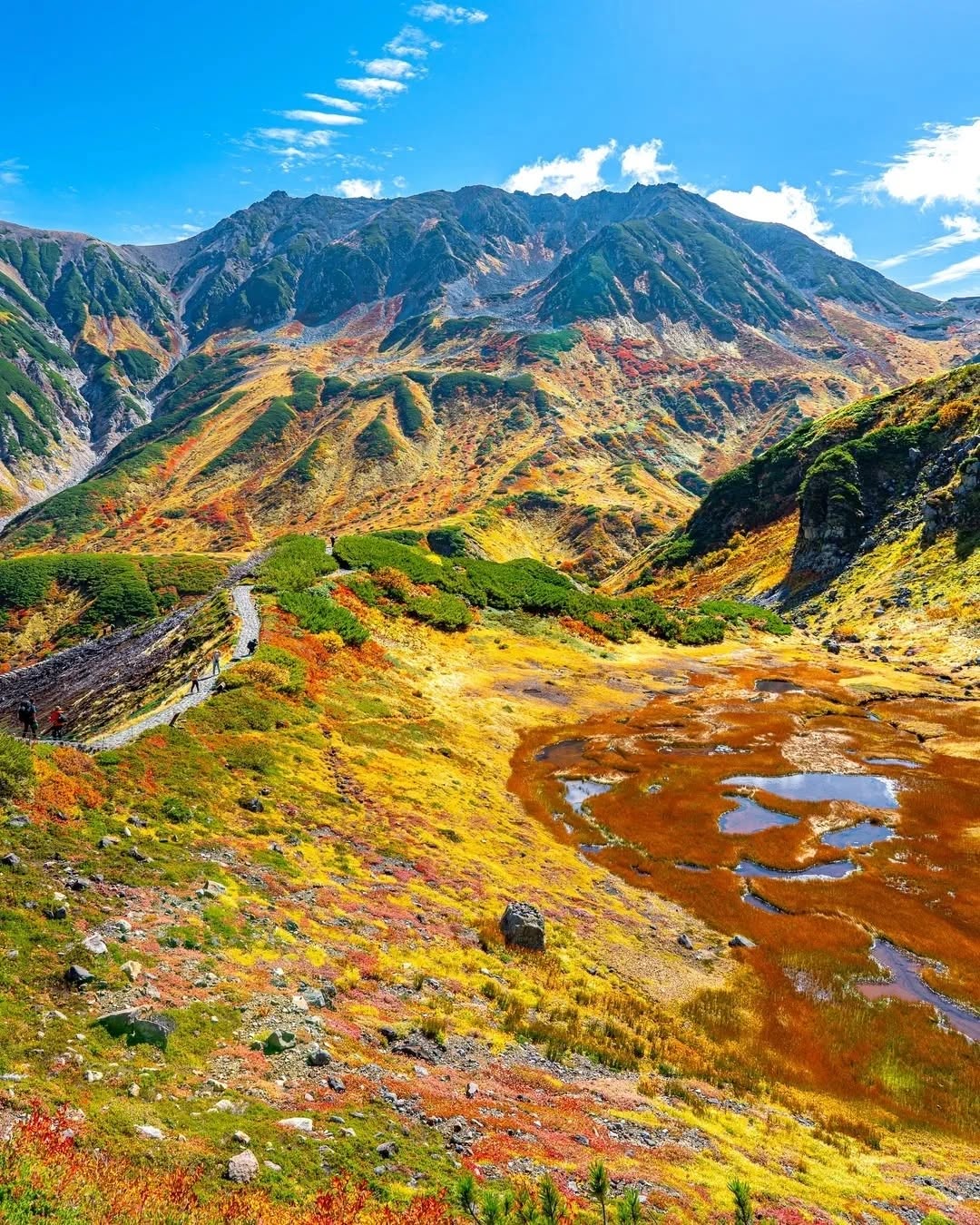
Murodo is the “roof” of the entire route and also where nearly all the high-altitude dining services are concentrated: the large station has a self-service dining area, a standing noodle counter, souvenir shops that also sell snacks, and the restaurant at Hotel Tateyama, which is directly connected to the station. A steaming bowl of soba or udon after walking through the biting wind around Mikurigaike is an unforgettable experience—not because the noodles are exceptional, but because of the setting. Outside the glass windows are a sea of clouds and mountain slopes brushed red.
That said, it’s important to set your expectations correctly: food at Murodo is “fuel with a view,” not a culinary highlight. During the autumn lunch rush, the self-service area is packed. If you’ve brought masu-zushi, look for a sheltered bench around Mikurigaike and enjoy your meal there. Just remember two things: hold on to your food, because the mountain crows here are bold and lightning-fast; and always carry your trash back down, since garbage bins are extremely limited up here.
Midagahara, Daikanbō, and the Transfer Stops
Mid-route stops such as Midagahara and Daikanbō mainly have small counters selling drinks, ice cream, sweets, and a few quick bites. Daikanbō has an observation deck overlooking emerald-green Lake Kurobe amid the autumn forest. Buying an ice cream bar or a cup of hot coffee and standing out there is a combination I always recommend. But don’t expect a full meal at these stops; they exist for transfers, not for lingering.
Kurobe Dam: The “Blue Lake” Curry Worth Trying Once in Your Life
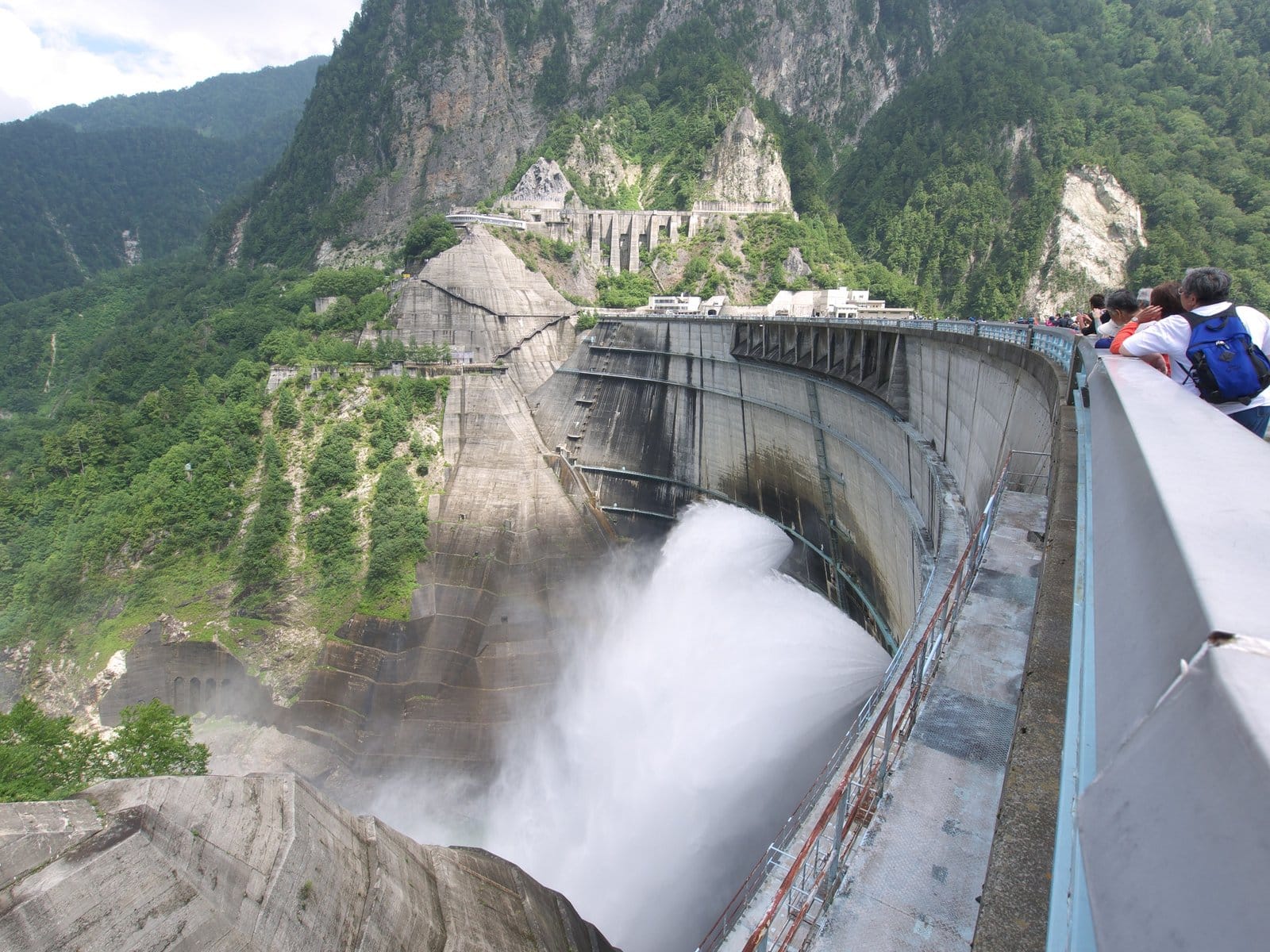
Once you reach the Kurobe Dam area—the site of Japan’s tallest arch dam—you’ll find the route’s signature lunch: dam curry at the restaurant in Kurobe Dam Rest House, right beside the dam observation area.
This curry plate is a miniature model in edible form: the rice is molded into the curved shape of an arch dam, blocking a pool of distinctive green curry that imitates the magical turquoise color of the real Kurobe Lake outside. A fried cutlet shaped like a sightseeing boat floats on the “lake.” It may sound gimmicky, but the curry itself is quite good, with the gentle heat of a green-style curry. Eating a “dam” while watching the real dam release water in a cloud of white spray—water discharge usually continues until around mid-October—is an experience you can only have here. A plate costs noticeably more than ordinary curry, but for me it’s the most worthwhile splurge on the route.
A few practical notes: the restaurant does not accept reservations. You buy a ticket from a machine and find your own seat, and from 11:30 to 1 o'clock during the autumn foliage season, it is almost always full. Plan to eat before 11 o'clock or after 1:30. The restaurant offers a few other curry versions and dishes, but once you’re here, you might as well order the classic. Afterward, climb the 220 steps to the observation deck to walk off lunch. Looking down from above, you’ll understand why they made an entire curry plate to celebrate this lake.
The Nagano Side: Freshly Harvested Soba and Early-Season Apples—Your Reward After Descending
After crossing the dam and taking the tunnel trolley bus to Ogizawa, you’ve officially entered Nagano—the kingdom of soba and apples. Autumn is the golden season for both.
Shin-soba—A Bowl of Noodles from the Harvest Season
Japan has the concept of “shin-soba,” soba made from buckwheat harvested that autumn, generally becoming widely available from around late October onward. The fresh noodles have a distinct buckwheat aroma and a gentle sweetness in the finish that older soba lacks. The Shinshu region—Nagano’s former name—has long been considered the soba capital of Japan, and eating shin-soba in Shinshu during autumn is one of those rare travel experiences where the dish, place, and timing are all exactly right.
Ogizawa Station has a restaurant serving soba and mountain dishes, which is a convenient option if you’re hungry as soon as you finish the route. But if you still have the energy, I recommend saving your appetite for Shinano-Ōmachi. Ōmachi has many long-established handmade soba shops around the station and in the old town, with quieter surroundings and much lower prices than in the mountains. Order a tray of zaru soba to appreciate the aroma of fresh buckwheat, along with a bowl of hot dipping broth if the autumn afternoon is chilly. Many shops close once they run out of noodles for the day, so arrive before late afternoon to be safe. If you’re staying in the Ōmachi Onsenkyō hot-spring area, ask your inn which soba restaurant they frequent; the answer is usually more reliable than any online ranking.
While you’re there, Nagano has another snack worth trying: oyaki, grilled or steamed flour buns filled with vegetables, pickled greens, pumpkin, or sweet red bean paste. Stalls around the station and at roadside rest stops often sell them. Holding one hot in your hands while waiting for the train is a wonderfully comforting way to end a long day.
Early-Season Nagano Apples—Where to Buy Them
Nagano is one of Japan’s largest apple-growing regions, and in autumn, different varieties ripen one after another. Early autumn brings early varieties with a refreshing tartness, October brings crisp, sweet “Shinano” varieties, and the famous Fuji arrives later in the season. If you travel the Alpine Route from late September to October, you’ll hit the most interesting transition period.
The best-value apples usually aren’t found at supermarkets, but at roadside stations (michi-no-eki) and farm-direct stalls around Ōmachi and Azumino. Apples picked in the morning may be sold that afternoon, prices are reasonable, and many stalls let you sample a slice before buying. If you’re traveling by train and can’t visit a farm, the produce stands near Shinano-Ōmachi Station and shops around the region still carry seasonal apples, along with bottled 100% apple juice. It’s the kind of juice that makes convenience-store versions taste remarkably bland afterward. Buy one or two apples for the next day’s journey and put them in your backpack; Nagano apples are firmer and more resistant to bruising than you might expect.
Bento-Buying Tips and a Sample One-Day Meal Schedule
Pulling all my experience together, this is the “stomach schedule” I find most practical for the Toyama → Nagano direction:
- The night before: Have shiroebi in Toyama—tempura don or sashimi—and buy your masu-zushi in advance if you’re worried about rushing in the morning.
- Early morning: Stop at a convenience store near Dentetsu-Toyama Station for water, coffee, onigiri to eat on the train, snacks, and emergency chocolate. If you haven’t bought masu-zushi yet, get it from the counter inside the station.
- Mid-morning at Murodo: Walk around and enjoy the scenery first; you’ll already have water with you if you get thirsty. If it’s cold, have a hot bowl of noodles at the station counter before 11 o'clock, when it’s quieter.
- Lunch: Either open your masu-zushi at Murodo with a million-dollar view, or wait a little longer and have dam curry at Kurobe Dam outside the peak hours. If you’re traveling in a large group, do both and share—that’s the strategy I use most often.
- Afternoon: Ice cream or coffee at Daikanbō, then freshly harvested soba after descending to Ogizawa–Ōmachi, followed by apples and apple juice for dessert.
A few small tips that can genuinely save you from hunger: carry an empty bottle so you can refill it—Japanese tap water is drinkable, and the Tateyama area is known for its delicious water; pack a few sweets, since altitude and lots of walking can drain your energy quickly; always bring a separate bag for trash, because there are almost no garbage bins along the route; and if you’re traveling in the opposite direction from Nagano to Toyama, apply the same logic in reverse. Buy your bento and oyaki around Shinano-Ōmachi Station or at Ogizawa before boarding, then save room for shiroebi and masu-zushi as your reward at the end of the day in Toyama.
Finally, all restaurants and stalls along the route operate according to the Alpine Route’s seasonal schedule—generally from mid-April to late November—and opening hours may change depending on the weather and season. Before your trip, check the route’s official website to make sure everything is operating, especially if you’re traveling in late autumn, when early snow can arrive unexpectedly.
Frequently Asked Questions
How long does masu-zushi keep, and is it safe to bring into the mountains?
Masu-zushi is a traditional preserved style of pressed sushi and is generally recommended to be eaten the same day. The exact expiration date is printed on the label of each box, so check it when you buy it. The route is cool in autumn, so carrying it with you in the morning and eating it at lunchtime is perfectly fine. Just avoid leaving the box in direct sunlight inside your backpack.
Do you need a reservation for the restaurant at Kurobe Dam?
No—the restaurant at the Rest House is self-service. You buy a ticket and find a seat, and it does not accept table reservations. The only way to avoid a long line during the autumn foliage season is to eat outside the peak hours: before 11 o'clock or after 1:30 in the afternoon.
Is fresh shiroebi still available in autumn?
The shiroebi fishing season in Toyama Bay continues until around early November, so you can still catch the season in autumn. Later in the season, some restaurants may use frozen shrimp, which are still delicious because shiroebi are frozen right on the boats. Ask the restaurant if you want to be certain you’re getting shrimp caught that day.
Can vegetarians manage on the route?
It’s fairly difficult. Soba and udon broth in Japan is usually made from dried fish, curry commonly contains meat, and choices in the mountains are already limited. The most practical approach is to prepare a vegetarian bento from a convenience store or supermarket in Toyama or Ōmachi beforehand, and treat vegetable-filled oyaki on the Nagano side as your fallback option. You should still ask each shop about the ingredients.
Is food along the route much more expensive than down in town?
Yes, prices at the high-altitude stops are noticeably higher than in town, which is understandable given the cost of transporting supplies into the mountains. A sensible strategy is to eat and shop mainly at both ends of the route, spend money on just one worthwhile meal experience in the mountains—such as dam curry—plus a hot drink, and rely on the bento and snacks you brought for the rest.
How much time should you allow for meals in a one-day itinerary?
If you’re completing the entire route in a single day during the busy season, your schedule will be very tight because you also need to queue for each cable car and bus section. In my experience, the best balance is one proper sit-down meal—30–45 minutes at Kurobe Dam—plus a flexible bento meal at Murodo. That way, you won’t miss the scenery or end up chewing on bread while walking through the mountain wind.
More from this region — Chubu (Nagano, Kanazawa)
View all →
Tateyama in Autumn: Choosing Your Route, Tickets, and Tips for Traveling Hands-Free
19 min · tips
A Station-by-Station Photo Map for Tateyama’s Autumn Foliage
16 min · tips
Tateyama and a 4–5-Day Autumn Arc Around the Japanese Alps
15 min · tips
Tateyama Kurobe Alpine Route – Walking Through 65-Foot Walls of Snow
5 min · tips