
Noboribetsu Onsen and Jigokudani Guide: Spring Types, Walks and Access from Sapporo
Noboribetsu Onsen and Jigokudani (Hell Valley): nine spring types, walking routes and times, bus, train or car from Sapporo, festivals, food and where to stay.
Apr 21, 2026·✍️ olablog·⏱ 20 min read
Noboribetsu Onsen and Jigokudani (Hell Valley): nine spring types, walking routes and times, bus, train or car from Sapporo, festivals, food and where to stay.
Tap a region to browse articles
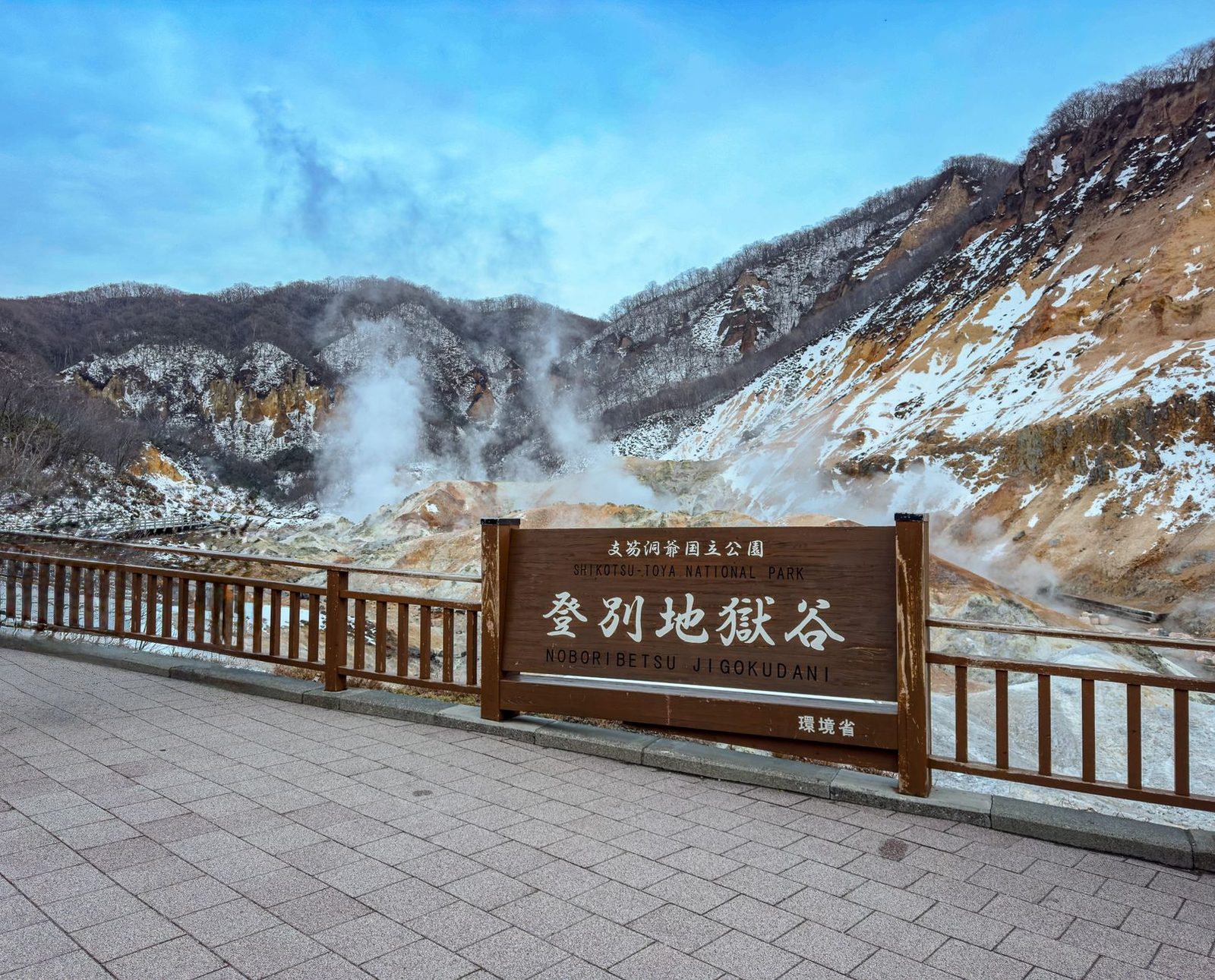
Noboribetsu Onsen is one of Hokkaido's best-loved hot spring towns, and its main source, Jigokudani ("Hell Valley"), is a place where you can almost watch the earth breathe: clouds of white steam pour from bare volcanic rock, water boils up out of the ground and the air smells of sulfur. The hot water is plentiful and unusually varied, and with Sapporo roughly two hours away by bus, train or car, Noboribetsu works as a day trip or, better still, as an overnight stay. This guide covers the nine spring types, the walking routes through Jigokudani and how long they take, every way to get there from Sapporo, the seasons and festivals, where to eat and stay, and sample half-day and full-day plans.
What Are Noboribetsu Onsen and Jigokudani?
Noboribetsu Onsen lies in southwestern Hokkaido and is one of Japan's leading hot spring resorts. At its heart is Jigokudani, the explosion crater left on Mount Hiyori by volcanic activity roughly 10,000 years ago. The valley measures about 450 m across and covers around 11 hectares, and across its floor hot water and volcanic gas vent from the ground. The drifting steam and raw, barren slopes are why it has long been described as a "hell where demons live", a theme the town has embraced: its summer fireworks and even its local beer are named after demons, and its biggest festival after hell itself.
Jigokudani is also the largest single source of the hot water piped to the resort's hotels and inns, producing around 10,000 tonnes a day.
What really sets Noboribetsu apart is variety. Nine different types of spring water rise here, which is why the town is nicknamed the "department store of hot springs"; few resorts anywhere offer so many kinds of water in one place. Because each type is associated with different benefits, you can choose your baths to suit how you feel and hop from one to the next, the classic way to enjoy Noboribetsu. Combine that with a walk through the steaming valley and you have one of the most memorable onsen experiences in Japan.
Noboribetsu's Spring Types and What They Are Said to Do
The benefits below are the ones traditionally attributed to each type of water in Japan. Treat them as part of onsen culture rather than medical advice. Of the nine types, these are the ones you are most likely to meet in Noboribetsu:
1. Sulfur spring (acidic, sulfur-containing sodium sulfate spring) The milky-white water Noboribetsu is famous for, with the unmistakable boiled-egg smell of sulfur. It is said to dilate the capillaries and coronary arteries and is traditionally recommended for chronic bronchitis and arteriosclerosis. It is also credited with detoxifying and skin-beautifying effects and used for chronic skin conditions, acne and chronic gynecological complaints.
2. Salt spring (sodium-calcium chloride spring) Clear and salty to the taste. The salt clings to your skin and slows the evaporation of sweat, so you stay warm long after you get out, which is why it is called the "hot spring of warmth". It is traditionally recommended for neuralgia, lower back pain, sensitivity to cold and recovery from fatigue.
3. Alum spring (aluminum-containing spring) Clear or faintly yellowish-brown, and common in volcanic areas. It is said to tighten the skin and mucous membranes and is associated with chronic skin conditions, inflamed mucous membranes, athlete's foot and hives. It was used for eye complaints for so long that it is also known as the "spring for the eyes".
4. Glauber's salt spring (sulfate spring) Clear and odorless, although its sodium content can give it a faintly salty taste. It is said to lower blood pressure and have a calming effect, and is associated with hypertension, arteriosclerosis, cuts and bruises, constipation, obesity, diabetes and gout.
Beyond these four you can also bathe in a green vitriol (iron sulfate) spring, prized for warming the body to the core, and a sodium bicarbonate ("baking soda") spring known for leaving the skin smooth. Each ryokan and hotel draws on different sources, so compare the spring types on their official websites when you choose where to stay.
Walking Jigokudani: Routes, Highlights and Time Needed
Jigokudani is within walking distance of the hot spring town, and a network of well-maintained trails lets you explore on your own, free of charge and at any hour.
The trailhead is about five minutes on foot from Noboribetsu Onsen Bus Terminal, and from there the path leads to Jigokudani Observatory. This is the classic view: rugged, bare rock and billowing white steam spread out right below you.
Route 1: Jigokudani only (about 30 minutes) Follow the trail from Jigokudani Observatory to Tessen Pond (Tessen-ike), a geyser that throws hot water into the air every so often. This short walk is enough to see the valley at its most dramatic.
Route 2: Jigokudani, Oyunuma and the natural foot bath (90 minutes to 2 hours) Carry on past Tessen Pond to Oyunuma and Oku-no-Yu, then to the Oyunuma River Natural Foot Bath. Oyunuma is a gourd-shaped lake about 1 km around, where sulfurous water at around 130°C gushes up and a veil of steam hangs over the surface. The Oyunuma River, a stream of hot spring water flowing out of the lake, has a natural foot bath where you can sit with your feet in the warm current and listen to the water running through the forest. Bring a small towel.
The trails are easy enough for children and older visitors, but you will pass spots where the sulfur smell is strong and the ground is noticeably hot. In winter, snow can close parts of the trail network, so check the latest conditions before you set out. After dark, footlights along the trail light up the valley as "Oni-bi no Michi" (the "Path of Demon Fire") until around 9:30 pm (more on that under the seasons below).
Getting There from Sapporo: Bus, Train or Car
There are three main ways to reach Noboribetsu Onsen from Sapporo. Here is how they compare at a glance, with the details below.
| Option | Journey time | One-way cost (approx.) | Best for |
|---|---|---|---|
| Highway bus (Kousoku Onsen-go) | 1 h 50 min to 2 h 5 min | ¥2,500–3,400 | No transfers, lowest fare |
| JR limited express + local bus | 1 h 10 min to 1 h 30 min by train, then 15 min by bus | about ¥4,500 + ¥370 | Punctuality and views from the train |
| Car via the Hokkaido Expressway | about 1 h 45 min | tolls about ¥3,060 with ETC, parking ¥500 | Families with luggage, flexible sightseeing |
1. Highway bus (the easiest option)
- Kousoku Onsen-go (Donan Bus): runs directly from Sapporo Station to Noboribetsu Onsen Bus Terminal, so there are no changes. The trip takes about 1 hour 50 minutes to 2 hours 5 minutes and can run late in bad weather or heavy traffic. The adult fare is about ¥2,500–3,400 one way. Every seat must be reserved, so book in advance, and confirm the exact boarding stop at Sapporo Station when you do.
- Kousoku Hakucho-go and Kousoku Muroran-go (Donan Bus): some of these services also run from Sapporo to Noboribetsu Onsen via Noboribetsu Station, with journey times and fares similar to the Onsen-go.
2. JR train plus local bus (the most punctual)
- Limited express: take the Hokuto or Suzuran limited express from JR Sapporo Station to JR Noboribetsu Station. The ride takes about 1 hour 10 minutes to 1 hour 30 minutes and costs about ¥4,500 one way including the limited-express surcharge. Discounted "Tokudane" fares booked online in advance can be up to 45% cheaper.
- Noboribetsu Station to the hot spring town: change to a Donan Bus bound for Noboribetsu Onsen and get off at the Noboribetsu Onsen stop. The ride takes about 15 minutes and costs about ¥370 for adults.
3. Car (rental or your own)
- Route: take the Hokkaido Expressway from Sapporo and exit at Noboribetsu-Higashi IC; the hot spring town is about 10 minutes from the interchange. The whole drive takes about 1 hour 45 minutes, and tolls are about ¥3,060 one way for a standard car using ETC. Check current rates before you go.
- Parking: there are paid car parks right next to Jigokudani. A standard car pays ¥500 per day, and that one ticket lets you park once at the Jigokudani car park and once at the Oyunuma car park. The Oyunuma car park closes for the winter season, usually from late November to late April.
- Winter driving: Hokkaido roads can be snowy or icy in winter, so winter tires are essential. If you are not confident driving in those conditions, take the bus or train instead. Our guide to renting a car in Hokkaido in winter covers what to expect.
Some hotels also run free shuttle buses from Sapporo Station for their guests. Check the hotel's official website when you book; it can save you the fare.
Seasons and the Best Time to Visit
Jigokudani looks different in every season, and each one has its own reasons to go.
Spring (late April to May): fresh green against the last of the snow As the snow melts and new leaves appear, the snow still lying on the surrounding mountains contrasts with the white steam rising from the valley, a view you only get at this time of year. Temperatures are mild and it is an ideal season for walking.
Summer (June to August): demon fireworks and the Hell Festival Summer adds two big events to the scenery.
- Jigoku no Tani no Oni Hanabi (Demon Fireworks of Hell Valley): from around June to September, on set days of the week (mainly Mondays and Thursdays), the Yukijin, the demon guardian deities of Noboribetsu Onsen, set off powerful handheld fireworks to pray for everyone's good health. Columns of fire up to about 8 m high light up the night sky over the valley. The dates and schedule change from year to year, so check the official website of the Noboribetsu International Tourism and Convention Association before you plan around it.
- Noboribetsu Jigoku Matsuri (Hell Festival): held on the last Saturday and Sunday of August, this is Noboribetsu Onsen's biggest summer festival. Highlights include the Enma Karakuri Dashi, a mechanical float carrying Enma, the king of hell, through town with his demons; the Oni Mikoshi Abare Nerikomi, a rowdy procession of demon portable shrines; and the Oni Odori Daigunbu, a spectacular mass demon dance.
Autumn (September to early November): the valley in fall colors Rowan, yama-urushi (a wild lacquer tree) and Erman's birch around Jigokudani and Oyunuma turn vivid red and yellow, and against the rugged cliffs and rising steam the effect is striking. The leaves are usually at their best from mid to late October, when the weather is also ideal for walking. Enjoy the foliage by day, then come back after dark for the illuminated Oni-bi no Michi.
Winter (late November to March): steam over a snowbound valley With snow covering Jigokudani, thick columns of steam rise from a silver-white landscape, and the whole valley feels as if the ground itself is breathing. From sunset until 9:30 pm, footlights along the trail light up the valley as "Oni-bi no Michi: A Valley of Fantasy and Mystery", with an atmosphere completely different from the daytime. Coming in from the cold to a hot bath is one of the great pleasures of a winter visit. In winter some trails may be closed and paths can ice over, so wear shoes with good grip and check the official website for the latest information.
When is the best time to go? If there is a particular event you want to see, plan around its dates. For the best all-round combination of scenery and walking conditions, the autumn foliage season (mid to late October) and the Oni Hanabi period (June to September) are especially recommended. Winter is beautifully atmospheric too, as long as you come properly prepared for the cold.
Where to Eat and Stay in Noboribetsu Onsen
The hot spring town has plenty of places to eat and a wide range of accommodation to round off a visit to Jigokudani.
What to eat
- Onsen Ichiba: about five minutes' walk from Jigokudani, this restaurant cooks with Noboribetsu ingredients. Try the "10-color Maehama-don", a bowl generously topped with fresh seafood, or Enma Yakisoba finished with a secret sauce.
- Enma Yakisoba: Noboribetsu's signature dish, named after Enma, the king of hell. It is made with local ingredients, and each restaurant serves it with its own original sauce, so comparing a few versions is part of the fun.
- Oni Densetsu craft beer: Noboribetsu's own beer is made by Wakasaimo Honpo, the company behind the famous Hokkaido confection "Wakasaimo", and has won numerous awards in Japan and abroad. You can drink it at the brewery's restaurant or buy it at convenience stores in town.
- Seafood: fishing ports are close by, so fresh seafood is plentiful. Many restaurants serve Hokkaido favorites such as seafood rice bowls and robatayaki (charcoal-grilled dishes).
- Onsen pudding and onsen manju: the town is full of sweets that are perfect for snacking on as you stroll and make good souvenirs.
Where to stay Noboribetsu Onsen has accommodation for every style, from large hotels with baths fed by several different springs to quiet, hideaway-style inns.
- Dai-ichi Takimotokan: in the center of the hot spring town, with one of the largest public bathhouses in Japan: five spring types across more than 30 baths. It also has views over Jigokudani, and its buffet of seasonal Hokkaido ingredients is popular.
- Hotel Mahoroba: a hot spring resort known for its wide variety of imaginatively designed baths and a buffet with plenty of seafood.
- Iwai no Yado Noboribetsu Grand Hotel: a long-established hotel with three spring types to enjoy: sulfur, salt and iron springs.
- Noboribetsu Onsenkyo Takinoya: a luxury ryokan with four spring types of its own and kaiseki cuisine rooted in traditional kappo cooking. Ideal if you want a quiet, relaxing stay.
Tips, Precautions and Etiquette
Sightseeing tips
- Pick up a sightseeing map: maps are available from the Noboribetsu Onsen Tourism Association and other local organizations. Mark the places you want to see before you set out; everything around Jigokudani is connected by trails and easy to cover on foot.
- Dress for walking: wear comfortable clothes and shoes. In winter, shoes with good grip and warm layers are essential on snowy, icy paths. The smell of sulfur can cling to clothing, so bring a change of clothes if that bothers you.
- Know the bathing etiquette: Japanese hot springs have their own customs, and some visitors from abroad are not used to them. Wash your body before you get into the bath, keep your towel out of the water and tie up long hair, so that everyone can relax. Many facilities post the rules, but it helps to know the basics in advance; our onsen beginner's guide walks you through them step by step.
- Travel light: especially if you are using public transport, leave large bags at your accommodation or use the coin lockers at the bus terminal and main sights so you can explore unencumbered.
Precautions
- Winter closures: in winter (usually late November to late April) the Oyunuma car park may close because of snow and some trails may be shut. Check the official website for the latest information before you go.
- Volcanic gas: Jigokudani is volcanically active. If you feel unwell or have a respiratory condition, avoid staying for long, and leave straight away if you start to feel sick.
Etiquette
- Take your rubbish with you: help keep this beautiful natural area clean.
- Keep your voice down and don't run: be considerate of others, especially in shared spaces such as the natural foot bath.
- Smoke only in designated areas: and never drop cigarette butts.
Sample Noboribetsu Itineraries
Here are two sample plans, one for half a day and one for a full day. Travel times and time at each stop are approximate, so adjust them to your own pace.
Half-day plan (a quick visit on your arrival or departure day)
For travelers arriving from Sapporo or New Chitose Airport, or heading off again, who want to see the highlights in a few hours.
- 10:00 am: Arrive at Noboribetsu Onsen Bus Terminal. Leave your luggage at your accommodation or in a coin locker near the terminal.
- 10:15 am: Gensen Park and Karakuri Enma-do. At Gensen Park, by the entrance to the hot spring town, watch a geyser that erupts roughly every three hours. At Karakuri Enma-do, see the mechanical figure of Enma, whose performance changes at set times of day.
- 10:45 am: Jigokudani. Take in the view from Jigokudani Observatory, then follow the trail to the geyser at Tessen Pond (about 30 to 40 minutes).
- 11:30 am: Lunch in town. Try Enma Yakisoba or a seafood bowl at Onsen Ichiba, then browse the souvenir shops for something you can only find in Noboribetsu.
- 1:00 pm: Day-use bath (optional). If you have time, soak in one of Noboribetsu's famous springs at a facility that offers day-use bathing.
- 2:00 pm: Move on from the bus terminal, or check in at your accommodation.
Full-day plan (plenty of time for the hot springs and nature)
For travelers staying overnight who want to enjoy Noboribetsu from morning to evening.
- 9:00 am: Set out from the hot spring town. Walk from your accommodation toward Jigokudani.
- 9:15 am: Jigokudani and Oyunuma. Start at Jigokudani Observatory and follow the trails past Tessen Pond to Oyunuma and Oku-no-Yu (about 1 hour 30 minutes to 2 hours). Stop for a foot bath surrounded by forest at the Oyunuma River Natural Foot Bath (bring a towel).
- 11:30 am: Lunch in town. Choose a restaurant that cooks with local ingredients; Noboribetsu beef and fresh seafood are both highly recommended.
- 1:00 pm: Noboribetsu Bear Park or Noboribetsu Date Jidaimura.
- Noboribetsu Bear Park: about seven minutes by ropeway from the hot spring town. See brown bears up close, try feeding them, and enjoy sweeping views over Lake Kuttara and the Pacific Ocean.
- Noboribetsu Date Jidaimura: a theme park where you can experience Edo-period culture, with ninja and oiran shows and period-style streets.
- 5:00 pm: Back to town and check in. Unwind in your accommodation's own hot springs.
- 6:30 pm: Dinner. Enjoy your inn's signature kaiseki meal or buffet.
- 8:00 pm: Oni-bi no Michi, or Oni Hanabi in season. Stroll through the illuminated valley along Oni-bi no Michi for a completely different atmosphere from the daytime. If you are visiting on one of the designated summer evenings, watch the Jigoku no Tani no Oni Hanabi handheld fireworks.
Both plans are only examples, so shape your day around your own interests and energy.
Key Points to Remember
- Try the nine spring types: Noboribetsu has so many kinds of hot spring water that it is called the "department store of hot springs". Hopping between sulfur, salt, alum and other springs with their different traditional benefits in mind is the best way to appreciate the town. Hotels draw on different sources, so check what yours offers before you book.
- See Jigokudani up close: the valley is the symbol of Noboribetsu Onsen. Well-maintained trails take you right up to the steam and boiling springs of the old explosion crater on Mount Hiyori. Allow 30 minutes to 2 hours depending on the route you choose.
- Choose your transport from Sapporo: the direct highway bus is the most convenient (about 1 hour 50 minutes, about ¥2,500–3,400). The JR limited express plus local bus is the most punctual (about ¥4,500 for the train, plus ¥370 for the bus), and driving takes about 1 hour 45 minutes with around ¥3,060 in expressway tolls.
- Time your visit for the events and the night views: summer brings the Oni Hanabi and the Noboribetsu Jigoku Matsuri, autumn paints the valley in fall colors, and every evening Oni-bi no Michi transforms Jigokudani after dark.
- Respect the hot spring etiquette: keep your towel out of the bath, tie up long hair, keep your voice down and be considerate of the people around you.
Frequently Asked Questions
Is there an admission fee for Jigokudani, and what are the opening hours?
No. Jigokudani is free and open 24 hours a day. From sunset until around 9:30 pm, the trail is lit up as "Oni-bi no Michi: A Valley of Fantasy and Mystery", which gives the valley an entirely different atmosphere from the daytime. Parking next to the valley costs ¥500 per day for a standard car.
How much time should I allow for Jigokudani?
About 30 minutes for the Jigokudani trail alone, from the observatory to Tessen Pond. If you continue to Oyunuma and the Oyunuma River Natural Foot Bath, allow about 90 minutes to 2 hours. Choose the route that suits your fitness and interests.
What is the best way to get from Sapporo to Noboribetsu Onsen?
For a simple journey with no transfers, take the Kousoku Onsen-go highway bus. It runs from Sapporo Station to Noboribetsu Onsen Bus Terminal in about 1 hour 50 minutes to 2 hours 5 minutes, and the adult fare is about ¥2,500–3,400 one way. All seats are reserved, so book ahead. If punctuality matters more, take the Hokuto or Suzuran limited express to JR Noboribetsu Station (about 1 hour 10 minutes to 1 hour 30 minutes, about ¥4,500) and then the 15-minute local bus. Driving takes about 1 hour 45 minutes via the Hokkaido Expressway.
Can I do Noboribetsu as a day trip from Sapporo?
Yes. With about two hours of travel each way, you can walk Jigokudani, have lunch in town and fit in a day-use bath, much like the half-day plan above. Staying overnight lets you add Noboribetsu Bear Park or Date Jidaimura, bathe in your hotel's own springs and see Jigokudani lit up after dark, as well as the Oni Hanabi if you visit on the right summer evening.
Is it worth visiting Jigokudani in winter?
Yes, if you come prepared. Steam rising from the snow-covered valley is a truly mystical sight, and a hot bath afterward feels especially good. Expect some trails to be closed and paths to be icy, wear shoes with good grip and warm layers, and remember that the Oyunuma car park is usually closed from late November to late April. If you are not used to driving on snow and ice, take the bus or train.
When can I see the Oni Hanabi fireworks and the Hell Festival?
The Jigoku no Tani no Oni Hanabi takes place from around June to September on set days of the week, mainly Mondays and Thursdays. The Noboribetsu Jigoku Matsuri is held on the last Saturday and Sunday of August. Dates can change from year to year, so check the Noboribetsu International Tourism and Convention Association's official website before you plan your trip around them.
Noboribetsu rewards a little planning: pick the Jigokudani route that fits your time, book the bus or train from Sapporo in advance, and choose a hotel whose springs you want to try. Then walk the steaming valley, soak in water that changes from one bath to the next, and come back after dark to see Hell Valley lit up along Oni-bi no Michi. If you are heading to Kyushu as well, compare it with Beppu's famous "hells", another of Japan's great volcanic hot spring landscapes.
More from this region — Hokkaido
View all →
Rebun Island – Japan's Northernmost Alpine Wildflower Paradise
6 min · destinations
Renting a Car in Hokkaido in Winter
5 min · destinations
Roads to Heaven: Hokkaido's Legendary Straight Roads
5 min · destinations
Roller Coaster Road, Hokkaido – The Undulating Drive That'll Take Your Breath Away
5 min · destinations