
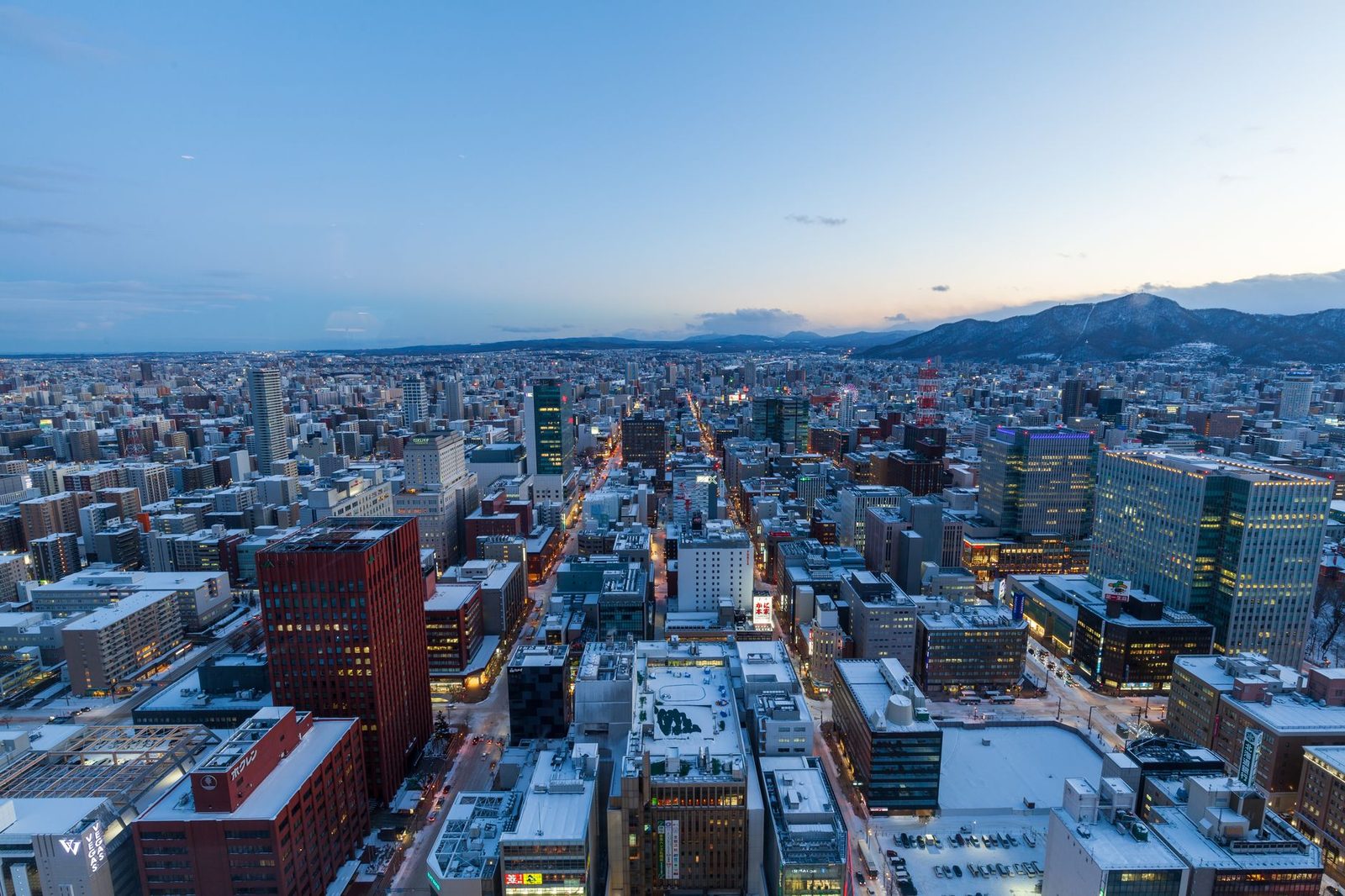
Sapporo: A Guide to Hokkaido’s Snow, Beer, and Miso Ramen City
A Sapporo guide covering Odori Park, morning seafood markets, the beer museum, miso ramen, the February Snow Festival, and a romantic day trip to Otaru along its historic canal.
Aug 8, 2026·✍️ olablog·⏱ 7 min read
A Sapporo guide covering Odori Park, morning seafood markets, the beer museum, miso ramen, the February Snow Festival, and a romantic day trip to Otaru along its historic canal.
Tap a region to browse articles
Sapporo is Japan’s fifth-largest city, yet it has a completely different feel from the rest of the country: neat American-style grid streets, spacious sidewalks, easygoing people, and a food culture born of the cold climate—draft beer, miso ramen, snow crab, and buttered corn. As the capital of Hokkaido, Sapporo is both a destination in its own right, famous for its Snow Festival, and the perfect base for exploring the northern island. This guide covers everything you need for 2–3 days in the snow city.
Odori Park and Japan’s Most Walkable Central District
The heart of Sapporo is Odori Park—a broad 1,5 km green belt running through the city center and dividing it into northern and southern halves. In summer, the park hosts outdoor beer festivals, with the irresistible aroma of buttered corn wafting from food carts; in winter, it becomes the main stage for the Snow Festival. At the eastern end stands Sapporo TV Tower, whose observation deck offers a direct view along the tree-lined park.
From Odori, all the main sights are within walking distance: the more than 140-year-old Tokei-dai clock tower, the underground Aurora Town–Pole Town shopping area linking the subway stations (a lifesaver on days when temperatures fall to minus 10 degrees), and Susukino to the south—the largest nightlife district in northern Japan, glowing with dazzling neon signs.
Morning Markets and Hokkaido’s Seafood Paradise
Seafood lovers visiting Sapporo should set an alarm and get up early at least once. Nijo Market in the city center (open from around 7 o’clock) and the Curb Market wholesale market west of the station are the two places to try kaisendon—bowls of rice topped with sea urchin, salmon roe, crab, and scallops so fresh they still glisten. A good bowl typically costs around 2.000–4.000 yen, depending on the toppings; a whole snow crab or hairy crab costs more, but is still reasonable compared with Tokyo prices.
If you plan to take crab home, most shops offer ice-packed foam-box shipping services. Outside the markets, Susukino comes alive at night with countless crab hot-pot restaurants and jingisukan grills—lamb cooked on a cone-shaped cast-iron pan, Hokkaido’s “national soul food,” which you absolutely have to try with a glass of draft beer.
Sapporo Beer Museum—Where Japanese Beer Began
Sapporo is the birthplace of Japan’s beer industry: Sapporo Beer was founded here in 1876, taking advantage of a climate similar to Europe’s. Housed in a historic red-brick brewery, the Sapporo Beer Museum tells that story through artifacts, vintage advertising posters, and—the most eagerly anticipated part—a tasting area where you can compare different beers for a few hundred yen per glass.
Right next to the museum is Sapporo Beer Garden, with German-style beer halls where the all-you-can-eat jingisukan-and-beer combo makes for one of the city’s most enjoyable dinners (around 5.000–7.000 yen per person). If you have time, add a visit to the Shiroi Koibito chocolate factory in the west—the birthplace of Hokkaido’s most famous white cookie boxes, which almost everyone takes home as a souvenir.
Miso Ramen and Legendary Noodle Alleys
Sapporo is the home of miso ramen, with a rich miso-based broth, springy yellow noodles, and toppings such as butter, sweet corn, and stir-fried bean sprouts—a dish created to withstand the harsh winter. The classic destination is Ramen Yokocho in Susukino: a cramped alley lined with nearly twenty tiny noodle shops dating back to the 1950s, each with only a handful of counter seats. A generous bowl costs around 900–1.300 yen; don’t hesitate to add butter and corn for the quintessential Sapporo style.
Beyond the noodle alley, the area around Sapporo Station has several “ramen towns” inside commercial buildings, bringing together famous brands from across Hokkaido—ideal on snowy days when you don’t want to travel far. And don’t forget a local-style dessert: rich Hokkaido soft-serve, or a “shime parfait”—a late-night parfait enjoyed after drinks, a uniquely Sapporo tradition.
The February Snow Festival—Japan’s Biggest Winter Event
Every year in early February, the Sapporo Snow Festival (Yuki Matsuri) transforms Odori Park into an open-air gallery of enormous snow sculptures—some as tall as a three-story building, recreating temples, anime characters, and famous landmarks from around the world. After dark, they are illuminated and brought to life with 3D light shows. The event lasts about one week and attracts several million visitors. There are also two satellite venues: Susukino, which displays translucent ice sculptures, and Tsudome, where children can play and slide in the snow.
Essential survival tips: book your room 3–6 months in advance, as hotels sell out and prices rise sharply; wear non-slip shoes with studded soles or buy attachable rubber grips (available at convenience stores everywhere); and remember that nighttime temperatures often plunge well below freezing, so dress in layers and keep some heat patches on hand. If you can’t visit during the festival, Sapporo is also beautiful in December, when the White Illumination lights up Odori and a German-style Christmas market takes over.
Otaru Day Trip—A Romantic Canal Town
Just 30–40 minutes by train from Sapporo, Otaru is a former port town that once prospered through the herring trade. Today, it charms visitors with a canal lined by early-20th-century brick-and-stone warehouses reflected in the water, at its most beautiful around dusk when the gas lamps come on. Sakaimachi Street leads into the center, passing Kitaichi glass shops, music-box stores (including the music-box museum with a steam clock outside), and LeTAO pastry shops serving melt-in-your-mouth cheesecake.
Otaru is also renowned for sushi, with an entire street dedicated to it—many food enthusiasts consider the sushi here both better and cheaper than in Sapporo. If you visit in mid-February, the Otaru Snow Light Path Festival places thousands of candles in snow-lined niches along the canal, creating one of the most romantic winter scenes in Japan. The JR Hakodate Line runs along the coast between Sapporo and Otaru; sit by the left-hand window (when traveling toward Otaru) to watch the silvery-gray Sea of Japan right beside the tracks.
How to Get to Sapporo and When to Visit
Sapporo’s air gateway is New Chitose Airport (CTS), about 45 minutes from the city center by rapid train (around 1.150 yen). There are currently seasonal direct flights from Vietnam, or you can connect through Tokyo—the Tokyo–Chitose route is one of the busiest domestic air routes in the world, with flights available at virtually any time. A domestic round trip typically costs around 20.000–40.000 yen when booked early. Within the city, the three subway lines and an IC card are all you need.
As for the seasons: February is for the Snow Festival and skiing; June–8 is Japan’s rare cool summer season (below 27 degrees, with no rainy season), making it easy to combine with the deep-purple lavender fields of Furano; September–10 brings early autumn foliage and the richest seafood season. Sapporo therefore has almost no true “low season”—only different versions of the same lovable city. If you want to include Sapporo in a complete Hokkaido itinerary with transportation included, see OlaChill’s Japan tours; for winter packing tips and advice on finding good fares, read more on the OlaChill blog.
Sapporo is not as historic as Kyoto or as glamorous as Tokyo—but it has something rarer: comfort. It’s a city where you can eat well from morning until late at night, walk without tiring, and find that falling snow outside the window makes the beer in your hand taste even better.
More from this region — Hokkaido
View all →
Sapporo to Otaru Group Day Trip: A Practical Charter Bus Guide
8 min · tips
Sapporo Snow Festival 2026 Complete Guide — February, Odori Park + Susukino + Tsudome: 3 Venues
4 min · events
Sapporo in Winter — Snow, Beer, Miso Ramen & Onsen
8 min · tips
Shikisai no Oka – Hokkaido's Stunning Flower Hill That Looks Like Heaven on Earth
5 min · destinations