Your First Onsen in Japan: Step-by-Step Bathing Etiquette
What happens at a Japanese onsen, from the entrance curtain to the rest area: washing, towels, how long to soak, tattoos, and easy places for your first bath.
May 4, 2026·✍️ olablog·⏱ 5 min read
What happens at a Japanese onsen, from the entrance curtain to the rest area: washing, towels, how long to soak, tattoos, and easy places for your first bath.
A first visit to a Japanese hot spring causes more nerves than it deserves. The rules sound strict, the changing room is full of strangers, and nobody explains anything because everyone else already knows. In practice an onsen runs on three simple ideas: get clean before you get in, keep the water clean once you are in, and don't disturb anyone. Here is how it works, from the door to the drinks machine.
Onsen, sento and the places you'll bathe
An onsen uses natural hot-spring water from underground; a sento is a neighborhood public bath that usually heats ordinary tap or well water. The etiquette is the same in both. You'll come across onsen in a few forms:
- Day-use facilities (higaeri onsen): pay at the entrance, bathe, and leave.
- Ryokan and hotel baths: shared baths for guests, sometimes open to day visitors in the afternoon.
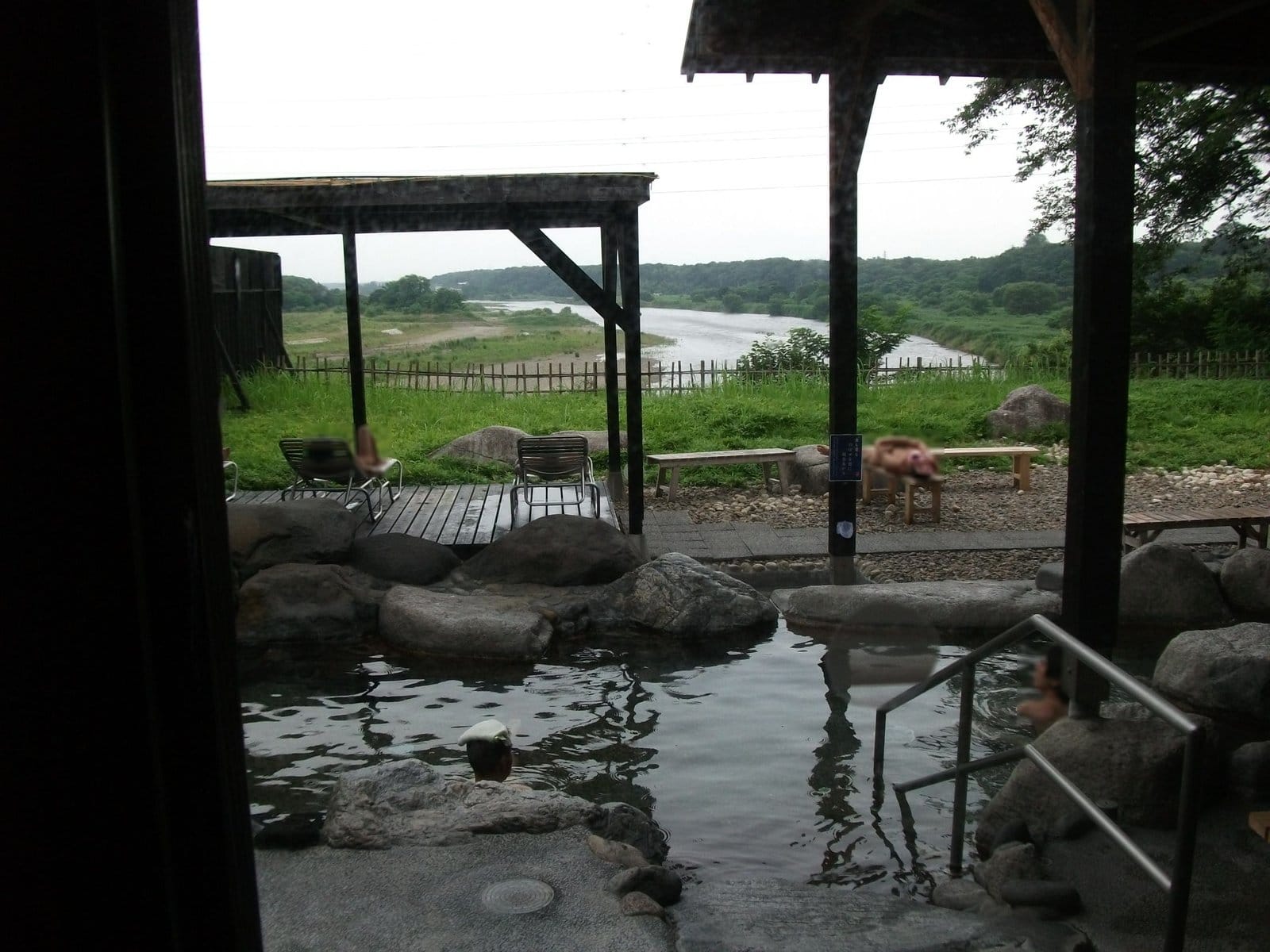
- Rotenburo: outdoor baths, usually the highlight of any visit.
- Private baths (kashikiri or kazoku-buro): book a time slot and bathe alone or with a companion or family. The best choice if you are shy or have tattoos.
What to bring
A small towel roughly the size of a hand towel, a hair tie if your hair is long, and something to drink afterward. Most day-use facilities sell or rent towels and supply soap, shampoo and hair dryers, but small neighborhood baths may not, so carry your own there. Some lockers take a 100-yen coin that comes back when you open them. Avoid bathing straight after a heavy meal or after drinking alcohol.
Step by step
1. Choose the right curtain. Baths are separated by gender. Look at the kanji on the noren curtain at the entrance: 男 is men and 女 is women. The curtains are often blue for men and red for women, but read the character rather than trusting the color.
2. Take your shoes off, then undress completely. Leave shoes in the lockers at the entrance. In the changing room, put all your clothes in a basket or locker; swimsuits are not worn. Take only your small towel into the bathing area and leave the big one with your clothes.
3. Wash first, and do it properly. Inside, you'll find a row of low showers with stools and small buckets. Sit down, since standing sprays your neighbors, then wash your whole body and hair with soap and rinse off every trace of suds.
4. Pour a little bath water over yourself. Many baths have a basin near the edge. Scooping warm water over your feet and legs first, then your body, is called kakeyu. It lets your body adjust to the heat and shows the other bathers that you are coming in clean.
5. Get in slowly and keep the towel out of the water. Fold your towel on top of your head or leave it on the edge. Hair should not touch the water, so tie it up. No swimming, diving, splashing, or scrubbing in the bath itself.
6. Soak in short rounds. Onsen water is often around 40 to 42°C. Stay in for a few minutes, sit on the edge or step into the cooler outdoor air, then go back in. If you feel dizzy or your heart is racing, get out slowly, sit down and drink some water.
7. Decide whether to rinse. Many Japanese bathers skip the final shower to leave the minerals on their skin. With strongly acidic or sulfurous water, or if your skin is sensitive, a quick rinse is sensible.
8. Dry off before you go back to the changing room. Wipe yourself down with your small towel while still in the bathing area so you don't drip across the floor. Then dress and enjoy a cold drink in the rest area, a small tradition of its own.
Tattoos
Many public baths still refuse entry to people with tattoos, a rule rooted in old associations with organized crime. Policies vary a great deal: some places now accept small tattoos covered by a skin-colored patch, some welcome everyone, and some refuse any tattoo at all. Check the facility's rules before you go, and if in doubt, book a private bath or a room with its own bath. Our guide to private open-air baths at ryokan explains how to reserve one.
Other things worth knowing
Photos are not allowed in the bathing area or the changing room, so leave your phone in the locker. Young children usually bathe with a parent, but the age limit for entering the other gender's side varies by prefecture and facility. At many ryokan, the men's and women's baths swap over at a set time so guests can try both, so read the curtain every time you go in. If you are pregnant or have heart or blood-pressure problems, check with your doctor first and keep your soaks short. Mixed bathing (konyoku) still exists at some rural springs, sometimes with bathing wraps provided, but it is the exception rather than the rule.
Good places for a first onsen
- Hakone, about 90 minutes from Tokyo, has plenty of day-use facilities that are used to first-time foreign visitors.
- Kinosaki Onsen in Hyogo is made for bath-hopping: guests stroll between the town's seven public bathhouses in yukata and wooden sandals.
- Kusatsu in Gunma is the classic mountain onsen town, with free communal baths and a large open-air bath in a park.
- Beppu in Oita offers almost every kind of bath, including sand baths and steam baths.
A neighborhood sento in Tokyo is also a cheap, low-pressure rehearsal before your first real onsen trip.
Plan your trip
For a day trip from Tokyo, Hakone is the natural choice. If you can spare a night, stay at a ryokan with its own baths and go in early in the morning, when the baths are quietest and you can learn the routine at your own pace.