
Nikko’s Week-by-Week Fall Color Calendar: From Senjogahara Down to the Historic Shrines
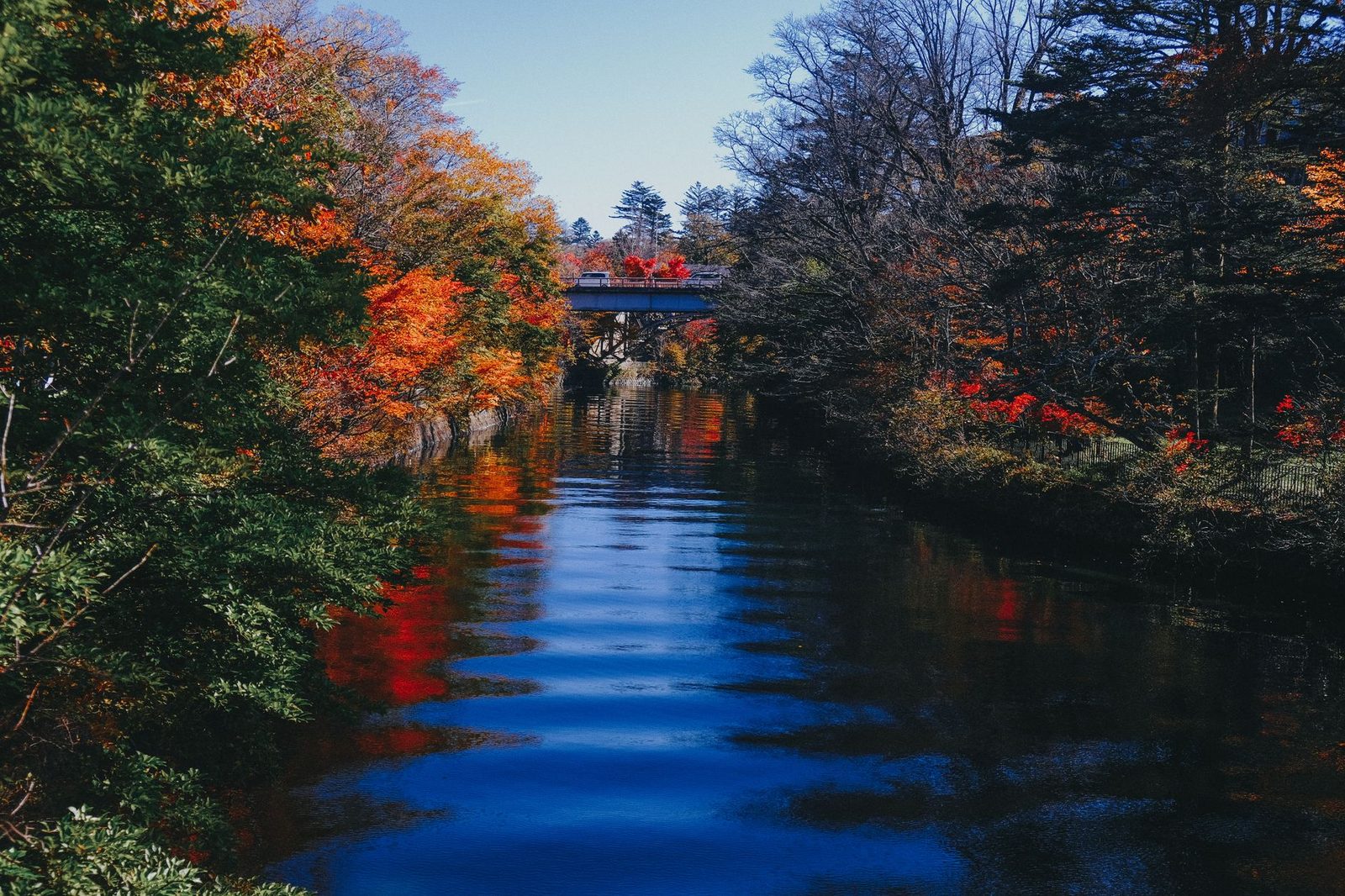
Autumn in Nikko lasts for more than a month because the fall colors move from the high mountains down to lower elevations. Follow the rhythm week by week and learn how to check the forecasts so you can choose the right time for the place you want to see.
Aug 12, 2026·✍️ olablog·⏱ 15 min read
Autumn in Nikko lasts for more than a month because the fall colors move from the high mountains down to lower elevations. Follow the rhythm week by week and learn how to check the forecasts so you can choose the right time for the place you want to see.
Tap a region to browse articles
Every year around mid-September, I inevitably get the same question from friends: “When are the fall colors in Nikko at their best?” And every time, I have to answer with a question of my own: “What do you want to see in Nikko?” It may sound a little annoying, but it’s the right question. Nikko doesn’t have one fall-color season—it has an entire calendar that lasts more than a month, with the “main stage” moving to a different location each week.
The reason is elevation. The Toshogu shrine complex below the town sits at around 600m above sea level, while Yumoto Onsen at the top of the Okunikko area is nearly 1.500m high. A difference of nearly 900m means a difference of several degrees Celsius, and trees change color according to temperature: the high mountains get cold first, so the leaves turn first; the warmer town follows later. As a result, Nikko’s koyo “wave” moves steadily from high to low elevations, almost every year.
This is where many people get it wrong. I once met a group of friends who had eagerly gone to Nikko in early October, only to stand bewildered in front of Toshogu’s gates because the trees were still completely green—while just one bus ride away, Senjogahara marshland was glowing golden at its peak. Conversely, some people go up to Lake Chuzenji in mid-November, find that most of the leaves have already fallen, then head back down and are surprised to discover that the shrine area is at its best. This guide gives you that week-by-week calendar, along with a way to check the forecasts yourself and choose the right travel date.
Why Nikko Has an Entire “Fall-Color Calendar” Instead of a Single Season
Picture Nikko as a giant staircase. The top step is Yumoto Onsen and Senjogahara marshland, at an elevation of 1.400–1.500m. The middle step is Lake Chuzenji and Ryuzu Falls, around 1.300m. Connecting the middle and lower steps is the Irohazaka pass, with its 48 hairpin turns. The bottom step is Nikko town, with its World Heritage shrine and temple complex, at around 600m.
Autumn “descends” this staircase one step each week. Up high, the cold nights at the end of September are already enough to turn the grasses and shrubs. By the time the colors reach the lake, it is mid-October. By the time they reach the shrines, it is already November. Once you understand this rhythm, it is almost impossible to miss the season entirely—the only question is which step to choose for your week.
One note before we get into the detailed calendar: the dates below reflect the rhythm of a “normal” year. In recent years, warmer weather has tended to delay the color change by about a week, and the timing can still shift each year depending on whether cold weather arrives early or late. That is why the forecast-checking section at the end is just as important as the calendar itself.
Week-by-Week Fall Color Calendar: From High to Low
Late September – early October: Yumoto Onsen and Senjogahara Marshland
This is the opening act, and also the one that few international visitors know about. Senjogahara is a vast marshland at an elevation of around 1.400m, and the first thing to change color here is not the maple leaves but…the grass. The Japanese call this phenomenon kusamomiji—“grass autumn colors.” The entire marsh turns coppery yellow and then reddish brown, dotted with slender white-barked birch trees, with Mount Nantai in the distance. In the early morning, mist creates a quiet, subdued atmosphere that is very different from the brilliant koyo scenes you often see in photographs.
The best way to experience it is on foot. A wooden boardwalk crosses the marsh, and the most popular route runs from Ryuzu Falls uphill to Yudaki Falls and then onward to Yumoto Onsen, taking about half a day at a relaxed pace. The trail is mostly flat and does not require mountaineering fitness, but remember to bring warm clothing—by late September, early mornings up here are already as cold as early winter in Tokyo.
Finishing the walk at Yumoto Onsen is a smart choice. This small hot-spring village sits beside Lake Yunoko, whose mineral-rich sulfur waters are cloudy white. There is nothing better than soaking after a walk in the cold air. If you enjoy slow travel, staying overnight in Yumoto this week is far more rewarding than squeezing into the crowds during the October peak.
Mid–late October: Ryuzu Falls and Lake Chuzenji
This is the climax of the entire season, and also when Nikko is busiest. Ryuzu Falls—“Dragon Head Falls”—is one of the most famous spots in Okunikko at this time of year. The water splits over a rocky bed, while maples and other red-leaved trees cover both sides. Viewed from the base, it looks exactly like a dragon parting the water amid a sea of fire. There is a teahouse at the foot of the falls with seats facing directly toward the view; arrive before 9 a.m. and you can take your time, but after that you may have to wait quite a while just to get a photo.
Lake Chuzenji sits at an elevation of around 1.270m, with a broad surface and Mount Nantai rising majestically on one side. The lake’s peak week usually falls in the second half of October. You can take a sightseeing boat, cycle or walk along the shore, and visit two historic villas that once served as vacation homes for the Italian and British embassies. Sitting on the wooden veranda and looking out over the leaf-streaked lake is, in my view, one of the most beautiful autumn scenes in the Kanto region. Nearby, Kegon Falls plunges nearly a hundred meters straight down a cliff, and an elevator takes visitors to the observation deck at its base (there is a fee, so check the official website for information before you go).
For a view from above, set aside time for Hangetsu Pass south of the lake. The lookout over the Hatchodejima Peninsula jutting into the water is a classic viewpoint for autumn at Lake Chuzenji.
Late October – early November: Irohazaka Pass
As the colors around the lake begin to fade, they blaze anew along the pass connecting Okunikko with the town. Irohazaka consists of two one-way roads—one uphill and one downhill—with a total of 48 hairpin turns. Each turn is named after a character from the old kana syllabary. During the fall-color season, the mountainsides on both sides seem to be on fire, and every bend reveals a new scene.
On the uphill route is the Akechidaira Ropeway, which takes you to an observation deck offering views of Lake Chuzenji, Kegon Falls, and the sea of foliage below all at once. Many people consider this the best view in Nikko. The ropeway may stop operating in strong winds or for maintenance, so check its operating status beforehand.
I should be frank about the downside: traffic jams on Irohazaka at this time of year are “legendary.” On peak weekends, a stretch of pass that normally takes twenty minutes can take several hours, and buses get stuck just like private cars. My advice is to go on a weekday if possible. If you have to go on a weekend, leave Tokyo very early and reach the pass before 8 a.m., or go much later, after 3 p.m., and stay overnight around the lake. The middle of the day is the worst time.
Early–mid November: The Shrine District and Town Center
This is the finale of the season, and for many people, the best part. By now, the fall colors have reached the World Heritage shrine and temple complex—Toshogu, Rinnoji, and Futarasan—as well as the red Shinkyo Bridge over the Daiya River. Red maple leaves against gilded shrine gates and vermilion walls create the kind of “very Japanese” scenery you cannot find in the mountains. In November, the low afternoon sun filtering through the maple canopies in the shrine grounds is indescribably beautiful.
This is also the easiest week for getting around. Everything is near the town center, accessible on foot from the station or after just a few bus stops, and you are not dependent on Irohazaka Pass. Outside the shrine area, spend an hour walking into Kanmangafuchi—a small riverside gorge lined with Jizo statues wearing weathered red knitted caps. In the leaf-fall season, golden leaves cover the paths, and the area is much quieter and more peaceful than the main shrine district.
A small tip: early November is the most beautiful overlap period of the year. If you go during exactly this week, you can head up Irohazaka in the morning to catch the last of the leaves on the pass, then come back down to the shrine area in the afternoon for the beginning of its own color season—two completely different scenes in one day.
How to Check Koyo Forecasts Like Someone Who Lives in Japan
The calendar above gives you the basic framework, but the timing shifts a little every year. To choose the exact date, you need to check the conditions yourself. It is easier than you might think, even if you cannot read Japanese.
Three Japanese Keywords to Learn
Every koyo forecast site uses the same three stages. You only need to recognize these terms:
- 色づき始め (irozuki hajime) — the leaves are beginning to change color. This usually means the best viewing is still about a week to ten days away.
- 見頃 (migoro) — the leaves are at their best. If you see this word for the place you want to visit, it is time to buy your train tickets.
- 落葉 (rakuyou/ochiba) — the leaves have fallen. The season is over at that location, so look farther downhill.
With just these three words, you can understand the essential information on almost any Japanese-language website.
Reliable Sources to Check
- Major Japanese forecast websites: tenki.jp, Weathernews, and the Japan Meteorological Corporation’s koyo forecast page all publish nationwide forecast maps from around early September and update them every week. Search for "紅葉 見頃予想" together with the year, or search directly for a location such as "竜頭ノ滝 紅葉" (Ryuzu Falls) or "中禅寺湖 紅葉" (Lake Chuzenji).
- The Nikko tourism association website: in autumn, it usually posts real photographs of each location every week. This is the most valuable source because the images show actual conditions rather than predictions. Search for "日光 紅葉情報".
- Real-time social media photos: search for the location’s name in Japanese on Instagram or X, then filter for the newest posts. Photos posted by visitors yesterday tell you more than any forecast. Google Maps is also useful: open the destination and look at the most recently uploaded photos.
- Live cameras: there are several public webcams around Lake Chuzenji. Search for "中禅寺湖 ライブカメラ" to see the colors with your own eyes right now.
How to Read the Forecast Correctly
Forecasts released in early September should only be used for booking accommodation and requesting time off—their margin of error can be as much as a week. This is what I do: in early September, I check the forecast for the first time, narrow down the week I want to travel, and reserve a room (accommodation around Lake Chuzenji sells out very early during this season). About a week before the trip, I check the real-time photos and the migoro status again. If the colors are later than planned, do not change the date—change the destination. Move your itinerary to a higher elevation, where the colors are sure to be at their best. That is the beauty of Nikko: its elevation “staircase” gives you a backup option at every point from late September through mid-November.
Choose Your Travel Week Based on What You Want to See
Now reverse the question: instead of asking “Where should I go that week?”, ask “Which week should I go if I want to see this?”
- You love untouched scenery and hate crowds → late September to early October, walk through Senjogahara and stay overnight at Yumoto Onsen. This is the quietest week of the entire season.
- You want the classic, brilliantly colored koyo photo → mid to late October, Ryuzu Falls and Lake Chuzenji. Accept the crowds and you will be rewarded with the most spectacular scenery.
- You enjoy driving or love panoramic views from above → late October to early November, Irohazaka and the Akechidaira observation deck. Avoid weekends at all costs.
- You want red leaves against vermilion-and-gold shrines → early to mid-November, the Toshogu area, Shinkyo Bridge, and Kanmangafuchi. This week also has the advantage of milder weather and easier travel.
- You only have one chance and want the safest choice → choose around late October. Being in the middle of the calendar means that if the season arrives early, you can still head lower and catch the colors; if it arrives late, the higher elevations will still be beautiful.
For transportation, the most convenient option from Tokyo is the Tobu train from Asakusa to Tobu-Nikko Station, followed by Tobu buses running to Chuzenji and Yumoto Onsen. Tobu offers several area passes combining trains and buses, and using the right one can save you quite a bit on the bus journey to Okunikko, which is not cheap—prices and conditions change from year to year, so check Tobu’s official website before buying. You can also take a JR train via Utsunomiya if you already have a JR Pass.
As for clothing, do not use Tokyo’s weather as your benchmark. Okunikko is often much colder than Tokyo, and early mornings around the lake can approach 0 degrees in late October. Thermal layers, a thick jacket, and gloves may sound excessive for “autumn,” but you will thank me when you are waiting for sunrise beside the lake. Also remember that November sunsets come very early. By around 4:30 p.m., it is already getting dark, so plan to finish your day earlier than you may be used to.
Finally, accommodation: if you are planning to travel during the peak period from mid to late October, book your room in summer. Staying overnight around Lake Chuzenji or Yumoto instead of making a day trip will completely change the experience. You will have the quiet early morning and late afternoon—two of the best times of day—while day-trippers are limited to the crowded midday hours.
Frequently Asked Questions
Is a day trip from Tokyo enough to see the autumn leaves in Nikko?
Yes, but you should choose just one “step” of the staircase. Spend the full day in Okunikko (Ryuzu Falls, Lake Chuzenji), or spend it entirely around the shrines and town. Trying to fit both into one day during peak season means losing most of your time on buses and in the Irohazaka traffic jams.
If I can only visit once, which week is the safest choice?
Around late October. It is the midpoint of the calendar: if the season arrives early, Irohazaka and the middle elevations will be beautiful; if it arrives late, the area around the lake will still be glowing. The chances of coming away empty-handed are almost zero.
Are the Irohazaka traffic jams really as terrible as people say?
Yes, during peak weekends in mid to late October. The pass is only a few kilometers long, but it can take several hours, with buses stuck alongside private cars. To avoid the worst of it, go on a weekday, reach the pass before 8 a.m., or stay overnight around the lake so you do not have to travel up and down in a single day.
Should I cancel my trip if it rains or is very cloudy?
Not necessarily. Rain-wet leaves look darker and more saturated, and mist over Senjogahara or Lake Chuzenji can sometimes be even more beautiful than harsh sunlight. Only Irohazaka and the observation decks lose much of their appeal in low cloud. On those days, focus your itinerary on the waterfalls, shrines, and onsen instead.
How accurate are koyo forecasts?
Forecasts released as early as September can be off by about a week, so use them only for rough planning. As your trip approaches, trust the real-time photos: updates from the Nikko tourism association, Japanese-language hashtags on social media, and webcams around the lake. When all three sources agree that the leaves are at migoro, you can confidently set off.
Is there anything to do in late November after the fall colors around the shrine district are over?
Yes. In mid to late November, golden leaves carpeting Kanmangafuchi and the riverside paths are still wonderfully atmospheric. Up in Okunikko, winter is beginning, and in some years the first snow covers the summit of Mount Nantai while red leaves remain in the town below. It is a “two seasons in one frame” scene that only a place with Nikko’s dramatic elevation differences can offer.
More from this region — Tokyo & Kanto
View all →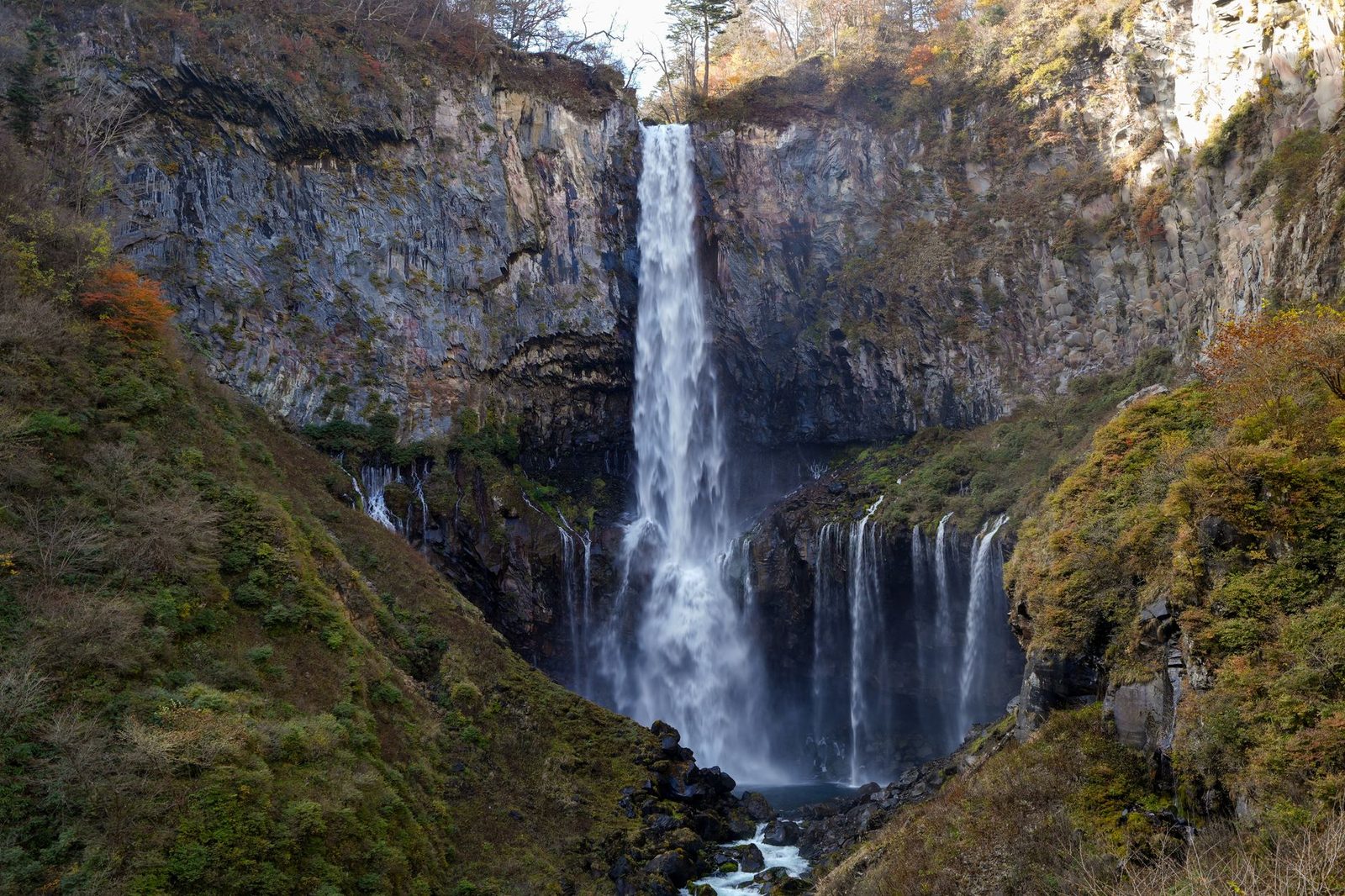
An Autumn Day in Nikko: Get Up Early to Beat Irohazaka
18 min · tips
Nikko in Autumn: 2 Days, 1 Night — A Leisurely Okunikko Trip and an Early-Morning Visit to the Shrines
18 min · tips
Nikko in Fall Foliage: Tips for Avoiding Irohazaka Traffic and Realistic Costs
17 min · tips
Nikkō National Park – Golden Shrines Deep in Sacred Mountains
5 min · tips