
An Autumn Day in Nikko: Get Up Early to Beat Irohazaka
A practical day trip from Tokyo: visit Kegon Falls and Lake Chuzenji in the morning before the crowds, explore Toshogu in the afternoon, with bus time windows and a shortened plan if you miss your connection.
Aug 12, 2026·✍️ olablog·⏱ 18 min read
A practical day trip from Tokyo: visit Kegon Falls and Lake Chuzenji in the morning before the crowds, explore Toshogu in the afternoon, with bus time windows and a shortened plan if you miss your connection.
Tap a region to browse articles
Every weekend toward the end of October, the same scene plays out at Tobu-Nikko Station: an express train from Tokyo unloads its passengers at 10 a.m., and in front of the bus terminal, the line for buses to Lake Chuzenji is already so long that staff have to put up ropes to divide it into lanes. Everyone thinks they got an early start—until they realize that thousands of other people had exactly the same idea. The regular bus usually takes around 50 minutes, but that day it crawled for nearly 3 hours through Irohazaka’s 48 hairpin bends. Many people reached the lake at 2 p.m., hurriedly took a few photos, and immediately started worrying about getting back down the mountain.
I’ve stood in that line myself, and since then I’ve drawn one simple rule: during Nikko’s autumn foliage season, you don’t need to be especially athletic—you just need to move against the crowd. The crowds leave Tokyo at 8–9 a.m., reach the lake around noon, and head back down the mountain at 4–5 p.m., getting stuck in traffic in both directions. You, on the other hand, will reach the lake while the morning mist has barely lifted, descend while everyone else is just beginning to head up, and spend a leisurely afternoon around the temples at the foot of the mountain.
This is a one-day itinerary that has been thoroughly “stress-tested” according to that principle: Irohazaka, Kegon Falls, and Lake Chuzenji in the morning, Toshogu in the afternoon, plus realistic bus time windows, extra time for traffic jams, and a shortened plan in case things don’t go as expected. Because schedules can change from year to year during the peak season, the times in this article are approximate. Check the Tobu train timetable and the Tobu Bus Nikko timetable on the official website before your trip.
Why This Itinerary Goes “Up First, Down Later”
Nikko is actually divided into two areas at different elevations. The Toshogu shrine complex is at the foot of the mountain, around 600 m above sea level. Lake Chuzenji is up in the mountains at more than 1,200 m, connected to the lower area by the famous Irohazaka pass and its 48 hairpin bends—each named after a letter in the old kana syllabary.
This difference in elevation creates two interesting effects. First, the foliage changes color at different times: the lake area is usually at its most brilliant from mid- to late October, while the temple area below peaks later, from late October to mid-November. That means you can see two different “phases” of autumn on the same trip. Second, all the traffic is funneled through a single mountain pass, and the congestion follows a highly predictable pattern: uphill traffic is worst from mid-morning to early afternoon, while downhill traffic builds from mid-afternoon into the early evening.
The itinerary below takes advantage of both gaps in that pattern: go up the pass before 9 a.m. and come back down around noon. It may sound demanding because you have to get up early, but in exchange you get a still lake in the morning, Kegon Falls before it gets crowded, and an afternoon without constantly checking the time.
Prepare the Day Before
Train Tickets from Tokyo
The most convenient option for this itinerary is a Tobu limited express departing from Asakusa Station, with some services stopping at Tokyo Skytree and Kita-Senju. Revaty and SPACIA X trains run directly to Tobu-Nikko Station in around 1 hour 50 minutes to 2 hours. The earliest morning train usually leaves Asakusa at around 6:30—that’s the one you need. Tobu limited express trains require reserved seats, and early departures sell out quickly on autumn-foliage weekends, so book online a few days in advance. Don’t wait until the morning of your trip to buy a ticket at the station.
If you have a JR Pass or are staying near a JR station, the alternative is to take the shinkansen to Utsunomiya and transfer to the JR Nikko Line. The total journey is also around 2 hours if your connections line up. JR Nikko Station and Tobu-Nikko Station are just a few minutes apart on foot, and buses to the lake pick up passengers at both.
Tobu also sells various passes combining a round-trip train ticket with local buses in the Nikko area, including options that cover as far as Lake Chuzenji. For an itinerary covering both the upper and lower areas like this one, a pass is usually better value than buying individual tickets, but prices and conditions change from year to year, so check Tobu’s website directly before deciding.
Bus Tickets and How to Check the Schedule
The buses from the station to the lake are Tobu Bus services bound for Chuzenji Onsen and Yumoto Onsen. During the busy morning period, buses run fairly frequently, roughly once every 15–30 minutes, but the exact schedule varies by season. Check the timetable on the Tobu Bus website, or take a photo of the timetable posted at the terminal as soon as you arrive at the station. Most buses accept IC cards such as Suica and Pasmo, but carrying a little cash as a backup is still the safer option. If you’re using a pass, simply show it when you get off, as instructed by the driver.
One small tip: at the bus terminal in front of Tobu-Nikko Station, the line for buses heading up to the lake is separate. Get off the train and go straight to the terminal; leave shopping and breakfast for later. Every minute you hesitate on a busy autumn morning can translate into a few dozen people getting ahead of you in line.
Detailed Hour-by-Hour Itinerary
Around 6:00–8:30 — Leave Tokyo on the First Train
Arrive at Asakusa about 15 minutes before departure, and buy breakfast and coffee at the convenience store inside the station. The 2-hour train ride is a good time to eat, catch up on sleep, and review the route on your map. The train arrives at Tobu-Nikko Station at around 8:20. Nikko is noticeably colder than Tokyo at this hour, so be prepared to pull out your jacket as soon as you step onto the platform.
Around 8:30 — Go Straight to the Bus Terminal and Head Up the Pass
This is the step that determines the entire day. Go to the terminal, join the line for Chuzenji Onsen/Yumoto Onsen, and board the earliest possible bus. When the roads are clear, the ride to Chuzenji Onsen takes around 45–50 minutes. On an autumn weekday morning, it is usually close to schedule, but even an early start on a busy weekend can add 30–60 minutes. The Irohazaka climb is the most scenic part of the ride: the bus winds continuously past mountainsides covered in red and orange foliage, occasionally opening onto views of the deep valley below. If you get carsick, take motion-sickness medicine at the station—48 hairpin bends are no joke.
On the way up, there is a stop at Akechidaira, where a short cable car ride leads to an observation deck with views of Kegon Falls, Lake Chuzenji, and the Irohazaka route all in one frame. The scenery here is among the best in Nikko, but here is some practical advice for a one-day itinerary: only get off at Akechidaira if you arrive before 9 a.m. and the cable-car line is still short. Otherwise, continue straight to the lake and keep Akechidaira as a backup option—as explained below.
Around 9:20–10:30 — Kegon Falls
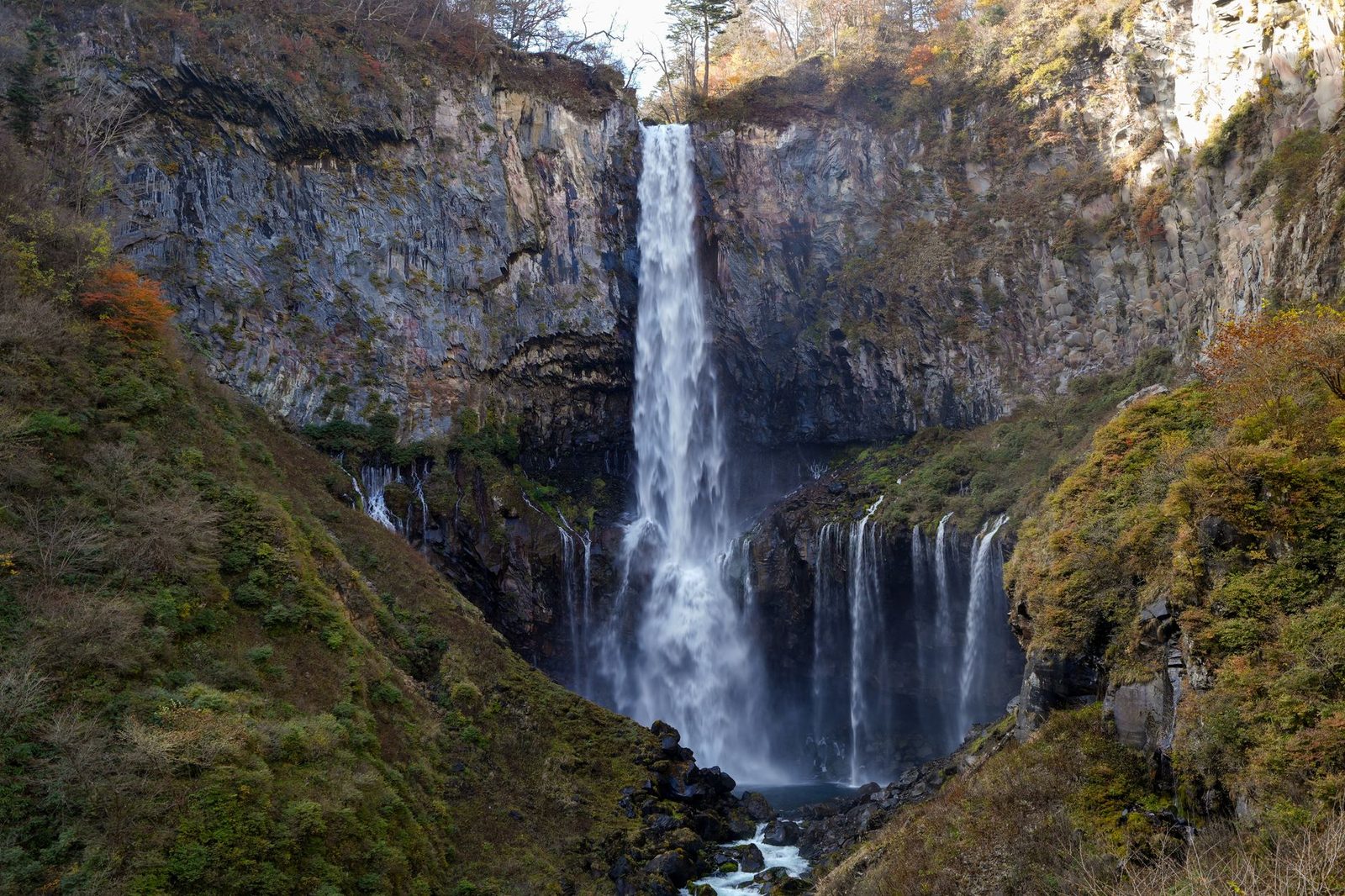
From the Chuzenji Onsen bus stop, it is about a 5-minute walk to Kegon Falls—a nearly 100 m waterfall where the waters of Lake Chuzenji plunge directly over a rocky cliff, considered one of the most beautiful waterfalls in Japan. There are two ways to see it: a free observation deck above, and a paid elevator that takes you down to a viewing platform at the base of the falls. If you choose only one, choose the elevator. Standing at the foot of the waterfall and hearing the water crash against the rock walls amid red and golden foliage feels completely different from viewing it from above. On sunny mornings, the spray sometimes creates a rainbow across the gorge—another reason to arrive early, since the elevator line can stretch to an hour around midday.
Around 10:30–11:45 — Lakeside Walk and an Early Lunch
After leaving the falls, walk back toward the lake. Lake Chuzenji sits between mountain slopes, and on a calm morning its surface is often smooth as glass, reflecting Mount Nantai and the autumn forest along the shore. Take a leisurely walk along the lakeside toward Futarasan Chugushi Shrine—a small shrine right on the water, with a red torii gate standing out against the golden leaves and usually far fewer visitors than the waterfall area.
Around 11 a.m., have an early lunch in the Chuzenji Onsen area. The specialty to try is yuba, the famous tofu skin of the region, which appears in all kinds of dishes: yuba soba, eel rice with yuba, and fried yuba. Eating at 11 a.m. may sound early, but it is deliberate: you avoid the lunch rush and, more importantly, make it down the mountain before the pass starts filling up.
Around 11:45–13:00 — Descend Before the Crowds
Head to the Chuzenji Onsen bus stop and catch a bus back to the station no later than around 12–12:30. This is the firmest deadline in the entire itinerary. Downhill traffic uses Irohazaka Route 1, a separate one-way road for descending vehicles, and around midday it is usually still relatively clear. By mid-afternoon, everyone from the lake starts heading down at once, and a 50-minute bus ride can turn into 2 hours of creeping along. Once you reach the lower area, don’t go all the way to the station. Get off at one of the stops near the temple district—such as Shinkyo or Nishi-Sando. The driver and the electronic displays on the bus will clearly announce them. From there, it is just a few minutes on foot to the entrance of the heritage area.
Around 13:00–15:30 — An Afternoon in the Temple District
Start at Shinkyo Bridge, the vermilion-lacquered wooden bridge spanning the Daiya River and one of Nikko’s most photographed spots, especially when the trees around it turn red. From the bridge, follow the shaded slope lined with ancient cedar trees up to the UNESCO-listed shrine and temple complex.
The centerpiece of the complex is Toshogu, the lavish shrine-mausoleum dedicated to Tokugawa Ieyasu and one of Japan’s most ornate buildings, densely covered in gilded carvings. Don’t miss these highlights: Yomeimon Gate, with hundreds of intricate carvings so elaborate that it was once called “the gate you could look at all day without getting tired”; the carving of the three “see no evil, hear no evil, speak no evil” monkeys on the sacred stable; and the tiny sleeping cat known as Nemuri-neko, guarding the path to the mausoleum. Beyond the carving are more than 200 stone steps leading to Ieyasu’s resting place, and the climb through the old cedar forest is well worth the effort. Admission to Toshogu is not cheap, and there are several combination options, so check the price board at the counter or on the official website before buying.
If you still have the energy and time, visit nearby Futarasan Shrine, which is much quieter, or Rinnoji Temple with its three large Buddhist statues. One important note for autumn: the shrines and temples here usually stop admitting visitors from around late afternoon, around 16:30 depending on the time of year, so don’t leave Toshogu too late. That is also why this itinerary places the temple district in the afternoon instead of trying to squeeze in another lake-area attraction.
Around 15:30–17:00 — A Quiet Corner Before Heading Home
If your legs are still up to it, walk for about 20–30 minutes—or take a local bus—to Kanmangafuchi. This small riverside gorge has dozens of Jizo statues lined up along the path, their red bibs draped over their shoulders as autumn leaves fall around them. The atmosphere is remarkably peaceful compared with the crowds at Toshogu. If you are already tired, the main street from the temple district back toward the station has plenty of cafés, castella bakeries, and souvenir shops where you can spend the rest of the afternoon comfortably.
Evening — Return to Tokyo
Evening limited express trains back to Asakusa generally run between 17:00 and 19:00–20:00. As with the outbound journey, weekend tickets during the autumn foliage season sell out early, so it is best to book your return ticket when you book the outbound one. A departure around 17:00–18:00 works well. You should arrive in Asakusa around 19:00–20:00, in time for a proper dinner in Tokyo instead of eating rice balls on the train.
How to Build in a Realistic Time Buffer
Traffic jams in Nikko during the autumn foliage season are not a risk so much as an almost certain occurrence to some degree. The only question is how much time you leave for them. Based on experience:
- Weekdays: add 20–30 minutes for each direction over the pass. The itinerary above should run quite comfortably.
- Weekends and public holidays during peak season (around the second half of October for the lake area): add 60–90 minutes for the uphill journey if you leave the station after 9 a.m., and the same for the downhill journey if you leave the lake after 14:00. If you follow the itinerary’s timing—up before 9 a.m., down around noon—you will usually add only 15–30 minutes in each direction.
- Cut attractions, not time: if you reach any point in the itinerary more than 1 hour behind schedule, drop an attraction rather than pushing back your descent. Leaving the lake before 12:30 and entering Toshogu before 15:00 are the two deadlines to protect at all costs.
One note for anyone planning to drive: during peak season, private cars get stuck on the same pass as the buses, and parking lots around the lake and waterfall area fill up from mid-morning. Unless you can leave Tokyo before 5 a.m., taking the train and bus is still the easier option to control.
A Shortened Plan When Things Go Wrong
You Miss the Early Train and Arrive at the Station After 10:00
Don’t try to go up to the lake—you will spend half the day on the pass in both directions and have no time or energy left to enjoy anything. Reverse the plan into a complete “lower-area loop”: Shinkyo, Toshogu, Rinnoji, and Futarasan around midday and in the early afternoon, followed by Kanmangafuchi in the late afternoon. In early November, the foliage at the foot of the mountain can be just as beautiful as it is around the lake, and you will have a genuinely relaxed day. Save Lake Chuzenji for another trip on a weekday.
The Bus Gets Completely Stuck on the Way Up
If the bus is moving unusually slowly from the foot of the pass, consider getting off at Akechidaira. The cable car takes just a few minutes and brings you to an observation deck with Kegon Falls, Lake Chuzenji, and the sea of foliage along Irohazaka all in one view—an “abridged version” of the entire upper area. After taking in the scenery, you can catch the next bus to the lake if traffic has eased, or turn around and head back down early to spend the afternoon in the temple district. You will miss the close-up view of Kegon Falls, but you gain a panorama and the entire afternoon—a reasonable trade-off.
You Are Still at the Lake After 13:00
Accept that you will need to skip the inside of Toshogu altogether, since even if you make it down in time, getting in before admission closes will be difficult. Instead, take a relaxed, free walk around the outside: Shinkyo Bridge, the cedar-lined slope leading to the shrine and temple complex, the outer grounds, and Kanmangafuchi. You can experience much of Nikko’s heritage atmosphere from this outer route, and it gives you a reason to come back.
You Miss the Last Limited Express to Tokyo
You do not necessarily have to spend the night at the station. Tobu local trains usually run later, though you will generally need to transfer at Shimo-Imaichi and several other stations along the way, for a total journey of about 3 hours. Another option is to go to JR Nikko Station, take the train to Utsunomiya, and then catch the shinkansen to Tokyo—it is faster but more expensive. Check the last departures for both routes in a train-planning app during the afternoon so you still have a fallback option.
What to Wear and Bring for a Day at Two Elevations
The temperature difference is the easiest thing to underestimate. In late October, when Tokyo may still be a comfortable 18–20 degrees, the temperature around Lake Chuzenji can be just 5–8 degrees in the morning, with wind off the lake biting at your ears. The simple formula is a thermal base layer, a sweater or fleece in the middle, and a windbreaker on top. Wear all three layers at the lake, then remove them gradually as you descend to the temple district. Thin gloves and a scarf will be useful if you plan to spend a long time at the base of the falls. Well-gripping sneakers are enough for the whole day, but remember that the temple district has many stone steps and this itinerary involves a fair amount of walking. Finally, bring a portable charger—taking photos all day uses a lot of battery—and a bottle of water, since the restaurants and shops around the lake can be just as crowded during peak hours as the buses.
Frequently Asked Questions
Is It Better to Go on a Weekday or a Weekend?
If your schedule allows it, a weekday is worth more than all the traffic-avoidance tips in this article combined. Following the same itinerary on a Tuesday or Wednesday, you will almost never have to queue for the Kegon Falls elevator, and the buses should run close to schedule. Weekends are still manageable, but you have to follow the early-up, early-down timing strictly.
When Is the Best Foliage for This Itinerary?
The safest window is around the second half of October: the lake area is at its most vibrant, while the temple district is beginning to change color. In early November, much of the foliage around the lake may already have fallen, but the temple district is often at its peak. In that case, consider spending more time on the lower-area loop. Foliage timing varies from year to year, so check the koyo forecast about a week before your trip.
Can I Use a JR Pass for This Trip?
The Tobu line from Asakusa is not covered by the JR Pass. Pass holders should take the JR route: the shinkansen to Utsunomiya, then the JR Nikko Line to JR Nikko Station. The buses to the lake are operated by Tobu Bus and are not covered by the JR Pass, so you will need to buy a separate ticket or bus pass.
Can Older Parents or Young Children Manage This Itinerary?
Yes, if you trim it down. Keep the lake and Kegon Falls—the elevator makes viewing the falls very easy—skip the longer lakeside walk, and in the temple district stop at the outer courtyard of Toshogu instead of climbing the more than 200 steps to the mausoleum. Anyone prone to motion sickness should take medication before traveling through Irohazaka in both directions.
Should I Stay Overnight Instead of Taking a Day Trip?
If you can arrange it, absolutely. Staying in Chuzenji Onsen lets you see the lake in the early morning and enjoy the area after the day-trippers have left in the evening—two of the best times that visitors on day trips never get to experience. But if you only have one day, the itinerary in this article is the best way to see as much of Nikko as possible without turning the trip into a race.
Should I Cancel If It Rains?
Light rain will not ruin Nikko. Kegon Falls will have more water, the temple district will be quieter, and wet foliage takes on especially deep colors. Consider postponing only in the event of a typhoon or prolonged heavy rain, since visibility from Akechidaira and on the lake can be almost nonexistent, and some bus routes may stop running. Checking Tobu Bus alerts on the morning of your trip is the safest approach.
More from this region — Tokyo & Kanto
View all →
Nikko in Autumn: 2 Days, 1 Night — A Leisurely Okunikko Trip and an Early-Morning Visit to the Shrines
18 min · tips
Nikko in Fall Foliage: Tips for Avoiding Irohazaka Traffic and Realistic Costs
17 min · tips
Nikkō National Park – Golden Shrines Deep in Sacred Mountains
5 min · tips
Soaking in onsen amid Nikko’s autumn leaves: highland Yumoto, riverside Kinugawa
17 min · tips