
Nikko in Autumn: 2 Days, 1 Night — A Leisurely Okunikko Trip and an Early-Morning Visit to the Shrines
A relaxed fall foliage itinerary: spend the first day visiting Ryuzu Falls and Senjogahara, stay overnight by Lake Chuzenji, then explore the shrine district early the next morning while it is still quiet and misty.
Aug 12, 2026·✍️ olablog·⏱ 18 min read
A relaxed fall foliage itinerary: spend the first day visiting Ryuzu Falls and Senjogahara, stay overnight by Lake Chuzenji, then explore the shrine district early the next morning while it is still quiet and misty.
Tap a region to browse articles
If you have ever done Nikko as a day trip from Tokyo during the fall foliage season, you probably remember two things: the beautiful scenery and... the traffic. Irohazaka is famous for its 48 hairpin bends, but on a peak October weekend it can turn into a parking lot stretching for several kilometers. Meanwhile, around 10-11 in the morning, the grounds of Toshogu are packed like a festival, and no matter how you frame your photo, a dozen strangers’ heads somehow end up in it. I learned that lesson the hard way once, and ever since then I have visited Nikko in autumn according to one simple formula: 2 days and 1 night, stay overnight, and reverse the usual itinerary of the crowds.
The formula is simple: head straight to the highlands of Okunikko on the first day — Ryuzu Falls, the Senjogahara Marshland, and Yumoto’s hot springs — where the leaves usually change color several weeks earlier than they do at the foot of the mountains. Spend the night by Lake Chuzenji or in central Nikko. The next morning, while day-trippers are still swaying on trains from Tokyo, you can leisurely stand in front of Toshogu’s gate in the early-morning mist, with the shrine district almost entirely to yourself.
In this article, I’ll walk you through every leg of this itinerary in detail, along with accommodation suggestions for different budgets — from affordable guesthouses near the station to lakeside ryokan with onsen — so you can choose the version that best suits your budget and travel style.
Why Nikko in Autumn Deserves 2 Days and 1 Night
Nikko has one advantage that a day trip cannot fully take advantage of: its dramatic changes in elevation. The shrine district in central Nikko sits at around 600m above sea level, Lake Chuzenji at roughly 1,200m, and Yumoto Onsen at nearly 1,500m. As a result, the fall colors do not arrive all at once but gradually “flow” down from the mountains: Yumoto and Senjogahara are usually at their best from early to mid-October, the area around Lake Chuzenji and Ryuzu Falls turns brilliant from mid to late October, while the lower shrine district often holds its colors until early November. With 2 days and good timing, you may see two different “seasons” of foliage at two different elevations on the same trip.
The second reason is more practical: transportation. During peak season, buses from Nikko Station to Lake Chuzenji via Irohazaka can take twice or three times as long as usual because of traffic, especially from late morning through the afternoon. Day-trippers lose several of the best hours simply sitting on a bus. If you stay overnight, you avoid most of that: head up the mountain early the previous day, then come back down in the late afternoon or the following morning, traveling against the flow of visitors.
And the third reason — also the one I find most worth the money — is the early morning. In autumn, Lake Chuzenji around 6-7 in the morning is often covered by a thin layer of mist hovering over the water, with Mount Nantai reflected on the lake and barely another person in sight. The shrine district is the same when it first opens: rows of ancient cedar trees, the scent of damp moss, and the sound of elderly caretakers sweeping leaves across the grounds. These are experiences day-trippers simply never get to enjoy.
Day 1: Head Up to the Okunikko Highlands
An Early Start and the Climb Up Irohazaka
From Tokyo, the most common option is to take a Tobu train from Asakusa Station to Tobu-Nikko Station; the limited express takes about 2 hours. If you plan to use the buses extensively — and this itinerary definitely does — consider buying a Tobu pass that combines a round-trip train ticket with local buses in the Okunikko area. Pass types and prices change from year to year, so check Tobu’s official website before you go.
The most important tip for the entire day: take the earliest train you can reasonably manage. Arrive at Tobu-Nikko Station before 9 a.m., leave your luggage in the station lockers or send it ahead to your accommodation if they accept luggage deliveries, then immediately board a bus bound for Yumoto Onsen. The bus climbs Irohazaka — the road itself is already a foliage-viewing spot, with maples and oaks filling both sides. Sitting by the window, you will find yourself glued to the scenery outside. Early in the morning, the road is usually still fairly clear; wait until noon to head up and you may end up stuck in a long line of vehicles.
For the day’s route, I recommend going straight to the farthest point, or close to it, first and then working your way back instead of making scattered stops from the bottom upward. The reason is simple: buses heading back toward Lake Chuzenji get increasingly crowded in the late afternoon, so I would rather deal with any “waiting in line for the bus” at the beginning of the day, when it is less stressful.
Ryuzu Falls — A Brilliant Red “Dragon’s Head”
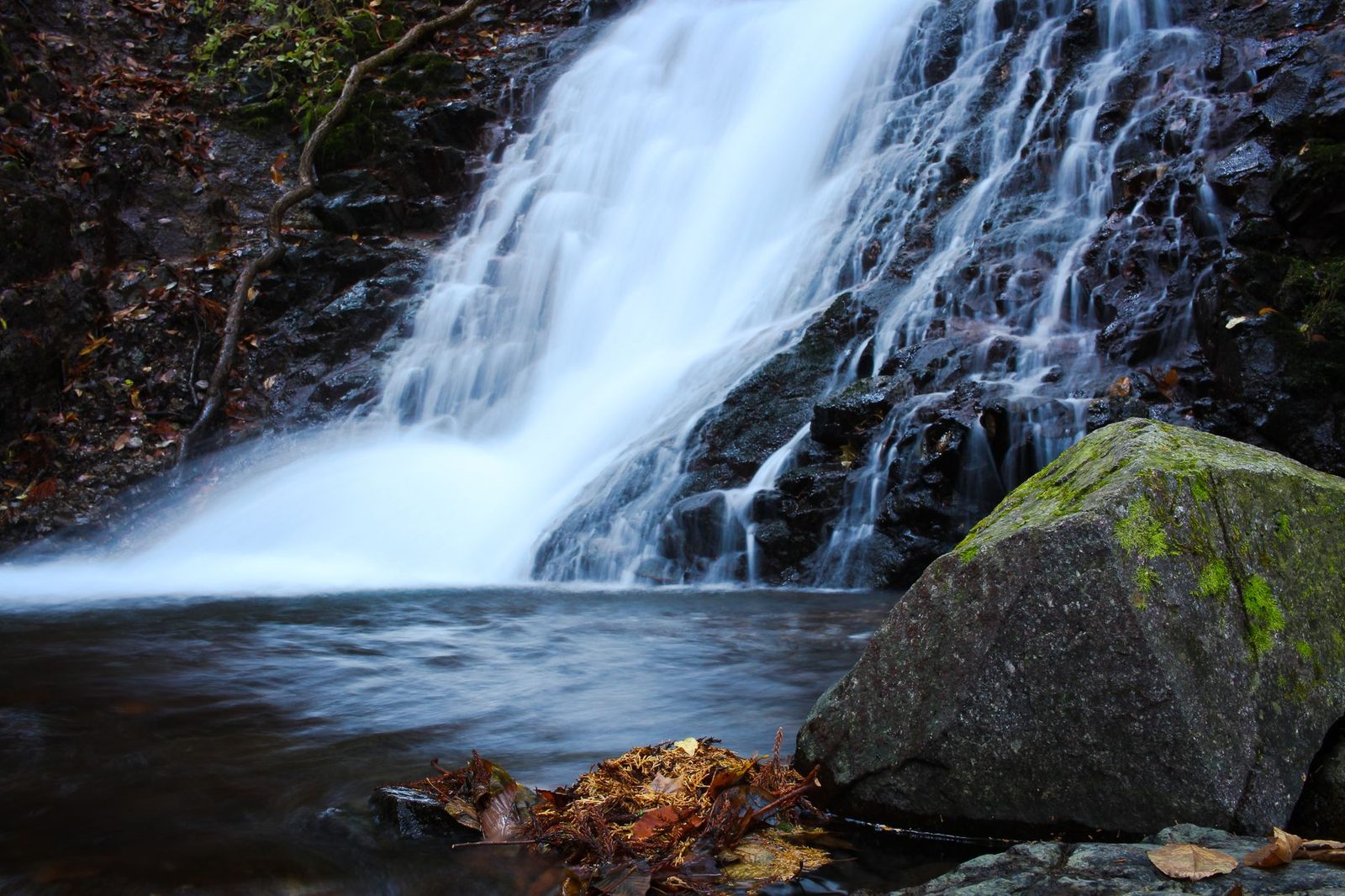
Ryuzu no Taki, or Dragon’s Head Falls, is always at the top of my autumn list. Water from the Yukawa River splits around a large rock before flowing into Lake Chuzenji, and from the front it looks exactly like a dragon opening its mouth. The highlight is the tea shop at the foot of the falls, with a row of seats facing directly toward the “dragon’s face.” Order a bowl of grilled mochi or a cup of tea, settle into one of the seats right by the window, and you will have a waterfall of white rushing water framed by red-orange maple leaves directly in front of you. During peak season, you may have to wait for one of those seats, so arriving early is yet another small victory.
If you still have the energy, do not stop at the base of the falls. A walking path follows the waterfall upstream and takes only around 15-20 minutes. The higher you go, the more beautiful the view becomes as the water slides over the rocks, and the crowds thin out considerably compared with the area around the tea shop.
Senjogahara — Golden Grassland Like a Prairie
From the upper part of Ryuzu Falls, you can continue on foot into the Senjogahara Marshland — this is my favorite section of the entire itinerary. Senjogahara is a vast highland marsh, and in autumn its grasses turn a glossy golden brown, like a prairie, with mountains edged in red foliage in the distance and a sky so blue and high it seems almost unreal. The trail consists of wooden boardwalks crossing the marsh, with very little incline, so anyone with average fitness should manage it comfortably.
The popular route runs from the Ryuzu area across the grassland to the Yudaki-iriguchi bus stop, or continues on to Yudaki Falls. It takes about 2 hours at a relaxed pace, with places to sit and rest along the way. Be sure to dress warmly: at nearly 1,400m, the wind sweeping across the grassland in October can already bite your ears, so a scarf and wool hat will not be excessive. Bring a bottle of water and some snacks, as there are no shops in the middle of the grassland.
If you start late or the weather is poor, a shorter option is to walk just a short stretch from Akanuma Bus Stop to take in the grassland, then turn back and catch the next bus. Even that is enough to understand why this place is so beloved in Japan.
Yumoto Onsen and Lake Yunoko — The Reward at the End of the Day
The final stop of the afternoon is Yumoto Onsen, a small hot-spring village tucked beside Lake Yunoko at an elevation of nearly 1,500m. The onsen water here is cloudy white and sulfurous, with a strong characteristic smell, but you feel wonderfully light after soaking. Onsen enthusiasts rate it highly. You can visit a public bath or ask one of the nearby ryokan about a day-use bath (higaeri onsen). Each property has its own policy on day visitors, so ask directly or check its website.
Before or after your soak, it is well worth taking a walk around Lake Yunoko in the late afternoon. The lake is small and still, the surrounding forest changes color earlier than anywhere else in the area, and there is a spot where exposed hot springs send clouds of steam into the air amid the red leaves — an intensely “Japanese” scene. After your bath, take a bus down toward Lake Chuzenji or central Nikko, depending on where you booked your accommodation. The last bus of the day finishes relatively early, so take a photo of the timetable at the stop as soon as you arrive in Yumoto to avoid being caught off guard.
Where to Stay: By Lake Chuzenji or in Central Nikko?
This is the biggest decision of the trip, and there is no single right answer for everyone.
Stay by Lake Chuzenji — Choose It for the Scenery
Choose Chuzenji if scenery is your top priority. The next morning, you can simply step outside and find the lake wrapped in mist, watch Mount Nantai change color in the early sunlight, and stop by Kegon Falls — Nikko’s most famous waterfall — as soon as the observation area opens, before the first groups from Tokyo have had time to arrive. Seeing Kegon Falls in the quiet of early morning before heading down to visit the shrine district is an exceptionally satisfying order of events.
The trade-off is that the lakeside area is very quiet at night, restaurants close early, and dinner options are limited — many people simply eat at their accommodation. Rooms around the lake are generally more expensive than those in central Nikko, and during peak foliage season, the best places often sell out more than a month in advance, sometimes even earlier.
Stay in Central Nikko — Choose It for Convenience and Savings
Choose central Nikko if you want more affordable accommodation options, greater freedom when choosing dinner, and especially if you want to maximize the advantage of visiting the shrine district early in the morning. From central Nikko, Shinkyo Bridge and the entrance to the shrine district are within walking distance or just a few minutes by bus. The downside is that you will need to take a bus down the mountain via Irohazaka on the afternoon of Day 1. This stretch can still be crowded in the late afternoon, and you will miss the lakeside scenery at sunrise.
Based on my own experience: if it is your first visit, I lean toward staying by Lake Chuzenji to fully enjoy the Okunikko experience. If you are traveling on a tight budget or with someone who dislikes moving around, staying in central Nikko makes more sense.
Accommodation Suggestions by Budget
The prices below are rough estimates for peak season and vary depending on the date and booking platform. Compare several booking sites as well as the property’s official website.
Budget: Guesthouses and Hostels
Central Nikko has quite a few small, family-run guesthouses, offering dorm beds or simple Japanese-style private rooms. Dorm beds usually cost around 3,000-5,000 yen per night, while private rooms are around 6,000-10,000 yen. Many are located between the station and the shrine district, making it very convenient to walk to the shrines in the morning. Another advantage of this type of accommodation is that the owners are often happy to give directions and share daily updates on the foliage. There are far fewer budget options around Lake Chuzenji, but a few small guesthouses and minshuku-style inns are still available if you book early.
Mid-Range: Small Hotels and Minshuku with Dinner
At around 10,000-20,000 yen per person per night, your options open up considerably: small hotels by Lake Chuzenji with rooms overlooking the water, and minshuku serving Japanese-style dinners featuring local specialties such as yuba (tofu skin — one of Nikko’s signature foods) and grilled freshwater trout. Some properties in this price range also have shared mineral baths for guests. If you can upgrade only one thing, I recommend upgrading the dinner: after a cold day of walking in the mountains, a steaming, beautifully prepared kaiseki meal at your accommodation is worth more than any restaurant you would have to search for on a dark evening.
Luxury: Ryokan with Onsen
This is the category that gives the trip its real “character” if your budget allows, generally starting at around 25,000-30,000 yen or more per person, including dinner and breakfast. Three areas are worth considering: ryokan by Lake Chuzenji with rotenburo (open-air baths) overlooking the lake or the autumn forest; ryokan in Yumoto Onsen with its distinctive cloudy white sulfur springs — staying overnight in Yumoto is also an excellent variation on this itinerary, and the nights there are incredibly peaceful; and historic hotels in central Nikko with a classic Western atmosphere, which have hosted royalty and literary figures alike. During the fall foliage season, beautiful ryokan fill up very early — seriously, if you are planning to go in mid- or late October, book 1-2 months in advance.
Day 2: The Shrine District in the Early Morning — A Reward for Staying Overnight
Before Opening: Shinkyo Bridge and the Cedar Forest
Do not sleep in. Wake up early, check out or leave your luggage with the accommodation, and arrive at the area around Shinkyo Bridge — Nikko’s iconic red-lacquered wooden bridge spanning the Daiya River — just as the sky begins to brighten. This is a famously crowded photo spot during the day, but early in the morning you will often have it to yourself, accompanied only by the sound of running water and the red canopy along both banks. The soft, angled morning light is also far more flattering for photos than the harsh midday sun.
From Shinkyo, stroll up the slope toward the shrine district, walking between two rows of towering ancient cedar trees. When mist still clings to the branches and the stone lanterns along the path are damp with moisture, this heritage area is at its most beautiful and sacred — something you cannot buy with a ticket, only with an overnight stay.
Toshogu, Rinnoji, Futarasan, and Taiyuin
The main shrines and temples usually open around 8-9 in the morning, depending on the season (check the official websites for exact hours before you go). My strategy is to enter Toshogu as soon as it opens, since it is the busiest site: the mausoleum of shogun Tokugawa Ieyasu, with the lavishly gilded Yomeimon Gate, the carving of the three wise monkeys — “see no evil, hear no evil, speak no evil” — and the famous sleeping cat. Arrive early and you can stand admiring Yomeimon for several minutes without being pushed along by the crowd.
After Toshogu, depending on your time and energy, visit Rinnoji Temple with its three large Buddha statues, the more subdued Futarasan Shrine, and, if you can choose only one more place, I would pick Taiyuin — the mausoleum of the third shogun, Iemitsu. Taiyuin is much smaller and far less crowded than Toshogu. Its deep, subdued black-and-gold architecture is tucked into the cedar forest, with red leaves scattered across mossy stone steps in autumn. For me, it is the quietest and most beautiful corner of the entire district.
Tickets are sold separately for each temple and shrine, though some combination tickets are available. Prices change, so check the on-site price boards or the official websites.
Noon: Yuba, the Old Streets, and the Journey Home
Around noon, as the day-trip groups begin pouring into the shrine district, it is time to make your graceful exit. Head down to the main street for lunch featuring yuba — from yuba hot pot and yuba soba to hot fried yuba korokke sold at roadside stalls. Browse a few bakeries and craft shops along the street, pick up some souvenirs, then head to the station and catch an afternoon train back to Tokyo. You will arrive before dark, still carrying the scent of onsen on your skin — a lovely way to end 2 days.
A Few Tips for a Smoother Trip
- Timing: for the best of Okunikko, aim for early to mid-October; if you want to balance the highlands with the shrine district, mid- to late October is usually the ideal window. Before finalizing your tickets, check the weekly updated Japanese autumn foliage (kouyou) forecasts on Japanese weather websites.
- Avoid weekends and public holidays if possible. The same itinerary on a Tuesday and a Saturday can feel like two completely different experiences, especially when it comes to buses and finding seats at cafés and restaurants.
- Dress in layers. A difference of nearly 1,000m in elevation means that while central Nikko may feel pleasantly cool, Yumoto can already resemble early winter. A thermal layer, windproof jacket, and light gloves are all useful — having too much is better than not enough.
- Cash is still useful. The tea shop at the foot of the falls, buses, roadside grilled-food stalls... not every place accepts cards or QR payments.
- Book your accommodation in advance, as early as possible during the fall foliage season. This is the part of the plan most likely to “fall apart” if you leave it until the last minute.
Frequently Asked Questions
Which week is best for visiting Nikko in autumn?
There is no fixed answer because the timing varies from year to year, but the general pattern is this: the highlands of Okunikko (Yumoto and Senjogahara) usually peak from early to mid-October, the area around Lake Chuzenji from mid- to late October, and the lower shrine district later, sometimes extending into early November. The safest approach is to follow Japan’s foliage forecasts around 1-2 weeks before your trip and then choose your main stops accordingly.
Can I see both Okunikko and the shrine district in one day without staying overnight?
In theory, yes; in practice, it is exhausting. During peak season, traffic on Irohazaka and the queues for buses alone can eat up several unpredictable hours. If you only have one day, I recommend choosing one or the other: either the shrine district or Okunikko. If you want to do both at a relaxed pace, 2 days and 1 night is practically the only answer.
Is staying by Lake Chuzenji very inconvenient?
It is not inconvenient, just quiet. Restaurants around the lake close early, so it is best to choose accommodation that serves dinner or eat early before returning to your room. In exchange, you get sunrise over the lake and the advantage of visiting Kegon Falls when it is still quiet — in my view, that is an excellent trade-off.
How much should I budget for this 2-day, 1-night trip?
Accommodation is the main variable. A budget version — guesthouse, inexpensive meals, and a train-and-bus pass — can fit within around 20,000-30,000 yen per person, including transportation from Tokyo. For a ryokan with onsen and two meals, the room alone generally starts at around 25,000-30,000 yen or more per person. These figures are only rough guidelines; actual prices vary depending on the season and how far in advance you book.
Can older parents or young children manage this itinerary?
Yes, as long as you shorten the walking sections. You can reduce Senjogahara to a short stretch from Akanuma Bus Stop, or skip the trek and enjoy the scenery at spots near the bus stops instead — Ryuzu, Lake Yunoko, and Yudaki Falls all offer their main views close to the stops. Choose accommodation with an onsen so the whole family can relax in the evening, and prioritize staying in central Nikko to reduce travel on the morning of Day 2.
Do I need to rent a car?
Not necessarily. Tobu buses cover the full route from Nikko Station to Lake Chuzenji, Senjogahara, and Yumoto, with fairly frequent service during peak season. Driving gives you more control over your schedule, but you will still face the same traffic on Irohazaka, along with the added concern of finding parking at crowded sites. If you still want the comfort of a car, consider hiring a car with a driver for the least stressful experience.
More from this region — Tokyo & Kanto
View all →Nikko in Fall Foliage: Tips for Avoiding Irohazaka Traffic and Realistic Costs
17 min · tips
Nikkō National Park – Golden Shrines Deep in Sacred Mountains
5 min · tips
Soaking in onsen amid Nikko’s autumn leaves: highland Yumoto, riverside Kinugawa
17 min · tips
Nikko Private Day Trip by 10-Seat Van
8 min · tips