
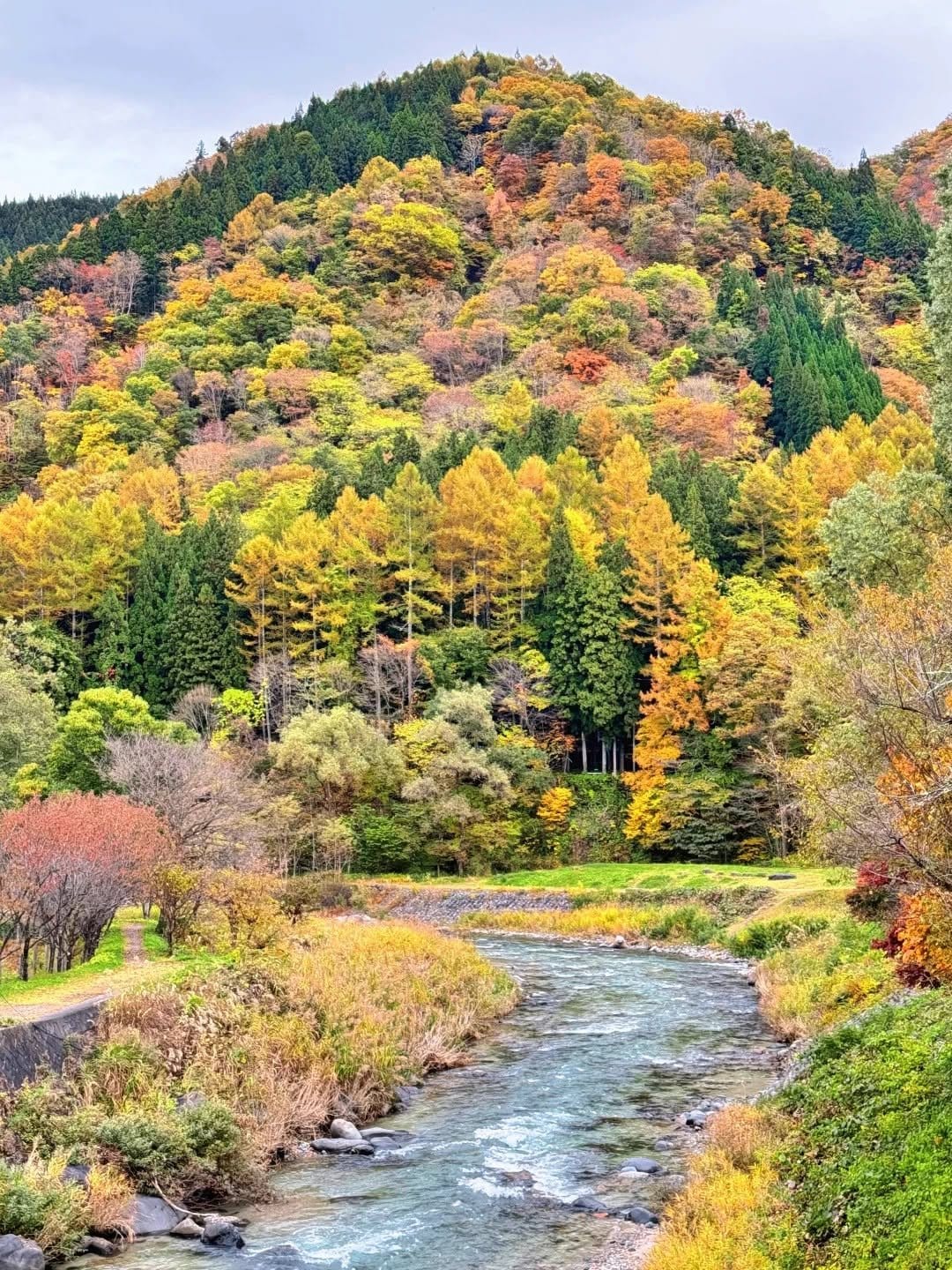
When Nikko’s Autumn Leaves Light Up: An Autumn Evening by Shinkyo Bridge and the Historic Temples
After sunset, the historic temple complex and momiji trees along the Daiya River take on a completely different glow from the daytime — along with tips on choosing the right date, planning your evening, and taking night photos.
Aug 12, 2026·✍️ olablog·⏱ 15 min read
After sunset, the historic temple complex and momiji trees along the Daiya River take on a completely different glow from the daytime — along with tips on choosing the right date, planning your evening, and taking night photos.
Tap a region to browse articles
There’s an ironic truth about Nikko that I only realized after visiting several times: most visitors leave town just as it starts to look its best. Around 4 p.m., the crowds stream out of Toshogu toward the bus terminal, jostling to catch trains back to Tokyo, and the street along the Daiya River gradually empties. If you visit during the autumn foliage season and hurry away too, you’ll miss a completely different version of Nikko — one that only appears after the sky grows fully dark and the lights beneath the momiji canopies begin to glow.
On the first evening I stayed, the scene by Shinkyo Bridge left me standing still for several minutes. The vermilion arched bridge stood out against the deep-dark water, the Daiya River roared below, and on both banks, canopies of red, orange, and yellow leaves were illuminated from below, glowing as if they were lit from within. Shinkyo is beautiful in a postcard-like way during the day; everyone takes a photo and moves on. At night, it has the kind of beauty that makes you want to linger — and the best part is that the area is considerably quieter.
OlaChill has already published an overview of autumn in Nikko, so this article will take a closer look at something many Vietnamese travelers overlook: experiencing Nikko at night during the autumn foliage season — the light-up events around the temples and Shinkyo Bridge, illuminated momiji gardens, how to time your visit each year, how to plan a complete evening, and a few low-light photography tips so you don’t come home with nothing but blurry pictures.
Why stay in Nikko after sunset
Nikko is a classic “day trip from Tokyo” destination, so the town’s rhythm revolves around daytime visitors: temples and shrines typically stop admitting visitors around 16:00–17:00 depending on the season, and restaurants and shops also close early. That’s precisely why the hours after sunset have a rare sense of quiet here—especially for such a famous Japanese tourist destination.
In autumn, that quiet comes with something extra: illumination. Every year around the peak autumn foliage period in central Nikko (usually from late October to mid-November; because the temple area sits at an elevation of around 600m, the leaves change later than in mountainous Oku-Nikko), the city and its temples and shrines organize nighttime illumination events. The scale and name may vary from year to year, but the overall idea is the same: the most beautiful World Heritage structures and momiji canopies are “lit up” for a few brief evenings.
This experience is completely different from viewing the leaves during the day. Light shining upward makes each leaf look almost translucent, deepens the reds, and sets everything dramatically against the pitch-black sky, like a stage set. And because it takes place at night in a chilly mountain town, the whole atmosphere feels more “autumnal” too: your breath turns to mist, your hands stay tucked into your coat pockets, and dry leaves crunch beneath your feet on the slope leading up to the temples.
“Light Up Nikko” — when the entire heritage complex lights up
The most notable event is the illumination commonly known as “Light Up Nikko” (ライトアップ日光), held annually around early November — in recent years, it has often fallen around Culture Day on 3/11 and the nearby weekend. This is one of the rare times each year when nearly the entire “Shrines and Temples of Nikko” World Heritage complex is illuminated at once.
Shinkyo Bridge — the familiar starting point
Shinkyo is almost always the event’s signature landmark. The vermilion wooden bridge spanning the Daiya River, considered one of Japan’s most beautiful bridges, becomes an iconic frame that appears on every poster for autumn in Nikko once it lights up. A major advantage is that the bridge sits right beside the national highway, and viewing it from the sidewalk or the neighboring concrete bridge is free, with no ticket or queue required. This stretch of riverbank also has many large momiji trees, which are illuminated along with the bridge during peak season, creating a ribbon of color along the water.
One small tip from my experience: arrive 20–30 minutes before it gets completely dark. The “blue hour”—when the sky is still deep blue rather than black—is when the bridge and leaves look their best in photos, while seeing the scene shift from afternoon into night right before your eyes is just as rewarding.
Rinnoji, Toshogu, Futarasan, and Taiyuin
From Shinkyo, walk uphill for a few minutes to reach the Sannai area—the main axis of the heritage complex. On event evenings, the sites commonly illuminated include Rinnoji Temple’s Sanbutsudo main hall, Omotesando leading to Toshogu with its avenue of ancient cedars and five-story pagoda, Futarasan Shrine, and the Taiyuin mausoleum area. The illumination range and specially opened areas may differ from year to year—some years only the exteriors and paths are lit, while in others, certain interior areas open in the evening with separate activities—so check that year’s announcements before you go.
Walking through the temple grounds after dark feels very different from visiting during the day. Towering cedar trees disappear into the shadows, while only the shrine gates, carved details, and clusters of momiji are “picked out” of the darkness by the lights. The lighting here is usually warm and deliberate, rather than bright and flashy like commercial illuminations in major cities—you’ll find it closer to a meditative atmosphere than a festival. Some sections are quite dark, so wear comfortable shoes and watch your step on the stone stairs.
Event dates and opening hours by year
This is the part most likely to catch you out, so let me explain it in a little detail:
- Timing: large-scale illumination events around the temple area usually last only a few evenings, often in early November. The exact dates differ each year and are generally announced only a few months in advance on the Nikko tourism association’s website and the official event page. Don’t assume the schedule will match last year’s—some years, it shifts by an entire week.
- Illumination hours: illumination usually begins around dusk (the sun sets quite early in Nikko in early November, around 16:30–16:45) and continues until around 21:00. Hours may differ by site, so check the official website for the year of your visit.
- Admission fees: outdoor areas such as the area around Shinkyo Bridge and the paths in Sannai are generally free to view during the event; specially opened interior areas may charge a separate fee. The exact amount changes each year, so I won’t give a fixed figure here.
- Foliage note: early November is usually when the leaves around the temples are at their most beautiful, but colors depend on the weather each year. Some years, the event takes place when only half the leaves have turned red—in return, you still get the illuminated architecture, which is the main star of this event.
Shoyoen Garden — momiji reflected on the water at night
If your visit doesn’t coincide with the main event dates, don’t be disappointed just yet. During peak autumn foliage, Shoyoen Garden—a strolling-style Japanese garden beside Rinnoji Temple—has often held longer evening illumination periods, typically lasting several weeks around the peak foliage season (roughly late October to mid-November, depending on whether the event is held that year).
Shoyoen is already one of the best places to see momiji in central Nikko during the day: it’s a small garden that takes just 20–30 minutes to walk around, but the maple trees surrounding the pond are exceptionally dense. At night, when the lights come on, the entire canopy of red leaves is reflected in the still water—the kind of scene where you can point your camera almost anywhere and get a great shot. Admission is charged (check Rinnoji Temple’s website or the tourism association before visiting for the fee and whether evening opening is available). For me, if I could choose just one reliable autumn evening spot in Nikko besides Shinkyo Bridge, it would be Shoyoen.
Suggested itinerary for a complete afternoon and evening
The tricky thing about Nikko at night is that everything takes place within a fairly short time window, and evening public transportation is infrequent. Here’s how I usually plan it:
Before sunset (around 14:00–16:30)
Spend the afternoon at places that require daylight: visit Toshogu before it stops admitting visitors (usually around 16:00–17:00 depending on the season, with last admission approximately 30 minutes earlier—check the hours for the month of your visit), or walk along Kanmangafuchi with its riverside rows of Jizo statues. Note that Kanmangafuchi has no lighting and becomes almost pitch-black after dark, so this should definitely be an afternoon activity.
Around 16:00, find a café near the Shinkyo area to rest and charge your phone. There are several pleasant cafés in old wooden houses around here; sitting somewhere warm while waiting for nightfall is a quintessential part of an autumn evening.
Blue hour (around 16:30–17:30)
Head to Shinkyo Bridge before it gets completely dark. Take photos while the sky is still deep blue, then stay to watch the bridge “transition” against the black sky. This is also when the largest number of people come to take photos, but compared with peak-season daytime, it’s still much more manageable.
Evening (from 17:30 onward)
From Shinkyo, walk uphill to the temple area if the illumination event is taking place, or head to Shoyoen if the garden is open in the evening. Take your time—the entire route through Sannai can be covered on foot in just 15–20 minutes, but there’s a worthwhile spot to stop every few steps. Aim to finish around 20:00–20:30 so you still have time for dinner and your train, or return leisurely to your accommodation if you’re staying overnight.
One practical note: restaurants and shops in Nikko close early. Many shut from 19:00–20:00, and some even earlier. If you want a proper dinner (yuba hot pot, soba, and so on), check restaurant hours in advance. You may even want to eat early before viewing the illuminations, then simply grab a hot cup of tea from a konbini afterward.
Low-light photography tips for the night light-up
Nighttime illumination photography is a matter of capturing a “bright subject against a very dark background”—the two most common problems are blown-out highlights in the leaves and blur from camera shake. Here are a few tips that have saved me many times:
With a camera
- Prioritize RAW: the contrast between light and shadow in illuminated scenes is enormous, and RAW files let you recover shadow detail and pull back blown highlights in post-processing.
- Lower exposure compensation (EV -0.7 to -1.3): the camera’s meter sees the dark background and tries to brighten the whole image, which can make the leaves lose their color. Intentionally shoot slightly darker to achieve deeper reds and preserve detail.
- Moderate ISO, wide aperture: when shooting handheld, use f/1.8–f/2.8 and a minimum shutter speed of around 1/60s (or follow the 1/focal-length rule), with Auto ISO capped at a maximum. Modern cameras handle noise well, so don’t be afraid of ISO 3200–6400.
- White balance: lights on the leaves are usually warm; setting WB to around 3500–4500K helps preserve the blue in the sky and keeps the leaves from turning yellow. If you shoot RAW, you can also adjust it later.
- Tripod: a tripod lets you use a lower ISO and longer exposure, but tripods may be restricted or get in the way in crowded areas or temple grounds—check the signs, ask staff if you’re unsure, and never block a walkway. A mini tripod placed on a railing is often a better solution.
With a phone
- Use Night mode and brace your hand against a railing, pillar, or anything else solid—Night mode’s several-second exposure is very sensitive to movement.
- Tap the brightest area to lock exposure, then lower the brightness a little further. This one-tap trick solves 80% of blown-out light-up photos.
- Don’t use digital zoom: move closer instead; digital zoom falls apart quickly in night photos.
- Turn off the flash: it ruins the atmosphere, disturbs people nearby, and won’t illuminate the tree anyway.
A few “survival” principles
Arrive before the lights come on so you can choose your viewpoint. Photograph both close-ups of the foliage and wider shots with architecture as an anchor—night photos consisting only of red leaves get monotonous after a while. And every so often... put the camera away. I once got so absorbed in adjusting settings that I nearly forgot the main point: standing beneath a glowing maple canopy in the cold, with no particular purpose at all.
Getting around, staying warm, and getting back to Tokyo
Evening transportation
From Tobu-Nikko Station or JR Nikko Station, it takes around 25–30 minutes to walk to the Shinkyo Bridge area along the main street, or you can take a bus for a few minutes. Buses become increasingly infrequent in the evening, so if you plan to return by bus, take a photo of the timetable at the stop as soon as you arrive. For trains to Tokyo, Tobu limited express services to Asakusa generally leave Nikko in the evening rather than late at night; taking the JR route via Utsunomiya is a little more flexible, but don’t be overconfident. Check the last service on the day of your visit and set yourself a personal “latest departure from the temple area” time—around 20:30 is a safe benchmark for most train schedules.
It’s colder than you think
Nikko is a mountain town; nighttime temperatures in November can fall to around 0–5 degrees, and standing outside for an hour or two really gets to you. Thermal layers, a scarf, a wool hat, and heat packs (kairo) from a konbini are the standard combination. Touchscreen-compatible gloves are well worth it—taking off your gloves to shoot a few photos in the cold is an experience nobody wants to repeat.
Should you stay overnight?
If your schedule allows, spending one night in Nikko or at the nearby Kinugawa hot-spring area is much more worthwhile than anxiously watching the clock for your train. You can take your time viewing the illuminations until they turn off, then visit Oku-Nikko the next morning or return to the temple area when it’s at its quietest. Rooms sell out early during peak autumn foliage and prices rise a little, so if you plan to visit during the illumination event—whose dates are often announced more than a month in advance—book as soon as you know the schedule.
Frequently asked questions
What exact dates does the Nikko illumination event take place?
There is no fixed date. The major illumination around the temple area usually takes place in early November and lasts only a few evenings; garden illuminations such as Shoyoen (if held) generally run longer, around the peak foliage period. Dates and hours are announced each year on the Nikko tourism association’s website and the official event page—check before booking your train tickets, and don’t rely on the previous year’s schedule.
Does the light-up cost anything?
Viewing Shinkyo Bridge lit up from the roadside is free. Outdoor areas during the event are generally freely accessible, but specially opened interiors of temples and shrines or Shoyoen Garden may charge a separate admission fee. Fees change from year to year, so check that year’s official announcement.
What is there to do in Nikko at night if I miss the event?
It’s still worth staying until evening: in recent years, the Shinkyo Bridge area has often been illuminated at night even outside the event period (check again before you go), the streets have a warm, atmospheric glow, and if Shoyoen holds its autumn illumination, that alone makes for a complete evening. And if everything is closed, a hot yuba meal and an onsen in Kinugawa are hardly a bad ending.
Can I bring a tripod?
On the streets and in public areas around Shinkyo Bridge, it’s generally fine as long as you don’t block the walkway. In temple and shrine grounds and crowded areas, tripods may be restricted depending on the location and time—pay attention to signs and staff instructions. A compact backup option is a mini tripod or bracing your camera against a railing.
Is it suitable for young children or older adults?
Yes, with two considerations: the cold and the darkness. The temple area has many stone steps, and at night the lighting is concentrated on the illuminated sites, so wear shoes with good grip and bring a small flashlight (or use your phone’s flashlight) for the darker connecting sections. The route to view Shinkyo Bridge and take a short walk through the temple area is manageable for most people; just keep warm and don’t try to stay out too late.
More from this region — Tokyo & Kanto
View all →
Five Onsen Towns Near Tokyo and How to Choose Between Them
6 min · experiences
Tokyo's 10 Best Ramen Shops — The Ultimate Bowl-by-Bowl Guide
8 min · food

Golden Gai and Omoide Yokocho: A Shinjuku Bar-Hopping Guide
5 min · food
Sanja Matsuri in Asakusa: Wearing Kimono Among the Mikoshi Crowds
6 min · culture