
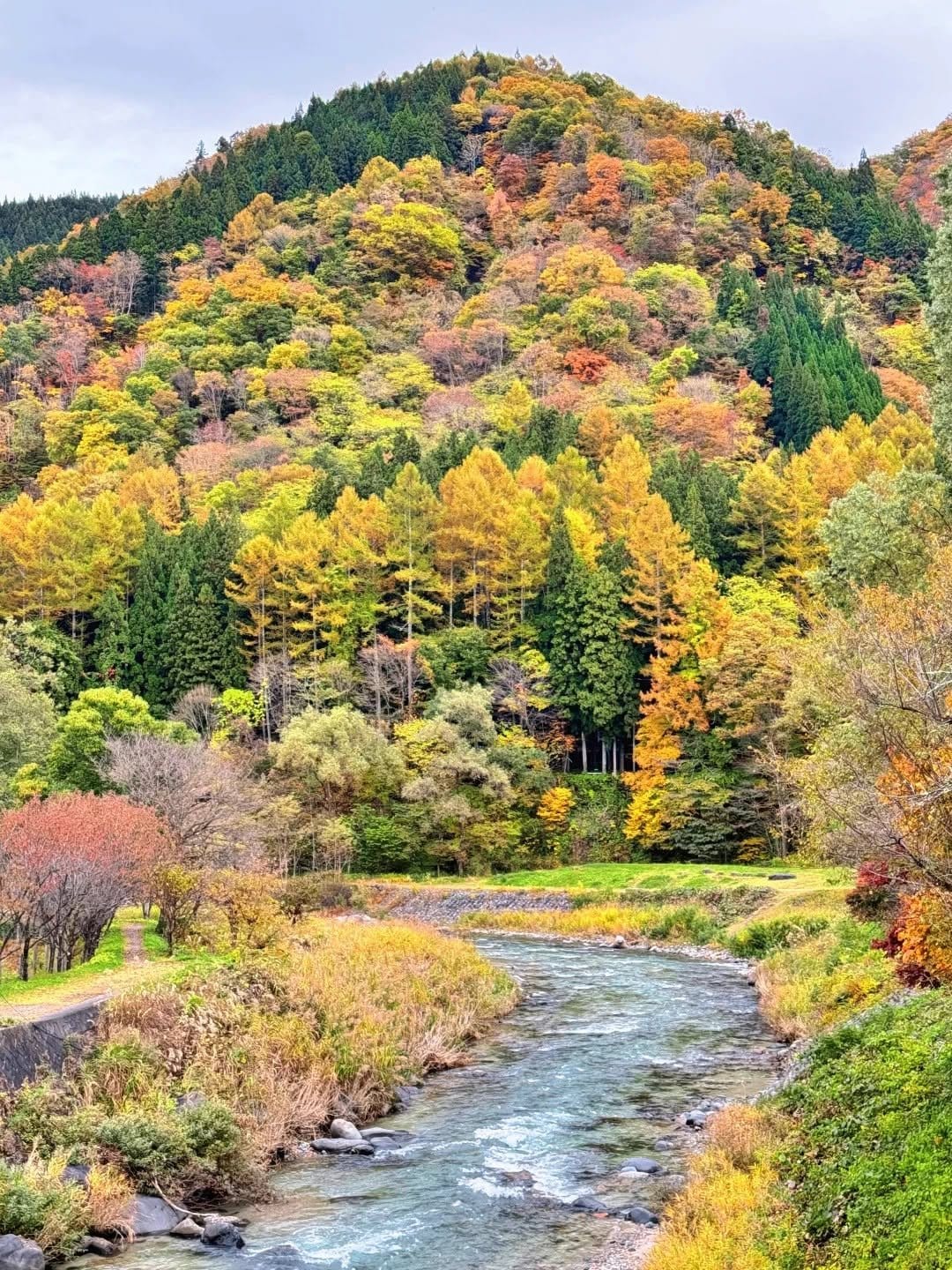
Nikko Autumn Photo-Hunting Map: Where to Stand, What Time to Go, and Which Way the Sun Shines
From the vermilion Shinkyo Bridge to the mirror-still surface of Lake Chuzenji at dawn — practical advice on choosing your composition, golden hours, and quieter time slots for every autumn foliage viewpoint.
Aug 12, 2026·✍️ olablog·⏱ 16 min read
From the vermilion Shinkyo Bridge to the mirror-still surface of Lake Chuzenji at dawn — practical advice on choosing your composition, golden hours, and quieter time slots for every autumn foliage viewpoint.
Tap a region to browse articles
Anyone who has searched for “Nikko in autumn” has seen the same iconic photo: a vermilion bridge arching over jade-green water, with maple leaves blazing on both banks as if someone had just set them alight. But that photo leaves out one detail: at nine o’clock on a day in mid-October, the sidewalk opposite Shinkyo Bridge is usually packed with dozens of people holding up their phones, while traffic on the national highway behind them inches along. You press the shutter, get home, open the photo—and there it is: the bridge, the red leaves, and... a dozen or more other people’s selfie sticks.
I’ve visited Nikko during autumn foliage season several times. On my first trip, I rushed through everything and came home empty-handed in the most literal sense: every photo was backlit, crowded, or taken before the leaves at that particular spot had changed color. Only on later trips did I realize that getting a decent autumn photo in Nikko has less to do with having an expensive camera or getting lucky than with standing in the right place at the right time and knowing which direction the sunlight is coming from.
This is the photo-hunting map I wish I’d had on my first trip: the five best autumn photography spots in Nikko—Shinkyo Bridge, Akechidaira Observatory overlooking the legendary Irohazaka, Kegon Falls, Ryuzu Falls, and Lake Chuzenji in the early morning. For each spot, I’ll explain exactly where to stand, which direction to shoot, when golden hour falls, and which time slots let you take photos without strangers wandering into the frame.
First, understand the foliage calendar: Nikko has two “autumns”
The most important thing—and the biggest trap for first-time visitors—is that Nikko doesn’t have one autumn foliage season, but two. The high-altitude Oku-Nikko area—around Lake Chuzenji, Ryuzu Falls, and Kegon Falls, all at elevations of over a thousand meters—usually changes color early, with peak foliage from early to mid-October. The lower central area—home to Shinkyo Bridge and the temple and shrine complex—usually reaches its peak later, from late October to mid-November.
That means if you visit in early October, you should focus your time on the lake and the two waterfalls. If you go in early November, Shinkyo Bridge becomes the main attraction, while the leaves in the mountains may already have mostly fallen. Visiting during the in-between period—around the third week of October—gives you a chance to catch both layers, but this is also when Nikko is busiest all year. Foliage timing varies from year to year depending on the weather, so before your trip, check the kōyō report on Japanese travel websites or Nikko’s official website and decide which spots to prioritize.
One more piece of honest advice: if you’re serious about photography, spend a night around Chuzenji Onsen instead of making a day trip from Tokyo. Nikko’s best light comes at both ends of the day—when visitors arriving by train from Tokyo haven’t made it yet or have already had to leave. Staying overnight gives you the most valuable thing a photographer can have: sunrise over the lake and frames without anyone else in them.
Shinkyo Bridge: the vermilion icon, photographed before the town wakes up
Shinkyo—meaning “sacred bridge”—crosses the Daiya River at the gateway to Nikko’s temple and shrine district. It is Nikko’s postcard image, and consequently one of the hardest places to photograph without crowds.
Composition
The classic viewpoint isn’t on Shinkyo Bridge itself, but on the modern road bridge right beside it. Stand on that bridge’s sidewalk, point your lens upstream, and include the entire vermilion arch, the jade-green Daiya River below, and the mountain slopes covered in yellow and red leaves behind it. This viewpoint is free and also the most beautiful. Try both landscape and portrait orientations: portrait framing captures more of the water and makes the bridge feel as though it is “floating” between the gorge walls. For a different perspective, walk a few dozen meters downstream along the riverbank and lower your camera close to the water, using the rocks as foreground. Far fewer people take this angle. You can also buy a ticket to step onto Shinkyo Bridge itself (a fee of a few hundred yen), but keep in mind that when you’re standing on the bridge, you can’t photograph... the bridge. That viewpoint is better suited to photographing family or friends standing on it than to photographing the landscape.
Golden hour and the direction of the sun
The bridge sits in a mountain gorge, so sunlight arrives late and disappears early. In the early morning, the entire scene is evenly shaded—the light is soft rather than harsh, perfect for a subdued mood, with the bridge’s red paint standing out against the cool-toned water. Around mid-morning, sunlight begins to slant across the bridge and the maple canopy. This is when the leaves look most fiery, but it is also when the crowds are largest. In the late afternoon, the sun drops toward the upstream end, creating backlighting. The maple leaves seem to glow from within at this time, making it well worth trying if you meter for the leaves.
Quieter times
Before around 8 a.m., the area is almost exclusively used by local residents passing through on their way to work. Tour groups from Tokyo typically begin arriving in mid-morning. After around 16:30, tour groups gradually leave to catch their trains home, giving you another quiet spell before dark. If you can choose only one time, choose the morning: on cold days, the thin mist above the river is something you won’t get in the afternoon.
Akechidaira Observatory: looking down over Irohazaka from above
Irohazaka is a mountain road with 48 hairpin turns connecting Nikko with the Lake Chuzenji area, each turn named after a character from the old Japanese alphabet. In autumn, the entire mountainside around the road becomes a carpet of gold, orange, and red. The best place to take it all in is Akechidaira, a rest stop near the top of the uphill route.
Composition
From the Akechidaira parking area, a short ropeway (round-trip fare of a few hundred to more than a thousand yen; check the official website for current prices) takes you to the observation deck. The view from here is what I consider Nikko’s most “valuable” panorama: Kegon Falls plunging white between the cliffs, Lake Chuzenji peeking out above, and Mount Nantai rising imposingly to one side—all wrapped in a sea of autumn leaves. A wide-angle lens captures the full panorama, but don’t forget a telephoto lens. A 70–200mm lens lets you compress Kegon Falls and the red-leaf-covered cliffs into a wonderfully monumental frame, or turn around and capture Irohazaka’s winding hairpin turns threading through the autumn forest, with streaks of moving cars. Few people explore this angle because most are focused on the waterfall.
Golden hour and the direction of the sun
From the observation deck, you are mainly looking west, which means the morning sun is behind you and illuminates the valley and Kegon Falls from the front, bringing out the foliage in its true colors. As the afternoon progresses, the scene becomes backlit and hazy with moisture, and photos can easily look washed out. On chilly, humid autumn mornings, the valley below may still be covered in a thin layer of cloud. If you catch that “sea of clouds,” keep shooting—those conditions don’t appear every day.
Quieter times
The ropeway usually opens around the beginning of the morning (check the official website for seasonal operating hours). The most important trick here isn’t avoiding people but avoiding... traffic jams. On peak weekends in mid-October, Irohazaka can be gridlocked for hours, and buses become just as stuck as private cars. Visit on a weekday if possible, and get onto the mountain road before 8 a.m. You’ll avoid the traffic and catch the best light at the observatory. If you’re staying overnight near the lake, reverse the order: stopping at Akechidaira in the morning on your way down the mountain is very convenient because the observatory is on the uphill one-way route. Double-check your transportation plan so it matches the direction of traffic.
Kegon Falls: a nearly hundred-meter column of water and a morning rainbow
Kegon is one of Japan’s most famous waterfalls: water from Lake Chuzenji plunges straight down a cliff nearly 100 meters high, surrounded in autumn by an arc of red and yellow leaves that looks like a painting.
Composition
There are two viewpoints. The free upper observation deck gives you a view across the top of the waterfall—beautiful and convenient, but somewhat distant. More worthwhile is the elevator through the mountain (a ticket costing a few hundred yen per person), which takes you to the observation deck at the foot of the falls. From here, the column of water appears in its entirety, towering overhead as spray hits your face. At the lower deck, portrait orientation is almost essential for capturing the waterfall’s full height along with the red leaves around the rim of the gorge. If you can bring a small tripod and an ND filter, try a shutter speed of around half a second to turn the water into silky ribbons. But the observation deck can be quite cramped during peak season, so watch your surroundings, don’t block the walkway with your tripod, and follow any on-site restrictions.
Golden hour and the direction of the sun
Kegon Falls faces east, making the morning the prime time to visit. Early sunlight shines directly onto the column of water, and on clear days, the spray at the base often produces a rainbow. You’re unlikely to see this in the afternoon: from midday onward, the gorge gradually falls into mountain shadow, leaving photos much grayer and flatter. I once stood at the lower deck at just after 9 a.m. on an October day, and a rainbow stretched across the base of the falls for nearly half an hour. Everyone around me forgot they were cold.
Quieter times
The elevator opens from around 8–9 a.m., depending on the season (check the official website before you go). Arrive right at opening time. You’ll avoid the long queues that can form around midday in peak season—on some days, the wait is substantial—and you’ll be there when the light and rainbow are at their best. Two birds with one stone: exactly the kind of reward early risers deserve.
Ryuzu Falls: the “dragon’s head” and Nikko’s earliest-changing maples
Ryuzu means “dragon’s head.” The water slides down the slope before splitting around a large rock at the foot of the falls, resembling two dragon whiskers. This is where the foliage changes color earliest in Nikko, usually reaching its peak from late September to mid-October, while other areas are still green.
Composition
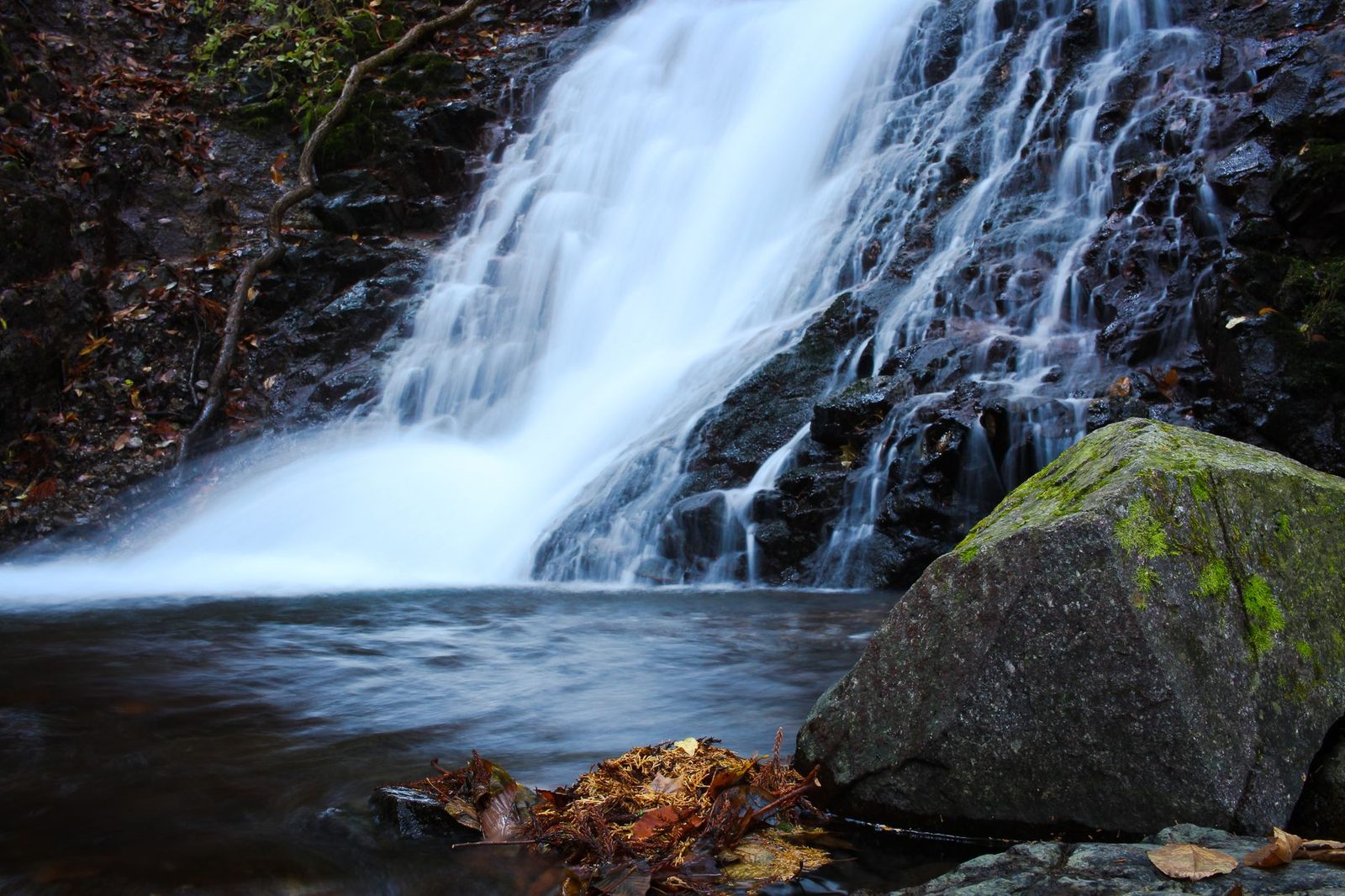
The classic viewpoint is at the observation deck behind the tea house at the foot of the falls. Two white streams embrace the rock, while deep-red maple canopies flare up on either side—a nearly perfect symmetrical composition that requires little thought. A mid-range focal length is sufficient. Stop down for greater depth of field, or slow the shutter slightly to soften the water. Here’s a small tip that everyone who visits seems to share: go into the tea house and order a pot of hot tea or a plate of dango, then sit at the tables by the window. You can photograph the “dragon’s head” composition right from your seat, comfortably and without having to push through the crowd. If you have time, follow the trail upstream along the stream. The long cascade farther up is much quieter and offers plenty of beautiful angles with leaves hanging close to the water.
Golden hour and the direction of the sun
The falls face southeast toward Lake Chuzenji, so morning sunlight falls relatively directly on the water and the maple canopies around the base. Mid-morning is the most comfortable time, after the sun has cleared the mountains to the east. In the afternoon, the light gradually slants across the falls before disappearing, and the base soon falls into shadow. That is when slow shutter speeds work well, since there are no longer bright areas at risk of being blown out.
Quieter times
Ryuzu is right beside the main road, and buses on the Lake Chuzenji–Yumoto route stop nearby, so visitors drop in throughout the day, although it rarely becomes as completely packed as Kegon. Even so, during peak season, people may have to queue for the small observation deck behind the tea house around midday. Before 9 a.m. or after 15:30 are the two quietest periods. On chilly early-autumn mornings, the vapor rising from the stream is also a photographic element you simply can’t get at noon.
Lake Chuzenji at dawn: a reward for staying overnight
If Shinkyo is the postcard, Lake Chuzenji at sunrise is a closely guarded secret—mostly because the majority of visitors simply aren’t there at that hour.
Composition
The lake sits at an elevation of over a thousand meters, and early autumn mornings are often wonderfully still. The water lies flat as a mirror, reflecting Mount Nantai and the autumn forest along the shore. A few worthwhile locations include the boat pier near the Chuzenji Onsen district, where swan boats and the wooden dock make photogenic foreground elements; the southern lakeshore around the former embassy villas, now a memorial park, where you can look back toward Mount Nantai across the water; and, if you have a car, the viewpoint on the Hangetsu mountain road south of the lake, which looks down from above onto the small peninsula in the middle of the lake. This is one of the most photographed autumn scenes in the area. Use a wide-angle lens for mirror-like water scenes and a telephoto lens to “pick out” patches of red forest reflected on the surface.
Golden hour and the direction of the sun
The sun rises behind the eastern mountains, so its light reaches the lake relatively late. During the half hour or so around sunrise, the sky shifts from blue-violet to pink and orange. This is a beautiful time to photograph Mount Nantai in silhouette reflected in the water. Once the sun clears the mountains, the forested slopes on the western side of the lake are illuminated first. If you want Mount Nantai itself to catch the sunlight directly, you have to wait until the afternoon, but by then the wind usually picks up and the mirror surface disappears. On especially cold mornings, mist may hover over the water. If you encounter it, every bit of effort spent getting up early will feel worthwhile.
Quieter times
Before 7 a.m., you’ll have the lakeshore almost entirely to yourself, apart from a few anglers. This is the main reason to stay overnight at Chuzenji Onsen: even the earliest day-trippers from Tokyo generally won’t reach the lake until mid-morning. Dress very warmly—the autumn mornings here are much colder than in Tokyo, and on some days temperatures come close to 0°C. Bring thin gloves so you can still operate your camera.
Putting it all together into a photo-hunting itinerary
If you’re staying overnight near the lake, the ideal rhythm is: sunrise on the shore of Lake Chuzenji, then an early visit to Ryuzu while it’s still quiet, back to Kegon in time for the elevator to open and the morning rainbow, Akechidaira toward the end of the morning while the light is still favorable, then down the mountain and back to Shinkyo Bridge to finish the day in the low late-afternoon sun, after the tour groups have left.
If you’re making a day trip from Tokyo, accept that you’ll have to skip sunrise at the lake. Take the earliest train possible from Asakusa (the Tobu line, around two hours to Nikko), photograph Shinkyo before the streets fill up, then take a bus up to the lake—the whole journey takes close to an hour if there’s no traffic—and visit Kegon, Ryuzu, and Akechidaira in that order on the way back. Weekdays in October are still busy, but manageable. On peak weekends, I’ll be honest: either go extremely early or choose another day.
As for equipment, you don’t need to bring an entire cabinet of lenses. A wide-angle lens, a 70–200mm telephoto, a small ND filter, a compact tripod, and spare batteries (cold weather drains batteries very quickly) are enough for all five locations in this article. And there’s one thing you can’t photograph but that determines the success of the entire outing: warm enough clothing.
Frequently asked questions
When is the best time to see Nikko’s autumn foliage?
The high-altitude areas around Lake Chuzenji, Ryuzu Falls, and Kegon Falls are usually at their best from early to mid-October. Shinkyo Bridge and the lower temple and shrine district peak later, from late October to mid-November. The exact timing varies each year, so check foliage reports on Japanese travel websites about a week before your trip.
Do I need to rent a private car to visit all these spots?
No. Tobu buses run from Nikko Station up to Lake Chuzenji and Yumoto, with stops near all five locations in this article. Regional passes offering unlimited travel can be convenient; check the available pass types and prices on the Tobu website. During peak season, a private car may not be any faster because Irohazaka can be heavily congested on weekends.
Can I photograph all five locations on a day trip from Tokyo?
Yes, if you take an early train and travel on a weekday. But you’ll miss the two most valuable photography windows: sunrise at the lake and Kegon Falls just after the elevator opens. If photography is your priority, staying overnight at Chuzenji Onsen is highly recommended.
How much do these locations cost?
Three activities charge admission: walking onto Shinkyo Bridge, taking the elevator down to the base of Kegon Falls, and riding the Akechidaira ropeway—each costs from a few hundred to more than a thousand yen. The Ryuzu observation deck (at the tea house) and the entire Lake Chuzenji shoreline are free. Prices may change, so check each location’s official website before you go.
How can I keep crowds out of my photos during peak season?
I always follow three principles in Nikko: arrive before 8 a.m. or after 16:00; choose weekdays instead of weekends; and when the main viewpoint is too crowded, move a few dozen meters to a secondary angle—the riverbank below Shinkyo Bridge or the trail above Ryuzu Falls, for example—where 90% of visitors never go. Waiting patiently for a few minutes between tour groups will often give you an unexpected clear window.
More from this region — Tokyo & Kanto
View all →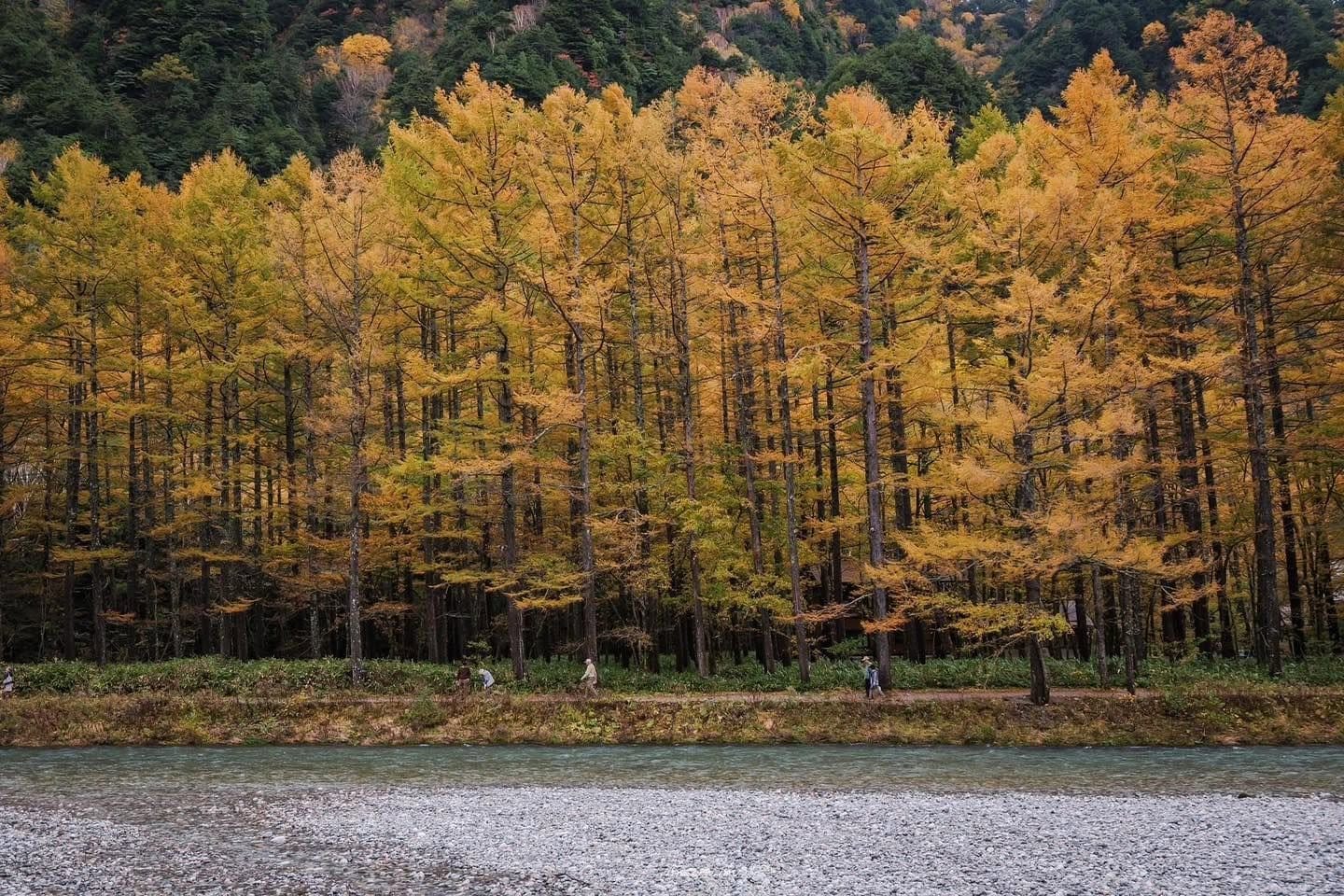
Combining Nikko with Kinugawa and Nasu for a 2–3-day fall foliage route by Tobu train
19 min · tips
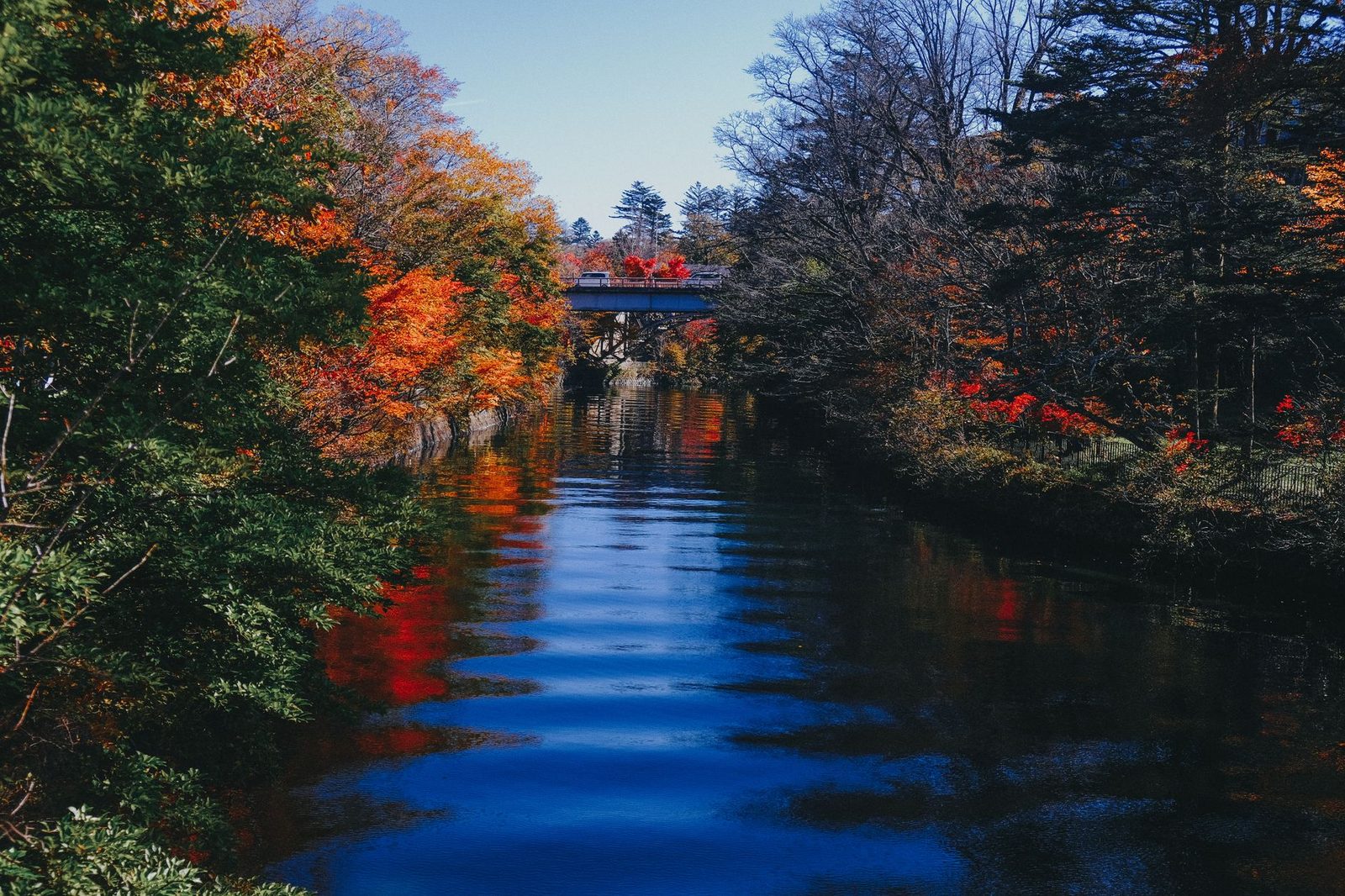
Nikko’s Week-by-Week Fall Color Calendar: From Senjogahara Down to the Historic Shrines
15 min · tips
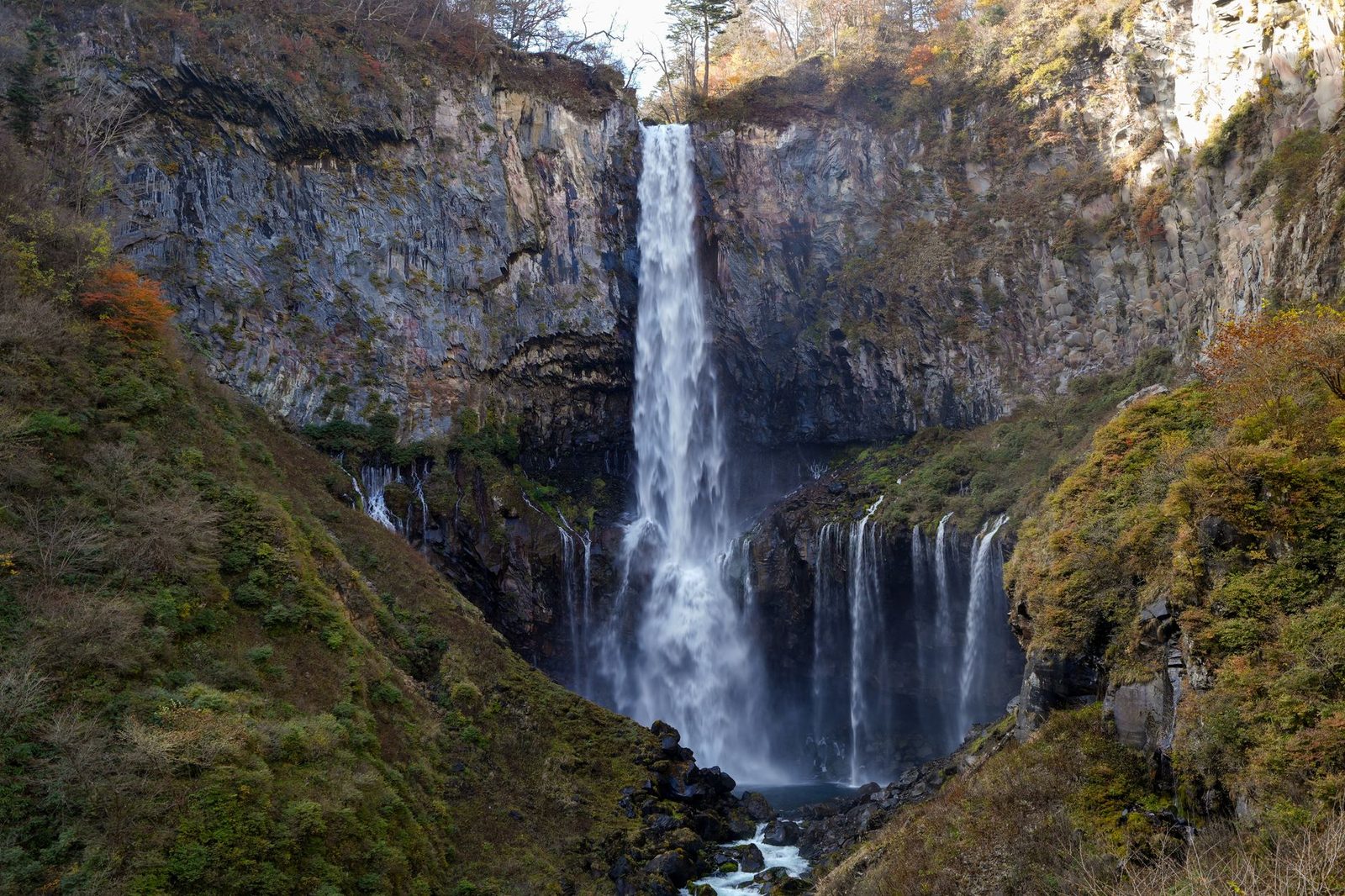
An Autumn Day in Nikko: Get Up Early to Beat Irohazaka
18 min · tips
Nikko in Autumn: 2 Days, 1 Night — A Leisurely Okunikko Trip and an Early-Morning Visit to the Shrines
18 min · tips