Autumn Foliage Around Mount Fuji: Momiji Corridor and Fuji Five Lakes
Your complete guide to autumn foliage around Mount Fuji: Lake Kawaguchi's Momiji Corridor, exploring the Fuji Five Lakes, peak mid-to-late November timing, and scenic onsen recommendations.
Aug 8, 2026·✍️ olablog·⏱ 7 min read
Your complete guide to autumn foliage around Mount Fuji: Lake Kawaguchi's Momiji Corridor, exploring the Fuji Five Lakes, peak mid-to-late November timing, and scenic onsen recommendations.
Tap a region to browse articles
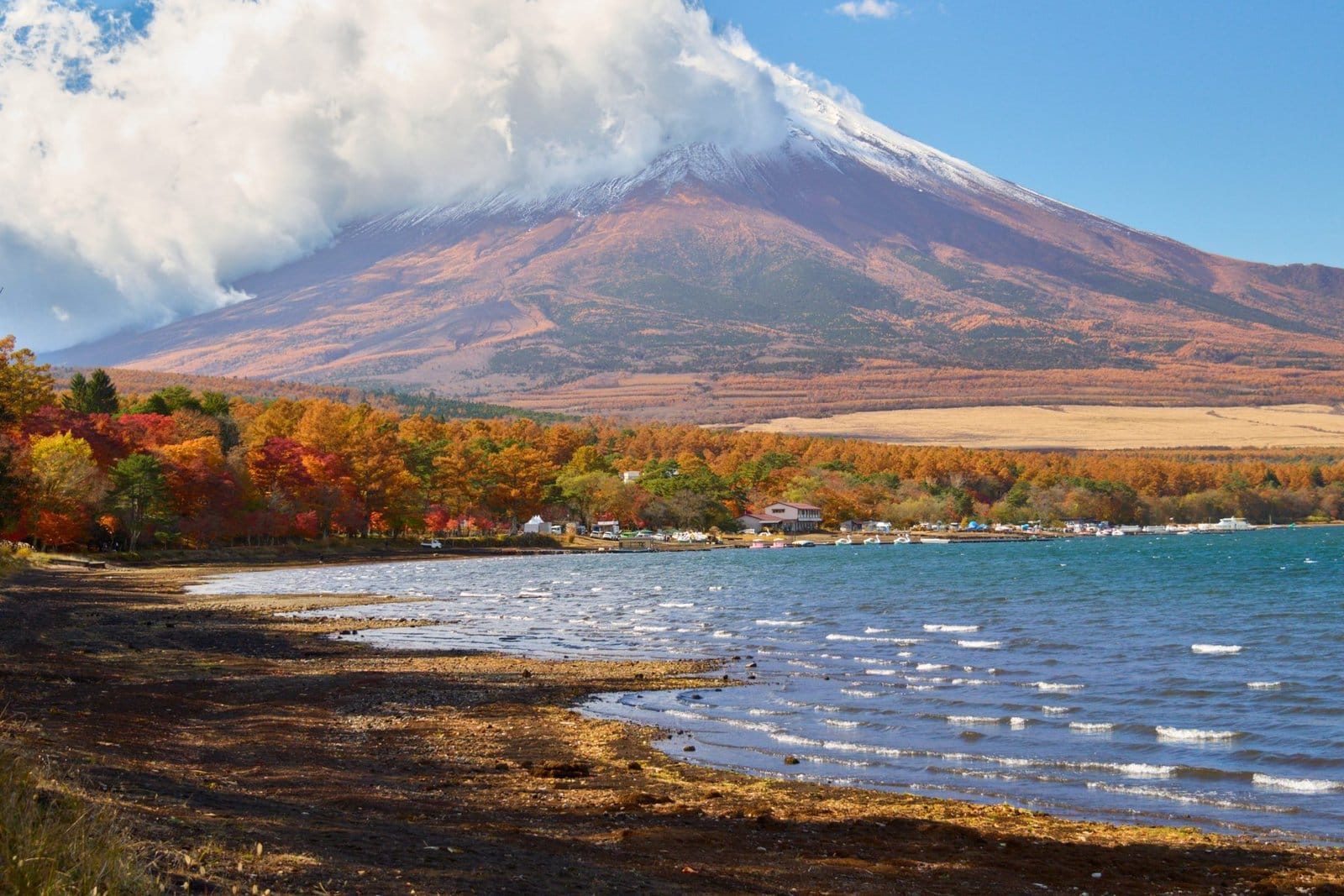
There are many breathtaking spots for autumn foliage in Japan, but only around 富士山(Mount Fuji) can you capture a frame incorporating all three layers of autumn colors: vibrant crimson maple leaves in the foreground, a serene blue lake in the middle, and the sacred peak freshly capped with white snow against the clear sky. The Fuji Five Lakes (富士五湖 / Fujigoko) region—the five bodies of water nestled at the foot of the mountain on the Yamanashi Prefecture (山梨県) side—brings this picture-perfect postcard to life from mid- to late November. This guide details where to go, when to visit, and how to pair your leaf-peeping with an onsen (hot spring) bath for the ultimate autumn Fuji getaway.
Peak Season: Mid- to Late November
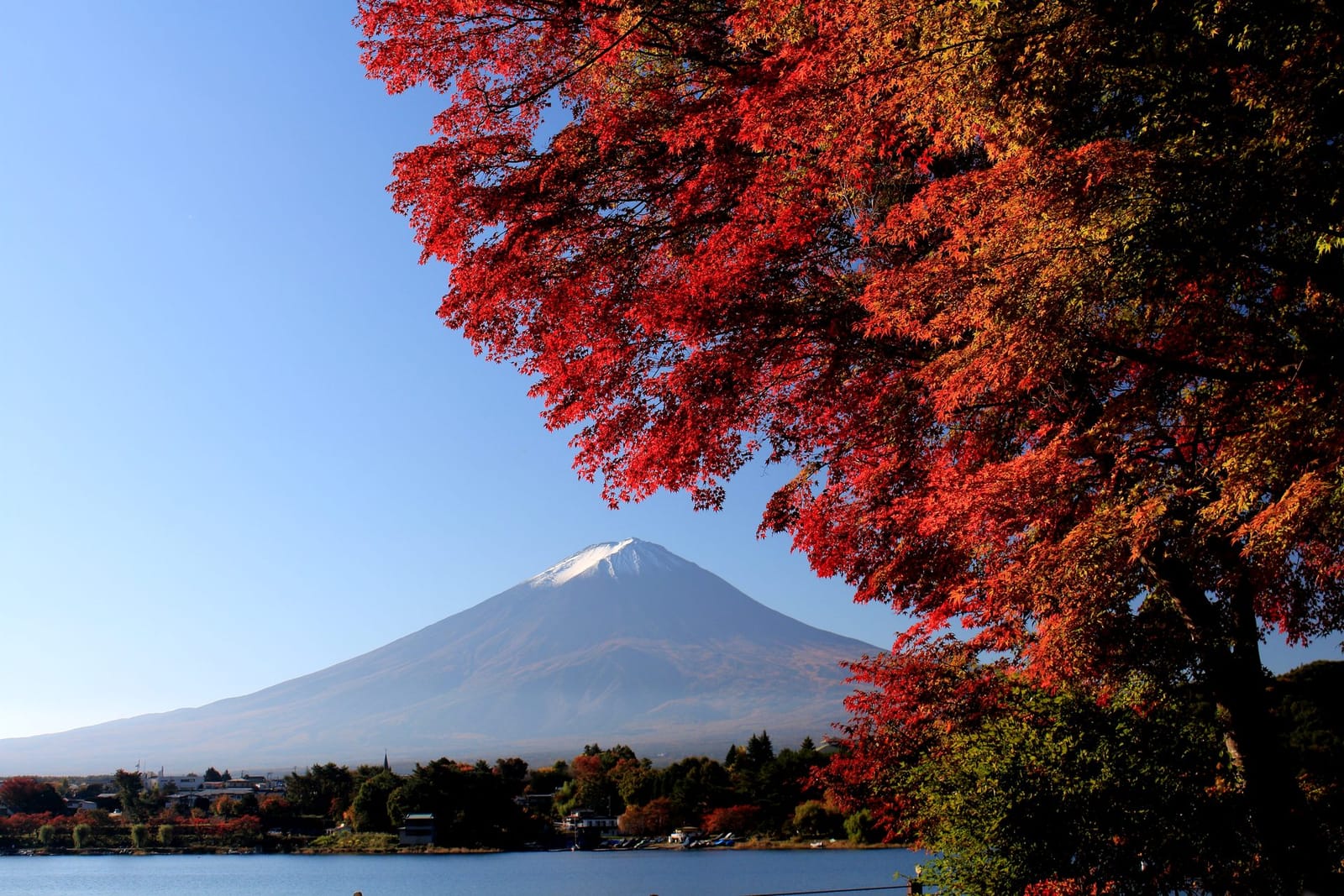
Autumn leaves around Mount Fuji turn later than in northern mountain regions: colors usually begin shifting in early November and reach peak beauty from mid- to late November, with some lower-elevation spots holding onto their vibrant hues through the first week of December. This timing works perfectly for international travelers, allowing you to easily pair a Mount Fuji foliage trip with Tokyo (東京) (where city ginkgo trees also hit their peak golden brilliance in late November) in a single itinerary without having to compromise.
Just as crucial as the foliage timing is mountain visibility. Autumn and winter offer the best weather for spotting Mount Fuji, thanks to the crisp, dry air; your highest probability of catching clear views is early in the morning before 9:00 AM–10:00 AM, before midday clouds gather around the summit. Therefore, the gold-standard recommendation is to stay overnight in Kawaguchiko instead of doing a day trip, ensuring you get a full, clear morning by the lake.
Momiji Corridor: Lake Kawaguchi's Maple Canopy
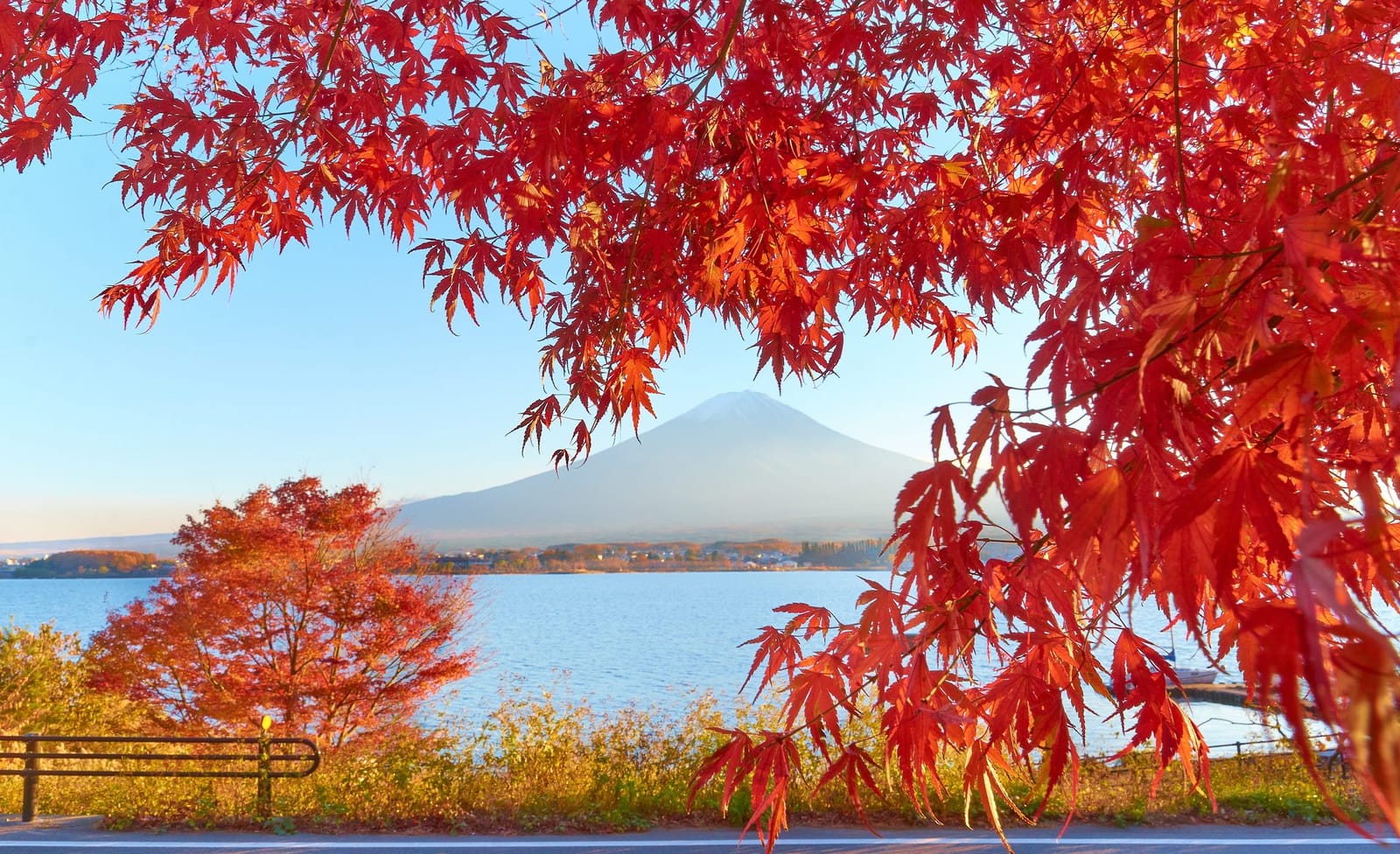
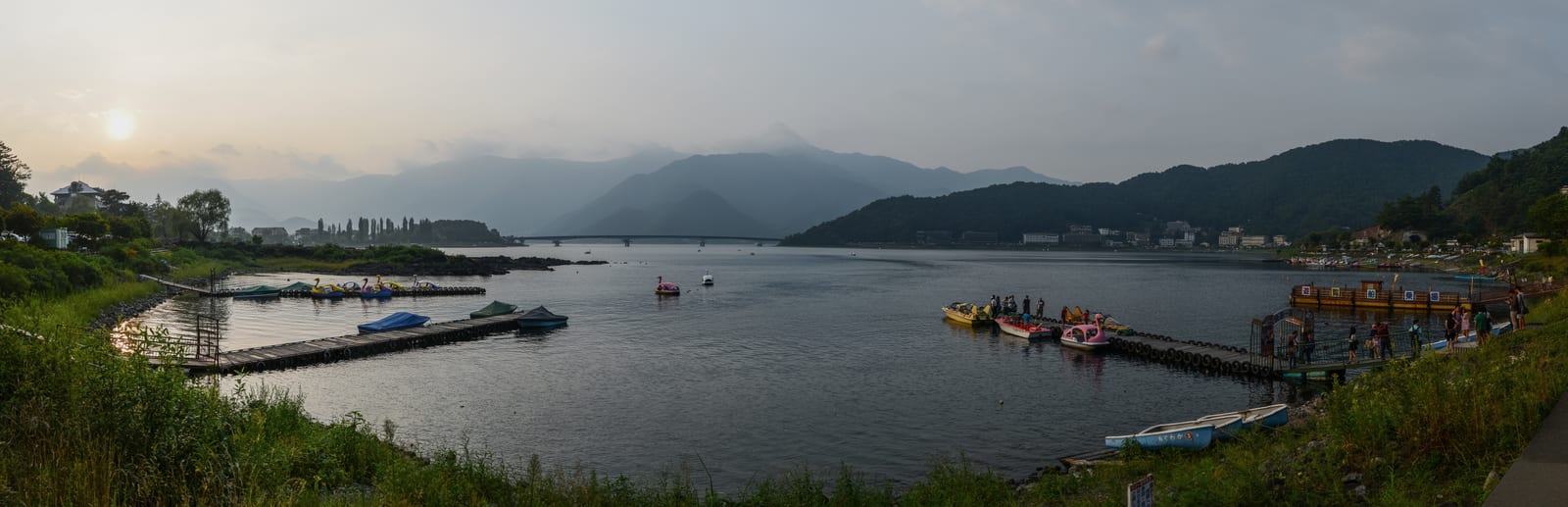
The star attraction of autumn at Mount Fuji is the Momiji Kairo (もみじ回廊 / Maple Corridor) on the northern shore of Lake Kawaguchi (河口湖 / Lake Kawaguchiko): a scenic walking canal lined with ancient maple trees whose branches arch over to form an endless red-and-orange tunnel. This serves as the centerpiece for the Fuji-Kawaguchiko Autumn Leaves Festival, usually running from the end of the first week of November through late November. During the day, local food stalls and craft vendors line the path, while at night, the maples are illuminated until approximately 10:00 PM, transforming the entire corridor into a glowing tunnel of fire—a spectacle well worth staying overnight to experience.
Photo tip: Standing on the north shore near the Momiji Corridor lets you frame the vibrant maple leaves, the lake surface, and Mount Fuji all in one shot. On calm, windless early mornings, you might even capture "Reverse Fuji" (逆さ富士 / Sakasa Fuji)—the pristine mirror reflection of the mountain glistening on the water.
Touring the Fuji Five Lakes: Unique Charm at Every Stop
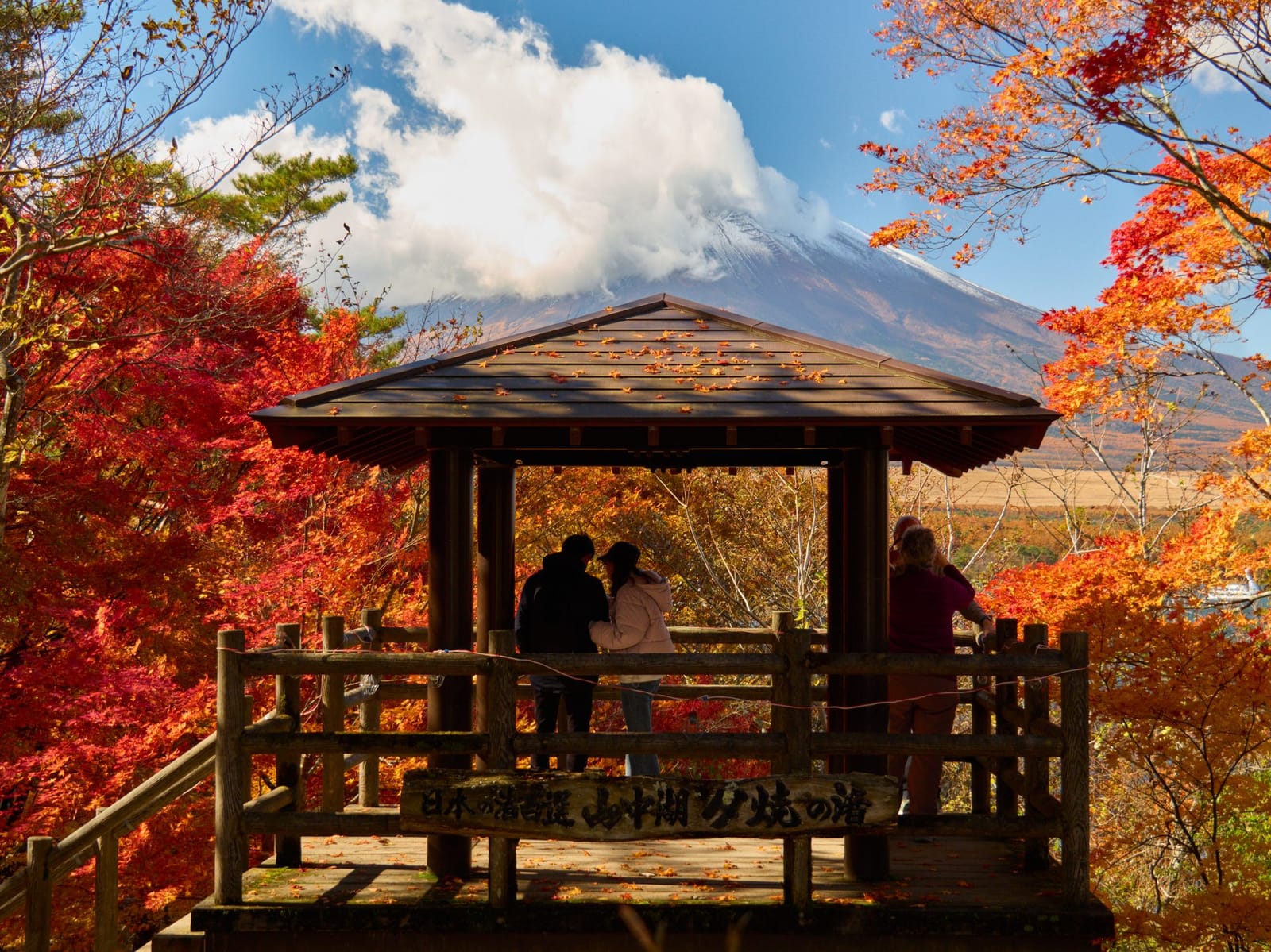
Beyond Kawaguchi, the remaining four lakes are each worth exploring if you have a full day or two:
- Lake Yamanaka (山中湖 / Lake Yamanakako) – The largest lake features its own "maple avenue," Momiji-no-Kairo in the Asahigaoka (旭日丘) area, which is also illuminated at night during the festival; the northern shore offers a wide-open view of Mount Fuji.
- Lake Saiko (西湖 / Lake Saiko) – Noticeably quieter, located near the restored traditional village of Saiko Iyashi-no-Sato Nenba (西湖いやしの里根場) with thatched-roof cottages set against bright autumn foliage, giving off an authentic "Old Japan" vibe.
- Lake Shoji (精進湖 / Lake Shojiko) – The smallest and most untouched, favored by photographers for unobstructed views of Mount Fuji free from commercial buildings.
- Lake Motosu (本栖湖 / Lake Motosuko) – Famous as the iconic view depicted on the back of the ¥1,000 note; home to the clearest waters among all five lakes.
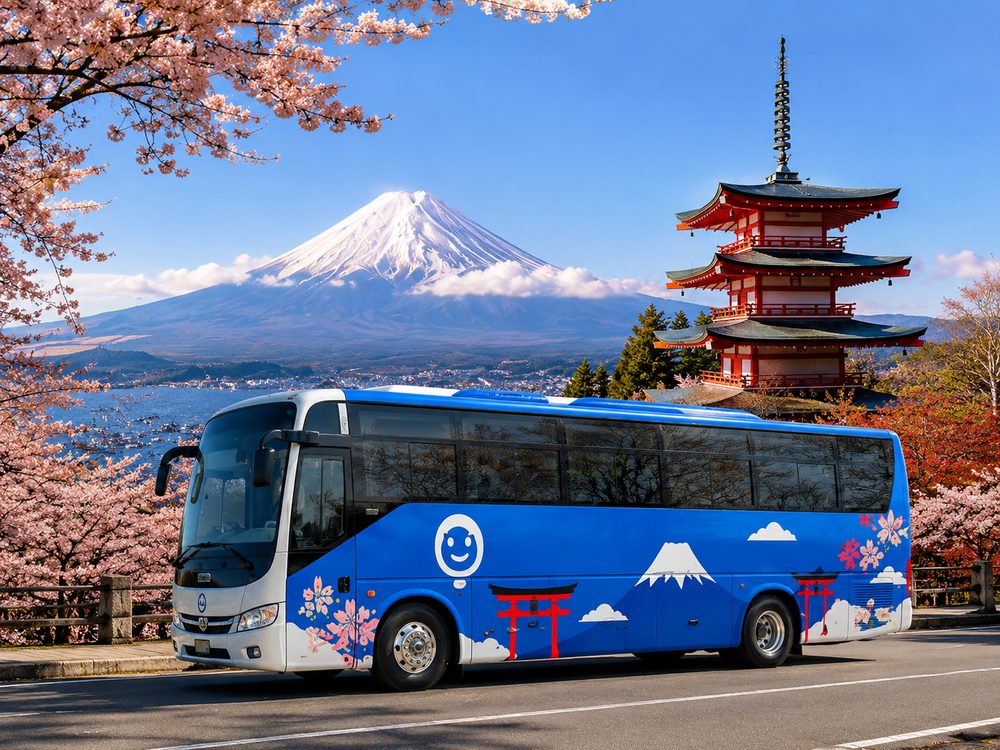
Nearby, do not miss the iconic Chureito Pagoda (忠霊塔 / Chureito Pagoda) in Arakurayama Sengen Park (新倉山浅間公園), located near Shimoyoshida Station (下吉田駅 / Shimoyoshida Station). Here, you can frame the red five-story pagoda, fiery maples, and Mount Fuji in a single shot—making it the classic postcard image of autumn in Japan. Climb the ~400 steps early in the morning to beat the crowds and secure a clear view of the mountain.
Getting Around: Express Buses and Regional Passes
From Tokyo, the most convenient option is a direct highway bus from Shinjuku Station (新宿駅), Tokyo Station (東京駅), or Shibuya Station (渋谷駅) straight to Kawaguchiko Station (河口湖駅). The trip takes about 2 hours and costs around ¥2,000–¥2,400 (approx. $13–$16 USD) one-way—be sure to book a few days in advance during peak autumn foliage season as seats sell out quickly. If traveling by train, take the JR line (covered by JR Pass where applicable) to Otsuki Station (大月駅) and transfer to the Fujikyu Railway (富士急行) line to Kawaguchiko, taking about 2.5 hours total. Tap your Suica or Pasmo IC card for easy train transit across local operators.
Once in the area, purchase an unlimited regional sightseeing bus pass (around ¥1,500–¥1,800 or $10–$12 USD for a 2-day pass), which covers the Red Line, Green Line, and Blue Line connecting almost all key spots around the lakes. For ultimate flexibility, you can rent a bicycle along the Lake Kawaguchi shore or rent a car—just remember to factor in potential traffic delays on peak autumn weekends.
Elevate Your Stay: Hot Springs with Mount Fuji Views
What elevates a Mount Fuji foliage trip to the next level is soaking in an onsen (hot spring) with direct views of the mountain. The Kawaguchiko area boasts numerous ryokan (traditional Japanese inns) where you can look directly across the lake at Mount Fuji from an open-air bath (rotenburo). On a crisp autumn morning, soaking as steam rises into the cool air with snow-capped Mount Fuji and brilliant red leaves in front of you is an unforgettable experience. Mid-range ryokan including traditional kaiseki dinners and breakfast usually run around ¥20,000–¥40,000 (approx. $133–$267 USD) per person during peak season; Western-style hotels with communal hot spring baths offer more budget-friendly rates around ¥10,000–¥18,000 (approx. $67–$120 USD).
If you aren't staying overnight, many local bathhouses and ryokan welcome day-use bathers (higaeri onsen) for about ¥1,000–¥2,500 (approx. $7–$17 USD)—a perfect 1-hour relaxing soak in the afternoon before catching your bus back to Tokyo. General Japanese onsen etiquette applies: wash thoroughly before entering the bath, and check tattoo policies ahead of time if you have ink.
Recommended 2-Day, 1-Night Itinerary
- Day 1: Take an early bus from Shinjuku, arriving at Kawaguchiko before noon; spend the afternoon visiting Chureito Pagoda or strolling along the lake's northern shore; in the evening, view the Momiji Corridor light-up event and check into an onsen ryokan overnight.
- Day 2: Wake up early to catch Mount Fuji at sunrise and photograph "Reverse Fuji"; spend the rest of the day exploring Lake Saiko and Iyashi-no-Sato village or head over to Lake Yamanaka; enjoy one last late-afternoon onsen bath before taking the bus back to Tokyo.
Joining a guided day tour from Tokyo is also a practical choice if you are short on time—November Fuji autumn tours typically bundle Chureito Pagoda, Lake Kawaguchi, and top mountain viewpoints into a single streamlined day; learn more on our Japan Tours page at OlaChill.
Autumn foliage around Mount Fuji is the kind of natural beauty that doesn't demand perfect sunrises or extraordinary luck—all you need is to visit during the second half of November, commit to waking up early one morning, and stay overnight by the lake. Nature will take care of the rest. We hope you capture your own dream shot of Mount Fuji, the sparkling lake, and fiery maples. If you need more inspiration for this year's koyo (autumn foliage) season, feel free to explore our other seasonal articles on the OlaChill Blog.