
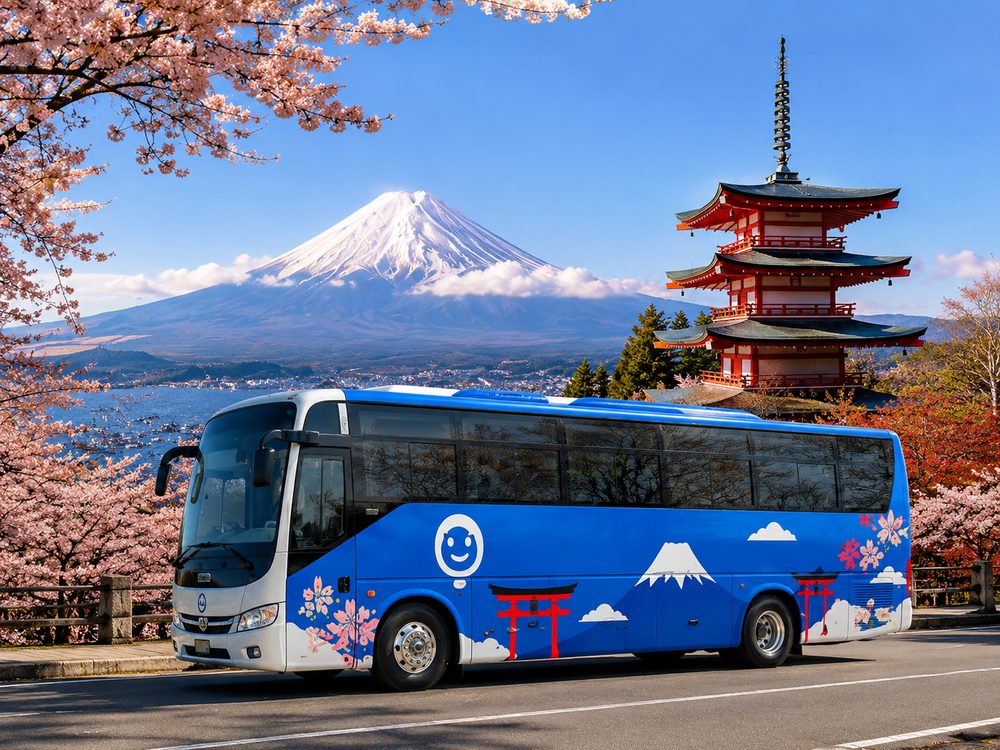
A Smooth Tokyo–Mt. Fuji–Kawaguchiko Day Trip for Groups
Plan a comfortable group day from Tokyo to Mt. Fuji, Lake Kawaguchiko, Oshino Hakkai, and the Fifth Station by private coach.
Aug 21, 2026·✍️ olablog·⏱ 8 min read
Plan a comfortable group day from Tokyo to Mt. Fuji, Lake Kawaguchiko, Oshino Hakkai, and the Fifth Station by private coach.
Tap a region to browse articles
Your group day at Mt. Fuji
A Tokyo–Mt. Fuji day trip sounds simple on a map. In practice, a large group must coordinate hotel pickups, luggage, meals, sightseeing time, parking, and the return journey through Tokyo traffic. Add changing mountain weather and popular viewpoints, and a private coach becomes more than a convenience—it is the most practical way to keep the day together.
This route is designed for groups travelling in a 45–50-seat full-size coach. It combines three classic Fuji-area stops:
- Mt. Fuji Fifth Station, for a close mountain perspective when access and weather allow
- Lake Kawaguchiko, for lakeside scenery and iconic Fuji views
- Oshino Hakkai, a traditional village area known for clear spring ponds and views of the mountain
The best itinerary is not simply about visiting every stop. It is about choosing the right order, leaving Tokyo early, and allowing enough flexibility for clouds, traffic, and the pace of your group.
Recommended route from Tokyo
A comfortable day usually begins with an early morning pickup from a hotel, office, or agreed meeting point in Tokyo. Your licensed Japanese operator can follow a planned route while your group relaxes on board.
A typical sequence is:
- Tokyo pickup
- Mt. Fuji Fifth Station, if the road is open and conditions are suitable
- Lake Kawaguchiko
- Oshino Hakkai
- Return to Tokyo
The exact order can change. If the forecast suggests clearer mountain views early in the day, the coach may head directly toward the Fuji area. If Fifth Station access is restricted or visibility is poor, spending more time around the lake and village can create a better overall experience.
Travel times vary considerably with your Tokyo pickup location, traffic, season, road conditions, and the length of each stop. A full-day charter gives the driver and group leader room to adjust instead of forcing everyone to follow a fixed public transport timetable.
Why a full-size coach works well
A 45–50-seat coach is particularly useful for school groups, company trips, wedding parties, tour groups, and large families travelling together.
Benefits include:
- One vehicle for the entire group
- Comfortable seating during the longer road sections
- A professional driver familiar with Japanese roads and local access rules
- Space for day bags and personal belongings
- Easier headcounts at every stop
- Convenient pickup and drop-off at an agreed location
- No need to divide the group across several trains, buses, or taxis
Large coaches also make communication easier. Your tour leader can give one departure time and one meeting point, while passengers avoid the stress of navigating transfers in unfamiliar areas.
The three essential stops
Mt. Fuji Fifth Station
The Fifth Station is one of the closest road-accessible viewpoints on Mt. Fuji. It offers mountain scenery, souvenir shops, cafés, and a distinctly alpine atmosphere. On a clear day, the views can be impressive; on a cloudy day, the summit may disappear completely.
Access is not guaranteed throughout the year. Weather, snow, road maintenance, congestion, or local traffic controls can affect whether a coach can reach the station. Your operator can confirm conditions on the day and suggest a suitable alternative if necessary.
Because the mountain can be colder and windier than Tokyo, advise passengers to bring an extra layer even during a mild season. Comfortable shoes are also recommended, as the area includes sloped and uneven surfaces.
Lake Kawaguchiko
Lake Kawaguchiko is the scenic heart of the route. The lakeshore offers open views, seasonal landscapes, cafés, and photo opportunities from different angles. It is a good place to slow down after the drive toward the mountain.
The lake works well for groups because passengers can spread out without losing the main meeting point. Depending on the season and your schedule, your itinerary may include a lakeside walk, a viewpoint, a ropeway area, or time for lunch nearby.
Fuji visibility is often best earlier in the day, but the mountain can appear and disappear quickly. Do not plan the whole experience around one photograph. A private coach allows your group to move to another viewpoint when local conditions change.
Oshino Hakkai
Oshino Hakkai has a different character from the lakeside area. Its traditional houses, clear spring ponds, small shops, and rural scenery provide a taste of old-fashioned Fuji-region Japan.
This stop is ideal for groups that want local atmosphere as well as landscape photography. It is also a practical place to browse regional snacks and souvenirs. The pathways can become busy, so a clear meeting point and departure time are important.
Oshino Hakkai is usually best enjoyed at a relaxed pace. Allow time for passengers to walk between the ponds, take photographs, and regroup before boarding the coach.
Choosing the best time to avoid clouds
No itinerary can guarantee a cloud-free view of Mt. Fuji. The mountain creates its own weather, and visibility can change even within the same morning. However, several planning choices can improve your chances.
- Start early from Tokyo. Morning departures often provide the best opportunity before clouds build around the mountain.
- Check the forecast shortly before travel. Use the forecast as a guide, not a promise.
- Keep the route flexible. If the summit is hidden at Fifth Station, the lake may offer a different view later—or the reverse.
- Avoid overloading the schedule. Too many stops create pressure and reduce your ability to wait for a brief clear spell.
- Plan around daylight. Seasonal daylight changes affect photography, walking, and the return journey.
- Allow for weekend and seasonal congestion. Road traffic near popular viewpoints can alter the timetable.
Every spring, autumn, and winter trip has a different balance of weather and scenery. Mid-November to early December is often attractive for autumn colour, while other seasons may offer greener landscapes, snow views, or spring flowers. The most suitable route depends on your group’s priorities and travel date.
Suggested planning balance
Use this guide when discussing the route with your group leader. It is a planning framework rather than a fixed timetable.
| Stop | Best for | Suggested planning approach | Important note |
|---|---|---|---|
| Mt. Fuji Fifth Station | Close mountain atmosphere and elevated views | Visit early when access and visibility are favourable | Road access may change with weather or traffic controls |
| Lake Kawaguchiko | Lakeside scenery, photography, and lunch | Allow flexible time for viewpoints and a relaxed break | Fuji may be hidden by clouds at any time |
| Oshino Hakkai | Traditional scenery, spring ponds, and local snacks | Set a clear meeting point before passengers explore | Paths can be busy, especially during popular travel periods |
Budgeting for a private coach
The cost of a Tokyo–Fuji group charter depends on the coach size, travel date, pickup area, route length, operating hours, tolls, parking, and any special requirements.
A 45-seat coach is ¥99,000 for the 10-hour day (60 seats ¥129,000), plus expressway tolls and parking. Seasonal demand, extended operating hours, additional stops, and pickup or drop-off arrangements can change the final amount.
The exact quote comes from the booking form. When requesting a quotation, include:
- Number of passengers
- Preferred travel date
- Tokyo pickup and drop-off locations
- Desired stops
- Approximate departure and return times
- Luggage requirements
- Accessibility or child-seat needs
- Any meal, guide, or special arrangements
Providing complete information helps the operator recommend a realistic route and vehicle.
Make the day comfortable for everyone
Before departure, share a simple itinerary with all passengers. Include the coach’s appearance, the driver’s contact procedure, stop names, meeting points, and what to bring.
For a smoother day, remind travellers to:
- Wear comfortable walking shoes
- Bring layers and rain protection
- Keep valuables with them
- Carry water and small snacks
- Return to the coach at the agreed time
- Follow local instructions around ponds, shrines, roads, and viewing areas
A full-size coach is most effective when the group treats departure times seriously. One late passenger can affect every following stop, especially on a day with mountain roads and a Tokyo return.
Ready to plan your route? Request a free charter-bus quote from OlaChill and receive a reply within 24 hours.
FAQ
Can a 45–50-seat coach reach Mt. Fuji Fifth Station?
Access depends on road conditions, weather, seasonal controls, and traffic restrictions. The operator will check the practical conditions and recommend the best available route on the day.
Is an early departure from Tokyo necessary?
It is strongly recommended for groups hoping to see Mt. Fuji clearly. Early travel can help avoid some traffic and gives more flexibility if clouds or congestion affect the first viewpoint.
What happens if Mt. Fuji is covered by clouds?
The route can be adjusted to focus on Lake Kawaguchiko, Oshino Hakkai, local viewpoints, and other suitable stops. Visibility cannot be guaranteed, so flexibility is important.
Can the itinerary include other Fuji-area attractions?
Additional stops may be possible depending on the travel date, operating hours, traffic, and your group’s priorities. Request them when submitting the booking form so the route can be checked properly.
Is the estimated coach price per person?
The estimated range is for the charter vehicle and service, not a guaranteed per-person fare. The final quote depends on the complete itinerary and group requirements.
More from this region — Mt. Fuji
View all →
Tokyo–Kamakura–Hakone: A Two-Day Group Itinerary by Coach
9 min · tips

Tokyo Snow Day Trips: Gala Yuzawa, Karuizawa, and Fujiten
6 min · experiences
10-Day Japan Deep Dive — Tokyo, Hakone, Kanazawa, Kyoto, Osaka
7 min · itineraries
5 Hidden Mount Fuji Viewpoints Beyond Chureito Pagoda: A Photo Guide
13 min · destinations