
5 Hidden Mount Fuji Viewpoints Beyond Chureito Pagoda: A Photo Guide
Five quieter Mount Fuji viewpoints beyond Chureito Pagoda, from Diamond Fuji at Lake Tanuki to Lake Yamanaka's Panorama-dai, with access, fees and timing.
Mar 9, 2026·✍️ olablog·⏱ 13 min read
Five quieter Mount Fuji viewpoints beyond Chureito Pagoda, from Diamond Fuji at Lake Tanuki to Lake Yamanaka's Panorama-dai, with access, fees and timing.
Tap a region to browse articles
Mount Fuji, Japan's sacred mountain and national symbol, has a way of stopping people in their tracks. The classic viewpoints deserve their fame, but this guide goes one step further. Beyond the Chureito Pagoda at Arakurayama Sengen Park, locals have their own favourite places to look at the mountain, and few visitors ever find them. Here are five lesser-known Mount Fuji viewpoints in Yamanashi and Shizuoka prefectures. Each one shows the mountain differently depending on the season and the hour, so a second visit rarely looks like the first.
Why look beyond the famous viewpoints?
Mount Fuji's appeal is not only its height. The angle, the distance and the landscape around it change the picture completely. Yamanashi and Shizuoka are dotted with very different viewpoints: places where the mountain feels close enough to touch, lakes that hold an upside-down "reflected Fuji" (sakasa Fuji) on their surface, and spots where the sun rises or sets exactly on the summit, the phenomenon known as "Diamond Fuji".
The five spots below sit a little off the standard sightseeing routes, which is exactly their charm: you can take in the view at your own pace, in relative quiet. For each one you will find the practical details (address, access, fees, parking, best timing and how long to allow), followed by tips on when to photograph the mountain.
The five viewpoints at a glance
| Viewpoint | Prefecture | Signature view | Entry | Time to allow |
|---|---|---|---|---|
| Lake Tanuki | Shizuoka | Diamond Fuji and reflected Fuji | Free | 1–2 hours |
| Lake Shoji | Yamanashi | "Fuji holding a child" (Kodaki Fuji) | Free | 1–1.5 hours |
| Saiko Iyashi no Sato Nenba | Yamanashi | Thatched-roof village with Fuji behind | ¥500 adults | 2–3 hours with activities |
| Lake Yamanaka Panorama-dai | Yamanashi | Lake Yamanaka and Fuji in one sweep | Free | 30 minutes–1 hour |
| Fujisan Kodomo no Kuni | Shizuoka | Fuji up close from a vast park | ¥830 adults | 2 hours or more |
1. Lake Tanuki: the go-to lake for Diamond Fuji and reflected Fuji
Lake Tanuki (田貫湖, Tanukiko) lies in Fujinomiya, Shizuoka Prefecture. It is not one of the Fuji Five Lakes, yet it is known for its beautiful view of the mountain. It is famous above all for Diamond Fuji: for about a week around 20 April and again around 20 August, the sun rises straight out of the summit, and photographers gather to catch the moment. On calm, windless days the lake also gives you a reflected Fuji, the mountain mirrored upside down on the water. Cherry blossoms, azaleas and autumn leaves line the shore, so the lakeside scenery changes with every season.
Practical information
- Address: 634-1 Saori, Fujinomiya, Shizuoka (静岡県富士宮市佐折634-1)
- By car: about 40 minutes from Shin-Fuji IC on the Shin-Tomei Expressway, or about 40 minutes from Fuji IC on the Tomei Expressway.
- By public transport: from JR Fujinomiya Station, take the bus bound for Inokashira (about 50 minutes) and get off at "Kyukamura Fuji".
- Fee: free
- Parking: 40 spaces on the north side and 200 spaces by the rest house (neither takes large vehicles). On the northeast side there are 7 bus spaces (reservation required), 11 car spaces and 1 accessible space.
- Best timing: Diamond Fuji for about a week around 20 April and around 20 August. For the reflection, aim for an early morning with no wind.
- Time to allow: 1 to 2 hours for a lakeside walk and photos.
2. Lake Shoji: the mysterious "Fuji holding a child"
Lake Shoji (精進湖, Shojiko) in Yamanashi Prefecture is the smallest of the Fuji Five Lakes, and its calm, unhurried atmosphere is a big part of its appeal. From its shore you see the view known as Kodaki Fuji, "Fuji holding a child": Mount Omuro sits in front of Fuji, so it looks as if the big mountain is cradling a smaller one. It is a composition unique to Lake Shoji. The lakeshore is also a popular base for camping and fishing, which makes it a good choice if you want a slow day in nature.
Practical information
- Address: 364 Shoji, Fujikawaguchiko, Minamitsuru District, Yamanashi (山梨県南都留郡富士河口湖町精進364)
- By car: about 30 minutes from Kawaguchiko IC on the Chuo Expressway.
- By public transport: from Kawaguchiko Station on the Fujikyu Line, take the Narusawa–Shojiko–Motosuko sightseeing bus (Blue Line), about 40 minutes, to the "Kodaki Fuji View Point" stop.
- Fee: free
- Parking: the free prefectural car park at Shojiko Tategohama (30 cars, 7 large vehicles).
- Best timing: the reflection appears most readily in the calm hours of early morning and evening. Kodaki Fuji can be seen all year round.
- Time to allow: 1 to 1.5 hours for a lakeside walk and photos.
3. Saiko Iyashi no Sato Nenba: thatched roofs and Fuji, a scene from old Japan
On the western shore of Lake Saiko in Fujikawaguchiko, Yamanashi Prefecture, Saiko Iyashi no Sato Nenba (西湖いやしの里根場) is a hamlet of thatched-roof farmhouses. It is a reconstruction of the old Nenba village, which was lost to a typhoon disaster in 1966, and the result looks like a scene from rural Japan in another age. The contrast between the thatched roofs and Mount Fuji makes for one of the most atmospheric views in the area. Inside the village you can try traditional crafts such as pottery, handicrafts and incense making, or dress up as a Koshu warlord (Koshu is the old name for the Yamanashi area) or as a ninja.
Practical information
- Address: 2710 Saiko Nenba, Fujikawaguchiko, Minamitsuru District, Yamanashi (山梨県南都留郡富士河口湖町西湖根場2710)
- By car: about 20 minutes from Kawaguchiko IC on the Chuo Expressway.
- By public transport: from Kawaguchiko Station on the Fujikyu Line, take the Saiko sightseeing bus (Green Line), about 40 minutes, to "Saiko Iyashi no Sato"; the entrance is right at the stop.
- Admission: adults (high school age and over) ¥500, children (elementary and junior high school) ¥250.
- Opening hours:
- March to November: 9:00–17:00 (last entry 16:30)
- December to February: 9:30–16:30 (last entry 16:00)
- Days open: every day of the year (temporary closures are possible).
- Parking: about 300 cars; buses and large vehicles can park.
- Best timing: every season works: cherry blossoms in spring, fresh greenery in summer, autumn leaves in autumn, and in winter the snow on the thatched roofs with Mount Fuji behind.
- Time to allow: 2 to 3 hours if you join a hands-on activity.
4. Lake Yamanaka Panorama-dai: the lake and Fuji in one grand view
Panorama-dai (山中湖パノラマ台) sits on the south side of Lake Yamanaka, on Prefectural Road 730 as it climbs towards Mikuni Pass. From here Lake Yamanaka spreads out below you with Mount Fuji rising beyond it, and nothing blocks the view, so the scene looks like a postcard. At dusk the lake turns orange and the whole scene takes on a dreamlike glow. In autumn the slopes of susuki (Japanese pampas grass) shine gold, and in winter the clear air makes the snow-capped mountain look even sharper.
Practical information
- Address: Hirano, Yamanakako Village, Minamitsuru District, Yamanashi (山梨県南都留郡山中湖村平野)
- By car: about 20 minutes from Yamanakako IC on the Higashi-Fuji Goko Road, or about 35 minutes from Kawaguchiko IC on the Chuo Expressway.
- By public transport: from Fujisan Station on the Fujikyu Line, take the "Fujikko-go" loop bus to "Yamanakako Hirano" (about 47 minutes clockwise or about 63 minutes anticlockwise), then walk about 40 minutes.
- Fee: free
- Parking: free, about 10 spaces.
- Opening hours: 24 hours, open every day.
- Best timing: from spring to autumn, go in the morning or late afternoon. In winter the air is clear and the mountain is at its crispest. Through the year you can also catch Aka Fuji ("red Fuji"), Beni Fuji ("crimson Fuji") and Diamond Fuji here.
- Time to allow: 30 minutes to 1 hour.
5. Fujisan Kodomo no Kuni: family fun with Fuji straight ahead
Fujisan Kodomo no Kuni (富士山こどもの国, "Mount Fuji Children's Land") in Fuji City, Shizuoka Prefecture, is a prefectural park covering about 94.5 hectares. It spreads across the lower slopes of the mountain, so Mount Fuji fills the view in front of you, far bigger and more powerful than it looks from the city below. The park is divided into three areas, the Grassland (Sogen no Kuni), the Waterside (Mizu no Kuni) and the Town (Machi no Kuni), with plenty of activities for children and adults alike, including canoeing, horse riding and craft workshops. It is an especially good choice for families who want to play and take in Fuji's scenery at the same time.
Practical information
- Address: 1015 Kuwazaki, Fuji, Shizuoka (静岡県富士市桑崎1015)
- By car: about 25 minutes from Shin-Fuji IC on the Shin-Tomei Expressway.
- By public transport: a bus bound for Grinpa runs from JR Fuji Station and the Yoshiwara-Chuo Station bus terminal; get off at "Fujisan Kodomo no Kuni", right at the entrance. Note that it runs only one round trip a day, and only on Saturdays, Sundays and public holidays, during Obon and over the New Year period.
- Admission: adults ¥830, junior high school students ¥410, elementary school students ¥200, younger children free.
- Opening hours:
- April to September: 9:00–17:00
- October to March: 9:00–16:00
- Closed: Tuesdays (open daily from May to October, on public holidays and during the spring and winter school holidays).
- Parking: 1,600 spaces, free.
- Best timing: Mount Fuji shows a different face in every season, and here you see it across wide open countryside.
- Time to allow: 2 hours or more, depending on the activities you choose.
Photographing Mount Fuji: the best seasons and times of day
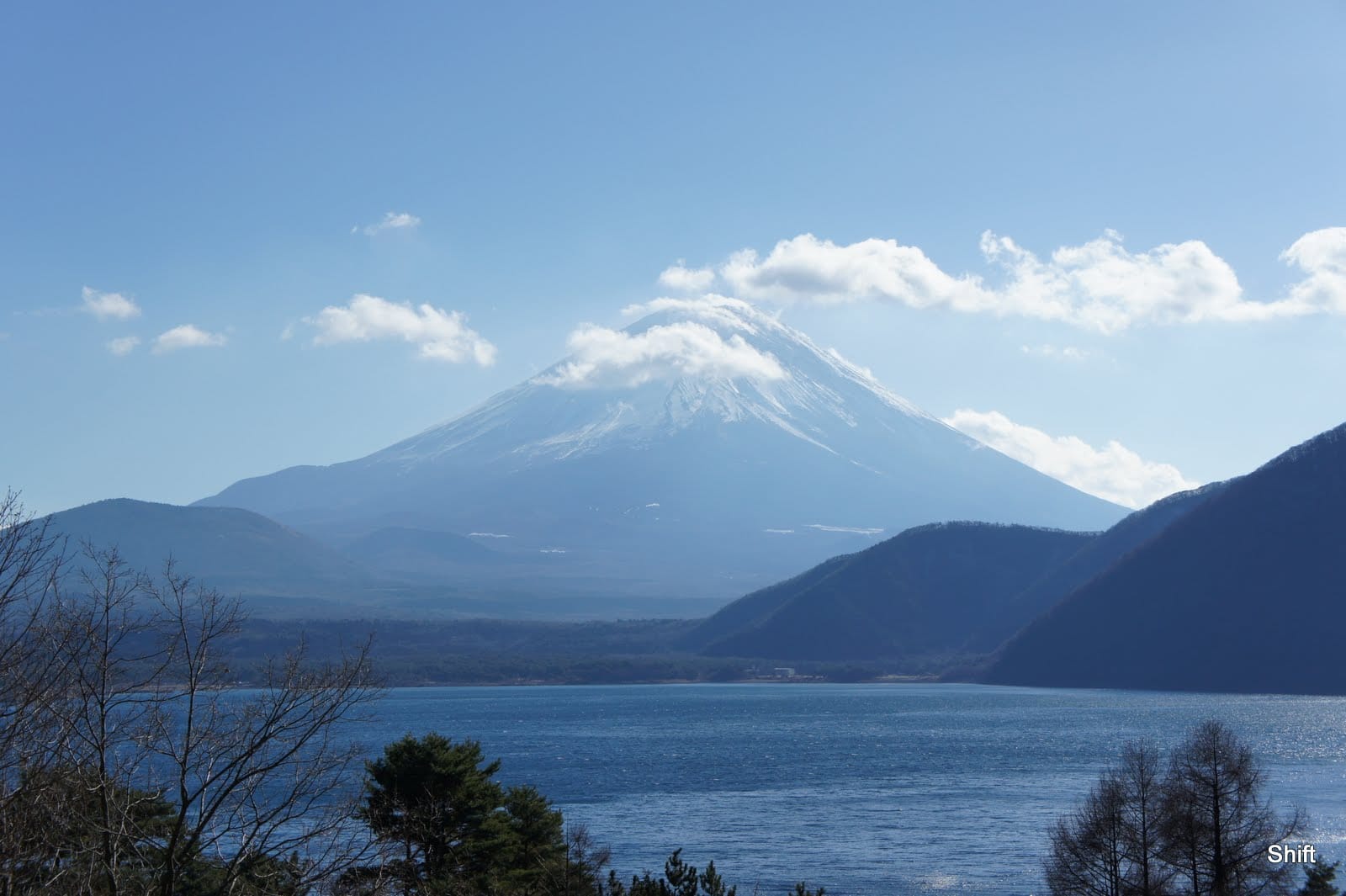
Mount Fuji changes from moment to moment with the season, the weather and the time of day. To come home with the shot you want, match the viewpoint to the conditions. The two tables below pull together the timing notes from the five spots above.
By season
| Season | What to look for | Where in this guide |
|---|---|---|
| Spring | Cherry blossoms and azaleas framing the mountain; Diamond Fuji around 20 April | Lake Tanuki, Iyashi no Sato Nenba |
| Summer | Fresh green around the thatched roofs; Diamond Fuji again around 20 August | Iyashi no Sato Nenba, Lake Tanuki |
| Autumn | Autumn leaves on the lakeshore; golden susuki grass | Lake Tanuki, Iyashi no Sato Nenba, Panorama-dai |
| Winter | Clear air and a snow-capped summit; snow on thatched roofs | Panorama-dai, Iyashi no Sato Nenba |
By time of day
| Time | What to look for | Where in this guide |
|---|---|---|
| Sunrise | Diamond Fuji, with the sun rising from the summit (on the dates above) | Lake Tanuki |
| Calm early morning | The reflected Fuji on still water | Lake Tanuki, Lake Shoji |
| Morning and late afternoon (spring to autumn) | The recommended hours for the lake-and-mountain panorama | Panorama-dai |
| Dusk and evening | The lake glowing orange; reflections in the calm evening | Panorama-dai, Lake Shoji |
Two habits pay off everywhere. First, the reflected Fuji needs still, windless water, and calm early mornings give you the best odds. Second, check the forecast before you set out: the mountain changes with the weather, and the view you came for depends on it.
Planning your route
- Group the spots by side of the mountain. Lake Shoji (about 30 minutes) and Iyashi no Sato Nenba (about 20 minutes) are both reached from Kawaguchiko IC, and both are served by sightseeing buses from Kawaguchiko Station. Lake Tanuki (about 40 minutes) and Fujisan Kodomo no Kuni (about 25 minutes) are on the Shizuoka side, reached from Shin-Fuji IC. Panorama-dai sits above Lake Yamanaka, about 20 minutes from Yamanakako IC.
- Think about a car for the harder spots. Every viewpoint in this guide has parking (free at Lake Shoji, Panorama-dai and Kodomo no Kuni). Public transport works well for Lake Shoji and Iyashi no Sato Nenba, but Panorama-dai involves a 40-minute walk from the nearest bus stop, and the bus to Fujisan Kodomo no Kuni makes just one round trip a day, and only on weekends, public holidays, during Obon and over the New Year. If you would rather drive, you can book a rental car with OlaChill.
- Watch the opening hours. Lake Tanuki, Lake Shoji and Panorama-dai are free and open-air. Iyashi no Sato Nenba and Fujisan Kodomo no Kuni charge admission, keep seasonal hours, and Kodomo no Kuni closes on Tuesdays from November to April, except on public holidays and during the spring and winter school holidays.
- Check before you go. Fees, hours, bus timetables and parking arrangements can change, so confirm the latest details with each venue before your visit.
Final thoughts
The Chureito Pagoda is only the beginning. Sunrise over Lake Tanuki, the "Fuji holding a child" view at Lake Shoji, thatched roofs at Nenba, the sweep of Lake Yamanaka from Panorama-dai and the mountain towering over the fields of Kodomo no Kuni: each shows you a side of Mount Fuji the crowds tend to miss. Pick the spots that suit your season and your pace, set an early alarm for the calm morning light, and you will leave with views of Fuji that feel like your own.
For the famous viewpoint these spots are measured against, see our guide to Chureito Pagoda, and for the lakes around the mountain, read the Fuji Five Lakes guide.
More from this region — Mt. Fuji
View all →
7-Day Honeymoon Japan Itinerary — Kyoto Ryokan, Hakone Onsen + Tokyo Rooftop
11 min · itineraries
Three Days Tokyo and Mt Fuji After Nagoya: Helicopter and Private Car
7 min · itineraries

Chureito Pagoda and Mount Fuji: Seasons, the 398 Steps and Access
12 min · culture
Japan Theme Parks: Choose Disney, USJ, Fuji-Q, or Ghibli Park?
6 min · experiences