
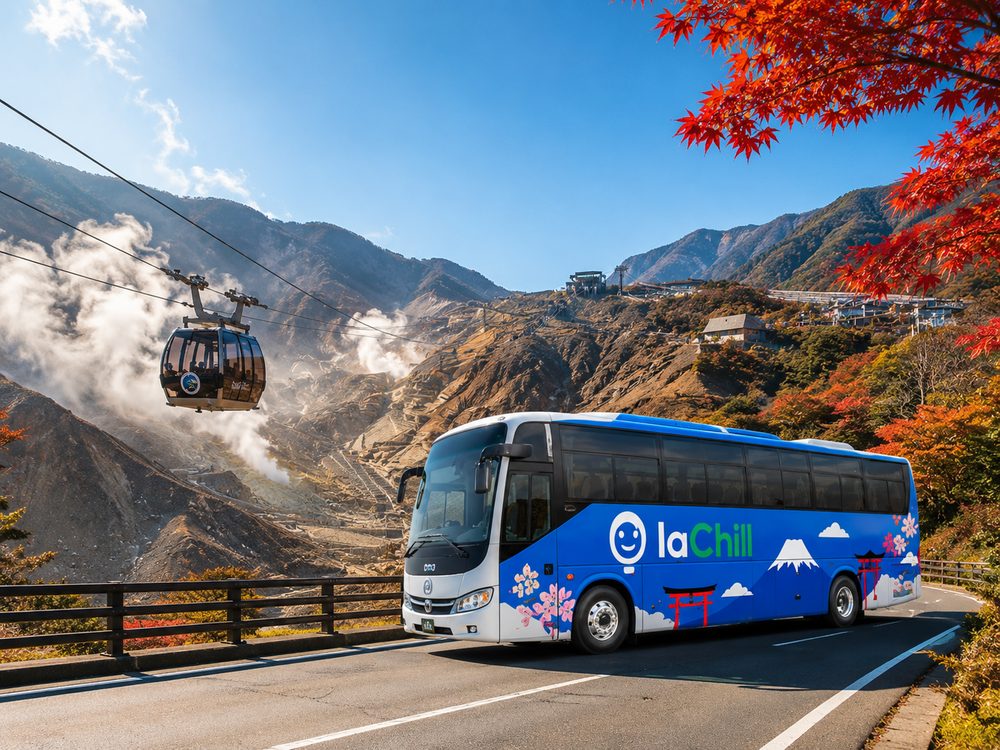
Hakone Onsen Group Trips by Charter Bus
Plan a relaxing Hakone onsen escape with a private 26–29-seat minibus, ryokan pickup, mountain roads and Fuji viewpoints.
Aug 21, 2026·✍️ olablog·⏱ 8 min read
Plan a relaxing Hakone onsen escape with a private 26–29-seat minibus, ryokan pickup, mountain roads and Fuji viewpoints.
Tap a region to browse articles
Why Hakone works so well for a group onsen trip
Hakone is one of Japan’s easiest mountain escapes from the Tokyo area, but it is much more enjoyable when your group can travel together. A private charter bus lets everyone leave from the same pickup point, keep luggage on board and reach a ryokan without navigating several train, bus or taxi connections.
For a group of around 20 to 29 travelers, a 26–29-seat Toyota Coaster-class minibus is a particularly practical choice. It has the capacity for a medium-sized group while remaining better suited to Hakone’s narrow, winding roads than a full-size coach.
The ideal format is a one-night stay:
- Depart from Tokyo or another agreed location in the morning.
- Stop for lunch or sightseeing on the way into Hakone.
- Visit a lake, shrine or volcanic valley before checking in.
- Leave the bus assigned to your group while you enjoy the ryokan.
- Continue to Fuji-viewing spots on the second day.
- Return to Tokyo or finish at another destination.
This structure gives your group time to enjoy the journey instead of treating Hakone as a rushed day trip.
What the charter includes in practice
OlaChill works with licensed Japanese operators, so the driver knows how to handle local roads, parking areas and the practical details of group travel. Your itinerary is arranged around the vehicle’s operating schedule, the ryokan’s access conditions and the places your group actually wants to visit.
A charter usually means:
- One private vehicle for your group.
- Pickup and drop-off at agreed locations.
- A professional licensed Japanese driver.
- Route planning for mountain roads and sightseeing stops.
- Space to keep day bags and luggage on the bus, within vehicle limits.
- A flexible sightseeing order when traffic, weather or parking conditions change.
For an overnight plan, the bus is not simply used as a one-way transfer. The vehicle and driver are planned around your group’s schedule, including the transfer to the ryokan and the second day’s sightseeing. Overnight parking and driver arrangements need to be confirmed in advance, especially when the accommodation is on a narrow road or in a busy hot spring district.
A realistic two-day Hakone route
A comfortable route might look like this:
Day 1: Tokyo to Hakone
- Morning pickup at a hotel, station-area hotel or another accessible meeting point.
- Travel toward Hakone, with a rest stop or lunch break.
- Visit Hakone Shrine and the Lake Ashi area.
- Add Owakudani if weather, volcanic conditions and access allow.
- Arrive at the ryokan in the late afternoon.
- Check in, enjoy the hot spring and have dinner together.
Day 2: Hakone and Mount Fuji views
- Enjoy breakfast and a relaxed departure from the ryokan.
- Travel toward a Fuji-viewing area such as the northern shore of Lake Kawaguchiko or Oshino Hakkai, depending on the overall route.
- Stop for photographs, lunch and seasonal sightseeing.
- Return to Tokyo, continue to another hotel or end at a station-area location.
Not every group should combine every location. Hakone and the Fuji Five Lakes area are close on a map, but mountain roads, traffic and sightseeing time can make the route longer than expected. Your driver and planner can recommend whether to focus on Hakone, add one Fuji viewpoint or create a more ambitious loop.
Why the 26–29-seat Toyota Coaster class is a good fit
Hakone includes steep sections, sharp bends, compact streets and busy sightseeing areas. A smaller minibus can be easier to position than a large touring coach, while still giving your group the benefits of private transport.
The Toyota Coaster class is suited to:
- School, university and cultural groups.
- Family groups traveling with older relatives.
- Friends sharing a ryokan booking.
- Corporate retreats and team off-sites.
- International groups carrying suitcases between hotels.
Luggage planning is important. A bus can accommodate luggage, but the amount depends on suitcase size, passenger numbers and the vehicle configuration. If every traveler has a large hard-shell suitcase, tell us before booking. The operator may suggest a luggage strategy, a different vehicle or a route that avoids unnecessary loading and unloading.
The road itself is part of the experience, but it can also be tiring. Keep the itinerary realistic, allow time for comfort breaks and avoid planning a long list of distant attractions around your ryokan check-in time.
One-night charter versus other ways to travel
| Travel style | Best for | Main advantage | Main limitation |
|---|---|---|---|
| Public transport | Small groups comfortable with transfers | Clear rail and bus connections | Difficult with luggage, fixed timetables and separate arrivals |
| Several taxis | Very small groups or short local journeys | Easy for point-to-point movement | Vehicles split the group and costs can become difficult to coordinate |
| One-way private transfer | Groups going directly to a ryokan | Simple arrival with minimal planning | No convenient transport for sightseeing or the second day |
| Two-day private charter | Medium-sized groups combining Hakone and Fuji viewpoints | One coordinated vehicle, flexible stops and luggage kept together | Requires advance planning for driver hours, parking and overnight arrangements |
Planning the ryokan pickup and waiting arrangement
The ryokan is the heart of the trip, so confirm its access details early. Some properties are located at the end of narrow roads, on a slope or in a district where buses cannot stop directly outside the entrance. In those cases, the driver may need to use a nearby approved stopping point.
Share these details with the charter planner:
- Ryokan name and full address.
- Check-in and check-out times.
- Number and size of suitcases.
- Whether anyone needs step-free access.
- Preferred bathing or sightseeing schedule.
- Whether the group wants the vehicle assigned for the second day.
- Your preferred departure and final drop-off locations.
A bus waiting arrangement does not mean the driver is parked indefinitely outside the ryokan. It means the vehicle service is coordinated for the overnight itinerary, subject to legal driving hours, designated parking and the operator’s arrangements. A clear schedule protects both your group and the driver.
Estimated charter budget
Longer and multi-day trips are quoted on request from the day price (29 seats ¥69,000 per 10-hour day), adding any extra hours, expressway tolls, parking and the driver's overnight costs.
Ryokan accommodation, meals, attraction tickets and some parking charges may be separate. The exact quote comes from the booking form after the operator reviews your dates, passenger count, luggage and route.
To request a free quote with a reply within 24 hours, send your itinerary through the OlaChill charter bus form.
Tips for a smoother Hakone group trip
Start with the overnight stay
Ryokans can fill quickly during autumn foliage, spring holidays and weekends. Secure the accommodation first, then build the bus route around its check-in and check-out times.
Keep the first day flexible
Mountain traffic and weather can affect arrival times. Choose two or three priority stops rather than promising every major Hakone attraction.
Plan for changing Fuji visibility
Mount Fuji may be hidden by clouds even on a clear-looking day. Treat Fuji viewpoints as scenic opportunities rather than guaranteed photo stops. Your driver can adjust the timing or suggest an alternative nearby stop when conditions change.
Pack for the onsen
Many ryokans provide towels and basic amenities, but your group should check the property’s rules in advance. Tattoos, private bathing options, meal times and children’s policies vary by accommodation.
Confirm the final drop-off
If some travelers return to Tokyo while others continue to Kyoto, Osaka or another hotel, mention this during planning. A single route may not suit multiple final destinations, but the operator can advise on the most efficient arrangement.
FAQ
Can a 26–29-seat minibus travel on Hakone’s mountain roads?
Yes, a Toyota Coaster-class minibus is generally well suited to Hakone’s winding roads. The exact route still depends on road width, traffic controls, weather and access restrictions at each attraction or ryokan.
Can the bus remain assigned to our group overnight?
An overnight charter can be arranged, but the vehicle’s parking and the driver’s legal rest and operating schedule must be confirmed. Share the ryokan details and your second-day plans when requesting a quote.
Can we combine Hakone with Mount Fuji viewpoints?
Yes, but the route should be planned carefully. Hakone and the Fuji Five Lakes area can require substantial driving time, so most groups should select a small number of priority stops rather than attempting every attraction.
Is the quoted amount inclusive of the ryokan?
The charter quote normally covers the vehicle service and agreed transport arrangements. Ryokan rooms, meals, attraction tickets and some parking costs may be separate. The exact inclusions and quote come from the booking form after your itinerary is reviewed.
More from this region — Mt. Fuji
View all →
Oshino Hakkai – 8 Sacred Springs with a Crystal-Clear View of Mount Fuji
5 min · destinations
A Smooth Tokyo–Mt. Fuji–Kawaguchiko Day Trip for Groups
8 min · tips
Tokyo–Kamakura–Hakone: A Two-Day Group Itinerary by Coach
9 min · tips

Tokyo Snow Day Trips: Gala Yuzawa, Karuizawa, and Fujiten
6 min · experiences