
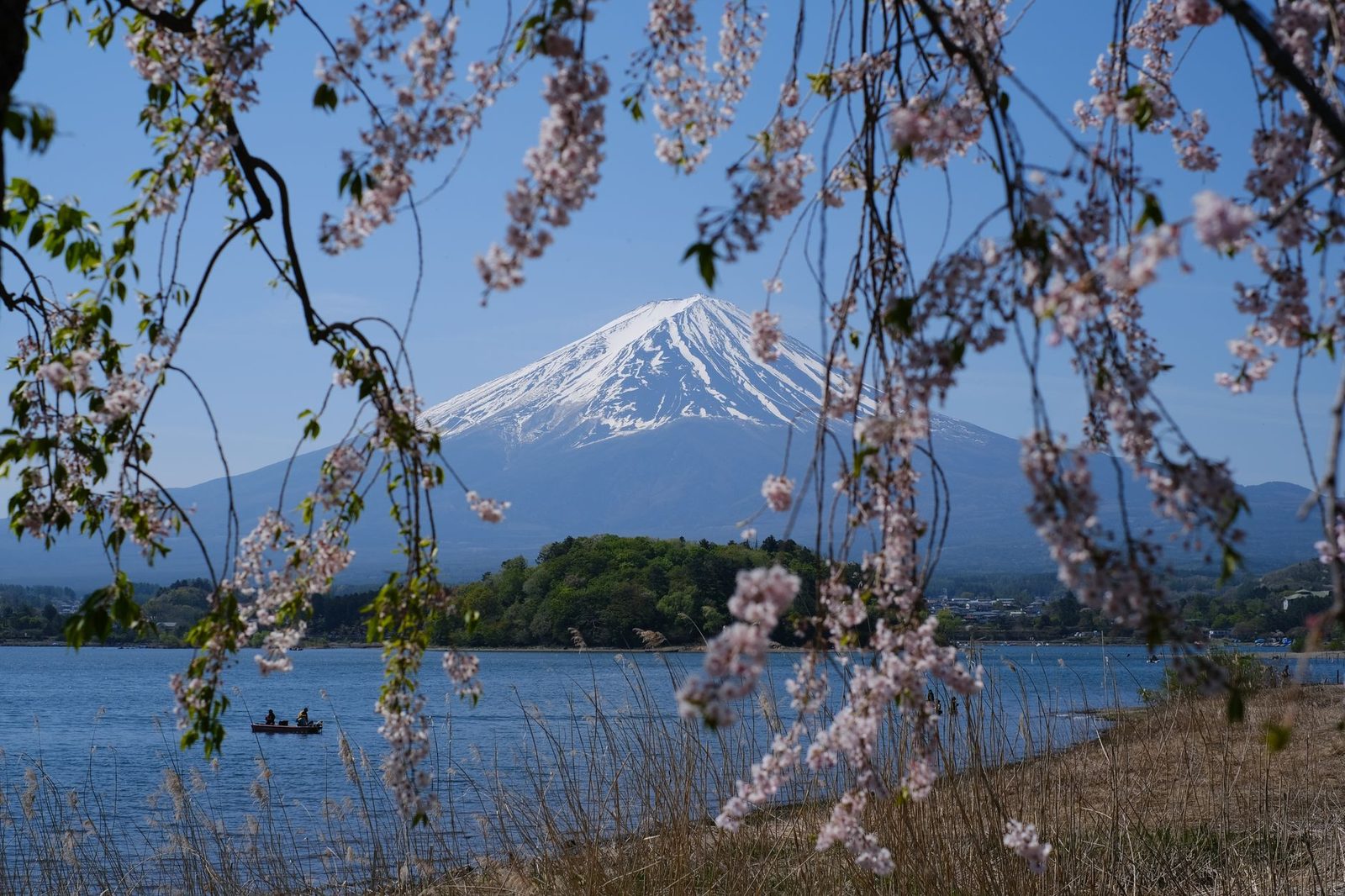
Mount Fuji in Cherry Blossom Season – Sakura Reflected on the Lake
Your complete guide to Fuji sakura in Yamanashi: peak bloom timing, how to get there, the best photo spots, and a ready-to-use 1–2 day itinerary.
Feb 1, 2026·✍️ olablog·⏱ 5 min read
Your complete guide to Fuji sakura in Yamanashi: peak bloom timing, how to get there, the best photo spots, and a ready-to-use 1–2 day itinerary.
Tap a region to browse articles
Japan consistently tops bucket lists for nature lovers — and Fuji sakura in Yamanashi Prefecture is exactly the kind of landscape that reminds you why. Standing beneath a canopy of cherry blossoms with an unobstructed view of Mount Fuji isn't just a photo opportunity; it's one of those rare travel moments that genuinely stops you in your tracks.
1. What Makes Fuji Sakura So Special
There's nowhere else on earth quite like this. The Yamanashi basin stretches out like a painting — snow-capped Fuji anchoring the horizon while thousands of cherry trees froth pink and white in the foreground. Light shifts dramatically throughout the day: a golden sunrise gives way to soft midday haze, then a blush-toned sunset that makes every photo look filtered without any filters.
The drive through Yamanashi is half the experience. Routes wind through mountain foothills and open valley floors, offering frequent pull-offs where you'll want to stop, stare, and wonder why you didn't come sooner. Plenty of visitors report that the journey itself — not just the destination — ends up being the highlight of the trip.
2. Must-Visit Photo Spots
The Fuji sakura area is packed with viewpoints, from iconic overlooks to low-key locals-only corners. Don't miss these:
The main observation deck: A sweeping 180° panorama of cherry blossoms with Fuji as the backdrop. Sunrise and sunset here are widely regarded as the best in the region.
The old tree-lined avenue: Century-old cherry trees form a natural tunnel overhead — spectacular in peak bloom, when the petals catch any breeze and drift like pink snow.
The lake reflection point: The still water of the nearby lake mirrors Fuji and the blossoms with near-perfect symmetry. This is the shot you've seen on Instagram; it's even better in person.
The hilltop panorama: Climb to the highest accessible point in the area for a full 360° view across Yamanashi — great for context shots that show the sheer scale of the bloom.
3. Best Time to Visit
Every season brings something different to Fuji sakura, but the undisputed sweet spot is late March through April. During peak season you can expect:
- Stable, mild weather — ideal for long days of driving and exploring
- Cherry blossoms at full bloom, typically coinciding with clear skies
- Perfect natural light for photography: 6–9 a.m. and 4–6 p.m. are golden hours
- Crowds that are lively but manageable — busy enough to feel festive, not so packed that you can't move
Winter visits reward you with dramatic snow-dusted scenes, though mountain roads can ice over. Autumn foliage (mid-October to mid-November) runs a close second to spring for sheer visual drama.
4. Getting Around — Why a Car Is the Right Call
Public transport will get you close, but a rental car is the move for properly exploring Fuji sakura and the wider Yamanashi area. Trains and buses lock you into fixed schedules; a car means you stop whenever the light is right, detour down unmarked lanes, and linger at a viewpoint without watching the clock.
Roads around Fuji sakura are well-maintained with clear signage in both Japanese and romaji. Mountain stretches have wide enough lanes and frequent rest stops (道の駅, Michi-no-Eki) to make a road trip genuinely relaxed rather than stressful.
✨ Pro tip: Book a private car with OlaChill and explore Fuji sakura entirely on your own schedule — self-drive or with a driver, whichever suits you.
5. Sample 1–2 Day Itinerary
Day 1
- 6:00 a.m. — Arrive at the main observation deck for sunrise; Fuji in early morning light is worth the early alarm
- 8:00 a.m. — Breakfast at a local restaurant; look for hōtō (Yamanashi's hearty flat-noodle hot pot) or a classic Japanese set meal
- 9:30 a.m. — Drive the main scenic loop, pulling over at viewpoints along the way
- 12:00 p.m. — Lunch at a roadside Michi-no-Eki rest stop or a lakeside restaurant
- 2:00 p.m. — Explore secondary spots: a nearby historic village, waterfall, or forested hiking trail
- 5:00 p.m. — Check in to your hotel or ryokan (traditional inn)
- 6:30 p.m. — Soak in the onsen (hot spring bath) if available, then settle in for a kaiseki multi-course dinner
Day 2
- 7:00 a.m. — Early breakfast and an early start to beat the day-tripper crowds
- 8:30 a.m. — Head to a lesser-known secondary route or off-the-beaten-path viewpoint
- 11:00 a.m. — Lake reflection shots while the light is still angled and the water is calm
- 1:00 p.m. — Lunch and a slow afternoon
- 3:00 p.m. — Continue to your next stop or begin the return journey
6. Practical Travel Tips
- 📷 Shoot during golden hour: The 30 minutes before and after sunrise/sunset deliver light that no filter can replicate — set your alarm accordingly
- 🚗 Book your rental car early: Peak bloom (late March–April) sells out fast; reserve at least 1–2 weeks ahead, ideally more
- ⛽ Fill up before you head into the hills: Gas stations are spread out across Yamanashi — top off whenever you see one rather than waiting until you need it
- 📱 Download offline maps: Save Google Maps offline for the Yamanashi area before you leave your hotel; cell signal is patchy on mountain roads
- 🍙 Stock up at a convenience store: 7-Eleven and FamilyMart are your best friends on a road trip — reliable, cheap, and surprisingly good food
- ☁️ Check the forecast: Cloud cover can hide Fuji entirely; if you have flexibility in your dates, keep an eye on the weather and plan your observation deck visits around clear windows
More from this region — Mt. Fuji
View all →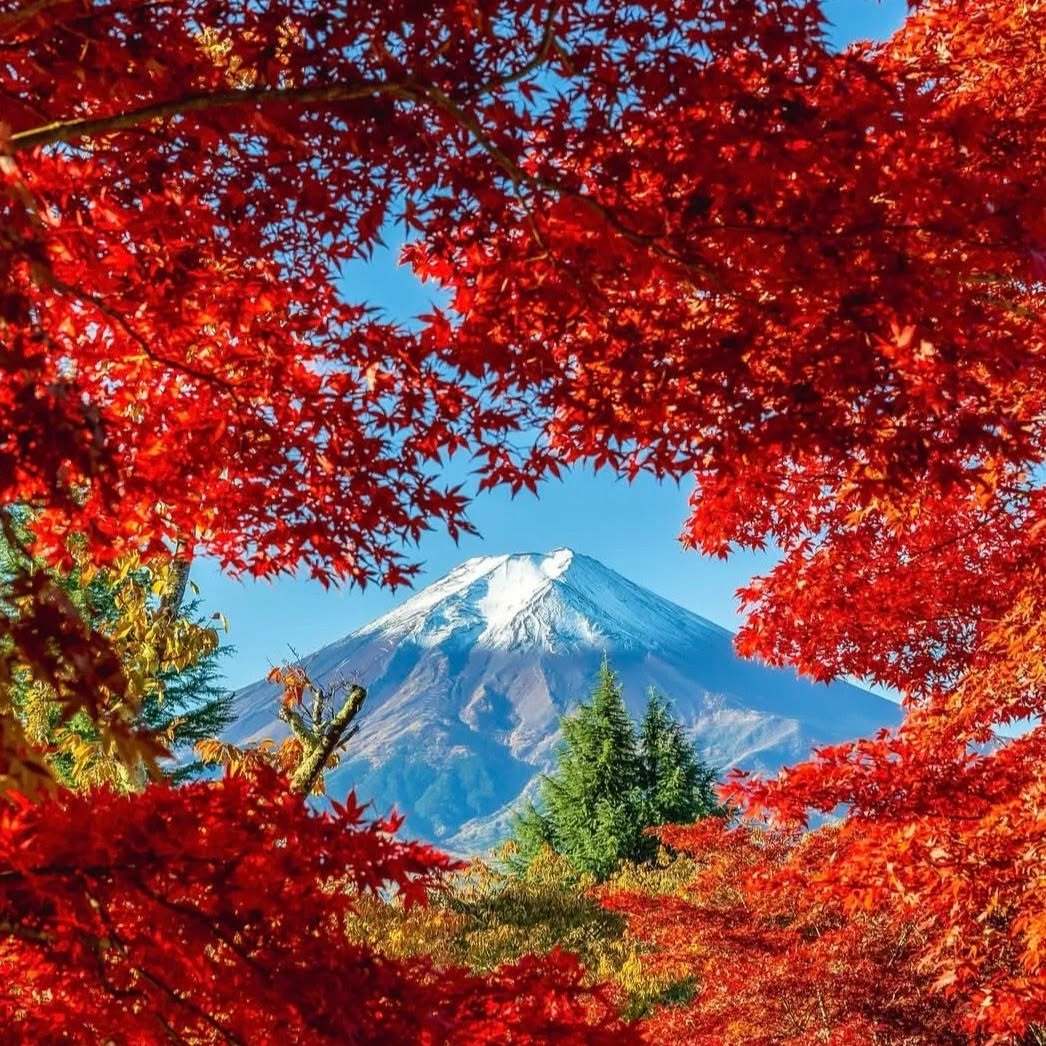
Mount Fuji in Fall – Koyo Season and the Blazing Colors Around Japan's Sacred Peak
6 min · seasonal
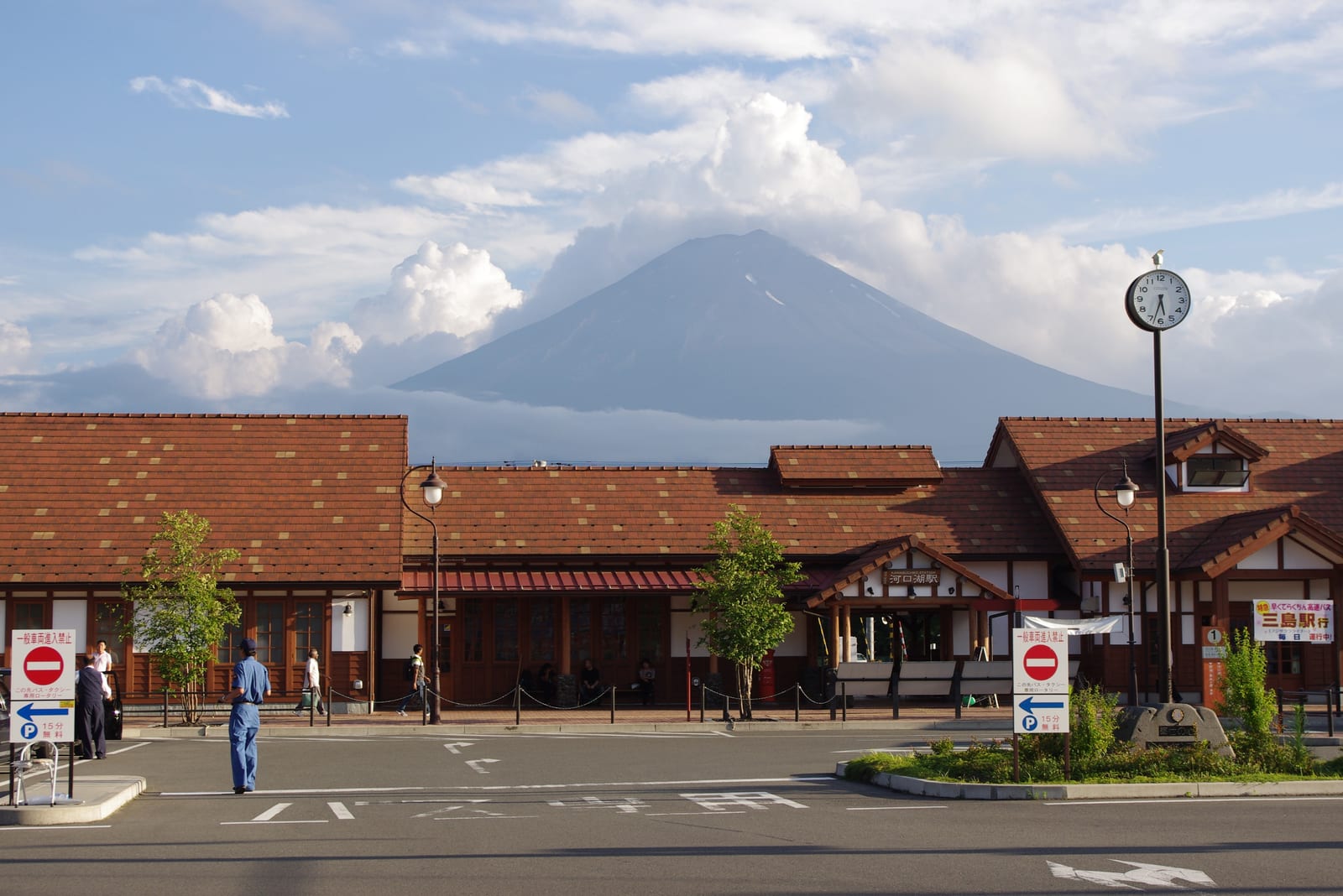
Seeing Mount Fuji Properly: Kawaguchiko, Hakone or Enoshima?
14 min · destinations
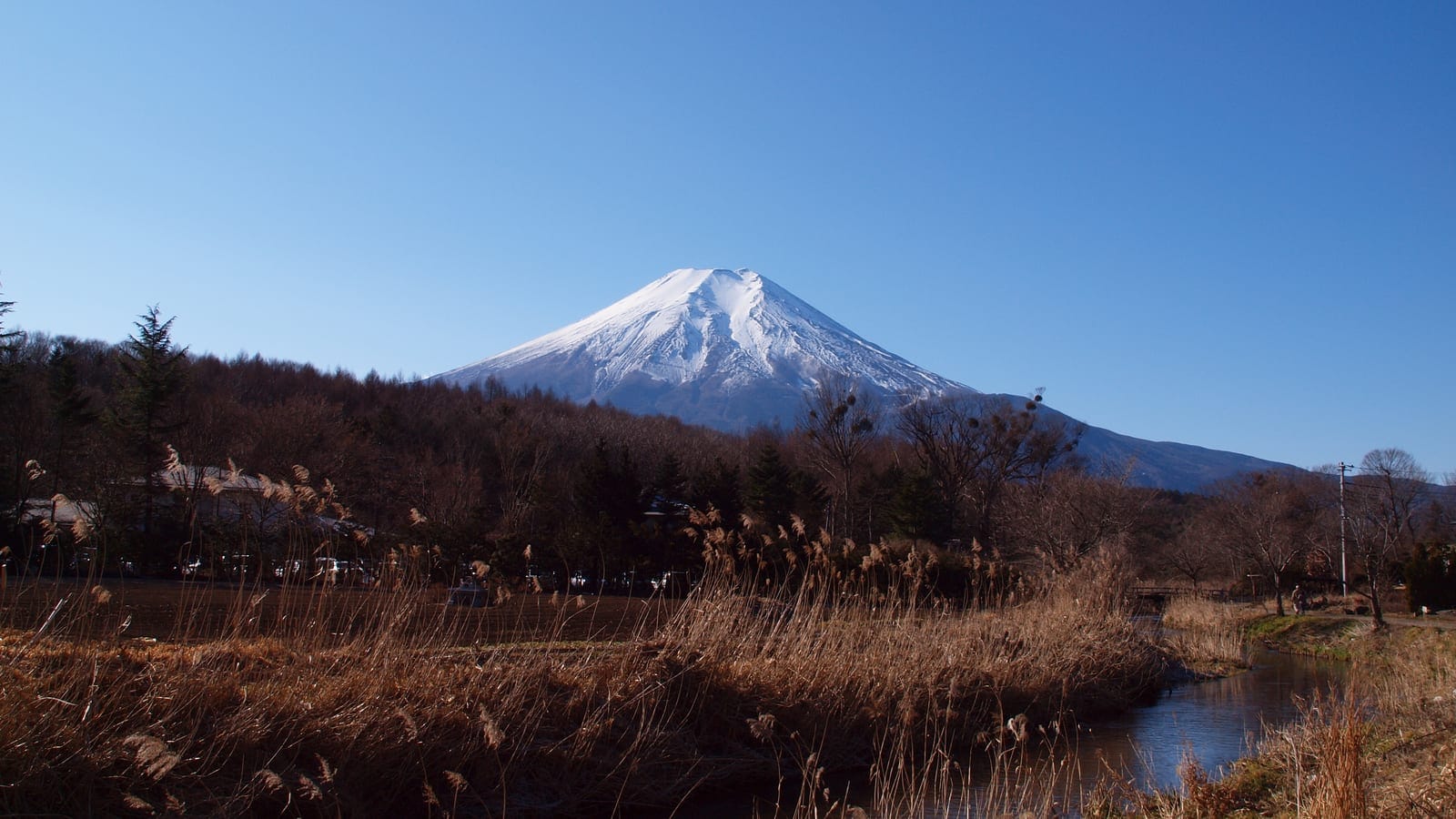
Mount Fuji in Winter – Snow-Capped Perfection Under Crystal-Clear Skies
5 min · seasonal
Mt. Fuji From Above – Aerial Views and Surrounding Summit Perspectives
5 min · destinations