Awa Odori in Tokushima: How to Watch, Join the Dance and Plan
A practical guide to Tokushima's Awa Odori in mid-August: the dance styles, paid stages versus free streets, joining a niwaka-ren, and getting there from Osaka.
May 4, 2026·✍️ olablog·⏱ 6 min read
A practical guide to Tokushima's Awa Odori in mid-August: the dance styles, paid stages versus free streets, joining a niwaka-ren, and getting there from Osaka.
Tap a region to browse articles
Every year from 12 to 15 August, during the Obon holiday, Tokushima City on the island of Shikoku turns into one enormous dance floor. Awa Odori grew out of the Bon dances held to welcome back the spirits of ancestors, and it has been danced here for around 400 years. Its famous chant sums up the spirit: the dancers are fools, the watchers are fools, and if everyone is a fool anyway, you may as well dance. Unlike many festivals, this one really means it. Visitors are invited to join in.
The dance and the music
Dancers perform in groups called ren. Some are famous clubs that practise all year. Others come from companies, schools or neighbourhoods. A ren moves down the street in formation, led by its band: shamisen, big and small drums, the shinobue bamboo flute, and a small hand-held gong (kane) that keeps the brisk two-beat rhythm. You will hear the dancers call "Yatto sa, yatto sa" as they go.
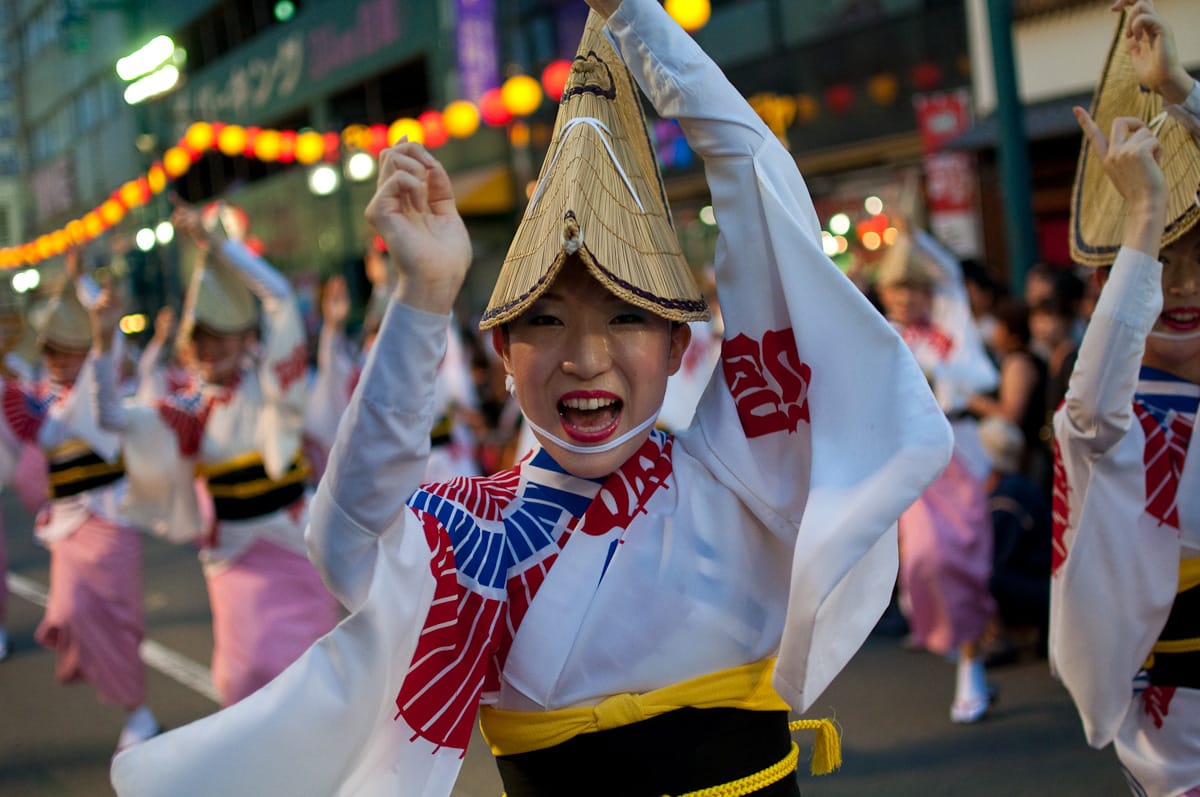
There are two main styles. In the women's dance (onna-odori), dancers wear yukata and folded straw hats (amigasa) pulled low. They move on tiptoe in wooden geta, with small precise steps and raised hands, and the effect is disciplined and elegant. The men's dance (otoko-odori) is loose and low to the ground, with bent knees, swinging arms and plenty of humour, usually in happi coats or tucked-up yukata. Many women dance the men's style too, and the children's ren are always crowd favourites.
Paid stages or free streets
You can watch in two ways. The paid venues, called enbujo, are grandstands set up along closed-off streets and open spaces in the city centre. Aibahama, a short walk from Tokushima Station, is one of the best known. Seats are sold by evening session, and famous ren perform one after another, so this is the best way to see the most skilled groups in comfort. Tickets for popular sessions sell out, so buy them well ahead.
The free venues are streets and squares where ren dance past at close range, and the city stays lively late into the evening. Here you can walk around, follow the drums and catch groups rehearsing in side streets. A good plan for a first visit is one session in a paid seat, then a night wandering the free areas.
Joining the dance
During the festival, niwaka-ren (impromptu groups) are set up so that visitors can take part. You gather at a meeting point, get a short lesson from experienced dancers, and then dance a stretch of the route with them. Meeting points and times can change from year to year, so check the official festival information or ask at a tourist information centre when you arrive.
The basic step is easy to learn. Step forward with your right foot as your right hand comes forward, then do the same on the left, and keep your hands above your shoulders. You do not need a costume, although many visitors wear a yukata.
Awa Odori all year: the Kaikan and Mt. Bizan
If you cannot come in August, go to the Awa Odori Kaikan, at the foot of Mt. Bizan about ten minutes' walk from Tokushima Station. A resident ren performs on stage on most days. At the end of the show the audience is usually invited up to dance, and the building also has exhibits on the festival's history and costumes. The Bizan ropeway leaves from the same building. In the evening, the view from the summit over the city and out to sea is a fine end to the day.
Getting there
Most visitors come from the Kansai region. Highway buses from Osaka, Kobe and Kyoto cross the Akashi Kaikyo Bridge and Awaji Island to Tokushima. The trip takes roughly two to three hours from Osaka or Kobe, depending on where you board, and it is usually the most direct option. By rail, take the shinkansen to Okayama and then JR trains across the Seto Ohashi Bridge into Shikoku, sometimes with a change on the way; allow about three hours or a little more from Osaka. There are also flights from Tokyo Haneda to Tokushima Awaodori Airport, with buses into the city.
During Obon, trains, buses and flights are all very busy, so reserve seats as early as you can, including your return.
Where to stay
Tokushima's hotels fill up many months in advance for festival week. Alternatives include Naruto, a short trip north and close to the whirlpools, or Takamatsu in neighbouring Kagawa, about an hour away by limited express. Some visitors stay in Osaka or Kobe and come for a single evening by highway bus. It works, but check the last bus back, which may leave before the dancing ends.
Practical tips
- Mid-August in Tokushima is hot and humid, even at night. Bring water, a fan and a small towel.
- Leave umbrellas and bulky bags behind; the streets are packed.
- Never cut through a dancing ren. Cross only where staff direct you.
- Photography is welcome, but do not step into the route for a shot, and avoid flash near the dancers' faces.
- Carry some cash for food stalls, and try local specialities such as Tokushima ramen and sudachi citrus drinks.
Make it a Shikoku trip
Tokushima is a gateway to eastern Shikoku. The Naruto whirlpools can be seen from the Uzu-no-michi walkway on the Onaruto Bridge or from sightseeing boats. The Otsuka Museum of Art in Naruto is a full day in itself, and the Iya Valley, with its vine bridge, is a scenic trip into the mountains. Tokushima is also known for Awa indigo dyeing, and some workshops let you dye a scarf or handkerchief yourself.
Plan your trip
Sort out accommodation first, then transport, then festival tickets. For the paid venues, session times and more detail on seating, see our Awa Odori festival guide. If you want to wear a yukata for the evening, our kimono and yukata guide to Tokushima covers where to wear one and the best photo spots.