Kimono in Tokushima: Where to Wear It, Best Photo Spots and How to Plan the Day
Kimono in Tokushima: Awa indigo, the Udatsu merchant street, Awa Odori dancers in yukata, Naruto whirlpools and the Iya vine bridge, with seasons and a day plan.
Sep 14, 2026·✍️ olablog·⏱ 8 min read
Kimono in Tokushima: Awa indigo, the Udatsu merchant street, Awa Odori dancers in yukata, Naruto whirlpools and the Iya vine bridge, with seasons and a day plan.
Tap a region to browse articles
Tokushima has a claim on kimono that no other prefecture can make: the colour. Japan blue, the deep indigo of workwear, yukata and the finest cotton kimono, is Awa indigo (阿波藍), and the plant was grown and fermented on the Yoshino River plain here for four hundred years. Add the Awa Odori, the biggest dance festival in the country, where a hundred thousand dancers in yukata fill the streets every August, and you have a prefecture where traditional dress is not a museum piece but a working wardrobe.
Start with indigo
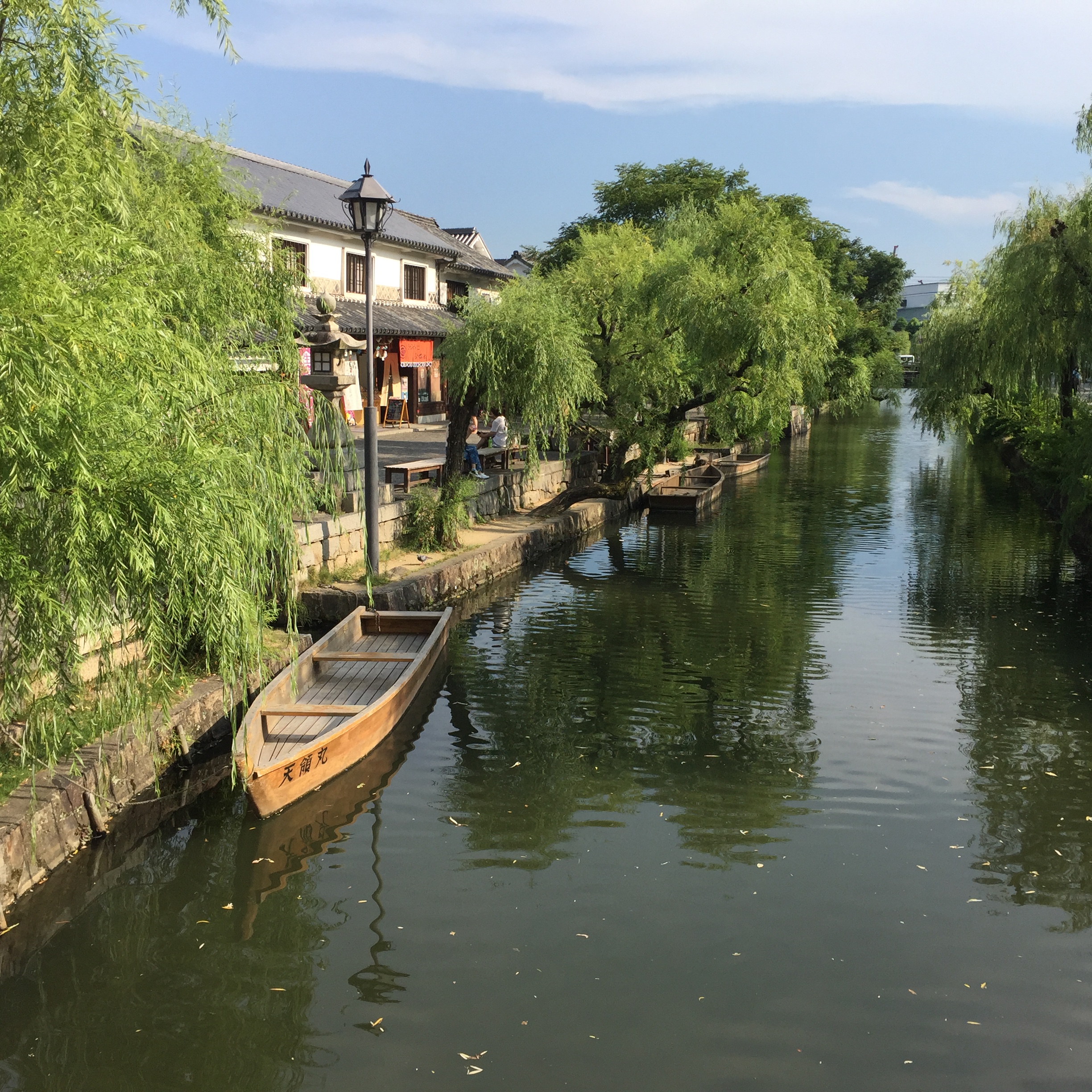
The Udatsu townscape of Wakimachi (脇町うだつの町並み) in Mima is a single street of Edo and Meiji merchant houses built by indigo traders. The udatsu are the decorative firewalls between roofs, added as a show of wealth; the richer the merchant, the more elaborate the udatsu. The street is long, straight and quiet, and a kimono in indigo or white photographs against the plaster and dark timber as if it had been planned.
Several workshops in the prefecture let you dye a handkerchief or tenugui in real indigo vats. It takes an hour, the smell is earthy and unforgettable, and you leave with the exact colour you may be wearing. Book ahead; the vats are living things and the workshops keep small groups.
Awa Odori: the yukata festival
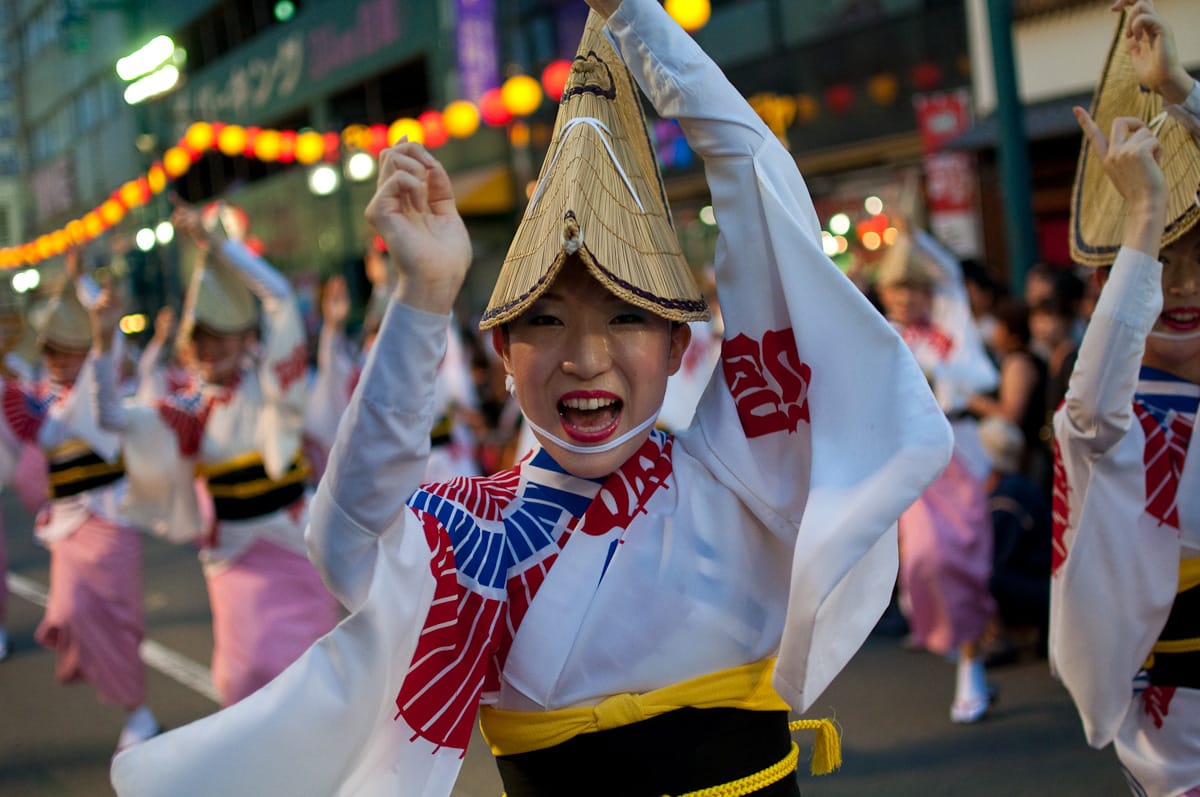
The Awa Odori (阿波おどり) runs 12 to 15 August in Tokushima city. Groups called ren dance through the streets to shamisen, flute and drums; women dance on the front of their geta in straight-brimmed amigasa hats, men in a crouching swagger. The uniform is yukata and happi coats. Spectators wear yukata too, and there are "Niwaka-ren" open groups where visitors can join the dance for a night.
If your dates do not match, the Awa Odori Kaikan (阿波おどり会館) in the city stages performances daily, with a museum and the ropeway to Mt. Bizan (眉山) from the same building. The summit view over the city and the Kii Channel at dusk is a good yukata photo in summer.
Naruto and Iya
The Naruto whirlpools (鳴門の渦潮) form under the Onaruto Bridge where the Seto Inland Sea meets the Pacific. The Uzunomichi walkway inside the bridge has glass floors over the water, and the sightseeing boats go close. Time it with the tide table; the whirlpools are large only around spring tides and for an hour either side of peak. A kimono on the walkway is fine, on the boat it is windy.
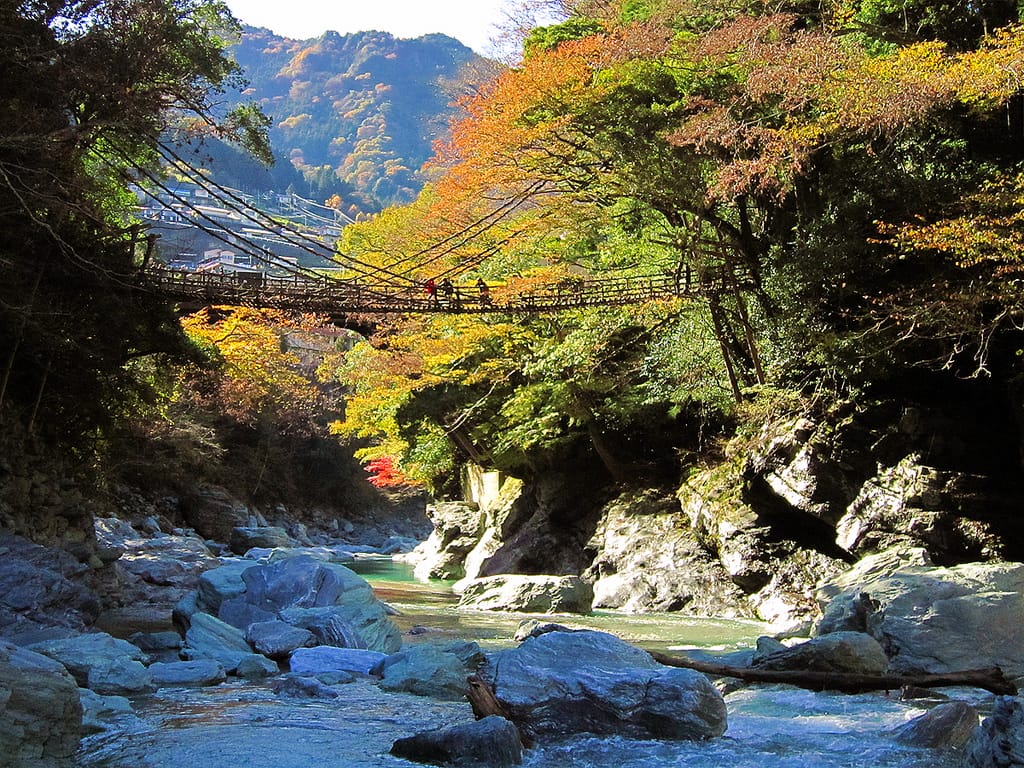
The Iya Valley (祖谷渓) is the opposite of all this: a mountain gorge with the Kazurabashi (かずら橋), a bridge woven from mountain vines, rebuilt every three years. You can cross it, with 14-centimetre gaps between the planks, and this is not a kimono activity. The photograph from the riverbank below, with the bridge and the autumn colour, is. Oboke Gorge (大歩危) nearby has boat rides through the ravine.
Best kimono photo spots in Tokushima
| Spot | Best time | Access | Crowd level |
|---|---|---|---|
| Udatsu townscape, Wakimachi (脇町) | Morning; any season | JR Tokushima Line to Anabuki, then taxi 10 min | Very low |
| Awa Odori Kaikan and Mt. Bizan ropeway | Afternoon show, then dusk on the summit | 10 min walk from JR Tokushima Station | Low to moderate |
| Awa Odori street stages | 12 to 15 August, evenings | City centre | Extremely high |
| Naruto whirlpools, Uzunomichi (渦の道) | Spring tide, check the table | Bus from JR Naruto Station, about 20 min | Moderate |
| Otsuka Museum of Art (大塚国際美術館) | Rainy days | Same bus line as Uzunomichi | Moderate |
| Ryozenji (霊山寺), temple number 1 of the 88 | Morning | JR Bando Station, 10 min walk | Low |
| Iya Kazurabashi from the riverbank | Late October to mid November | Bus from JR Oboke Station | Moderate in foliage season |
| Oboke Gorge boat | Late morning | JR Oboke Station, 20 min walk | Low |
Ryozenji is where the 88-temple Shikoku pilgrimage begins; pilgrims in white vests set out from here, and a kimono in the grounds is treated with the same friendliness as any other traditional dress.
Seasons
- Spring: mild and clear. Cherry blossom along the Shinmachi River in the city in early April; the whirlpools are biggest around the spring equinox tides.
- Summer: Awa Odori in August. Yukata, a fan, and expect to be sweaty and happy.
- Autumn: the Iya Valley turns red in November and the Udatsu street is at its quietest. Best kimono season overall.
- Winter: cold in the mountains, mild on the coast. The whirlpools are at their most dramatic in the winter months with the largest tidal ranges.
Plan your kimono day in Tokushima
- Arrive at Tokushima. From Kansai, the highway bus from Osaka or Kobe over the Akashi Kaikyo Bridge takes about two to two and a half hours and is more direct than the train.
- Morning, Udatsu townscape. Train to Anabuki, about 50 minutes, then a short taxi. Two hours is enough for the street, an indigo shop and a coffee in a converted merchant house.
- Lunch back in the city. Tokushima ramen, dark pork-bone broth with a raw egg, is the local dish; roll your sleeves in with a clip before you start.
- Afternoon, Awa Odori Kaikan. Catch the afternoon performance, then take the ropeway up Mt. Bizan for the view.
- Day two, Naruto. Tide-timed visit to the walkway, then the Otsuka Museum, which reproduces a thousand Western masterpieces in ceramic and is far better than it sounds.
- Day three, if you can, Iya. This is a change-of-clothes day: the vine bridge and gorge are for hiking shoes, with the kimono photographs taken from the road and riverbank.
Where OlaChill fits in
OlaChill's kimono shops are in Kyoto Kiyomizu and Tokyo Asakusa. There is no OlaChill shop in Tokushima.
Tokushima's link to Kansai is the reason a Kyoto rental can work: Kyoto to Tokushima is about three hours by train and highway bus via Osaka. Rent at Kiyomizu, add the next-day return option (¥1,100), wear it for a Kyoto afternoon and a Udatsu morning, and return it in Kyoto on the way back. The plan list starts from simple yukata sets, which are the right choice for Tokushima in summer; booking online takes 10 percent off, with hair (¥1,500) and make-up (¥5,000) as add-ons.
For the Iya Valley and Naruto in a single trip, a private car with driver from Osaka or Takamatsu is the practical option; the mountain roads to Iya are narrow and the buses infrequent. We quote by route and hours.
FAQ
Can visitors really join the Awa Odori? Yes. The Niwaka-ren open groups gather at set points in the evening during the festival and anyone can join for a short circuit. You will be taught the basic step on the spot. Yukata is not required but most people wear one.
Is an indigo-dyed yukata colourfast? Fresh indigo can rub off slightly on light-coloured skin or underwear the first few wears; that is normal and washes out. Wash separately in cold water the first time.
How far is the Udatsu street from Tokushima city? About an hour: a 50-minute local train to Anabuki Station and a 10-minute taxi. The street is flat and paved, easy in zori.
Can I cross the Kazurabashi vine bridge in a kimono? You can, but you should not. The planks have wide gaps, the bridge sways, and the crossing is one-way with people behind you. Photograph it from the bank and cross in trousers.
When are the Naruto whirlpools strongest? Around spring tides, near the new and full moon, especially in spring and autumn. The tide table on the walkway's website gives the best viewing hour each day; plan the bus around it.
Ready to plan it?
Wear Japan blue where it was born. Start the kimono at OlaChill Kiyomizu with next-day return, or come in August in yukata for the dance. Read our Awa Odori guide and Naruto whirlpools notes, then book your kimono online.