
Kimono in Yamanashi: Where to Wear It, Best Photo Spots and How to Plan the Day
Kimono in Yamanashi with Mount Fuji behind you: Chureito Pagoda, Oshino Hakkai, Lake Kawaguchi and the Itchiku Kubota kimono museum, plus train times from Tokyo and a day plan.
Sep 14, 2026·✍️ olablog·⏱ 7 min read
Kimono in Yamanashi with Mount Fuji behind you: Chureito Pagoda, Oshino Hakkai, Lake Kawaguchi and the Itchiku Kubota kimono museum, plus train times from Tokyo and a day plan.
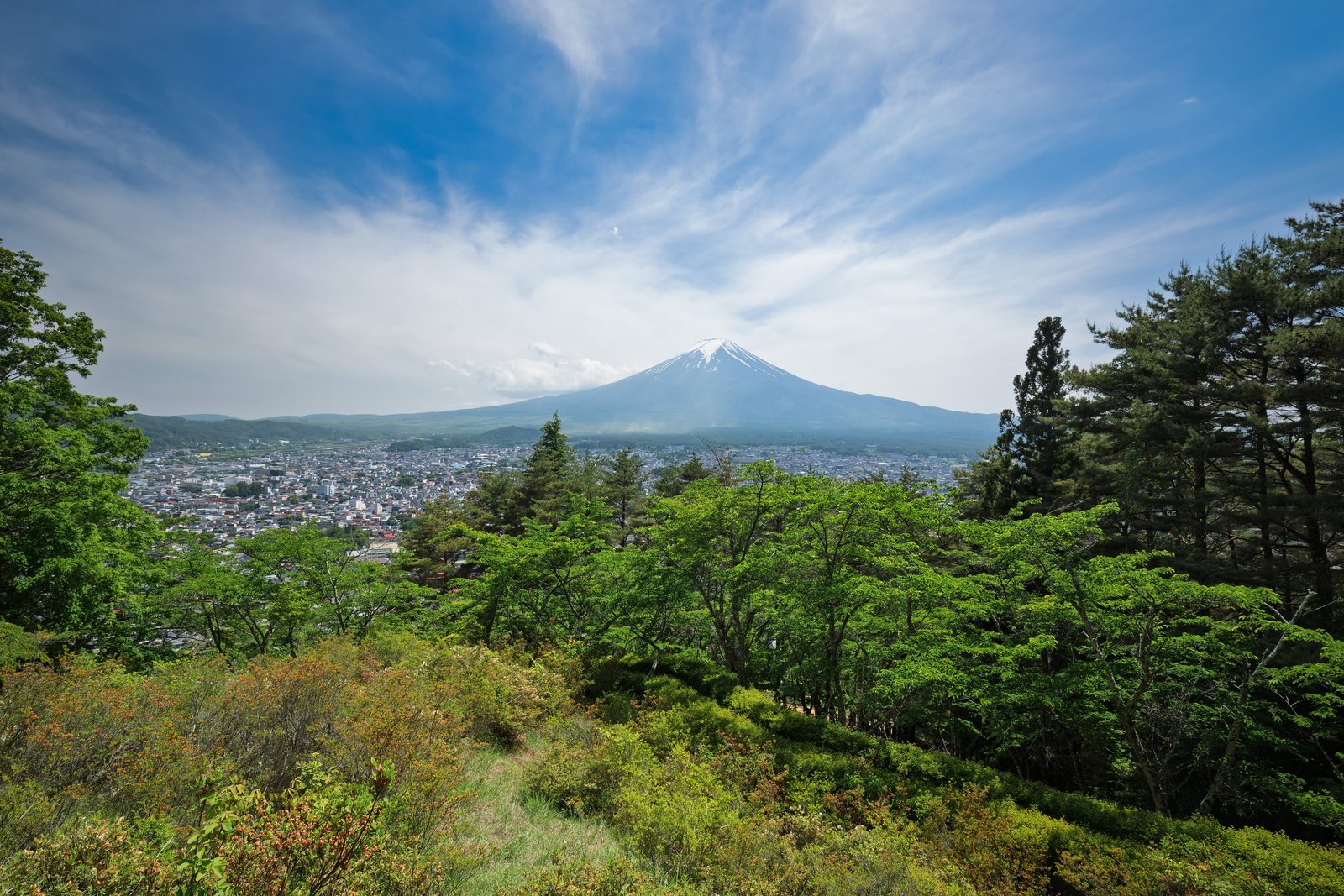
There is one photograph almost everyone who rents a kimono in Japan secretly wants: a kimono with Mount Fuji behind it. That photograph is taken in Yamanashi (山梨県), the prefecture on the northern side of the mountain, where the Fuji Five Lakes and the town of Fujiyoshida give you a clear line of sight to the summit on roughly one day in two.
This guide is about doing it properly: which spots actually show the mountain, what time the cloud comes in, and how to get a kimono there from Tokyo without spending the whole day on a bus.
Yamanashi and kimono: more connected than it looks
Fujiyoshida (富士吉田) was a weaving town. Its "Koshu textile" workshops still make silk linings and umbrella cloth, and the town's Honcho street, with its shuttered shops and Fuji filling the end of the road, has become one of the most photographed streets in Japan. On the shore of Lake Kawaguchi, the Itchiku Kubota Art Museum (久保田一竹美術館) displays the tsujigahana kimono of one artist who spent forty years reviving a lost Muromachi dyeing technique. If you want to understand what a kimono can be, this is the place, and the museum's garden and gate are themselves a fine backdrop.
Best photo spots in Yamanashi for kimono
| Spot | Best time | Access | Crowd level |
|---|---|---|---|
| Arakurayama Sengen Park, Chureito Pagoda (新倉山浅間公園 忠霊塔) | Sunrise to 9:00; mid-April cherry; early November maples | Shimo-Yoshida Station, 20 min walk plus 398 steps | Very high in sakura season, otherwise medium |
| Oshino Hakkai springs (忍野八海) | 8:00 before tour buses | Bus from Kawaguchiko or Fujisan Station, 25 min | High from 10:00 |
| Kitaguchi Hongu Fuji Sengen Shrine (北口本宮冨士浅間神社) | Any time; the cedar approach is shaded | 20 min walk from Fujisan Station | Low |
| Lake Kawaguchi north shore, Oishi Park (大石公園) | Late June lavender; morning for reflections | Bus from Kawaguchiko Station, 30 min | Medium |
| Fujiyoshida Honcho street (本町通り) | Early morning, shops shuttered | 5 min from Fujisan Station | Medium, photographers at the crossing |
| Itchiku Kubota Art Museum (久保田一竹美術館) | Afternoon | Bus from Kawaguchiko, 25 min | Low |
| Shosenkyo Gorge (昇仙峡) | Late October to mid-November | Bus from Kofu Station, 30 min | Medium in autumn |
| Erin-ji temple, Koshu (恵林寺) | Morning, dry garden | Taxi from Enzan Station, 10 min | Low |
On the pagoda: the famous view is from the observation deck above Chureito, not from the pagoda itself. In cherry season the deck now uses a queue system and you may wait an hour. Go at opening, or come in early November when the maples are red and the crowd is a quarter of the size.
When Fuji actually shows
Fuji is visible most reliably from October to February in the morning. Summer haze hides it by 10:00 on many days, and the rainy season in June is the worst. If your kimono day is in July or August, plan for Oshino Hakkai's springs and the shrine's cedar avenue, and treat any mountain sighting as a bonus. Check the live webcams from Fujiyoshida city the evening before; if the summit is clear at 18:00, dawn is usually clear too.
Where the kimono comes from
OlaChill has two shops: Tokyo Asakusa, by Kaminarimon, and Kyoto Kiyomizu. For Yamanashi, Tokyo is the natural start.
Train: the Fuji Excursion limited express runs from Shinjuku directly to Kawaguchiko in just under two hours, with stops at Shimo-Yoshida (for the pagoda) and Fujisan Station. From Asakusa, allow 30 minutes to reach Shinjuku first. Dress at 9:00, take a late-morning train, and you are at Lake Kawaguchi by early afternoon. Because the last train back reaches Tokyo after the shop closes, take the next-day return add-on (¥1,100) and bring the kimono back before 10:00 the following morning.
Highway bus: buses from Shinjuku Busta to Kawaguchiko take about two hours and are cheaper. Seats are narrower; sit forward so the obi bow is not crushed.
Private car: the honest recommendation for the pagoda-at-dawn shot. A chauffeured car can leave Tokyo at 5:00, reach Arakurayama by 7:00 and continue around the lakes without waiting for buses. Ask for a quote at Japan luxury car with driver.
OlaChill's 14 plans start at ¥4,000 for men's yukata and ¥4,500 for women's, ¥5,500 for the everyday Komongi, ¥12,000 for the formal Houmongi and ¥19,000 for a long-sleeved Furisode. Hair styling is ¥1,500, makeup ¥5,000, and online booking is 10% less than paying at the counter.
Plan your kimono day in Yamanashi
- Evening before: check the Fuji webcam. Book the kimono plan online with next-day return. Reserve a lakeside hotel if you want the dawn shot.
- 09:00 Asakusa: dressing, about 30 minutes. Ask for a low, tight obi; you will be climbing 398 steps.
- 10:30 Shinjuku, Fuji Excursion: two hours. Eat before boarding; the train has no dining car.
- 12:30 Shimo-Yoshida: walk to Arakurayama. Climb slowly, holding the front hem; the steps are shallow but many.
- 14:30 Fujisan Station to Kitaguchi Hongu Sengen Shrine: the cedar approach is cool and empty even in August.
- 16:00 Oshino Hakkai or Lake Kawaguchi: springs if it is hazy, the north shore if the mountain is out.
- Next morning: train back to Shinjuku and Asakusa. Return the kimono before 10:00.
Practical notes
- Fujiyoshida sits at 800 metres. Even in May the morning is cold; a haori or shawl is not optional.
- Pagoda steps in geta are slow. Ask the shop for zori, which have a flatter sole.
- Lavender at Oishi Park attracts bees. Keep long sleeves close if you are wearing a furisode.
Related reading: Chureito Pagoda and Arakurayama viewpoints and Oshino Hakkai springs guide.
FAQ
Can I get a same-day Fuji kimono shot from Tokyo without staying overnight? Yes, if you dress at Asakusa at 9:00 and take the Fuji Excursion, you reach Arakurayama by 12:30 and can be back in Tokyo by 20:00. The shop closes at 18:00, so you still need the next-day return add-on.
Is Chureito Pagoda open in winter? The park is open year-round. Snow on the steps is cleared, but ice forms early morning; walk on the handrail side.
Does the Itchiku Kubota museum allow kimono visitors? Yes, and it is welcome. Photography inside the main hall is restricted; the gate, garden and tea room are fine.
Which is better for Fuji reflections, Kawaguchi or Yamanaka? Kawaguchi's north shore is the classic. Lake Yamanaka gives the "Diamond Fuji" sunset in autumn and winter but is farther from the train.
Kimono or yukata for Yamanashi? Kimono from October to May; yukata in July and August. June is wet either way; bring a covered umbrella.
Book the Tokyo start
Reserve your plan on the OlaChill kimono rental page, add next-day return, and take the morning train to the mountain. For the dawn pagoda shot, a driver quote is at Japan luxury car.
More from this region — Other
View all →
Kimono at Weddings and Shichi-Go-San: What the Outfits Mean
7 min · culture
Kimono Rental with Kids: Yukata and Kimono Plans for Boys and Girls
9 min · culture
Renting Kimono as a Group: Timing, Matching Styles and Keeping Everyone Moving
6 min · culture
Kimono on a Rainy Day: Umbrellas, Hem Protection and Indoor Photo Ideas
6 min · culture