
Kimono at Weddings and Shichi-Go-San: What the Outfits Mean
How to read the kimono you see at a Japanese wedding and at the Shichi-Go-San children's rite in November — shiromuku, iro-uchikake, montsuki hakama, tomesode, furisode, the children's hakama and hifu — and how a visiting family can wear the same styles for a shrine photograph.
May 4, 2026·✍️ olablog·⏱ 7 min read
How to read the kimono you see at a Japanese wedding and at the Shichi-Go-San children's rite in November — shiromuku, iro-uchikake, montsuki hakama, tomesode, furisode, the children's hakama and hifu — and how a visiting family can wear the same styles for a shrine photograph.
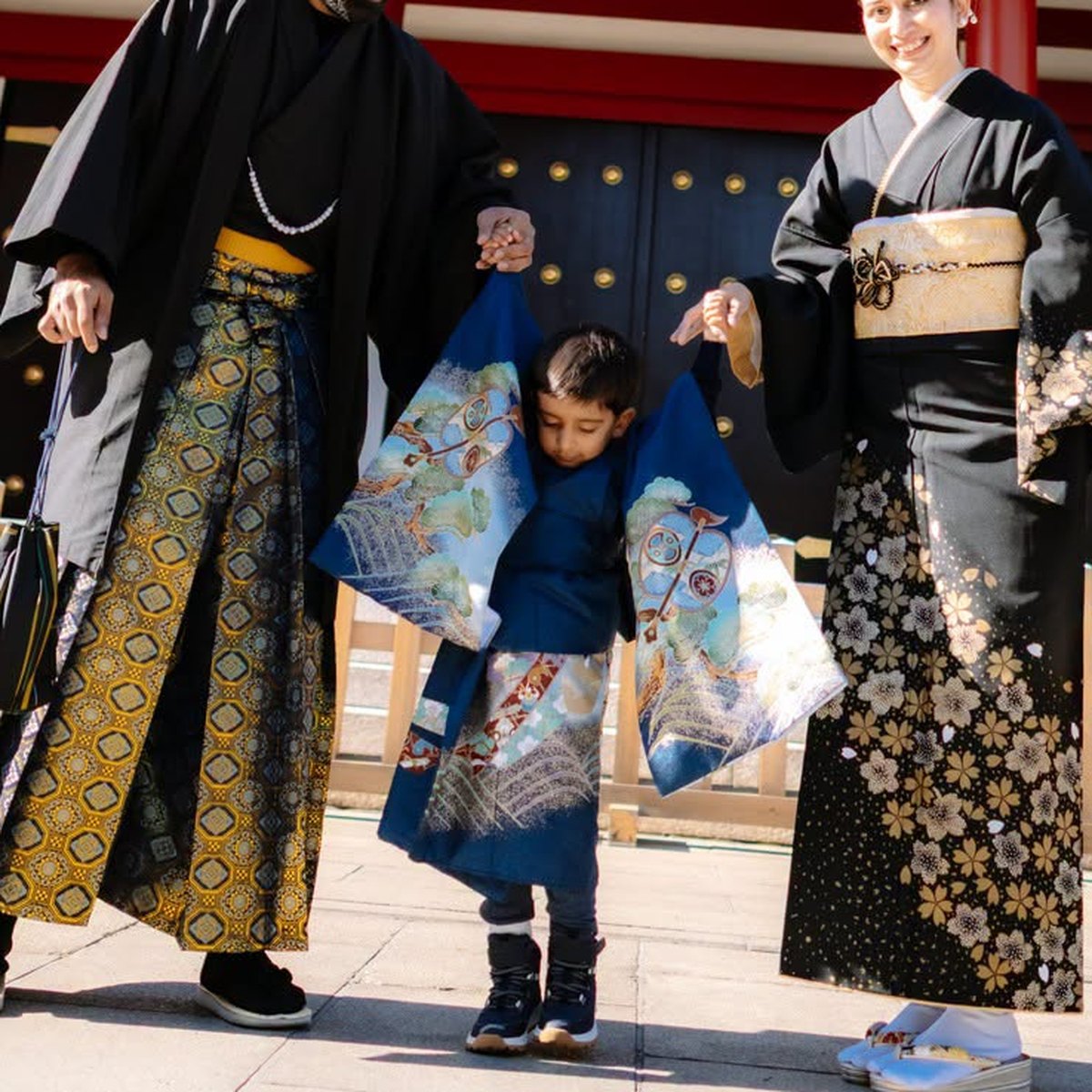
Walk past a large shrine on a Saturday in Japan and there is a fair chance you will see a wedding party or, in November, a crowd of small children in bright hakama and furisode clutching long paper bags of candy. Both scenes are worth pausing for, and both make much more sense when you can read the outfits: who is the bride's mother, why one guest's sleeves reach the floor, what the little boy's stiff jacket signifies. This article explains the kimono of a Japanese wedding and of Shichi-Go-San, the rite for children aged three, five and seven, and ends with how a visiting family can rent the same styles for a photograph of their own.
The bride: shiromuku and iro-uchikake
At a Shinto wedding the bride most often wears shiromuku — white from the outer robe down to the inner layers, the obi and the sandals. White here means purity and a blank page: she takes on the colours of her new family. Over her hair she may wear the wataboshi, a large white hood, or the tsunokakushi, a narrow white band — literally "horn-hider", a gentle joke about setting aside stubbornness.
After the ceremony, for the reception, many brides change into the iro-uchikake: a heavily embroidered outer robe in red, gold or deep colours, worn open over the kimono and trailing on the floor, with cranes, pine, plum, phoenixes and wave patterns picked out in metallic thread. It is the most sumptuous garment in Japanese dress, and it is meant to be — it is worn once.
The groom: montsuki hakama
The groom wears montsuki hakama: a black haori jacket with five family crests, over a black kimono, with striped hakama trousers and a white haori cord at the chest. It is severe, architectural and identical from groom to groom, which is the point — the formality is in the sameness. The same outfit appears at graduations, at formal receptions and, in a lighter version, at Shichi-Go-San on the father.
The guests: reading the sleeves and the hem
- Kurotomesode. Black ground, five crests, pattern only along the hem. Worn by the mothers of the couple and by close married relatives. If you see two women in identical black-and-gold at the front of the party, they are the mothers.
- Irotomesode. The same cut on a coloured ground; for married relatives and older guests.
- Furisode. Sleeves to the ankle, pattern all over: the formal kimono of young unmarried women, worn by sisters, cousins and friends of the bride. The swinging sleeves are the brightest thing in the room.
- Houmongi. Semi-formal, pattern flowing across the seams; the safe choice for any woman guest of any age.
- Men wear a dark suit or, less often, montsuki hakama in grey rather than the groom's black.
Shichi-Go-San: seven, five, three
On and around 15 November, families take children aged three and seven (girls) and five (boys) — in some regions three as well — to a shrine to give thanks for their growth and pray for the years ahead. The name is simply the three ages. Historically the milestones marked a child being allowed to grow their hair, to wear hakama for the first time, and to tie a proper obi; today they are a dressing-up day, a shrine visit, a formal photograph and a long lunch.
The outfits follow the ages:
- Girls aged three wear a kimono with a hifu, a padded sleeveless vest over the top, because a three-year-old cannot manage an obi. The hifu is the giveaway that a child is three.
- Boys aged five wear their first hakama, with a crested haori — a miniature montsuki hakama — and often carry a toy sword and a fan. The photograph of a five-year-old trying to look stern in this outfit is a national genre.
- Girls aged seven wear a full kimono with a real obi, usually a bright furisode-style garment with a decorative knot at the back, hair ornaments and a small purse. It is the first "grown-up" dressing of their lives.
Every child carries chitose-ame, "thousand-year candy": long red and white sticks in a paper bag printed with cranes and turtles, the symbols of long life. The bag is as much a part of the picture as the kimono.
Watching respectfully
Weddings and Shichi-Go-San parties at shrines are private family occasions taking place in a public space. Watching from a distance is fine and normal; so is a photograph that does not single anyone out. Do not step into the family's photographer's frame, do not ask a bride to pose, and do not photograph children up close without asking a parent. Most parents, asked politely, are delighted.
Wearing the same styles as a visitor
None of these garments is off limits to a visiting family for a photograph — the ceremonial rules govern Japanese occasions, not tourists having a picture taken. What a rental shop offers is the everyday equivalent of each:
| Seen at the ceremony | Rental equivalent at OlaChill | Price |
|---|---|---|
| Groom's / father's montsuki hakama | Montsuki (crested haori, hakama) | ¥10,000 |
| Mother's kurotomesode | Tomesode | ¥12,000 |
| Guest's houmongi | Houmongi | ¥12,000 |
| Young guest's furisode | Furisode / Design Furisode | ¥19,000 / ¥25,000 |
| Boy's first hakama (age five) | Boy's Kimono | ¥8,000 |
| Girl's kimono and obi (ages three and seven) | Girl's Kimono | ¥8,000 |
All prices include tax and the accessory set; hair styling is ¥1,500 and make-up ¥5,000 extra; children's plans include the child-size set and an accompanying adult who is not renting pays nothing. Both OlaChill shops — Tokyo Asakusa near Sensō-ji and Kyoto Kiyomizu below Kiyomizu-dera — are a short walk from a temple or shrine forecourt where the family photograph belongs. Our family guide covers ages, timing and how to keep a three-year-old cheerful through the dressing.
If your visit falls in November, dressing the children in the Boy's or Girl's Kimono plan and walking to the nearest shrine puts you in exactly the same scene as the Japanese families around you — the same stone steps, the same paper bags of candy from the shrine shop, the same slightly bewildered five-year-old in hakama.
Dress the family: OlaChill Tokyo Asakusa · OlaChill Kyoto Kiyomizu. Book each person's plan at the same time slot; note each child's age and height.
Frequently asked questions
Can a visitor attend a Japanese wedding in rented kimono? If you are invited, yes — houmongi for women and montsuki hakama or a dark suit for men is the appropriate level. Tell the shop it is for a wedding and they will steer you away from patterns reserved for the bride's family.
Is Shichi-Go-San only on 15 November? The date is 15 November but families visit on weekends throughout late October and November, so the shrines are lively for weeks.
Do shrines charge to enter during these events? The grounds are free. Families pay the shrine for the private blessing; visitors watching from the forecourt pay nothing.
Which shrines are best for seeing Shichi-Go-San? Any large shrine on a November weekend. In Tokyo, Meiji Jingu and Sensō-ji's neighbouring Asakusa Shrine; in Kyoto, Yasaka Shrine and Heian Shrine.
My daughter is four — is she "three" or "seven" for the outfit? For a rental it does not matter; the Girl's Kimono plan fits a range of heights and the staff adjust the tucks. The hifu vest is used for the smallest children because it is comfortable, not because of the calendar.
More from this region — Other
View all →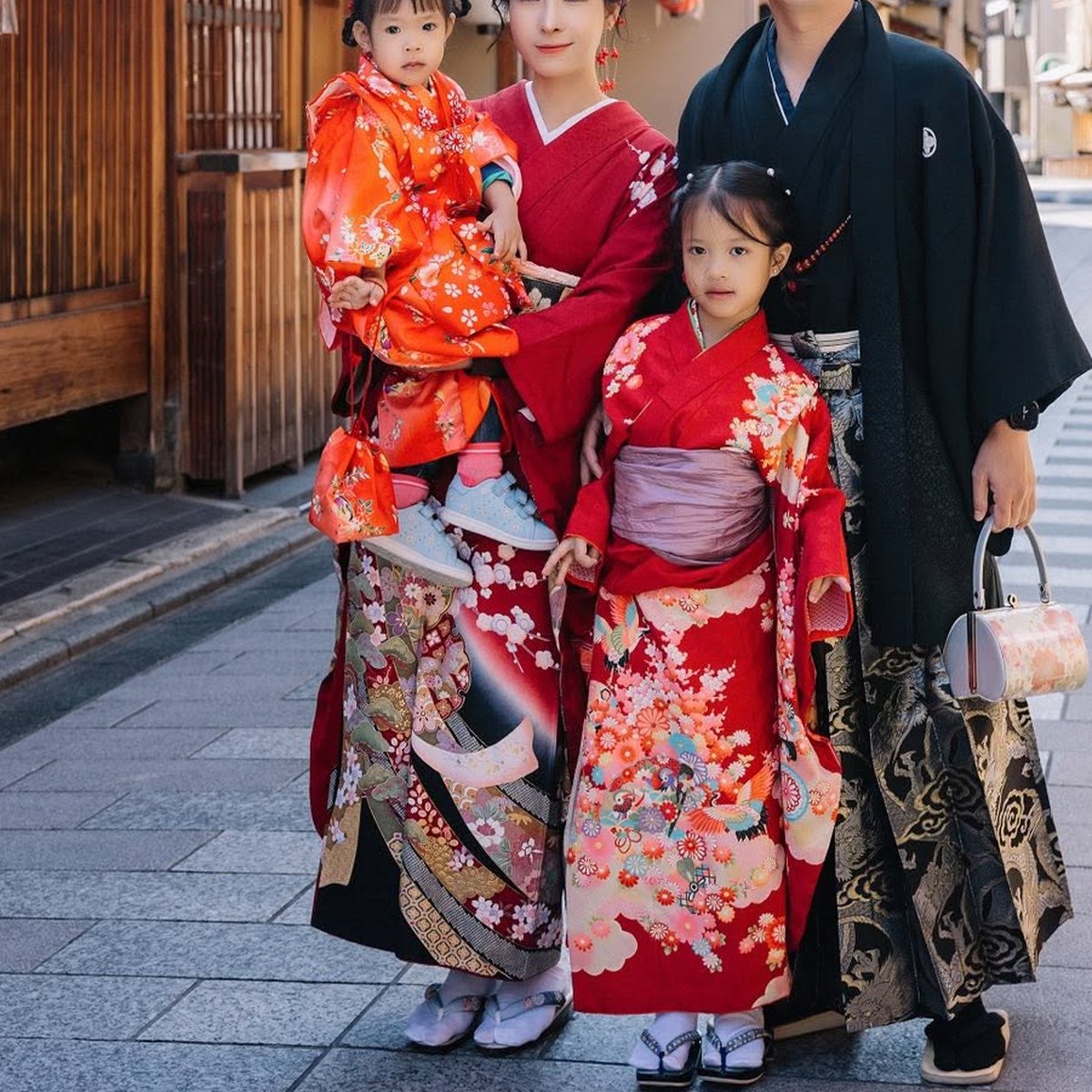
Kimono Rental with Kids: Yukata and Kimono Plans for Boys and Girls
9 min · culture
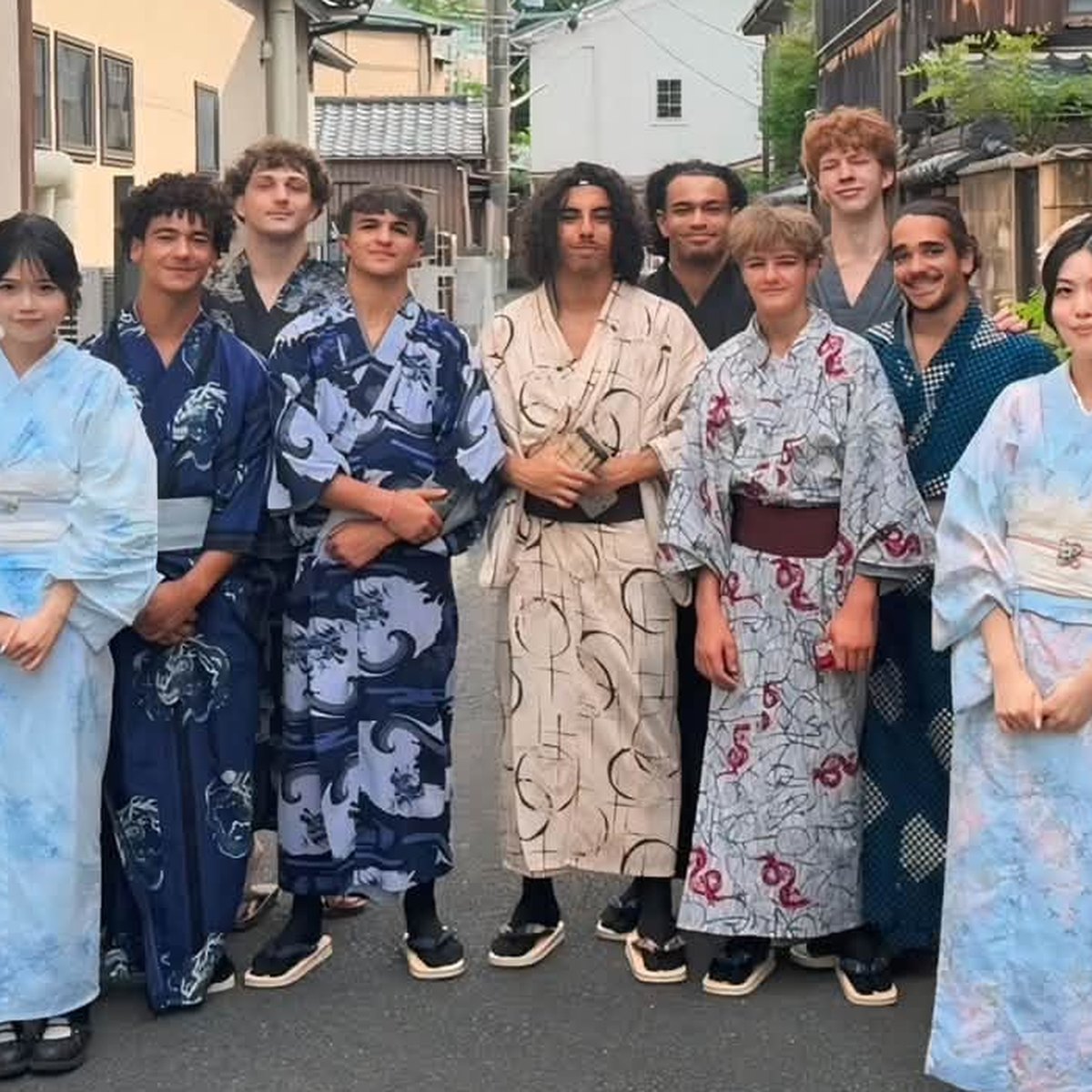
Renting Kimono as a Group: Timing, Matching Styles and Keeping Everyone Moving
6 min · culture
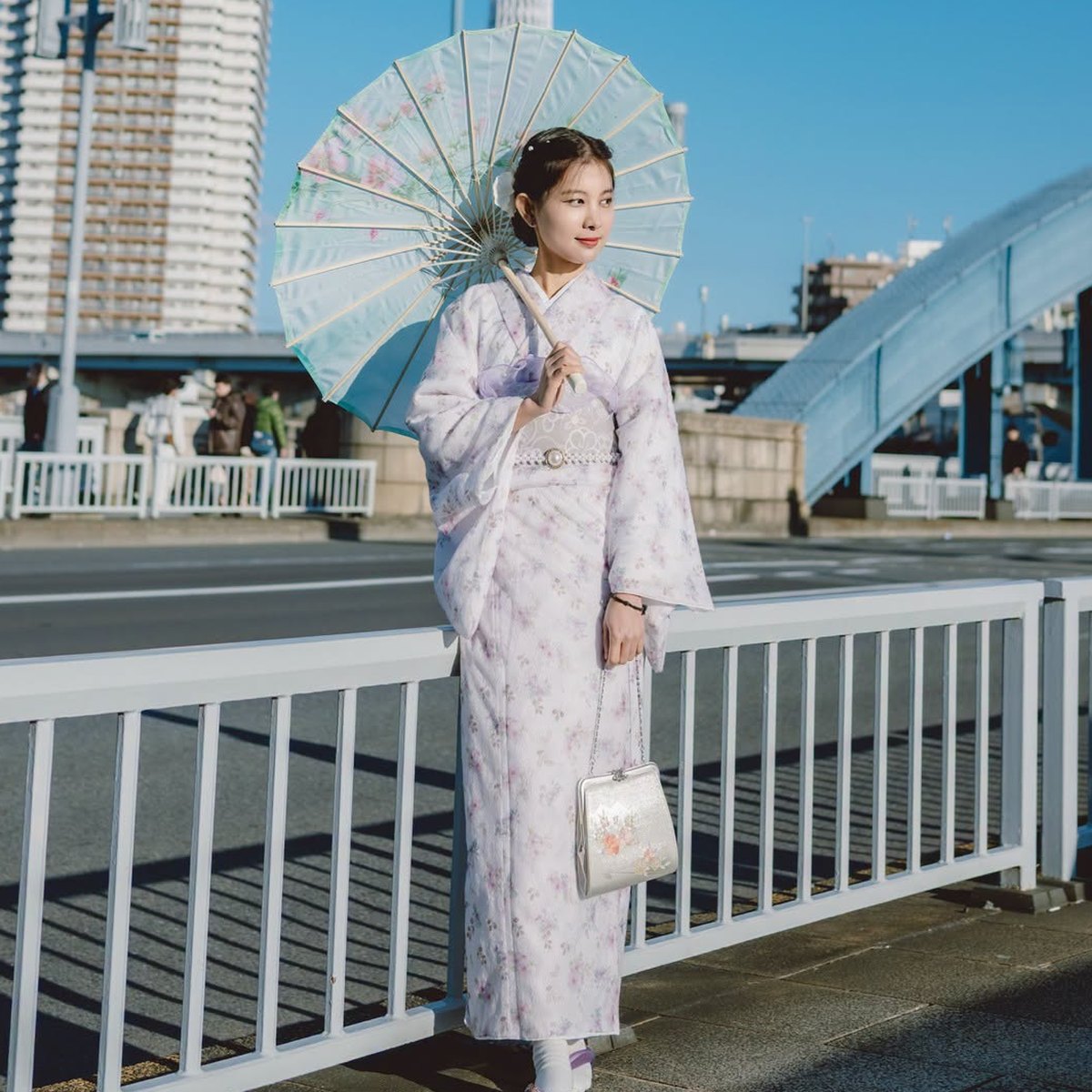
Kimono on a Rainy Day: Umbrellas, Hem Protection and Indoor Photo Ideas
6 min · culture
Kimono Sizes for Tall, Petite and Plus-Size Visitors: What Rental Shops Can Fit
6 min · culture