
Walking Through Karuizawa in Autumn: From Kumoba-ike Pond to Usui Pass
No car or bicycle needed: an approximately 9 km walking route through a mirror-like pond, an old shopping street, and the Asama Mountain viewpoint—with distances, gradients for each section, and a departure time to avoid the crowds.
Aug 12, 2026·✍️ olablog·⏱ 17 min read
No car or bicycle needed: an approximately 9 km walking route through a mirror-like pond, an old shopping street, and the Asama Mountain viewpoint—with distances, gradients for each section, and a departure time to avoid the crowds.
Tap a region to browse articles
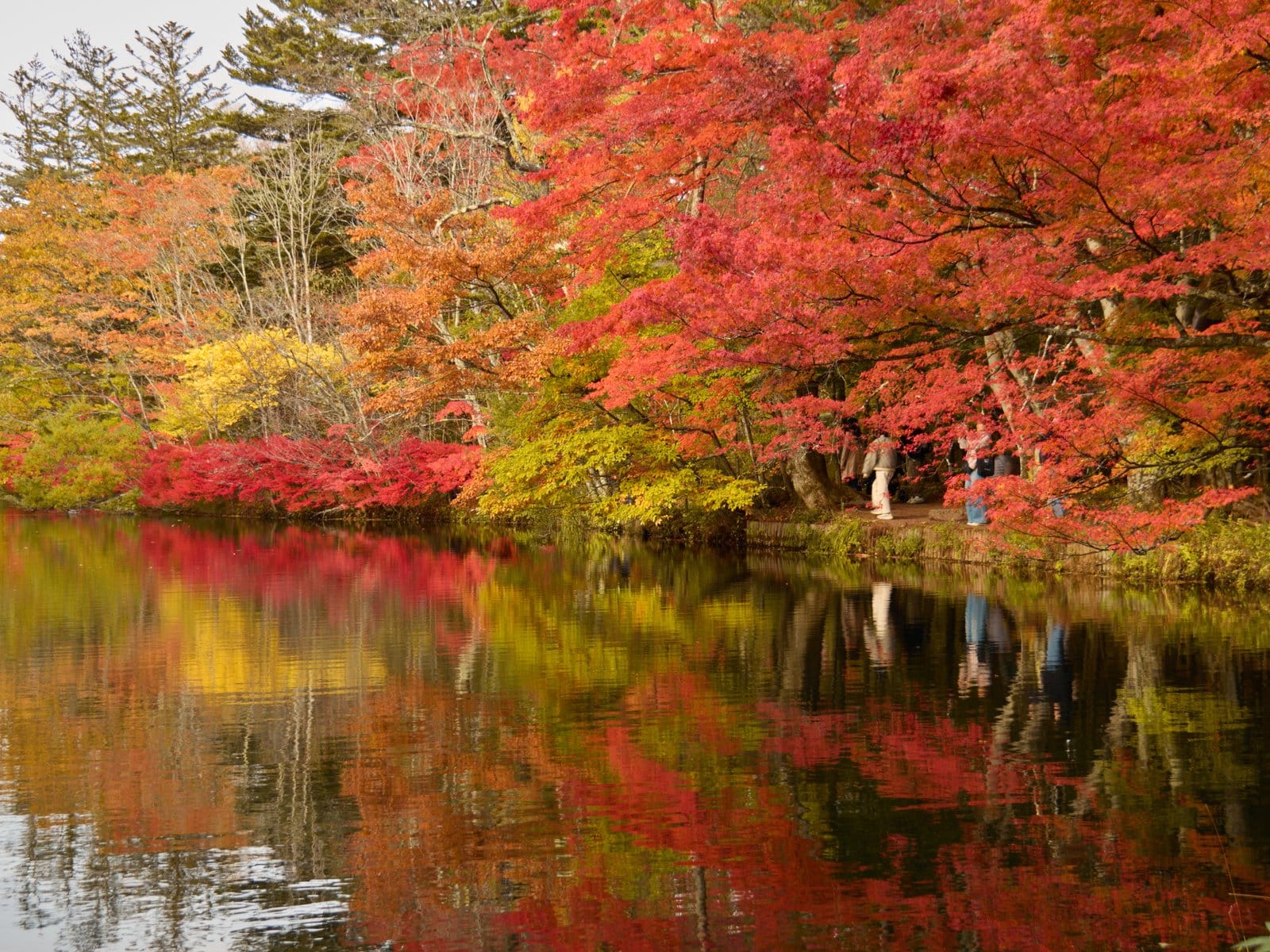
There’s a moment in Karuizawa that I think everyone visiting in autumn should treat themselves to at least once: around 8 a.m. at Kumoba-ike Pond, when the mist hasn’t fully lifted, the water is flat as a mirror, and the entire stand of red, orange, and yellow maples is reflected upside down on its surface. At that hour, there are only a few locals walking their dogs around the pond, and the only sound you hear is falling leaves. Exactly an hour and a half later, in that same spot, you’ll be lining up to take a photo without a dozen selfie sticks in the frame.
The difference between those two scenes has nothing to do with money, renting a fancy car, or staying at a beautiful hotel—it comes down to what time you set out and how you get around. And here’s something few people tell you about Karuizawa: this resort town, famous for its cycling and scenic drives, is actually at its best on foot during the autumn foliage season. Roads clog up, parking lots fill by midmorning, and bicycles can’t handle the climb to the most beautiful section of the pass.
This article isn’t another vague itinerary along the lines of “visit this place in the morning and that one in the afternoon.” Instead, it focuses on one full-day walking route that requires no car at all: Karuizawa Station → Kumoba-ike Pond → Kyu-Karuizawa Ginza Street → Usui Pass viewpoint. The total distance is approximately 9–10 km, with some easy, flat stretches, some sweaty uphill sections, and a panoramic reward at the end: Mount Asama and the autumn-colored mountains of Gunma. I’ve listed the distance, time, gradient, and resting spots for each section below.
Route overview: four sections, one day
Before getting into the details, here’s the basic framework:
- Section 1: Karuizawa Station → Kumoba-ike Pond, approximately 1.5 km, 20–25 minutes, flat.
- Section 2: Walk around Kumoba-ike Pond, approximately 1 km, 25–40 minutes depending on how often you stop for photos.
- Section 3: Kumoba-ike Pond → Kyu-Karuizawa Ginza Street, approximately 1.2 km, 15–20 minutes, almost entirely flat. Add extra time for browsing the street and having lunch.
- Section 4: End of Ginza Street → Usui Pass viewpoint (Usui-toge Miharashi-dai), approximately 3 km on a gradually climbing trail, 60–90 minutes. You can walk back down or take a bus during the high season.
The total distance for the day, including wandering around the shopping street, comes to about 9–10 km. That may sound like a lot, but the route is broken into manageable sections with rest stops in between, so anyone in average physical condition—including people traveling with fit older parents—should be able to complete it comfortably. The only key point is to start early. I’ll explain why in the final section.
As for getting to Karuizawa: from Tokyo, take the Hokuriku Shinkansen, and you’ll arrive in a little over an hour. If you want to reach the pond before 8:30 a.m., choose a train departing Tokyo between 6:30 and 7:00. It may sound tough, but trust me—this is the most worthwhile investment of the entire trip.
Section 1: Karuizawa Station → Kumoba-ike Pond
Exit Karuizawa Station through the North Exit, turn northwest, and follow Kumoba-dori. The approximately 1.5 km route is completely flat, with wide sidewalks and resort villas tucked behind rows of karamatsu trees (deciduous larches)—the trees that create one of Karuizawa’s signature autumn scenes. By the time the maples have turned a vivid red, the karamatsu turn a brilliant gold, and toward the end of the season, their golden needles fall across the road as if someone had sprinkled it with glitter.
A leisurely walk takes 20–25 minutes. Autumn mornings here are noticeably colder than in Tokyo—Karuizawa sits at an elevation of approximately 950 m, and temperatures in the early morning in late October can drop to around 0–5 degrees. That makes this first walk of the day particularly pleasant: it’s just enough to warm you up before you stop to admire the pond.
One small tip: if you’re hungry, there are several cafés and convenience stores near the station that open early. Pick up a pastry and a bottle of hot tea to take with you. Don’t expect a proper breakfast around the pond—there are hardly any shops open around Kumoba-ike at that hour.
Walking around Kumoba-ike Pond
Kumoba-ike is a small pond in the forest, once known by the Japanese as “Swan Lake.” Its appeal in autumn isn’t its size but its reflections on the water. Sheltered from the wind, the pond is almost perfectly still in the early morning, creating a symmetrical scene of red foliage mirrored on the surface—the kind of view you’ve seen all over Instagram, except that it’s even more beautiful in person.
The path around the pond is approximately 1 km long, covered with gravel and compacted earth, and flat enough for ordinary sneakers. Walking one full loop without stopping takes about 20–25 minutes, but during the autumn foliage season, allow 40 minutes because you’ll be stopping constantly. In my experience, the best photo spot is on the opposite bank from the main entrance. From there, you can capture both the maple trees and their reflections, while the morning sunlight comes from behind you, making the colors glow without backlighting the scene.
There are a few wooden benches around the pond, providing the first rest stop on the route. Sit down, take a sip of the hot tea you brought, and watch the mist rise from the water—I’m not exaggerating when I say that some people walk this entire route just for those fifteen minutes.
A note about the high season: from around 9:00 to 9:30 a.m., tour groups begin arriving, and the path around the pond is fairly narrow, so it quickly becomes packed. That’s why this entire itinerary revolves around being at the pond before 8:30.
Section 2: Kumoba-ike Pond → Kyu-Karuizawa Ginza Street
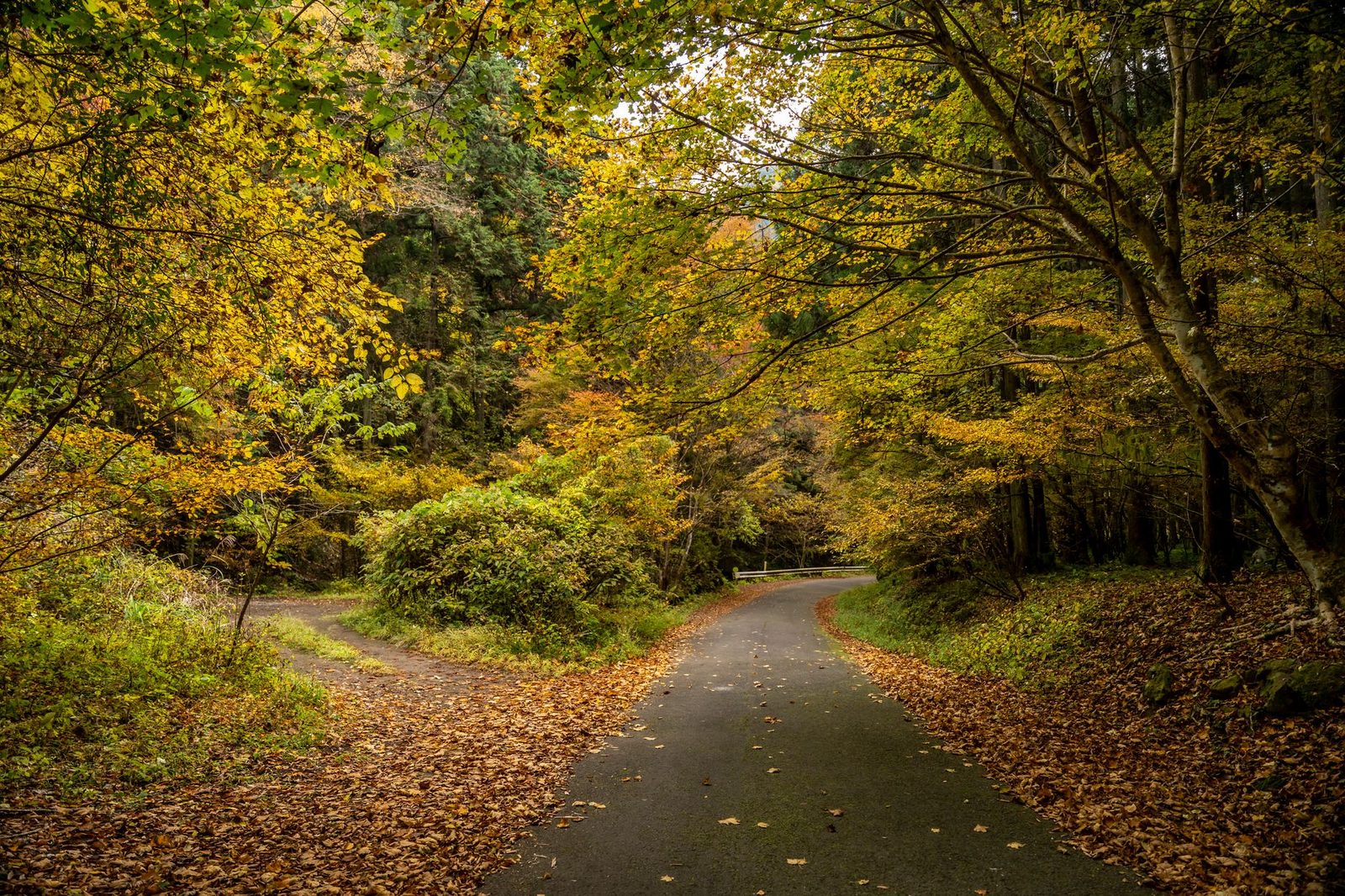
From the pond, head northeast along small roads through the old villa district toward Kyu-Karuizawa (Old Karuizawa). This section is approximately 1.2 km and takes 15–20 minutes. It remains flat and very pleasant, with many stretches where tree branches meet overhead, thick fallen leaves underfoot, and the occasional wooden church or café tucked into the forest. Google Maps gives accurate directions here, so you can follow it with confidence.
Arriving around 9:30–10:00 is ideal. Kyu-Karuizawa Ginza Street—the roughly 700–800 m-long shopping street that has been the soul of the town since Western missionaries began coming here to escape the heat more than a hundred years ago—is just beginning to open. The shops are getting ready for the day, the street is still relatively quiet, and you can browse at your leisure.
Rest and “refuel” before climbing the pass
This is the strategic rest stop on the entire route, because the next section climbs continuously and there are almost no places to buy food or drinks on the pass until you reach the viewpoint. Here are a few stomach-tested suggestions:
- Karuizawa-style French bread: The area has several long-established bakeries famous throughout Japan, with visitors from Tokyo lining up to take bread home. Buying one or two items to eat along the climb is a classic choice.
- Sausages and smoked ham: Local specialties, often sold grilled on skewers so you can eat them on the spot.
- Karuizawa jam: More suitable as a souvenir, but sampling the free tastings at the shops is fun. If you’re buying some, wait until the afternoon so you don’t have to carry it up the pass.
- Hot coffee to go: Walking with a cup in the crisp autumn air—it’s simple, but it becomes a memorable part of the day.
Having an early lunch in this area, around 10:30–11:00, works best. You’ll avoid the restaurant rush and still have plenty of time to start the climb. Don’t eat too much—a steep climb on a full stomach is not a pleasant experience.
One important thing to do before leaving the street: fill up your water supply. Carry at least 500 ml per person. The dry autumn air will make you thirsty faster than you expect.
Section 3: End of Ginza Street → Usui Pass viewpoint
This is the most rewarding section—and the reason this route isn’t suitable for bicycles. Follow Ginza Street northeast, passing Shaw Memorial Church—Karuizawa’s first church, a tiny building in the forest that’s well worth a 10-minute stop—and you’ll reach a small bridge marking the entrance to the walking trail up Usui Pass, known in Japanese as Usui-toge yuhodo, or the Usui Pass walking path.
Distance, gradient, and trail conditions
- Distance: approximately 3 km from the foot of the climb to the viewpoint.
- Elevation gain: from approximately 950–1,000 m to around 1,200 m, meaning an additional climb of roughly 200–250 m—equivalent to climbing a 60–70-story building, but spread over 3 km, making the average gradient a moderate 7–8%.
- Time: 60–90 minutes depending on your fitness. Experienced walkers can reach it in 60 minutes; if you’re traveling with older adults, take your time and allow 90 minutes—there’s no need to rush.
- Trail surface: dirt and fallen leaves, with some sections following an old automobile road. It’s generally easy to walk, but it becomes slippery after rain, and thickly fallen karamatsu needles late in the season can conceal tree roots and rocks. Sneakers with good traction are sufficient; specialized hiking shoes aren’t necessary, but flip-flops or ballet flats are definitely a bad idea.
This path essentially follows the old Nakasendo route, one of the historic highways connecting Edo and Kyoto. Usui Pass was once among the most difficult sections for travelers to cross during the Edo period. As you climb, imagining people from centuries ago carrying goods up the very slope where you’re panting can suddenly make your sneakers feel extraordinarily luxurious.
There are several natural rest spots along the way—places where the trail widens, with a large rock or tree stump suitable for sitting. Take a short 2–3-minute break every 20 minutes, have a sip of water, and you’ll reach the top before you know it. The autumn forest here is beautiful in a “layer of fire overhead, layer of carpet underfoot” kind of way: maples, oaks, and karamatsu change color in turn, with the hues becoming deeper as you climb higher and the temperature drops.
At the viewpoint: the final reward
Usui Pass viewpoint (Usui-toge Miharashi-dai) sits directly on the border between Nagano and Gunma prefectures. There’s even a marked line where you can stand with one foot in each prefecture for a fun photo. The view opens in two directions: on one side is Mount Asama, the imposing active volcano rising behind Karuizawa, its summit often trailing a little smoke; on the other are the layers of mountains in Gunma, including the jagged profile of Mount Myogi, splashed with red and yellow in autumn like a lacquer painting. If the sky is clear, the afternoon sun cuts across the mountain ranges—and this is when you understand why you didn’t drive. The feeling of climbing up under your own power to see this view is completely different from stepping out of a parking lot.
Near the viewpoint is a small settlement with a few teahouses and old-fashioned mochi shops. The chikara-mochi (literally, “power mochi”) served here has been famous since the days when travelers crossed the pass. Eating a plate of warm mochi with tea after the climb is the name’s meaning in the most literal sense. The shops operate seasonally and take irregular days off, so don’t rely on them for your entire lunch—consider it a bonus if you find one open.
Section 4: The return journey—two options
Option 1 — walk back down: Follow the same route. The descent is faster than the climb and takes approximately 45–60 minutes to reach Ginza Street. If your knees are weak, take the steep sections slowly and use the dry leaves along the edges of the path as a cushion. You’ll reach the street around 3:00 p.m., leaving the rest of the afternoon for shopping, cafés, and then walking or taking a bus/taxi back to the station (from Ginza Street to Karuizawa Station is approximately 1.3 km on flat roads, or a 20-minute walk).
Option 2 — take the bus: During the autumn foliage season and other peak periods, a small bus service usually runs between Kyu-Karuizawa and the Usui Pass viewpoint. It’s a “lifeline” for anyone who can’t manage the descent or wants to save time. However, schedules change seasonally and are adjusted in some years, so be sure to check the official Karuizawa tourism information website in advance, and check the time of the last bus as soon as you reach the viewpoint—don’t let the sunset hold you there until you miss the final departure.
If you get back to the station before 5:00 p.m., you’ll have no trouble catching a Shinkansen to Tokyo in time for dinner. One day, one pair of shoes, not a liter of gasoline.
Departure time to avoid the crowds: sample timeline
This is the schedule I find works best for a weekend during the autumn foliage season:
- 6:30–7:00 — Board the Shinkansen from Tokyo.
- 8:00 — Arrive at Karuizawa Station, buy some snacks, and set off on foot.
- 8:25 — Reach Kumoba-ike Pond while it’s still quiet, with mist hovering over the water. These are the golden 45 minutes of the entire day.
- 9:15 — Leave the pond just as tour groups begin arriving.
- 9:35 — Arrive at Kyu-Karuizawa Ginza Street as the shops are opening and the street is still quiet.
- 10:30 — Have an early lunch, and buy snacks and water for the climb.
- 11:15 — Start climbing the pass. By this time, the sun is warm, the forest is beautifully lit, and you avoid both the early-morning chill and the late-arriving crowds.
- 12:30–13:00 — Reach the viewpoint, rest, have a snack, and take as many photos as you like.
- 14:00 — Start back down (or take the bus if available).
- 15:00 — Return to Ginza Street for coffee and souvenir shopping. This is when the street is busiest, but you’re only there to stroll around, so it doesn’t matter.
- 16:30–17:00 — Return to the station and board your train.
On weekdays, you can shift every time by about an hour and still have a relaxed experience. But on peak autumn-foliage weekends, which usually fall from late October to early November, I recommend sticking closely to this schedule. Arriving at Kumoba-ike an hour later can mean an entirely different experience.
What to bring for this route
- Shoes: Comfortable sneakers with good traction. Hiking boots aren’t necessary.
- Clothing: Dress in layers. Early mornings by the pond can be close to 0 degrees, while climbing at midday will leave you sweating—ideally, wear a light jacket that you can remove and pack into your backpack. Add a thin scarf for standing at the viewpoint, where the wind is noticeably colder than in town.
- Water and snacks: At least 500 ml of water per person, plus bread or onigiri bought in town.
- Cash: Bring some, as small shops on the pass and a few long-established stores in town may not accept cards.
- Portable battery: Cold weather drains phone batteries quickly, and you’ll take more photos than you expect. Trust me.
- Check the weather: Rain the day before can make the trail slippery; on windy days, ripples form on Kumoba-ike and the mirror effect disappears. Clear weather after several cold, dry days is perfect.
When is the foliage at its best?
Karuizawa’s autumn arrives a month earlier than Tokyo’s because of its elevation. Usually, the leaves begin changing in mid-October, peak around late October through the first week of November, and the beautiful golden karamatsu needles continue falling for approximately another week afterward. The timing shifts by several days or half a month from year to year depending on the weather, so check Japan’s autumn foliage forecasts before you go—search for “軽井沢 紅葉” and you’ll find them.
There’s also a “niche” option for anyone who hates crowds: visit during the second week of November, when the maples are past their peak but the karamatsu are at their golden best and the crowds have thinned. The scenery is more subdued then—gold and brown rather than brilliant red—but the quiet is pure Karuizawa, the kind of atmosphere people write about in novels.
Frequently asked questions
Is this route suitable for people who aren’t very active?
Yes, as long as you’re willing to walk slowly. The first three sections are completely flat; only the 3 km climb to the pass requires real effort. If you start feeling tired, you can take the shortened option: station → Kumoba-ike Pond → Ginza Street and back, for a total of only approximately 5 km on flat roads. You’ll still get the full mirror-pond and old-town experience. Alternatively, check whether the bus is running during the high season and take it up to the viewpoint, then walk back down.
Can I do it with children?
Children around 6–7 years old who are used to walking should manage it easily, and they’re often the most excited during the forest section. With younger children, a stroller works for the first three sections but won’t handle the trail up the pass, so consider a baby carrier or choose the shortened option.
Do I need to bring food from Tokyo?
No. Kyu-Karuizawa Ginza Street has more than enough options for lunch and snacks along the way. Just remember the basic rule: buy enough water and snacks before leaving the street to climb the pass, because there are no shops on the trail and even vending machines are rare.
What if it rains—should I still go?
The first three sections are fine in light rain, and Kumoba-ike can even take on a uniquely beautiful, very “Japanese film” quality in the drizzle. But you should skip the pass climb in rainy weather—the trail is slippery, and at the viewpoint you’ll probably see nothing but clouds. Stay flexible: if it rains, replace Section 4 with time spent at a café, visiting a museum, or exploring the old churches around Kyu-Karuizawa.
Is there anywhere else I can visit if I still have energy at the end of the day?
If you return to the station area while it’s still light, the shopping complex right next to the station on the South side is the most convenient place to kill time while waiting for your train, and it includes a large outlet mall. If you’re staying overnight in Karuizawa, visit Shiraito Falls or the Nakakaruizawa area the next morning—but that’s a story for another article.
There’s nothing “secret” about this route—every stop along it is well known. What makes it special is connecting them on foot, at the pace this town was made to be enjoyed: slowly, in the cold, surrounded by the scent of fallen leaves and freshly baked bread. I hope you have a truly autumnal day in Karuizawa—and remember, don’t be late for that 8 a.m. reflection on the pond.
More from this region — Chubu (Nagano, Kanazawa)
View all →
Hunting for Autumn Photos in Karuizawa: Where to Stand and When to Shoot
16 min · tips
Karuizawa Highland Drive – Japan's Coolest Escape (Literally)
5 min · tips
Branching out from Karuizawa: 2–3 autumn days through Kusatsu, Asama, and Usui Pass
15 min · tips
Karuizawa’s Week-by-Week Fall Foliage Calendar
16 min · tips