
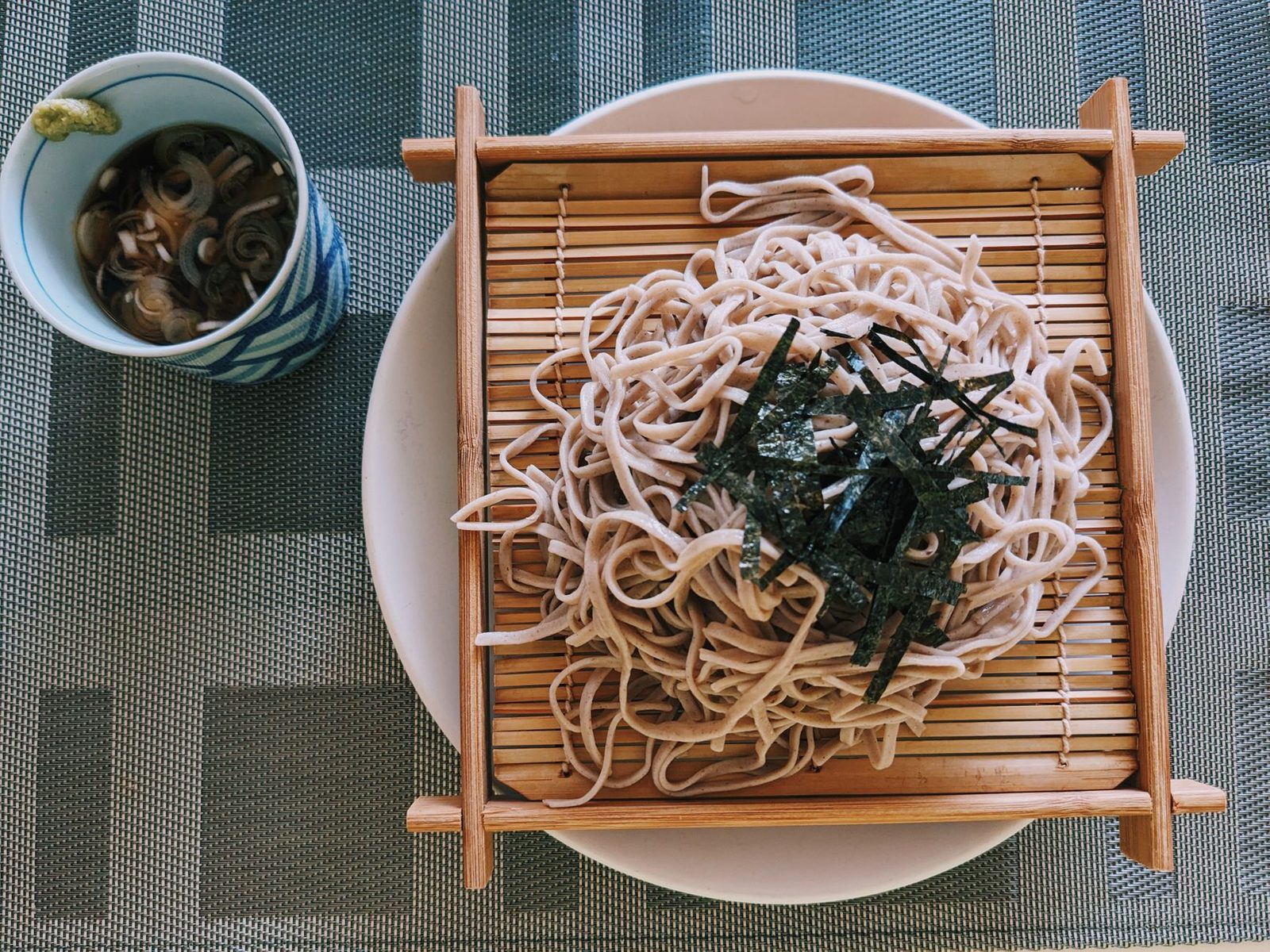
Karuizawa in Autumn: What to Eat, from New-Crop Soba to Harunire Coffee
Fragrant shin-soba made with freshly harvested buckwheat, wild mushroom tempura, crisp and sweet Nagano apples, and hot coffee beneath golden foliage — the best flavors of this mountain town as autumn arrives.
Aug 12, 2026·✍️ olablog·⏱ 16 min read
Fragrant shin-soba made with freshly harvested buckwheat, wild mushroom tempura, crisp and sweet Nagano apples, and hot coffee beneath golden foliage — the best flavors of this mountain town as autumn arrives.
Tap a region to browse articles
One morning in late October, I stepped out of Karuizawa Station, and the first thing I felt wasn’t the sight of red leaves but the dry, distinctive chill of the highlands — the kind of cold that makes you hungry faster than usual. Less than ten minutes into my walk, the smell of freshly baked bread drifted from a small shop, mingling with the scent of dry leaves, and I suddenly understood why Japanese people often say, “Autumn is the season of appetite” (shokuyoku no aki). In Karuizawa, that isn’t a tourism slogan. It’s the truth unfolding on every dining table.
Karuizawa has been a retreat for Tokyo’s wealthy for more than a hundred years, so the standard of dining here is considerably higher than in an ordinary mountain town. But what makes autumn especially wonderful is the near-perfect convergence of seasonal ingredients: newly harvested soba, forests bursting with mushrooms, ripe chestnuts, and Nagano apples at their sweetest — all arriving at restaurants, bakeries, and markets during the brief six-week window from mid-October to mid-November, just as the maple leaves turn red.
In this article, I’ll take you on an “autumn food tour” of Karuizawa following the route I usually take: from a steaming bowl of shin-soba to mushroom and chestnut dishes, with stops at Sawaya jam shop and Asanoya bakery, before ending with coffee amid the golden forest at Harunire Terrace. I’ll also include addresses, approximate prices, autumn-only specialties, and a list of worthwhile souvenirs to take home.
Why autumn is the best season for food in Karuizawa
Karuizawa sits at an elevation of around 1,000 meters in Nagano Prefecture — a region known throughout Japan for soba, apples, mushrooms, and highland produce. The wide difference between daytime and nighttime temperatures in autumn causes vegetables and fruit to accumulate more sugar; that’s why Nagano apples picked in October taste so different from the apples sold year-round in Tokyo supermarkets.
As for timing: the leaves begin changing color in mid-October, with the peak usually falling from late October to early November (the timing shifts slightly each year, so check the koyo forecast before you go). New-crop soba also appears around this time. In other words, if you can visit Karuizawa only once a year, choose the last two weeks of October — you’ll get the best scenery and the very peak of the food season.
One note from personal experience: on autumn foliage weekends, Karuizawa can be just as crowded as a miniature Kyoto in fall. Popular soba restaurants may have waits of 30–60 minutes around lunchtime. If you can go on a weekday, your experience will be much more relaxed.
Shin-soba: noodles available for only a few weeks each year
What is shin-soba, and why do food lovers wait all year for it?
Shin-soba (新そば) literally means “new soba” — noodles made from buckwheat harvested that autumn, usually milled and rolled within a few weeks of harvesting. The difference is in the aroma: fresh buckwheat retains a green, slightly sweet fragrance, with a hint reminiscent of freshly made young rice cakes — something soba made from long-stored flour can never replicate. Japanese soba enthusiasts treasure shin-soba the way we Vietnamese treasure cốm at the start of the season — wait a few weeks too long and it’s gone.
Nagano, formerly known as Shinshu, is Japan’s soba capital, and restaurants in Karuizawa start displaying flags or signs reading “新そば” outside their doors around late October. When you see that sign, don’t hesitate — go in.
The best way to appreciate it: order seiro soba (cold noodles served on a bamboo tray), pick up a few strands and taste them without dipping first to take in the buckwheat aroma, then dip about one-third of the noodles into the tsuyu dipping sauce. At the end of the meal, the restaurant will bring you a pot of sobayu — cloudy, milky-colored noodle-cooking water — to pour into the remaining tsuyu and drink warm. When it’s 10 degrees outside, finishing a meal with a hot bowl of sobayu is hard to beat.
Where to eat: Kawakamian and the restaurants around the old town
The restaurant I always recommend to first-time visitors is Kawakamian (川上庵) — a modern soba restaurant with a warm wooden interior, wine, and small plates, all very “Karuizawa.” The main location is right at the entrance to Kyu-Karuizawa Ginza (the old shopping street, about 15–20 minutes on foot or 5 minutes by taxi from Karuizawa Station), and there’s another branch at Harunire Terrace — convenient if you’re combining it with an afternoon itinerary.
- What to order: seiro soba with shrimp tempura or autumn vegetable tempura. During mushroom season, the restaurant often serves mushroom soba in broth — a dish that appears only on the autumn menu.
- Price range: a serving of seiro costs around 1.000–1.400 yen; with tempura, a meal comes to about 2.000–3.000 yen per person. It isn’t cheap compared with casual soba, but it’s worth it.
- Tip: go outside the main lunch hours (before 11h30 or after 13h30) to avoid a long wait.
Besides Kawakamian, the old town and Naka-Karuizawa are home to many smaller family-run soba shops with gentler prices (around 900–1.500 yen per meal). My rule for choosing a restaurant is simple: if it says “house-milled” (jikasei/石臼挽き) and displays a shin-soba sign, it’s almost never a bad choice.
Wild mushrooms and chestnuts: the taste of Shinshu’s mountains in every dish
Mushroom season — from affordable maitake to luxurious matsutake
The forests around Karuizawa and throughout Nagano are rich with autumn mushrooms: maitake, shimeji, nameko, and assorted kinoko. During the season, local restaurants put mushrooms into almost everything — crisp mushroom tempura, mushroom soba and udon, mixed mushroom rice (kinoko gohan), and steaming mushroom hot pots. If you see きのこ (kinoko) on the seasonal menu, that’s the dish you should try.
Matsutake, the king of Japanese mushrooms, is also in season at this time, but it comes with a steep price: a meal or dobin-mushi (soup steamed in a clay pot) featuring matsutake can cost anywhere from several thousand to over ten thousand yen at a restaurant, depending on the year’s harvest. My view: if you’re on a moderate budget, choose maitake and ordinary wild mushrooms instead — they’re nearly as fragrant and much easier on the wallet.
Chestnuts — from kuri gohan to mont blanc
Chestnuts (kuri) are Nagano’s other autumn star. In Karuizawa, you’ll encounter them mainly in two forms:
- Kuri gohan — chestnut rice, usually served as part of seasonal lunch sets at washoku restaurants. The chestnuts are nutty and mildly sweet, blending with the chewy rice in a simple dish that tastes unmistakably like “autumn.”
- Mont blanc and chestnut pastries — almost every café and bakery in Karuizawa releases an autumn mont blanc, usually priced at around 600–1.000 yen per serving. The long-established Western-style bakeries around the old town make them particularly well.
If you’re a true “chestnut fanatic,” make a note of Obuse — Nagano’s chestnut capital, home to confectioners with centuries-old kuri-making traditions. It’s in the northern part of the prefecture and takes about one and a half to two hours from Karuizawa. That’s a long way, so it’s best suited to travelers spending several days in Nagano; within Karuizawa itself, the mont blanc at local bakeries should be more than enough to make you happy.
Nagano apples and Sawaya jam shop
Autumn apples — something you absolutely have to eat locally
Nagano is Japan’s second-largest apple-growing region, and October–November is when its best varieties come into season: deeply sweet Shinano Sweet, crisp, golden, pleasantly tart Shinano Gold, and, later in the season, the original Fuji. Apples eaten fresh at harvest are wonderfully crisp, sweet, and fragrant — completely different from cold-stored apples.
The easiest place for travelers to shop is Tsuruya Karuizawa supermarket — a local Nagano supermarket chain beloved by Tokyo residents who own vacation homes here. It’s located along the main road in the Naka-Karuizawa area, a few minutes by taxi or bus from the station. Seasonal apples are sold by the bag or individually, at around 100–300 yen each depending on the variety and size. Tsuruya also has a dedicated section for processed products — pure apple juice, dried apples, and apple pastries — all very popular souvenirs.
If you’re driving, roadside farm stands around Saku and Miyota, near Karuizawa, sell freshly picked apples at even lower prices. If you see a sign reading りんご (ringo), pull over.
Sawaya — Karuizawa’s “national favorite” fruit jam
Mentioning Karuizawa souvenirs without mentioning Sawaya (沢屋) would be a major omission. Originating as a local fruit shop in the 1950s, Sawaya makes jam according to a philosophy that’s almost the opposite of industrial jam: only fresh, seasonal fruit and sugar, no preservatives, and a light sweetness that lets the fruit shine. Its strawberry jam is so famous that it has become an icon, but autumn is when the menu gets most interesting: apple jam, apple butter, grape jam, chestnut jam, and seasonal limited-edition flavors tied to the harvest — many available for only a few weeks before selling out.
- Address: the main shop is on Kyu-Karuizawa Ginza; there’s also a branch with a café at Harunire Terrace, where you can try pancakes and toast spread with different jams before deciding which jars to buy.
- Price range: around 700–1.500 yen per jar, depending on the type and size. The small jars, costing a few hundred yen, are ideal for buying several flavors as gifts.
- Shopping tip: ask the staff for “kisetsu gentei” (季節限定 — seasonal limited edition) to find the flavors available only in autumn. Since the jam contains no preservatives, its shelf life becomes short after opening — remember to refrigerate it at home.
Asanoya bakery — nearly a century of wheat aroma on the old street
Karuizawa has an unusually long-standing bread culture for a Japanese mountain town — a legacy of Western missionaries and Tokyo’s wealthy residents coming here for summer holidays. Asanoya (浅野屋) is the most prominent name: the bakery has been operating since the 1930s, and its main shop on Kyu-Karuizawa Ginza is always filled with the irresistible smell of freshly baked bread.
The item that made Asanoya famous is its blueberry bread — a brown loaf filled with raisins and blueberries, gently sweet and wonderful sliced and toasted for breakfast. In autumn, however, the seasonal limited-edition items are what you should seek out: chestnut bread, marron-filled pastries, and apple bread — usually appearing on the shelves from around October. Individual pastries cost around 300–700 yen each, while a whole loaf is around 1.000 yen.
The main shop has a dine-in corner: order a pastry, a cup of coffee, or a bowl of hot soup, then sit and watch people passing along the old street in the autumn sunshine — a very Karuizawa-style breakfast that costs only about 1.000 yen. Asanoya also has a counter near the station and shops in Tokyo, but eating at the original bakery on the old street is still the most complete experience. The various breads keep for several days, so you can easily buy a loaf of blueberry bread to take home as a souvenir — the recipient will inevitably ask where to find it.
Coffee at Harunire Terrace and an afternoon by the Yukawa River
If your morning belongs to the old town, spend the afternoon at Harunire Terrace — a wooden complex in the Hoshino area of Naka-Karuizawa, with around a dozen restaurants and shops linked by wooden boardwalks and built around more than a hundred mature harunire elm trees beside the Yukawa stream. In late October, the whole area is painted gold and red, with leaves scattered across the wooden deck — cinematic without trying too hard.
The star attraction for coffee lovers is Maruyama Coffee (丸山珈琲) — a specialty coffee brand founded in Karuizawa in the early 1990s that has since become one of Japan’s most respected roasters. The Harunire Terrace branch brews each cup to order; a hand drip costs around 600–1.000 yen depending on the beans. Order a hot cup, find a seat overlooking the stream, and you’ll understand why people are willing to take a train for more than an hour from Tokyo just to drink coffee here.
One of Harunire Terrace’s biggest advantages is that it offers “many experiences in one place”: there’s a Kawakamian branch (soba), a Sawaya shop (jam and pastries), an Italian restaurant, a furniture store, and a bookstore. In other words, if you’re short on time, you can fit almost everything in this article into a single afternoon here.
- Getting there: from Karuizawa Station, take the Shinano Railway one stop to Naka-Karuizawa, then walk for about 15–20 minutes, or take a bus/taxi from Karuizawa Station for around 10–15 minutes. During the high season, there may be a local shuttle bus, so check the official Hoshino area website before you go.
- Note: autumn foliage weekends are very crowded; visiting early in the morning or after 15h will be more relaxed. The highland sun disappears quickly, and it gets noticeably cold after 16h — bring a warmer jacket than you think you’ll need.
Autumn souvenir ideas
Here’s my roundup of the souvenirs I find most reliably successful, ranked by how easy they are to transport:
- Sawaya seasonal limited-edition jam (around 700–1.500 yen/jar): an elegant, wallet-friendly gift. Since the jars are glass, wrap them carefully and put them in checked baggage if you’re flying.
- Maruyama Coffee (drip bags or roasted beans, around 150–350 yen per individual drip bag, gift boxes from around 1.000 yen): compact, lightweight, and long-lasting — a universally popular gift for colleagues.
- Asanoya blueberry bread and rusks: the bread should be eaten within a few days, while rusks (crisp dried bread) keep for much longer and are better suited to taking home to Vietnam.
- Dried soba with tsuyu dipping sauce: sold at soba shops and Tsuruya supermarket, at around 500–1.500 yen per set — bring the taste of Shinshu autumn back to your own kitchen.
- Fresh apples and processed apple products: fresh apples are a good choice if you’re continuing your journey to Tokyo; for taking home to Vietnam, choose juice, dried apples, or apple pastries for safety (fresh fruit may be subject to quarantine regulations on arrival, so check in advance).
- Local craft beer: Karuizawa is home to one of Japan’s best-known craft beer makers; supermarkets and local souvenir shops stock a wide range of beautifully designed cans, at around 300–500 yen per can.
Sample one-day “autumn food” itinerary
- 8h30: arrive at Karuizawa Station by shinkansen from Tokyo (a little over an hour, with a one-way ticket costing around 6.000 yen — check the price and train schedule on the official website).
- 9h00: walk or take a taxi up to Kyu-Karuizawa Ginza and have breakfast with freshly baked bread at Asanoya.
- 10h00: stroll through the old town, stop at Sawaya to sample and buy jam, and browse the pastry shops for chestnut mont blanc.
- 11h30: have shin-soba for lunch at Kawakamian (arrive early to avoid the line), with an extra order of mushroom tempura.
- 13h30: head to Naka-Karuizawa and stop at Tsuruya supermarket to buy apples and souvenirs.
- 14h30: Harunire Terrace — stroll along the wooden deck beneath golden foliage, enjoy Maruyama Coffee, and relax beside the Yukawa stream.
- 17h00: return to the station in time to catch the train back to Tokyo before evening.
If you stay overnight, you’ll have time for a mushroom hot pot or European-style dinner — Karuizawa is strong in this area too — followed by a bike ride around the old villa district the next morning while the mist is still hanging in the air. The scenery is every bit as beautiful as any famous autumn foliage destination.
Frequently asked questions
When is shin-soba available in Karuizawa?
Usually from around late October through the end of November, depending on that year’s harvest. Restaurants put up “新そば” signs when they begin serving it. If shin-soba is your main goal, the first two weeks of November are the safest window; to be certain, message the restaurant or check its social media beforehand.
Can I visit all the places in this article without driving?
Absolutely. Kyu-Karuizawa Ginza is accessible on foot or by bicycle from the station; for Harunire Terrace, take the Shinano Railway to Naka-Karuizawa and walk, or use a bus/taxi. Karuizawa is also a cycling paradise — renting a bicycle costs anywhere from a few hundred to over a thousand yen a day, and riding through the autumn forest is well worth it. Just remember that it’s cold and gets dark quickly.
Is matsutake worth the money?
If you’re curious and have a comfortable budget, try it once for the experience — matsutake really does have an aroma unlike any other mushroom. But if I had to choose, I’d spend the money on a good soba meal with ordinary wild mushroom tempura: the flavor-to-price ratio is much better.
Can I bring Sawaya jam on a flight to Vietnam?
Yes, but it’s best to put it in checked baggage because jam is considered a liquid/gel, and jars over 100ml won’t pass security in carry-on luggage. Wrap each jar in clothing or ask the shop for extra wrapping paper. Sawaya jam contains no preservatives, so once opened it must be refrigerated and consumed promptly.
Is one day in Karuizawa from Tokyo enough?
It’s enough for the food-focused itinerary in this article, since the shinkansen takes only a little over an hour each way. But if you also want to visit foliage-viewing spots such as Shiraito Falls, Kumoba Pond, or the old villa district, consider staying overnight — Karuizawa becomes quiet, chilly, and fragrant with wood smoke after the day-trippers leave, offering a completely different experience from daytime.
Japan has plenty of places to enjoy autumn, but few destinations are as satisfying to both see and eat your way through as Karuizawa. Have a deliciously warming trip — and remember to leave room in your suitcase for a few jars of jam.
More from this region — Chubu (Nagano, Kanazawa)
View all →
Traveling to Karuizawa from Tokyo by Train and Bus During the Fall Foliage Season
16 min · tips
Walking Through Karuizawa in Autumn: From Kumoba-ike Pond to Usui Pass
17 min · tips
Hunting for Autumn Photos in Karuizawa: Where to Stand and When to Shoot
16 min · tips
Karuizawa Highland Drive – Japan's Coolest Escape (Literally)
5 min · tips