
Karuizawa in 2 Days and 1 Night in Autumn: Choose the Right Place to Stay and Half the Trip Is Done
Choose between the old town, Hoshino Forest, or the area around the station based on your budget, with evening plans, tips for catching early-morning mist by the autumn-leaf lake, and booking deadlines for peak season.
Aug 12, 2026·✍️ olablog·⏱ 15 min read
Choose between the old town, Hoshino Forest, or the area around the station based on your budget, with evening plans, tips for catching early-morning mist by the autumn-leaf lake, and booking deadlines for peak season.
Tap a region to browse articles
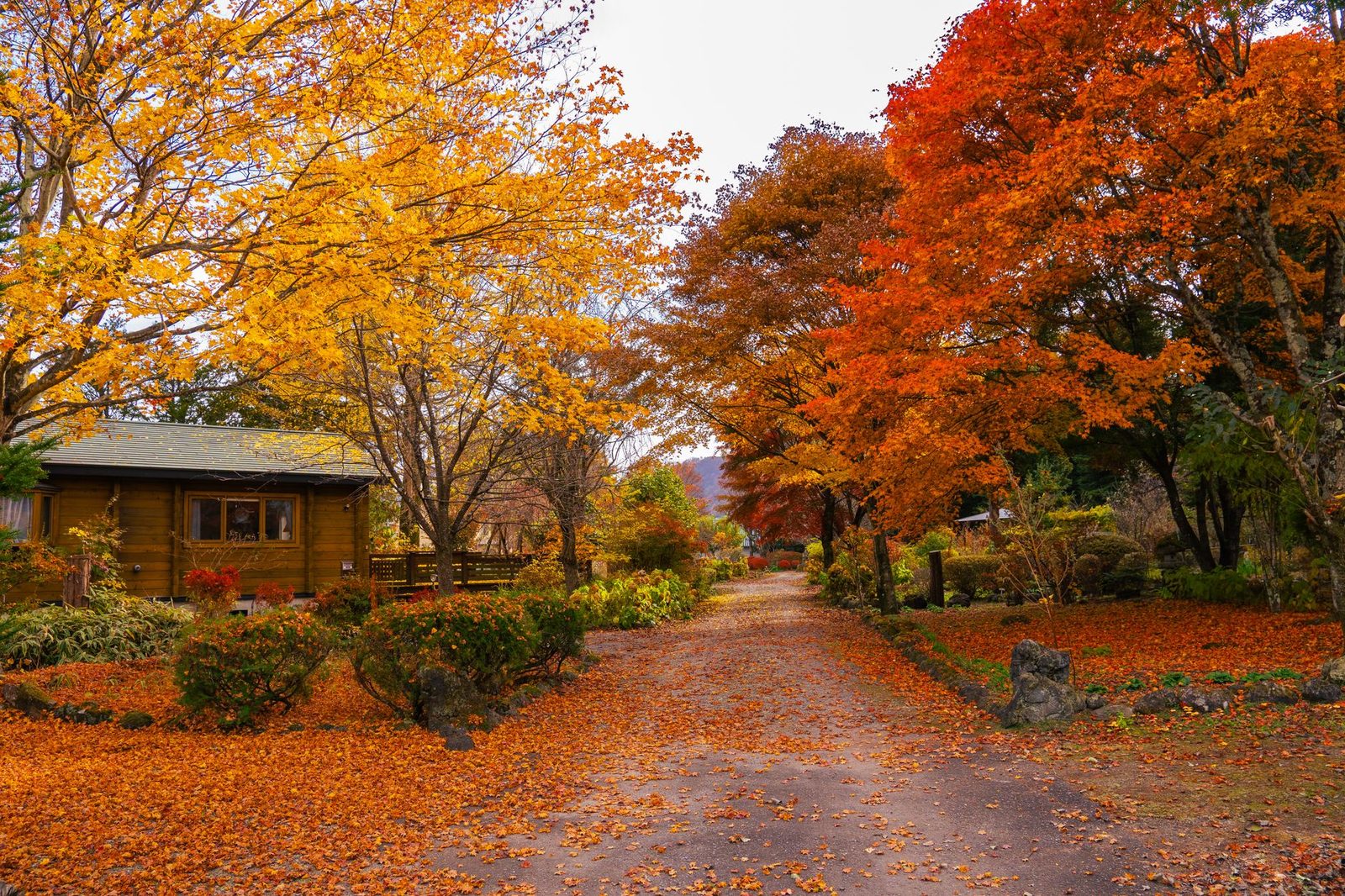
If you have ever visited Karuizawa as a day trip from Tokyo, there is a good chance you missed the best part of it. The Shinkansen takes just over an hour from Tokyo, so most visitors arrive around 10 a.m. and leave before dark—the busiest hours, and also when Karuizawa is at its least impressive. Meanwhile, the reason Japan’s wealthy have been flocking to this highland resort to build villas for more than a century lies at both ends of the day: cool evenings scented with burning firewood, and early mornings when mist blankets the lake, autumn leaves reflect in the water, and there is not another person around.
Karuizawa sits at an elevation of around 1,000 meters, so autumn arrives here a full month earlier than in Tokyo. The leaves are usually at their best from mid-October to early November. Because it is a highland area, fog (kiri) is one of its specialties—on some mornings, the entire town is swallowed by a thin veil of mist, and walking through golden-leafed forests feels like stepping into a Studio Ghibli film. To enjoy those moments, you have to stay overnight. And here is the key point: in Karuizawa, choosing which area to stay in matters more than choosing which hotel, because each area gives you a completely different evening and morning.
That is why this article reverses the usual process. Instead of listing attractions and squeezing accommodation in at the end, I will start with the question, “Where are you sleeping tonight?” and build a 2-day, 1-night itinerary around it, making the most of the evening and early morning—the two “main courses” of the trip.
Karuizawa’s Three Main Accommodation Areas: Which “Team” Are You On?
The town is spread out, and the three main accommodation clusters are far enough apart that choosing the wrong area can leave you spending your time getting around instead of enjoying yourself. Think of it this way: the Kyu-Karuizawa old town offers the atmosphere of historic resort villas, Naka-Karuizawa/Hoshino offers forests and hot springs, while the area around the station offers absolute convenience.
Kyu-Karuizawa—The Old Town, for Fans of a “Century-Old Villa” Atmosphere
This is the birthplace of Karuizawa as a resort: tree-lined roads, wooden villas hidden behind moss-covered fences, Kyu-Karuizawa Ginza shopping street, and old churches. The biggest advantage of staying here in autumn is that Kumoba-ike is within walking distance—it is the town’s most famous spot for viewing autumn leaves reflected on the water, and exactly where you will want to be at 7 a.m. the next morning (more on that in the itinerary section).
Accommodation here falls into two distinct categories: elegant historic hotels—notably Mampei Hotel, the venerable hotel where John Lennon vacationed with his family—and ryokan and small guesthouses scattered throughout the villa district. Evenings in Kyu-Karuizawa are quite quiet: most shops and restaurants on Ginza Street close in the early evening, especially outside peak season. The appeal here is taking your time over dinner at the hotel restaurant or a small European-style restaurant, then strolling beneath the trees in the warm glow of streetlights. It suits couples and anyone seeking peace and quiet, but is less suitable for groups of friends looking for something to do at night.
One small note: walking from Karuizawa Station to the old town is possible but somewhat far if you have suitcases (around 20–30 minutes), so consider taking a taxi or local bus, or leaving your luggage at the station and picking it up later.
Naka-Karuizawa and the Hoshino Area—Forests, Onsen, and the Most Activity-Filled Evenings
Just one Shinano Railway stop from Karuizawa Station, Naka-Karuizawa has a completely different atmosphere: fewer streets, more forest. The heart of the area is the Hoshino Area, home to the riverside shops and restaurants of Harunire Terrace, the Tombo-no-yu hot spring, which welcomes walk-in visitors, Kogen Church, and the famous Stone Church, a popular wedding venue in Japan.
Accommodation here covers a surprisingly broad range of budgets. At the top end is Hoshinoya Karuizawa, a village-style hot spring resort that is among the most expensive and hardest places to book in Japan during autumn-leaf season. Yet within the same ecosystem, there is BEB5 Karuizawa, a youthful and far more affordable brand with rooms designed for “organized laziness,” making it ideal for groups of friends. The surrounding area also has numerous pensions—European-style family-run guesthouses—and small mid-range hotels tucked into the forest, often offering quite good home-cooked dinners.
Stay here and your evening is almost “pre-designed”: have dinner at Harunire Terrace as the lights come on, warm up with a nighttime soak at Tombo-no-yu, and, if you are diligent about booking ahead, join Picchio Nature Center’s night tour to see flying squirrels, or musasabi—a seasonal experience loved by children and adults alike (tours are seasonal and require reservations, so check the schedule on the official website). The next morning, the nearby Yacho-no-mori wild bird forest is an equally beautiful place to catch the mist, and far less crowded than Kumoba-ike.
Around Karuizawa Station—The Most Convenient, Ideal for Families and Heavy Luggage
If your trip involves “hauling a large suitcase, bringing small children, and wanting everything within easy reach,” the area around the station is the safest choice. South of the station is the sprawling Karuizawa Prince Shopping Plaza outlet mall, and this area is also home to Karuizawa Prince Hotel, which offers an especially appealing option for larger groups: cottages—private wooden houses among the pine trees, with several bedrooms in one unit. Split among several people, they can sometimes be cheaper than a hotel while also giving you private space. There are also urban-style mid-range hotels around the station, convenient for late arrivals or early Shinkansen departures.
The trade-off is that the station area has the least “Karuizawa character”—step outside your hotel and you will see streets and parking lots rather than forest. On the other hand, its central location makes getting around easy: Kumoba-ike is about 20 minutes away by bicycle or on foot, and Naka-Karuizawa is just one train stop away. For families with small children, being close to the station, convenience stores, and the outlet mall—with its play areas and wide range of food—usually outweighs every romantic consideration.
Choose by Budget: Ryokan, Resort, or Cottage?
To be frank, Karuizawa is one of Japan’s more expensive destinations for accommodation, and prices rise even further during autumn-leaf season. The difference between a Saturday night and a weekday night can be as much as one and a half or twice the price. So the first rule is: if you can take time off work, go midweek—you can get a significantly better room for the same amount of money.
Budget Accommodation
Look at guesthouses, small pensions, and business-style hotels around the station, or BEB5 if you are traveling in a group. A tip from frequent travelers: do not search only for places listed under “Karuizawa.” Nearby stations along the Shinano Railway line, or even Sakudaira (the next Shinkansen station), can offer considerably more comfortable rooms. If you get up early, you can still catch a train back in time to hunt for the morning mist. In this price range, the most worthwhile “investment” is not a beautiful room but a location that makes it easy to reach the lake early in the morning.
Mid-Range Accommodation
This is the most interesting range of choices in Karuizawa: forest pensions and petit hotels in Naka-Karuizawa serving European-style dinners prepared by the owners, resort hotels with small onsens, or Prince cottages shared among groups of 4–6 people. The selection rule is simple: prioritize places that serve dinner or are near a cluster of restaurants, because, as mentioned, this town goes to sleep early. If it is late and you still have not eaten, your remaining option is practically limited to a convenience store.
High-End Accommodation
If this trip marks a special anniversary, autumn in Karuizawa is worth splurging on for one night: Hoshinoya Karuizawa, with rooms overlooking the stream valley; the recently renovated Mampei Hotel, with its classic atmosphere; or one of the auberges—small inns whose soul lies in kaiseki or French dinners made with ingredients from the Shinshu highlands. In this price range, the accommodation itself is the attraction: return to check in early in the afternoon so you can enjoy all the facilities, rather than sacrificing them for an outside itinerary.
2-Day, 1-Night Itinerary: Save the “Best Courses” for the Evening and Early Morning
The outline below assumes you are taking the Shinkansen from Tokyo and not renting a car. If you are driving, the logic remains the same; you will simply have a wider radius.
Day 1: Arrive Around Noon, Explore Further Afield in the Afternoon, Then Return to “Your Neighborhood” at Night
Do not try to arrive extremely early on the first day—the golden hour is the early morning of Day 2. Arrive in Karuizawa around late morning, leave your luggage at the hotel or in a station locker, have lunch, and spend the afternoon visiting sights farther from your accommodation: Shiraito Falls, where thin curtains of water like white threads flow from the earthen cliff (take a bus or taxi from the station; the golden leaves around the falls are beautiful in autumn), or cycle around the old villa district. Stop by Kyu-Karuizawa Ginza while the shops are still open to buy jam—one of the region’s best-known specialties—and fruit pastries. If you are interested in architecture, the Western-style wooden Kyu-Mikasa Hotel from the Meiji era is worth a visit (the building has undergone lengthy periods of closure for renovation, so check its opening status before you go).
Return to check in around 15–16:00. This is not a minor detail: the sun sets quickly in autumnal Karuizawa, and temperatures drop with it. Coming back early to take a hot bath, put on an extra layer, and then head out for the evening is the right rhythm for this town.
Evening: A Different Plan for Each Area
- Staying in Hoshino/Naka-Karuizawa: Stroll through Harunire Terrace at dusk as the lights in the riverside shops and restaurants come on—this is one of the few places in Karuizawa that is still “alive” after 18:00. Have dinner here (soba, European food, grilled dishes, and more, depending on the restaurant), then soak at Tombo-no-yu at night. Sitting in an outdoor hot spring amid cool mountain air and the scent of fallen autumn leaves is one of the most worthwhile experiences of the trip. If you managed to reserve Picchio’s flying squirrel tour, fit it into the early evening.
- Staying in Kyu-Karuizawa: Choose a slower-paced plan—a long dinner at your hotel restaurant or a small restaurant booked in advance, followed by a walk beneath the trees to help digest. On a clear night, look up and you will see a much denser field of stars than in Tokyo.
- Staying around the station: Take advantage of the outlet mall in the evening—it stays open later than the old town—then have dinner in the outlet’s food court or around the station, and buy breakfast supplies at a convenience store for the next day.
One serious reminder about warm clothing: autumn nights here can drop below 5 degrees, and toward the end of the season, some nights approach 0 degrees. Thermal layers, a scarf, and a wool hat are not excessive, even if the daytime weather is sunny and warm.
Day 2: Hunt for Mist and Autumn Leaves Before the Day-Trippers Arrive
This is why you stayed overnight, so do not sleep in. Set your alarm for around 6–6:30, dress warmly, and leave while the town is still silent.
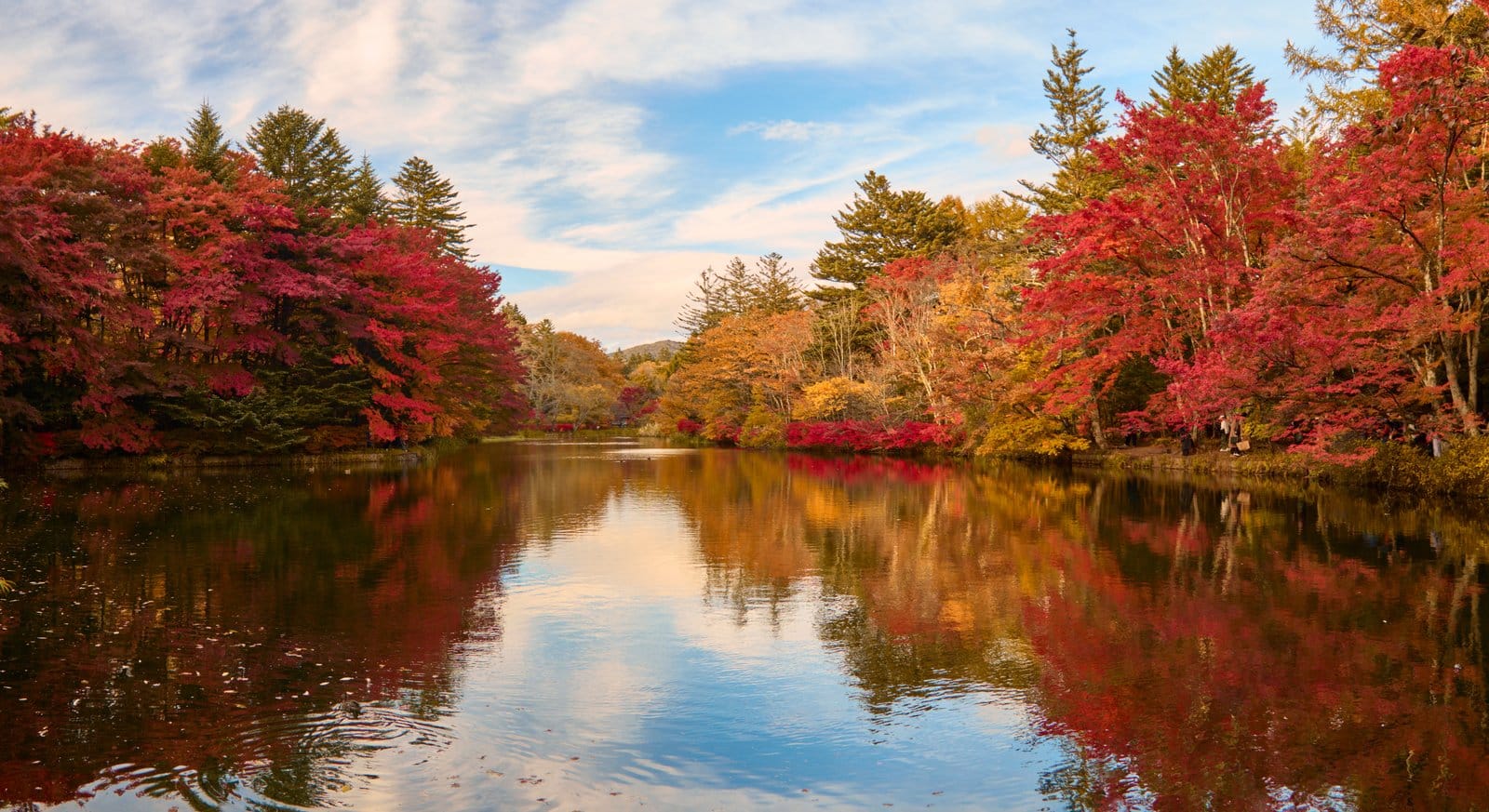
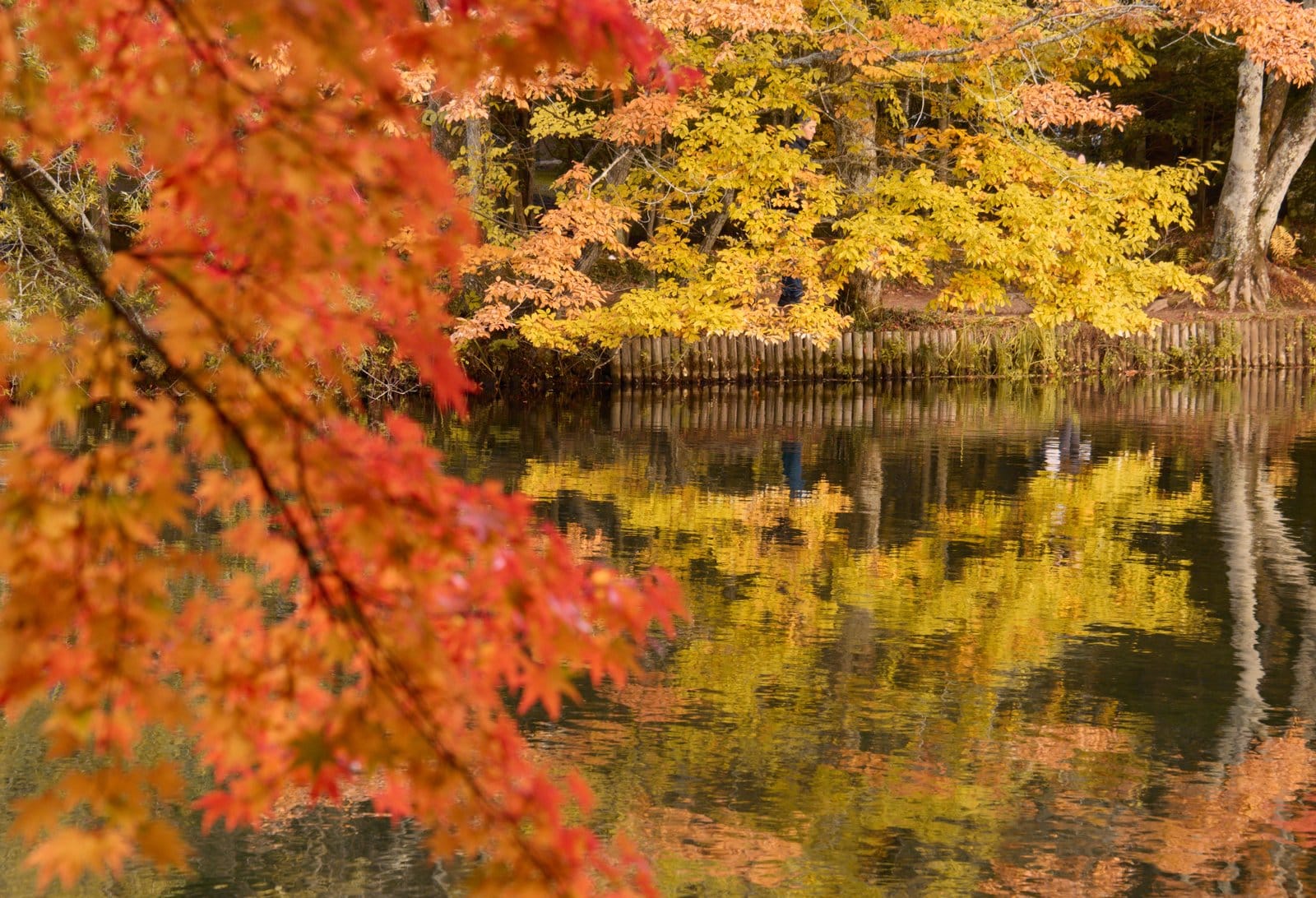
- Kumoba-ike before the mist lifts is Karuizawa’s most beautiful autumn scene: the lake lies smooth as a mirror, red, orange, and yellow maples and oaks are reflected in the water, mist hovers over the surface, and a few wild ducks cut long trails through it. From around 9–10, day-trip groups begin to arrive, and the path around the lake becomes packed with people taking photos—the experience of the very same lake can be worlds apart. If you stay in Kyu-Karuizawa or around the station, you can walk or cycle there; from Naka-Karuizawa, take an early train or a taxi.
- An alternative for those staying in the Hoshino Area: Yacho-no-mori forest right beside the resort. Early in the morning, mist winds between the tree trunks, wild birds call to one another, and there are almost no tourists. It offers fewer “Instagrammable” photos than Kumoba-ike, but a deeper sense of being in an autumn forest.
After your mist hunt, return for breakfast, check out, and leave your luggage. Spend the rest of the day according to your energy level: hike the old Usui slope to a viewpoint overlooking Mount Myogi on a clear day, explore corners you missed the day before, or simply have coffee at a café in the forest—Karuizawa has one of the highest concentrations of beautiful cafés in Japan. Stop by the outlet mall in the late afternoon for any last-minute shopping before boarding the Shinkansen. If you are returning to Tokyo during the busy weekend period, reserve a seat in advance, as Sunday afternoon trains are very crowded.
When to Book for Autumn-Leaf Season: The More Famous the Place, the Earlier You Need to Book
Karuizawa’s peak autumn-leaf season overlaps with two Japanese public holidays—the long weekend around Sports Day (mid-October) and Culture Day (3/11)—so desirable rooms disappear in clearly defined waves. Here is what I have learned the hard way:
- 3–6 months in advance: Well-known resorts (Hoshinoya, small auberges with few rooms, and Mampei’s best room categories) for weekend nights and holidays. Many properties open bookings about half a year ahead, and auberges with only a handful of rooms fill up first.
- Around 2–3 months in advance: Mid-range hotels, pensions, and cottages for weekends; this is also the deadline for securing a Saturday night in the second half of October.
- Around 1 month in advance: Weekday rooms at acceptable prices are usually still available, especially around the station and at nearby stations.
- Close to the date: Do not despair—Japanese travelers often cancel when bad weather is forecast, so good rooms sometimes “reappear” a few days before the trip. This tactic is only for travelers with flexible schedules.
The safest strategy is to book a room with free cancellation as soon as you settle on the weekend you want, then take your time upgrading if you find a better option. Be sure to read the cancellation deadline carefully—many ryokan and small auberges begin charging cancellation fees fairly early, sometimes more than a week in advance. And because the timing of the leaves changes with the weather each year, check the latest koyo forecast around 2–3 weeks before your trip. If the leaves are late, the beginning of November is often a beautiful “window,” with prices already cooling off compared with festival weekends.
Frequently Asked Questions
Do you need to rent a car for a 2-day, 1-night trip to Karuizawa?
Not necessarily. The Shinkansen, Shinano Railway, local buses, and rental bicycles cover all the sights mentioned in this article. Renting a car is really worthwhile only if you want to travel farther—to Lake Shirakoma, Onioshidashi, or Kusatsu—or if you are traveling in a large group with small children. Note that on autumn-leaf weekends, roads around Kyu-Karuizawa and the outlet mall can be heavily congested, so having a car is not necessarily faster than cycling.
When are Karuizawa’s autumn leaves at their best?
Usually from mid-October to early November. The trees change color gradually, moving from higher elevations down toward the center of town, so the “season” lasts quite a while. The timing shifts each year depending on the weather—and in recent years, it has tended to be later—so check the koyo forecast before finalizing your tickets.
What if I cannot find accommodation in Karuizawa?
Look at nearby stations: Naka-Karuizawa and smaller stations along the Shinano Railway line, Sakudaira (the next Shinkansen station), or even Takasaki toward Tokyo. Staying there is noticeably cheaper, and you can still take an early train back in time to catch the mist—you just have to get up about an hour earlier.
Which area is best for traveling with small children?
The Prince cottages near the station or BEB5 on the Hoshino side. The cottages offer private space, while the nearby outlet has dining options and places to play. The Hoshino side has Picchio’s nature tours and hot springs, making it better suited to slightly older children. The old town is quiet and has many restaurants geared toward adults, so it can feel somewhat restrictive with small children.
Is anything open in Karuizawa in the evening?
Less than you might expect—this is a resort town, not a nightlife district. After around 18:00, the main options are Harunire Terrace, the dining areas around the station and at the outlet mall, hotel restaurants, and Tombo-no-yu, which stays open into the evening. So decide on dinner in the afternoon, make a reservation if you are visiting on a weekend, and treat the quiet evenings as part of the experience rather than a shortcoming.
To sum it up in one easy sentence: when visiting Karuizawa in autumn, choose your accommodation area first— the old town if you want romance, Hoshino if you want forests and onsen, and the station area if you want convenience—and everything else in your itinerary will fall into place. And wherever you stay, do not miss your 7 a.m. appointment with the mist over the lake. It is something day-trippers will never get to see.
More from this region — Chubu (Nagano, Kanazawa)
View all →
Karuizawa in Autumn: What to Eat, from New-Crop Soba to Harunire Coffee
16 min · tips
Traveling to Karuizawa from Tokyo by Train and Bus During the Fall Foliage Season
16 min · tips
Walking Through Karuizawa in Autumn: From Kumoba-ike Pond to Usui Pass
17 min · tips
Hunting for Autumn Photos in Karuizawa: Where to Stand and When to Shoot
16 min · tips