
Kamikochi in One Autumn Day from Tokyo: Overnight Bus or DIY?
Two realistic ways to fit Kamikochi's golden-larch season into a single day from Tokyo — an overnight coach that arrives at dawn, or trains and buses on your own — with a sample route, real costs and the departure times you cannot miss.
Aug 19, 2026·✍️ olablog·⏱ 5 min read
Two realistic ways to fit Kamikochi's golden-larch season into a single day from Tokyo — an overnight coach that arrives at dawn, or trains and buses on your own — with a sample route, real costs and the departure times you cannot miss.
Tap a region to browse articles
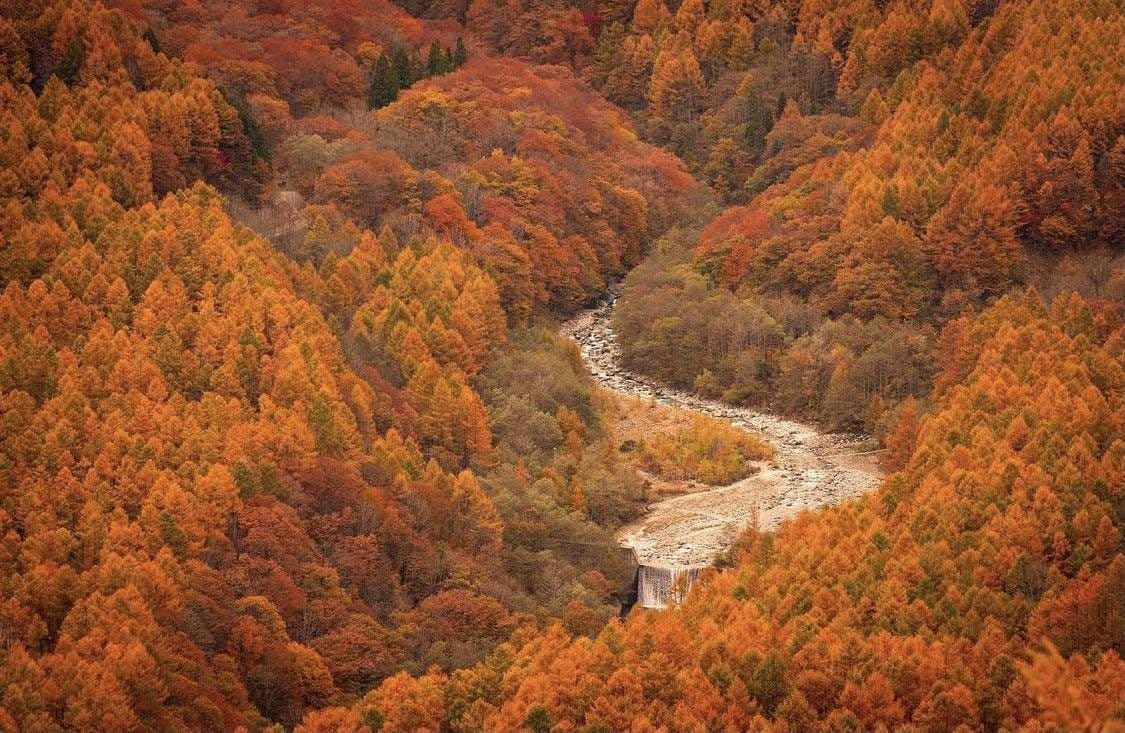
Kamikochi stays open only until mid-November, then shuts for the whole winter — so for anyone based around Tokyo, autumn is a now-or-next-year trip. The hard part isn't distance. It's that the valley is at its absolute best in the early morning, when mist still rises off the Azusa River and the golden larch forest belongs to nobody. Take the first train out of Tokyo and you'll walk in around lunchtime — just in time to have missed it.
This guide compares the two realistic ways to do Kamikochi in one day from Tokyo: the overnight coach — sleep on the bus, wake up in the mountains — or DIY by train and bus if you can't sleep sitting up or want full control of your schedule. A sample in-valley route at the end works for both.
Option 1 — Overnight coach: leave Tokyo at night, wake up at the trailhead
The format is almost unfairly simple: board at Tokyo Station in the evening, doze through the highway hours, and as the sky lightens the bus is already climbing into the Nagano mountains. You're in the valley during the one window that train travellers from Tokyo can never reach — Taisho Pond flat as a mirror, white mist between the dead standing trees.
Three big wins:
- No hotel night to pay for — and foliage-season room rates around Matsumoto or inside the valley are not small money.
- No workday lost to travel: board Friday night, hike all Saturday, return that evening.
- You arrive before every day-tripper in the country — something money can't easily buy unless you sleep inside the valley.
The honest downside: bus sleep isn't bed sleep. If you struggle to sleep sitting up, the two-day version with a hotel costs more but you'll start the day fresher.
OlaChill runs exactly these two formats in autumn: the Hakuba–Kamikochi overnight coach tour (includes Hakuba's Mountain Harbor viewpoint) and the Kamikochi 2-day, 1-night tour with a proper bed. Both pick up at Tokyo Station, no transfers to plan.
Option 2 — DIY: train + bus, flexible but clock-driven
Private cars are banned in Kamikochi, so DIY means: the Azusa limited express from Shinjuku to Matsumoto (2 h 40), the little Kamikochi Line to Shin-Shimashima (30 min), then the valley bus (~65 min). The earliest departure from Shinjuku typically gets you in around 10:30–11:00 a.m. Round-trip transport usually lands somewhere around ¥14,000–16,000 depending on tickets.
Two deadlines that rule the day:
- The last bus out of the valley leaves around 16:30–17:00 depending on the date. Miss it and you're staying the night — in a valley where autumn rooms sell out weeks ahead.
- In peak foliage weeks, bus queues at Shin-Shimashima and at the Kamikochi terminal both get long — budget an extra 30–45 minutes each way.
DIY suits travellers who want to stop in Matsumoto (the black "crow castle" is well worth two hours) or fold Kamikochi into a longer route. But if the goal is "one day, see the most," the overnight coach simply wins on valley time: four to five more hours on the ground.
Sample in-valley route (works for either option)
Walk west to east, downstream, almost entirely flat:
- Taisho Pond — get off at the first stop. The water is calmest before 9 a.m.; the dead trees standing in the pond are the signature shot.
- Tashiro Marsh → the boardwalk — the best golden-larch stretch of the whole trail. Walk it slowly.
- Kappa Bridge — the heart of the valley, straight views to the Hotaka range. Lunch is around here.
- Time and legs permitting: Myojin Pond, about 2 hours round trip, with salt-grilled iwana trout at the lakeside huts.
Taisho to Kappa is only about 3.5 km of flat path. For temperatures, closures and a half-day fallback plan, our Vietnamese-language deep-dive exists as a companion; this article focuses on getting there from Tokyo the smart way.
What to wear, and how to time the leaves
Early autumn mornings in the valley run 0–8°C, warming to 12–16°C by a sunny midday — dress in three layers with a windproof shell, and skip thin white sneakers: the boardwalks are dew-wet at dawn. The larches usually hit their deepest gold from mid-October to early November, but it shifts by a week or more each year, so check the current foliage calendar before locking in dates.
One small thing people forget: mobile signal inside the valley comes and goes by section, though it works around Kappa Bridge and the bus terminals — set up a Japan travel eSIM before you leave home so you land with data for bus times instead of hunting for Wi-Fi.
The short version
- Cheapest + most hours in the valley: overnight coach — arrive at dawn, back in Tokyo the same night.
- A real bed and a slower pace: the 2-day, 1-night version.
- Maximum flexibility, add Matsumoto: DIY train + bus — respect the two deadlines above.
The Kamikochi season is short; the valley closes in mid-November. Pick your format and book early — foliage-season buses and Matsumoto-area rooms sell out first and wait for no one.
More from this region — Tokyo & Kanto
View all →
Kanto Around Tokyo: Top 5 Essential Day Trips and Regional Pass Guide
9 min · destinations

Kawagoe Little Edo in Kimono: Warehouse Streets, Candy Alley and Access from Tokyo
7 min · culture
Kimono Experience in Asakusa: Strolling Through Old Japan
6 min · culture
Kimono in Chiba: Where to Wear It, Best Photo Spots and How to Plan the Day
6 min · culture