
Ishigaki Island Beach Guide: Kabira Bay, Yonehara, Sukuji and Water-Clarity Rankings
Explore Ishigaki's beautiful beaches, from the characteristics of Kabira Bay, Yonehara and Sukuji to water-clarity rankings, nearby food, access and sample itineraries for planning your trip.
Feb 1, 2026·✍️ olablog·⏱ 11 min read
Explore Ishigaki's beautiful beaches, from the characteristics of Kabira Bay, Yonehara and Sukuji to water-clarity rankings, nearby food, access and sample itineraries for planning your trip.
Tap a region to browse articles
Ishigaki's beaches continue to captivate visitors with their breathtakingly clear water and rich natural surroundings. This guide focuses on three of the island's best-known coastal destinations—Kabira Bay, Yonehara Beach and Sukuji Beach—and explains their appeal, characteristics, access, surroundings and water-clarity rankings. It also distinguishes the official swimming season at Sukuji from the different operating arrangements at Fusaki Beach so that the two are not treated as interchangeable.
Introduction: what makes Ishigaki's beaches special, and how to choose
Ishigaki lies at the centre of the Yaeyama Islands, approximately 400 km southwest of Okinawa's main island, and enjoys a warm climate throughout the year. Its emerald-green sea and white sand create a tropical setting. To find the right beach among the many choices, it helps to understand each one's individual character. A rental car is one of the most convenient ways to reach the main beaches, but actual journey times vary with traffic and your starting point, so check the route on the day rather than relying on one fixed estimate.
Kabira Bay: Michelin three-star scenery and glass-bottom boats
Opening times, prices and access
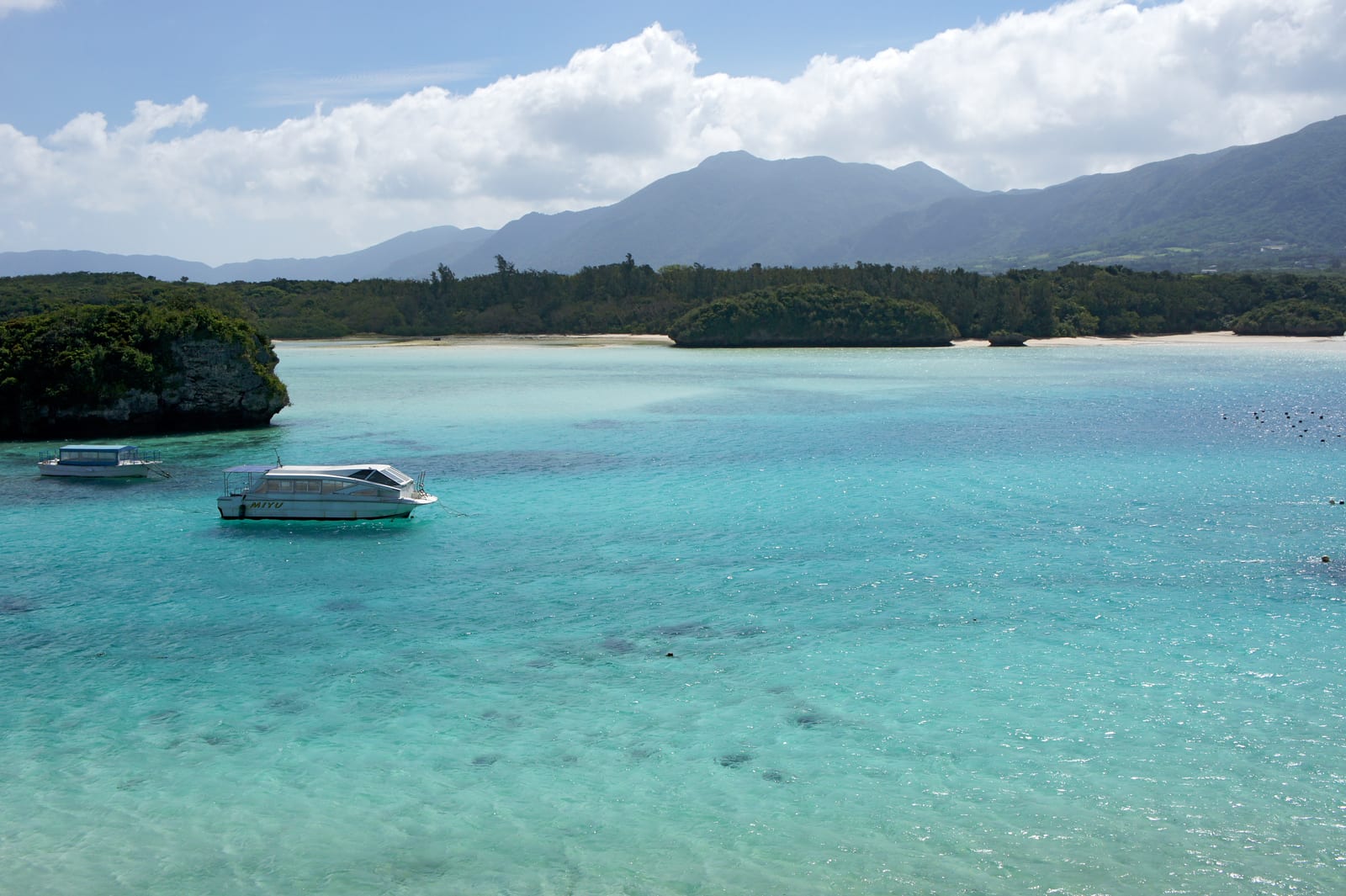
Kabira Bay is one of Ishigaki's signature scenic destinations, awarded three stars in the Michelin Green Guide Japan for its extraordinary beauty. Strong tidal currents mean swimming is prohibited in the bay throughout the year. However, glass-bottom boats offer a way to enjoy the clear underwater scenery. Departures run from around 09:00 to 17:00. Typical prices are ¥1,200 for adults and ¥600 for children, and paid parking starts at ¥300 for 1 hour; check current prices before travelling.
The bay can be reached by car or local bus from central Ishigaki. Check the latest bus timetable and fare before departure because schedules and prices can change.
Seasonal highlights and the best time to visit
Kabira Bay offers beautiful scenery throughout the year, but a sunny morning, when sunlight reaches into the water, is particularly attractive. The sea's colour gradients change with the time of day. Winter can be quieter, while summer brings a stronger contrast between blue sky and sea. Strong sun protection is important in every season.
Nearby food and accommodation
Cafés and restaurants using local ingredients are scattered around the Kabira area. Visitors can also find guesthouses and smaller hotels around the wider Kabira district. Check current opening hours and accommodation maps rather than assuming every property named in older travel material is still operating under the same name.
Tips, precautions and etiquette
Do not visit Kabira Bay expecting to swim: swimming is prohibited. Prepare a hat, sunglasses and sunscreen for sightseeing. The bay lies within a protected natural area, so do not collect coral or marine life, and take rubbish away with you. Check local drone restrictions before flying.
Yonehara Beach: colourful tropical fish and a snorkelling hotspot
Opening times, prices and access
Yonehara Beach is known for its natural coral reef and abundant tropical fish, making it a popular place for snorkelling. It is not a conventional managed swimming beach with lifeguards at all times, so conditions should be assessed carefully before entering the water. Showers, toilets, shops and equipment-rental outlets are available in the wider area, but charges and opening hours vary by facility.
Local buses are limited compared with urban Japan, so a rental car is convenient for many visitors. Check current parking and access information before departure.
Seasonal highlights and the best time to visit
Water conditions vary substantially with wind, waves and tides. Summer brings warm water but also a greater likelihood of typhoon disruption, while winter northerly winds can make conditions unsuitable for swimming. Do not treat a calendar month alone as proof that snorkelling is safe on a particular day.
Nearby food and accommodation
Cafés and small restaurants are scattered around the wider Yonehara area, and guesthouses and pensions can be found nearby. Availability changes, so check a current map and booking information when planning an overnight stay.
Tips, precautions and etiquette
Yonehara can have strong currents and is not a place to assume calm conditions simply because the water looks clear. Wear a life jacket when appropriate, do not swim alone, and follow local warnings. Avoid touching or standing on coral. If lifeguards or local authorities advise against entering the water, follow that instruction.
Sukuji Beach: shallow water and a family-friendly managed beach
Opening times, prices and access
Sukuji Beach (Sukuji Kaisuiyokujo) is a managed beach at 185-1 Kabira, Ishigaki. The official Okinawa travel guide lists the swimming season as April through September and swimming hours as 09:00–18:00, subject to seasonal and weather changes. Entry is free, free parking is available, and the official listing identifies lifeguards, a jellyfish net, toilets and showers.
Outside the designated season or operating hours, do not assume that supervised swimming is available.
Seasonal highlights and the best time to visit
Sukuji's shallow bay and gentle appearance make it popular with families, particularly during the official April–September swimming season. Conditions can still change with weather and tides. The presence of a lifeguard and jellyfish net reduces some risks but does not make any beach completely risk-free; keep children closely supervised and follow on-site instructions.
Nearby food and accommodation
Sukuji is in the Kabira area on Ishigaki's northwest side. There are cafés, restaurants and accommodation options in the wider Kabira district, but not every resort elsewhere on Ishigaki should be described as “near Sukuji.”
Fusaki Beach Resort Hotel & Villas is a separate west-coast resort and beach area, not an accommodation directly at Sukuji. Fusaki Beach operates year-round, but its own safety arrangements differ: regular lifeguard coverage is listed for the summer operating period from March 1 to October 31, while winter swimming requires contacting resort staff and swimming is prohibited outside supervised operating hours.
Tips, precautions and etiquette
Even at a managed beach, keep children under close supervision. Use the jellyfish-net area and follow lifeguard instructions. Strong sunshine makes hydration, a hat and suitable sun protection important. Do not leave rubbish behind or enter closed sections of the beach.
Ishigaki beach water-clarity rankings: choices for different interests
The remarkable clarity of Ishigaki's sea is one of its main attractions. The following rankings are editorial suggestions rather than scientific measurements of water conditions.
Overall water-clarity ranking
- Kabira Bay: Swimming is not allowed, but the bay is renowned for clear scenic water that can be viewed from glass-bottom boats.
- Yonehara Beach: Natural coral and tropical fish can make for impressive snorkelling views when conditions are suitable.
- Northern Ishigaki beaches, including Akashi Beach: More remote beaches retain a largely natural setting, but access and water conditions should be checked before visiting.
- Sukuji Beach: The shallow bay can be clear in calm weather and is easier to use during its managed swimming season.
Recommended for snorkelling
- Yonehara Beach: Popular for coral and tropical fish, but use appropriate safety equipment and pay attention to currents.
- Blue Cave area: Join a reputable local tour rather than treating an unfamiliar cave or reef route as a self-guided swim.
Recommended for families
- Sukuji Beach: Official April–September season, lifeguards, jellyfish net, toilets and showers make it a practical managed-beach option.
- Fusaki Beach: A separate resort beach with year-round operation and seasonal lifeguard arrangements; check the resort's current operating hours before swimming.
Clarity changes with weather and tides, so no fixed ranking can guarantee conditions on a particular day.
Sample beach itineraries: half-day and full-day plans
These sample routes assume travel by rental car. Driving times can change with traffic, weather and the exact route, so use current navigation estimates on the day.
Half-day route: Kabira Bay and northern scenery, approximately 4 hours
- 09:00 — Leave Ishigaki Airport
- Collect a rental car and head towards Kabira.
- 09:40 — Kabira Bay and a glass-bottom boat
- Since swimming is prohibited, enjoy the underwater scenery by boat and the bay from the lookout.
- 11:30 — Lunch in the Kabira area
- Try a local restaurant and allow time for parking and queues.
- 12:30 — Optional northern-Ishigaki stop
- If visiting Akashi or another northern beach, check the current driving time and sea conditions first rather than relying on a 15-minute estimate from Kabira.
- 13:00 — Begin the return journey
- Return towards the airport or city centre.
Indicative costs: glass-bottom boat ¥1,200; lunch ¥1,500–¥2,000; parking ¥300. Check current prices before purchase.
Full-day route: popular beaches, snorkelling and sightseeing, about 9.5 hours
The schedule below runs from 09:00 to 18:30, so it is approximately 9.5 hours, not 8 hours.
- 09:00 — Leave Ishigaki Airport
- Collect a rental car and start the beach circuit.
- 09:30 — Sukuji Beach
- Swim only during the official season and operating hours and when conditions permit.
- 11:30 — Travel to Yonehara Beach
- Check the current route time in navigation.
- 12:00 — Yonehara and lunch
- If snorkelling, use appropriate safety equipment and follow local conditions and warnings.
- 15:00 — Travel to Kabira Bay
- 15:30 — Enjoy Kabira Bay's scenery
- Take a glass-bottom boat trip or enjoy the lookout; do not swim in the bay.
- 17:00 — Continue to a final scenic stop if time and daylight allow
- 18:30 — Head into town for dinner
Indicative costs: showers and equipment rental ¥1,000–¥1,500; glass-bottom boat ¥1,200; lunch ¥1,500–¥2,000; dinner ¥3,000–¥5,000. Confirm current prices locally.
General beach precautions and etiquette
- Prepare for strong sunshine: Wear suitable sun protection, a hat and protective clothing, and drink water regularly.
- Use supervised areas when available: At Sukuji, use the official managed season and lifeguard/jellyfish-net area. At Fusaki, follow the resort's stated operating hours and winter contact procedure.
- Take jellyfish warnings seriously: Use jellyfish-net areas where provided and follow local lifeguard or authority instructions. If stung or unwell, leave the water and seek help from lifeguards or medical professionals rather than relying on a generic internet first-aid recipe.
- Be alert to currents: Natural beaches such as Yonehara can have strong currents. Do not enter rough water, do not swim alone and use suitable flotation equipment.
- Protect coral and marine life: Do not touch, stand on or collect coral, and avoid feeding wildlife.
- Take all rubbish away: Leave beaches cleaner than you found them.
- Do not swim after drinking alcohol: Alcohol and open-water swimming are a dangerous combination.
- Watch changing weather: Typhoons, sudden wind, rain and lightning can rapidly change conditions.
Summary: the main points
- Kabira Bay: sightseeing and glass-bottom boats; swimming is prohibited.
- Yonehara: excellent natural reef scenery when conditions are suitable, but currents require caution.
- Sukuji: official swimming season April–September, 09:00–18:00, with lifeguard and jellyfish-net facilities listed by the official Okinawa guide.
- Fusaki: separate west-coast resort beach operating year-round; regular lifeguard coverage is March 1–October 31, with different winter procedures.
- Use current conditions: weather, tides, supervision and local warnings matter more than a generic “safe all year” statement.
Frequently asked questions
Q. When can I swim at Sukuji Beach? A. The official Okinawa travel guide lists the swimming season as April through September, with swimming hours generally 09:00–18:00, subject to weather and seasonal changes.
Q. Is Fusaki Beach open year-round? A. Yes, the resort lists the beach operation as year-round. It also states that regular lifeguards are stationed during the summer operating period from March 1 through October 31. In winter, contact staff before swimming, and do not swim outside supervised operating hours.
Q. Can I snorkel at Yonehara Beach? A. Snorkelling is popular there, but conditions and currents can be hazardous. Use appropriate safety equipment, check local warnings and consider joining a reputable guided tour.
Q. Is Sukuji the same area as Fusaki? A. No. Sukuji is in the Kabira area on Ishigaki's northwest coast. Fusaki is a separate resort and beach area on the island's west coast.
Q. What should I do if I am stung or feel unwell in the water? A. Leave the water, alert a lifeguard or nearby staff, and follow local medical guidance. Seek emergency medical help for severe symptoms.
More from this region — Okinawa
View all →
Kerama Islands, Okinawa – Japan's Most Breathtaking Emerald Archipelago
5 min · destinations
Kimono in Okinawa: Ryusou, Where to Wear It, Best Photo Spots and How to Plan the Day
8 min · culture
Okinawa: Japan's Tropical Side — Worth It for Travelers Who Know Goa and the Maldives?
20 min · destinations
Okinawa Island Travel Guide: Japan's Very Own Tropical Paradise
9 min · destinations