
Kimono in Okinawa: Ryusou, Where to Wear It, Best Photo Spots and How to Plan the Day
Kimono in Okinawa is really ryusou, the Ryukyu court dress in bingata colours: how it differs from kimono, where to wear it at Shuri and Naha, seasons and a day plan.
Sep 14, 2026·✍️ olablog·⏱ 8 min read
Kimono in Okinawa is really ryusou, the Ryukyu court dress in bingata colours: how it differs from kimono, where to wear it at Shuri and Naha, seasons and a day plan.
Tap a region to browse articles
Okinawa is the one prefecture where the answer to "where do I wear a kimono?" is "you don't, and here is something better." For 450 years these islands were the Ryukyu Kingdom, a separate state trading with China, Japan and Southeast Asia, and it dressed its court in its own way: loose, bright, tied without an obi, dyed in patterns of hibiscus, cranes and waves in colours that Kyoto would have thought loud. That dress is ryusou (琉装), and you can wear it today at the castle where the kings wore it. This guide explains what it is, how it differs from kimono, where to put it on, and why the mainland kimono is best left in Kyoto.
Ryusou and kimono: the differences
Ryusou is cut like a kimono at first glance, a T-shaped robe with wide sleeves, but almost everything else is different.
- No obi. The outer robe is worn open and loose, held by a narrow sash or simply by the way it is folded, in a style called ushinchi. In the heat of Okinawa, a stiff obi made no sense.
- Sleeves and length. The sleeves are wider and shorter, the robe is often worn shorter, and the layers are fewer. The whole outfit breathes.
- Bingata (紅型). The signature textile is stencil-dyed in mineral pigments: yellow was the royal colour, worn only by the king and queen; deep blue and pink for nobles. Patterns mix Chinese phoenixes, Japanese cherry blossom and Ryukyu hibiscus in one cloth, which tells you exactly where the kingdom sat.
- Headwear. Men of rank wore a hachimaki turban whose colour marked their grade, and a black lacquered hachimachi for court. Women's hair was dressed high with a long silver hairpin, the jifa.
- Footwear. Sandals, not zori and tabi; barefoot indoors.
The result photographs completely differently from a kimono: more colour, more movement, and a silhouette that reads as tropical rather than formal. Think of it as the outfit the place actually wore, not an adaptation.
Where to wear ryusou
Shuri Castle Park (首里城公園) is the obvious place. The main hall burned in October 2019 and is being rebuilt with the same red lacquer and Chinese-influenced roof; the reconstruction work has been visible to the public, with viewing areas, and the outer gates, the Shureimon (守礼門) and the stone walls survived and are open. Ryusou experiences are offered within the park area, usually with dressing and a short walk to the gate for photos; the terms and the exact viewing route change as the rebuilding progresses, so check the park's current notices before you go. Below the castle, the Kinjo-cho stone-paved road (金城町石畳道) is a 300-year-old lane of limestone paving and old walls, empty and beautiful, and the best walking photograph in ryusou.
Ryukyu Mura (琉球村) in Onna, up the west coast, is a village of relocated old Okinawan houses with red-tiled roofs, shisa lion-dogs and courtyard performances of eisa drumming, and it offers dressing in ryusou for the grounds. Naha's Tsuboya pottery street (壺屋やちむん通り) is the city's version: stone paving, old kilns, and shops selling the shisa you will see on every roof.
Best photo spots in Okinawa (ryusou, and yukata in summer)
| Spot | Best time | Access | Crowd level |
|---|---|---|---|
| Shureimon gate, Shuri Castle Park (守礼門) | Early morning | Yui Rail to Shuri, 15 min walk | High by mid-morning |
| Kinjo-cho stone road (金城町石畳道) | Morning | Below the castle, 5 min | Very low |
| Tsuboya pottery street, Naha (壺屋やちむん通り) | Afternoon | Yui Rail to Makishi, 10 min walk | Low |
| Ryukyu Mura, Onna (琉球村) | Morning shows | Car or bus, 60 min from Naha | Moderate |
| Nakagusuku Castle ruins (中城城跡) | Late afternoon | Car, 40 min from Naha | Very low |
| Shikinaen royal garden (識名園) | Morning | Bus from Naha, 20 min | Very low |
| Cape Manzamo (万座毛) | Sunset | Car | High |
| Taketomi Island lanes (竹富島) | Any time | Ferry from Ishigaki, 15 min | Moderate |
Shikinaen, the royal family's second residence, is a walled garden with a pond, a Chinese-style bridge and a wooden villa; it is the calmest ryusou setting in Naha and almost nobody goes. Taketomi, far south in the Yaeyama islands, is a village of coral-wall lanes and red roofs where water buffalo pull carts; it is the most photogenic old street in the prefecture.
Seasons and heat
Okinawa is subtropical. Summer is long and humid, from May to October, with typhoons from July to September. A mainland kimono in this climate is genuinely uncomfortable and the layers show sweat within an hour. Ryusou was designed for it. Yukata works for summer evenings, and Okinawa's own summer shirt, the kariyushi, is the local formal wear in July and August; you will see it on politicians.
- Winter to spring (December to April) is the pleasant season, 18 to 24 degrees, and the only time a mainland kimono would be bearable outdoors.
- Festivals: the Shuri Castle Festival in late October or early November stages a Ryukyu royal procession in full court dress through Naha; Naha's Great Tug-of-War in October pulls a 200-metre rope; eisa dance groups perform through summer and at Obon.
Plan your ryusou day in Okinawa
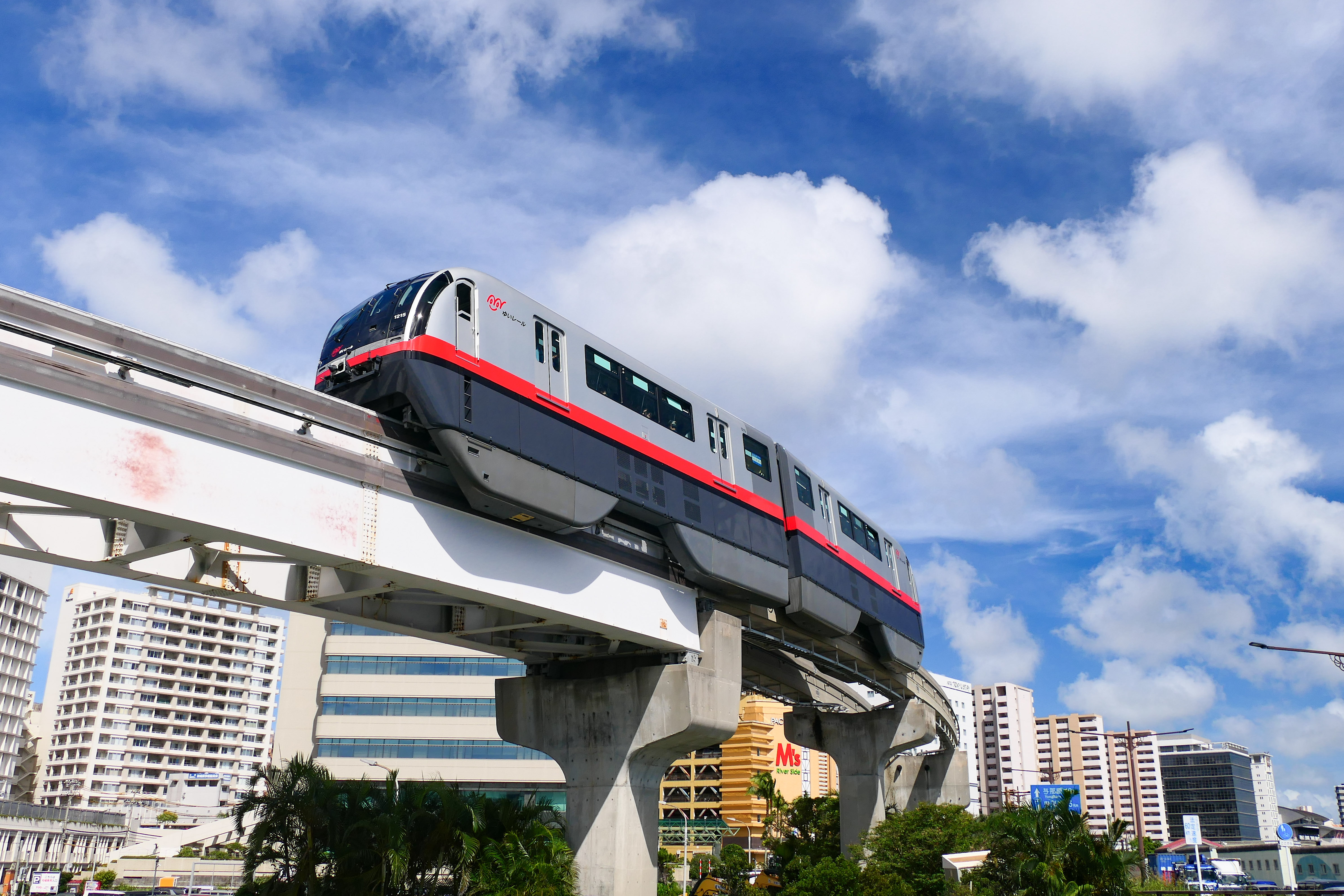
- Stay near Kokusai Street or Shuri. The Yui Rail monorail links the airport, the city and Shuri; everything in Naha is on it.
- Morning: Shuri. Monorail to Shuri, walk up. Book the ryusou dressing in advance if the park's programme is running; photograph at the Shureimon and the walls, then walk down the Kinjo-cho stone road.
- Lunch: Shuri or Naha. Okinawa soba with pork ribs, and sata andagi doughnuts; ryusou has no obi, so you can actually eat.
- Afternoon: Shikinaen, then Tsuboya. Bus to the garden, then back to the city for the pottery street and a shisa to take home.
- Evening: Kokusai Street for live sanshin music at an izakaya. Change first; the street is crowded.
- Day two, by car: Ryukyu Mura and the west coast, Cape Manzamo at sunset, or Nakagusuku's stone walls if you prefer ruins to theme villages.
Where OlaChill fits in
OlaChill's kimono rental shops are in Tokyo Asakusa and Kyoto Kiyomizu. We do not have a shop in Okinawa, and we will say plainly that flying a rental kimono here from Tokyo or Kyoto with the next-day return option (¥1,100) is neither practical nor a good idea in this climate.
Wear the kimono in Kyoto or Tokyo at one of our shops, where dressing is included, hair styling is ¥1,500, make-up ¥5,000 and online booking is 10 percent off across the 14 plans. Then come to Okinawa and wear ryusou at Shuri, which is the dress the islands are proud of and the one that belongs in the photograph.
If you are travelling as a family or a group, Okinawa's sights are spread along a long island with limited trains. A private car with driver from Naha up the west coast to Ryukyu Mura, Manzamo and back makes a full day without a rental-car queue. We quote by route and hours.
FAQ
Is ryusou the same as kimono? No. It is the court and festival dress of the Ryukyu Kingdom, cut loose, worn without an obi and dyed in bingata patterns. It shares the robe shape with kimono but developed separately, with Chinese and Southeast Asian influences.
Can I wear a mainland kimono in Okinawa? You can, in winter and spring. In summer it is hot and heavy, and it looks out of place at Shuri, where the local dress is ryusou. Most visitors who try it once switch.
Is Shuri Castle open while the main hall is rebuilt? The park, the gates and the walls are open, and the rebuilding has been arranged so visitors can see the work. The route and the fees change as the project moves; check the park's website the week you go.
Where can I see real bingata? Workshops in Shuri and Naha show the stencil-dyeing process and sell small pieces. The Okinawa Prefectural Museum in Naha has historic court garments, including royal yellow.
Is Taketomi worth the flight to Ishigaki? For a day in coral-walled lanes with almost no cars, yes. Ishigaki is an hour's flight from Naha and Taketomi is 15 minutes by ferry; go for the morning before the day-trippers land.
Ready to plan it?
Leave the kimono in Kyoto, at OlaChill Kiyomizu or OlaChill Asakusa, and wear the islands' own dress at Shuri. For the beaches and islands around it, read our Okinawa beaches guide and Kerama Islands notes; then book your kimono online for the mainland leg.
More from this region — Okinawa
View all →
Okinawa: Japan's Tropical Side — Worth It for Travelers Who Know Goa and the Maldives?
20 min · destinations
Okinawa Island Travel Guide: Japan's Very Own Tropical Paradise
9 min · destinations
Okinawa Island Charters for Groups: A Practical Planning Guide
9 min · tips
Top 5 Most Beautiful Beaches in Okinawa — Japan's Tropical Paradise
13 min · tips