
Pairing Autumn Hakuba with Kamikochi, Matsumoto, Togakushi, and the Alpine Route in 3–5 Days
A practical travel order, bus and train times between each leg, plus suggestions for where to sleep each night so your trip through Nagano’s autumn mountains doesn’t leave you exhausted from long distances.
Aug 12, 2026·✍️ olablog·⏱ 18 min read
A practical travel order, bus and train times between each leg, plus suggestions for where to sleep each night so your trip through Nagano’s autumn mountains doesn’t leave you exhausted from long distances.
Tap a region to browse articles
Hakuba has a slightly strange reputation among Vietnamese people living in Japan: mention it and they immediately think of snow, skis, and photos of people in puffer jackets standing on top of Happo. In autumn, Hakuba almost disappears from the map — everyone heads to Kyoto, Nikko, or Kawaguchiko, while the valley at the foot of the Northern Alps is so quiet that you can walk along the village roads all afternoon and encounter only a few people walking their dogs.
But look at a map and you’ll see that Hakuba is almost perfectly positioned: it’s about an hour by bus from Nagano Station, sits on the Oito Line running down through Shinano-Omachi to Matsumoto, and from Omachi it’s just one short bus ride to Ogizawa — the Nagano-side gateway to the Tateyama–Kurobe Alpine Route. That means within two hours of Hakuba, you have: Kamikochi Valley glowing with golden larch foliage, Matsumoto Castle’s jet-black keep, the thousand-year-old cedar-lined path leading to the sacred shrines of Togakushi, and a mountain route climbing to 2,400 m before closing for the entire winter.
The only real problem is the order. These four routes head in four different directions, mountain buses run infrequently, and one poorly planned connection can cost you half a day sitting on the road or waiting for the next service at a bus shelter with nothing but a vending machine. That’s exactly what this article focuses on: which direction to go first, how long each leg takes, and where to sleep each night so you don’t have to get up at 5 a.m. the next morning.
Why make Hakuba your base instead of Matsumoto or Nagano
Many people automatically choose Matsumoto or Nagano City as their base because they have more hotels and more convenient shinkansen connections. That’s not wrong, but in autumn Hakuba has three advantages those cities don’t.
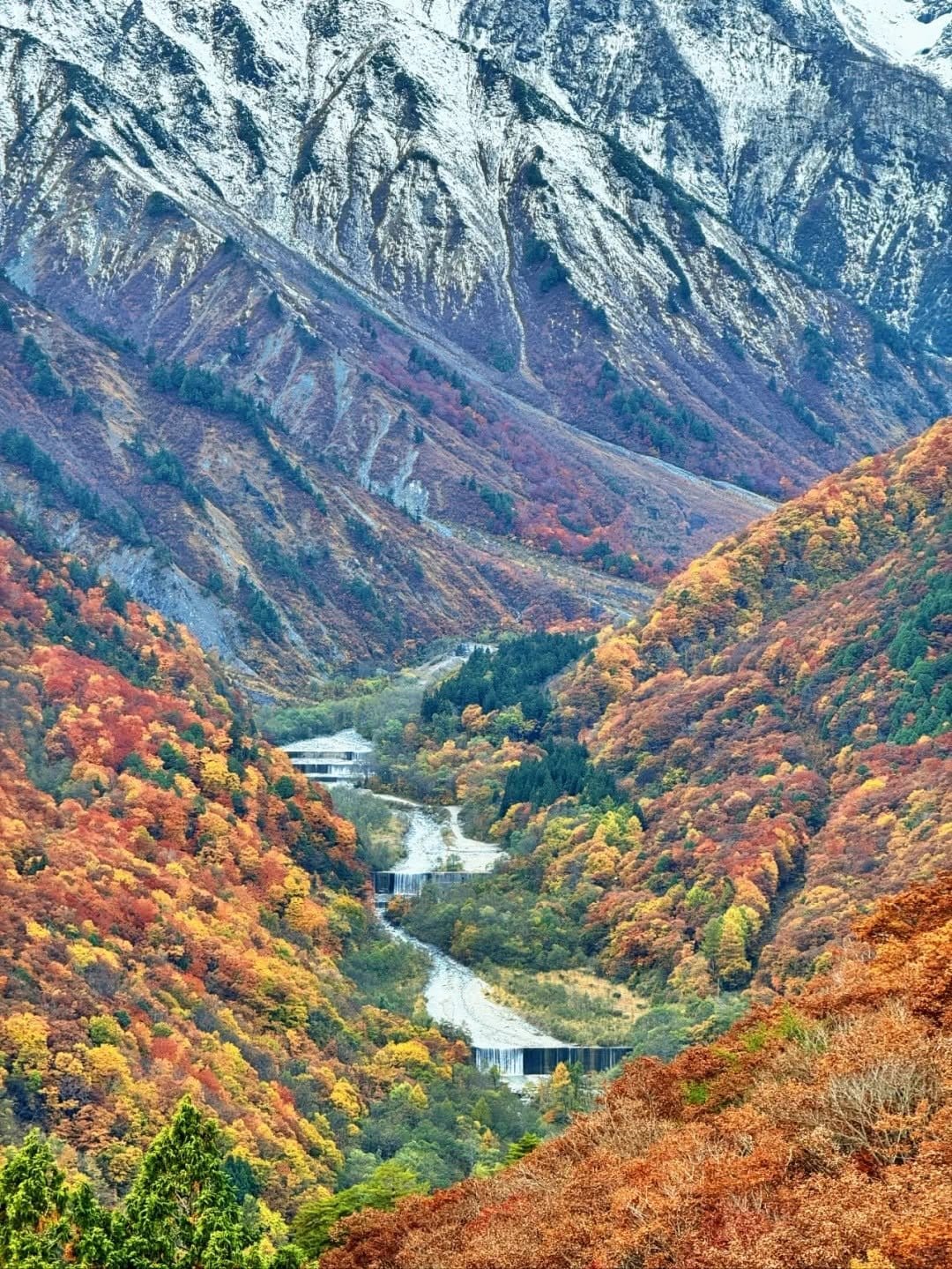
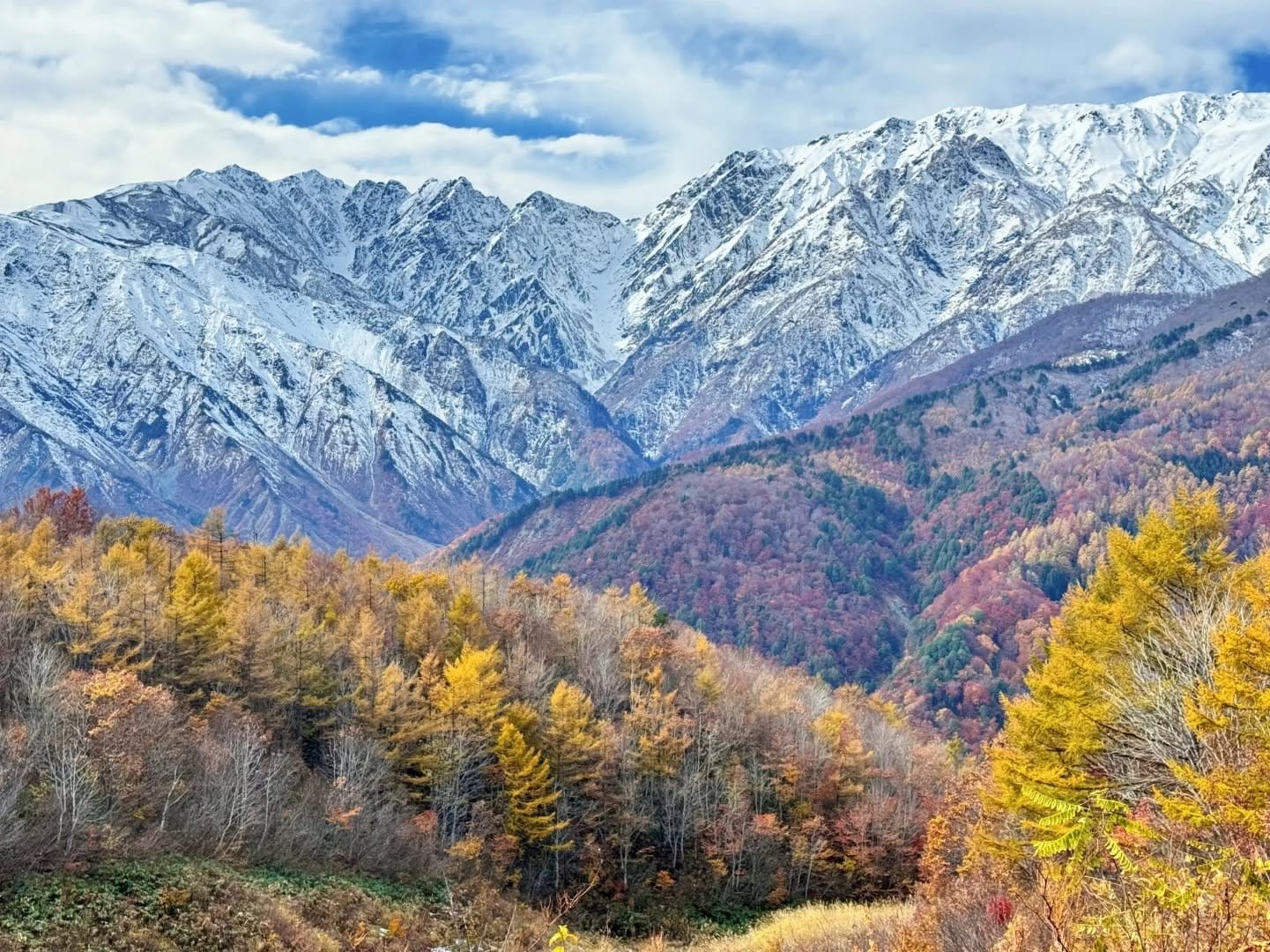
First is elevation and foliage layers. Hakuba Valley sits at around 700 m, while the mountain slopes rise above 2,000 m, so the foliage season here doesn’t last one week but nearly six: by the end of September, the alpine area around Happo-ike is already turning red; from mid-October, the middle elevations and karamatsu larch forests turn a brilliant gold; and it isn’t until early November that the trees and lakes on the valley floor have their turn. Whenever you visit, there will be something to see — you’ll simply be viewing a different elevation layer.
Second is room rates and atmosphere. Hakuba runs on winter, so autumn is its low season — locally run pensions and small hotels are generally much easier to book than Matsumoto during peak autumn foliage weekends, and many offer private onsen and home-cooked dinners. In my view, that’s well worth choosing over a business hotel next to a station.
Third, and most important for this itinerary: Hakuba lies between two routes. The horizontal route is the bus to Nagano, from where you can turn toward Togakushi; the vertical route is the Oito Line down to Omachi and Matsumoto, from where you can branch off to the Alpine Route and Kamikochi. If you arrange the trip in the right direction, you won’t have to backtrack at all.
Four nearby routes: what’s worth combining and what to skip
Kamikochi — a golden valley, but with a deadline
Kamikochi is a private-car-free valley at the foot of the Hotaka Range, where the clear blue Azusa River flows beneath Kappabashi Bridge. Autumn here isn’t the vivid red of momiji but gold: the karamatsu forests — deciduous larches — change color across entire mountainsides at once, reflecting in the waters of Taisho Pond. The easiest route is to walk from Kappabashi up to Myojin Pond and loop back, taking around 2–3 hours at a relaxed pace. The trail is flat, and sneakers are sufficient.
The key thing to remember: Kamikochi closes for winter around mid-November and reopens in mid-April. Buses into the valley stop running according to a schedule that varies each year — check the official website if you’re traveling after 10/11. The best autumn colors usually appear from mid- to late October.
Matsumoto — half a day is enough, and that’s the advantage
Matsumoto Castle is one of the few original keeps that remain intact, its jet-black wooden walls reflected in the moat. Autumn here is subdued rather than dramatic: yellow leaves gather around the castle, the moat lies still, and early mornings often bring mist. Add Nakamachi Street, Nawate Street, and a bowl of soba — Nagano is soba country, and it’s hard to have a bad meal anywhere.
The great thing about Matsumoto is that half a day is just right, making it ideal as a buffer between two demanding mountain days. You don’t need to dedicate a full day to it, and it sits directly on the route toward Tokyo or Nagoya.
Togakushi — a sacred forest for slow travelers
Togakushi lies on a plateau northwest of Nagano City and consists of the Hokosha, Chusha, and Okusha shrines scattered along the mountainside. The most famous section is the path leading to Okusha: after Zuishinmon Gate, centuries-old cedars stand tall on both sides of the trail. It’s about 2 km one way, and in autumn, golden leaves carpet the path while mist often hangs between the tree trunks. Nearby Kagami-ike Pond reflects Mount Togakushi and is the most sought-after autumn photography spot in the area among Japanese visitors. And Togakushi soba is genuinely reason enough to come here.
But to be honest, Togakushi isn’t convenient to combine with the other three destinations. It lies in the complete opposite direction from Kamikochi and the Alpine Route. If you only have 3 days, this is the first stop I recommend cutting — or add it to your first or final day while passing through Nagano City.
The Tateyama–Kurobe Alpine Route — the heaviest day, with a real deadline
From Hakuba, you approach this route from the east: take the Oito Line down to Shinano-Omachi, then a bus to Ogizawa. From Ogizawa, an electric bus through the tunnel takes you to Kurobe Dam in about 15–20 minutes — even walking across the dam itself, between the emerald-blue lake and mountainsides streaked with gold and red, is worth the trip. To go higher, continue by cable car to Kurobedaira, take the ropeway to Daikanbo, and then the tunnel bus across to Murodo at around 2,450 m.
Two points need clarifying because many people get them confused. First, the "snow corridor" with two walls of snow dozens of meters high is a spring sight, when the route reopens in April — you won’t see it in autumn. What you’ll see in autumn is red foliage at lower elevations and early snow on the peaks, a combination the Japanese describe as a "three-layered landscape." Second, the route closes completely around late November to mid-April, and some high-elevation sections may close earlier depending on snowfall — the exact closing date changes each year, so check the official website.
For travelers using Hakuba as a base, I recommend going round-trip from the Ogizawa side rather than crossing the mountains to Toyama, unless you plan to end your trip in Kanazawa. Reaching Murodo and returning takes a full day, but you can keep the same hotel reservation and avoid dragging your luggage through six transfers.
Travel times between each leg — the numbers you need for your itinerary
This is the part I wish someone had told me in advance. The times below are approximate real-world travel times and do not include transfer waits:
- Tokyo → Nagano (Hokuriku shinkansen): around 1 hour 30 minutes to 1 hour 50 minutes.
- Nagano → Hakuba (highway bus): around 1 hour to 1 hour 15 minutes. This is the fastest and cheapest way to reach Hakuba from the north.
- Nagano → Togakushi (Alpico bus, stop in front of the station): around 1 hour to Chusha/Okusha.
- Hakuba → Shinano-Omachi (Oito Line): around 35–45 minutes, but trains are infrequent, with some time slots having 1–2 trains per hour, so check the timetable in advance.
- Shinano-Omachi → Ogizawa (bus): around 40 minutes.
- Ogizawa → Kurobe Dam: around 15–20 minutes by tunnel bus. Continuing to Murodo takes around 1 hour 30 minutes in total if you don’t make long stops.
- Hakuba → Matsumoto: around 1 hour 30 minutes to 2 hours by Oito Line, usually changing trains at Shinano-Omachi, or around 1 hour 30 minutes by bus.
- Matsumoto → Kamikochi: Matsumoto Dentetsu train to Shin-Shimashima takes around 30 minutes, followed by around 1 hour by bus into the valley — about 1 hour 45 minutes to 2 hours including the wait. During peak season, direct buses may run from Matsumoto Bus Terminal, so check the schedule.
- Matsumoto → Tokyo (limited express Azusa): around 2 hours 30 minutes to 3 hours. Matsumoto → Nagoya (Shinano): around 2 hours.
One tip: some years, bus companies operate seasonal routes connecting Hakuba directly with several destinations in the region, saving you one train transfer. The schedule changes from year to year, so it’s worth spending five minutes checking the official Alpico website before finalizing your itinerary.
3-day itinerary: the valley, the mountain route, and the old castle
The compact version for a long weekend starting from Tokyo. The principle: travel one way from north to south without backtracking.
Day 1 — Early-morning Tokyo → Nagano → Hakuba. Take an early shinkansen, arrive in Nagano around mid-morning, catch the bus to Hakuba, and have lunch in the valley. In the afternoon, take the Happo-one gondola (continue to Happo-ike if the weather is good and you still have the energy; the walk from the upper station to the pond takes about 1 hour each way, and the gravel trail requires shoes with good grip) or choose the gentler option of Iwatake for panoramic views of the Northern Alps. Soak in an onsen in the evening and have dinner at your pension. Sleep: Hakuba.
Day 2 — Round-trip mountain crossing. Get up early, take the Oito Line down to Shinano-Omachi, and take the bus to Ogizawa. Go up to Murodo, walk around Mikurigaike Pond if the sky is clear, then retrace your route. This is a long day; allow for 7 a.m. to 6 p.m. Sleep: Shinano-Omachi or Omachi Onsenkyo — don’t return to Hakuba, since the next day you’ll continue south.
Day 3 — Matsumoto, then home. The train down to Matsumoto takes about an hour. Leave your luggage at the station, visit the castle and old streets, eat soba, and take the Azusa back to Shinjuku or the Shinano to Nagoya in the afternoon. Go home.
This 3-day itinerary leaves out Kamikochi and Togakushi. If you want to swap one in, you can replace Day 3 with Kamikochi and return late — but the final day will be very tight.
4-day itinerary: adding Kamikochi
Keep Day 1 and Day 2 above, then:
Day 3 — Omachi → Matsumoto → Kamikochi. Head down to Matsumoto in the morning, send your luggage to the hotel, and go to Kamikochi from midday if you want to avoid the morning crowds (but remember that the final bus leaves the valley fairly early in autumn, so don’t push your luck). My preferred option is to visit Kamikochi first thing in the morning and return to Matsumoto in the late afternoon. Sleep: Matsumoto.
Day 4 — A leisurely Matsumoto morning, then home. Visit the castle as soon as it opens, when the light is beautiful and the crowds are thin; wander around Nakamachi at midday; head home in the afternoon. Go home.
If you can spend a night in Kamikochi Valley itself — there are several lodges and ryokan there — it’s a completely different experience. Early in the morning, before the first buses bring visitors down, the entire valley contains only mist and the sound of water. Rooms are limited, and they sell out early during the autumn foliage season, so book well in advance.
5-day itinerary: all four destinations, beginning with the sacred forest
This is the version I find best in terms of rhythm — start with shrines, finish with a city, and put the two mountain days in the middle.
Day 1 — Tokyo → Nagano → Togakushi. Take the morning shinkansen, leave your luggage, and catch the bus to Togakushi from in front of Nagano Station. Visit Chusha, then walk up to Okusha through the cedar avenue, eat soba, and stop by Kagami-ike. Return to Nagano in the late afternoon and visit Zenkoji Temple if you still have the energy. Sleep: Nagano City (or stay at a shukubo — temple lodging — in Togakushi if you want to take things slowly and wake early to hear the bells).
Day 2 — Nagano → Hakuba. Take the morning bus to Hakuba and spend the whole day in the valley: ride the Happo-one gondola, visit Tsugaike Nature Park farther north (note that it usually closes fairly early toward the end of October, so check in advance), or simply rent bicycles and ride around the village and harvested rice fields. Sleep: Hakuba.
Day 3 — Mountain crossing. Same as Day 2 of the 3-day version. Sleep: Shinano-Omachi or Omachi Onsenkyo.
Day 4 — Omachi → Matsumoto → Kamikochi. If time is tight, leave your luggage and go straight from Matsumoto to Kamikochi for the day. Sleep: Matsumoto.
Day 5 — Castle and the journey home. Visit the castle, market, and old streets in the morning, then head home to Tokyo or Nagoya in the afternoon. Go home.
If you’re coming from Kansai or Nagoya, reverse the entire itinerary: enter via Matsumoto, travel north through Omachi and Hakuba, finish in Nagano, and return by shinkansen. The scenery is the same; only the direction changes.
Where to sleep each night — and why you shouldn’t stay in one place for the entire trip
The most common mistake is booking four consecutive nights in Hakuba and making day trips everywhere. It sounds convenient, but you’ll pay for it with around 3–4 hours on the road every day, especially on the Kamikochi day — a day trip from Hakuba is almost impossible if you want enough time for a proper walk.
- Hakuba (1–2 nights): choose a small pension or lodge in Wadano or Echoland rather than a large hotel. Many places remain open in autumn, but not all — some close between seasons, so confirm in advance. Prioritize somewhere with dinner, because restaurants in Hakuba close early during the low season and many take the entire season off.
- Shinano-Omachi or Omachi Onsenkyo (1 night): this is the link people often overlook. Staying here lets you reach Ogizawa as early as possible, and the trip down to Matsumoto the next morning is also shorter. Omachi Onsenkyo is a small hot-spring area in the mountains with limited but peaceful accommodation; the number of rooms is limited, so book earlier than you think you need to.
- Matsumoto (1 night): plenty of hotels, reasonable prices, and a walkable area around the station. This is the easiest night to book, so keep it as your flexible option.
- Nagano City (1 night): only necessary if you’re including Togakushi. Stay near the station so you can catch an early bus.
One small luggage tip: the Oito Line uses small local trains with limited space for large suitcases, and neither Shinano-Omachi nor Hakuba is a major station. If you’re carrying a 28-inch suitcase, use a luggage-forwarding service (takuhaibin) to send it directly from one hotel to the next, and travel through the mountains with only a backpack.
Timing your trip: two deadlines to remember
The foliage in this region “flows” downward from the mountaintops, so choose your travel week based on your top priority:
- Late September to early October: the alpine areas around Murodo and the summit of Happo are coming into season. At this point, the valley foliage is still completely green.
- Mid- to late October: the best overall window. Kamikochi is glowing gold, Togakushi is in season, the middle elevations of the Alpine Route and the slopes around Hakuba are changing color, and the summits may already have their first snow.
- Early to mid-November: the colors have descended to the valley floor, and the moat around Matsumoto Castle is at its best, but Kamikochi is about to close or may already be closed.
Remember the two deadlines: Kamikochi closes for winter around mid-November, and the Tateyama–Kurobe Route closes around late November before reopening in mid-April. Exact dates change each year, so always check the official websites before booking nonrefundable flights or rooms.
As for the weather, temperature differences within a single day can be enormous here. In late autumn, Murodo may hover around 0 degrees with strong winds and sudden snow, while Matsumoto may still be 18–20 degrees on the same day. Dress in layers and bring a waterproof windbreaker, hat, and thin gloves — even if the forecast says it will be clear.
Tickets and the costs that can easily blow your budget
There is no single pass covering all four routes — that’s the slightly harsh reality. Tickets for the Tateyama–Kurobe Route, buses to Kamikochi, the Nagano–Hakuba bus, and the Togakushi bus are all separate. A practical approach:
- If you’re traveling from Tokyo and returning to Tokyo, compare the price of two one-way shinkansen tickets with the regional JR East passes — for a 3–5-day itinerary, individual tickets can sometimes be cheaper, so do the math first.
- Alpico sells various route-specific combination tickets (for example, bus packages that include admission to certain destinations around Matsumoto or Hakuba Valley). It’s worth asking at the bus terminal counter when you arrive, since the packages change by season.
- Two things to book in advance during the autumn foliage season: tickets for the mountain route (they have an official online time-slot reservation system) and accommodation in Omachi or Kamikochi Valley.
- Treat the mountain and gondola tickets as the “admission fee” for the scenery. Don’t try to save money here and regret it later.
Frequently asked questions
Can I do this without an international driver’s license?
Absolutely. The entire itinerary in this article works by public train and bus. The only inconvenience is that the Oito Line and mountain buses run infrequently, so you need to check the schedules the night before and stick to them. A car gives you more flexibility around the valley and Togakushi, but private cars are prohibited in Kamikochi, and you can’t drive through the Alpine Route — so a car isn’t an absolute advantage either.
Is a day trip to Kamikochi from Hakuba possible?
In theory, yes, but I don’t recommend it. One way takes around 3 hours 30 minutes including transfers, which means spending 7 hours on transport for 2 hours of walking. Spend one night in Matsumoto and visit Kamikochi from there, or leave Kamikochi out if you only have 3 days.
If I can choose only one, should I pick the mountain route or Kamikochi?
It depends on the experience you want. The Tateyama–Kurobe Route offers dramatic scenery, high elevations, lakes, and early snow, but the entire day consists of queues and transport changes. Kamikochi is gentler: you walk beside a stream through golden forest and have much more control over your time. For families with young children or older travelers, I usually recommend Kamikochi; landscape photographers will prefer the mountain route.
Can I still go in late November?
Yes, but you’ll have to accept some trade-offs. Kamikochi will most likely already be closed, the mountain route will be nearing its closing date, and the higher elevations may look snowy rather than covered in autumn leaves. In return, Matsumoto, lower-elevation Togakushi, and the valley floor may still have color, room rates are pleasant, and there are almost no tourists. If foliage is your main goal, try to travel between mid-October and early November.
Can I see all four destinations in three days?
No, and don’t try. In 3 days, Hakuba, the mountain route, and Matsumoto are the most logical trio because they lie along the same axis. Togakushi heads in the opposite direction, while Kamikochi requires a full day — forcing all four into three days means viewing most of the scenery through a bus window.
Can I continue to Kanazawa or Toyama instead of returning?
Yes, and it’s a variation well worth considering if you have 5–6 days. Instead of making a round trip, cross to the Toyama side, spend a night in Toyama, then continue to Kanazawa and eventually return by Hokuriku shinkansen. In that case, use luggage-forwarding services across the route so you don’t have to drag your suitcase through every cable-car leg, and schedule the mountain-crossing day for the week’s best weather.
More from this region — Chubu (Nagano, Kanazawa)
View all →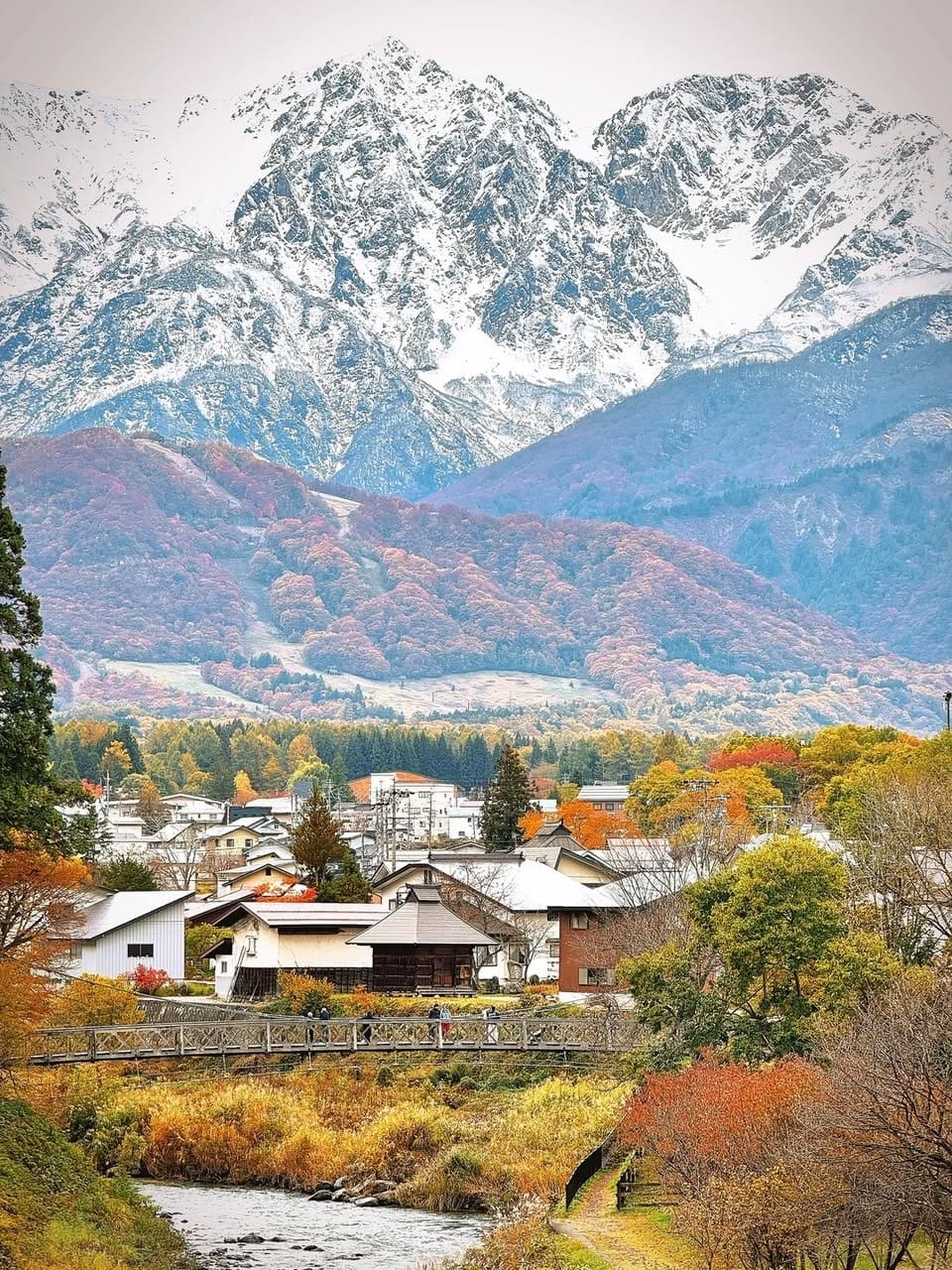
Alkaline Onsen in Hakuba: Four Baths for an Autumn Afternoon After Hiking
17 min · tips
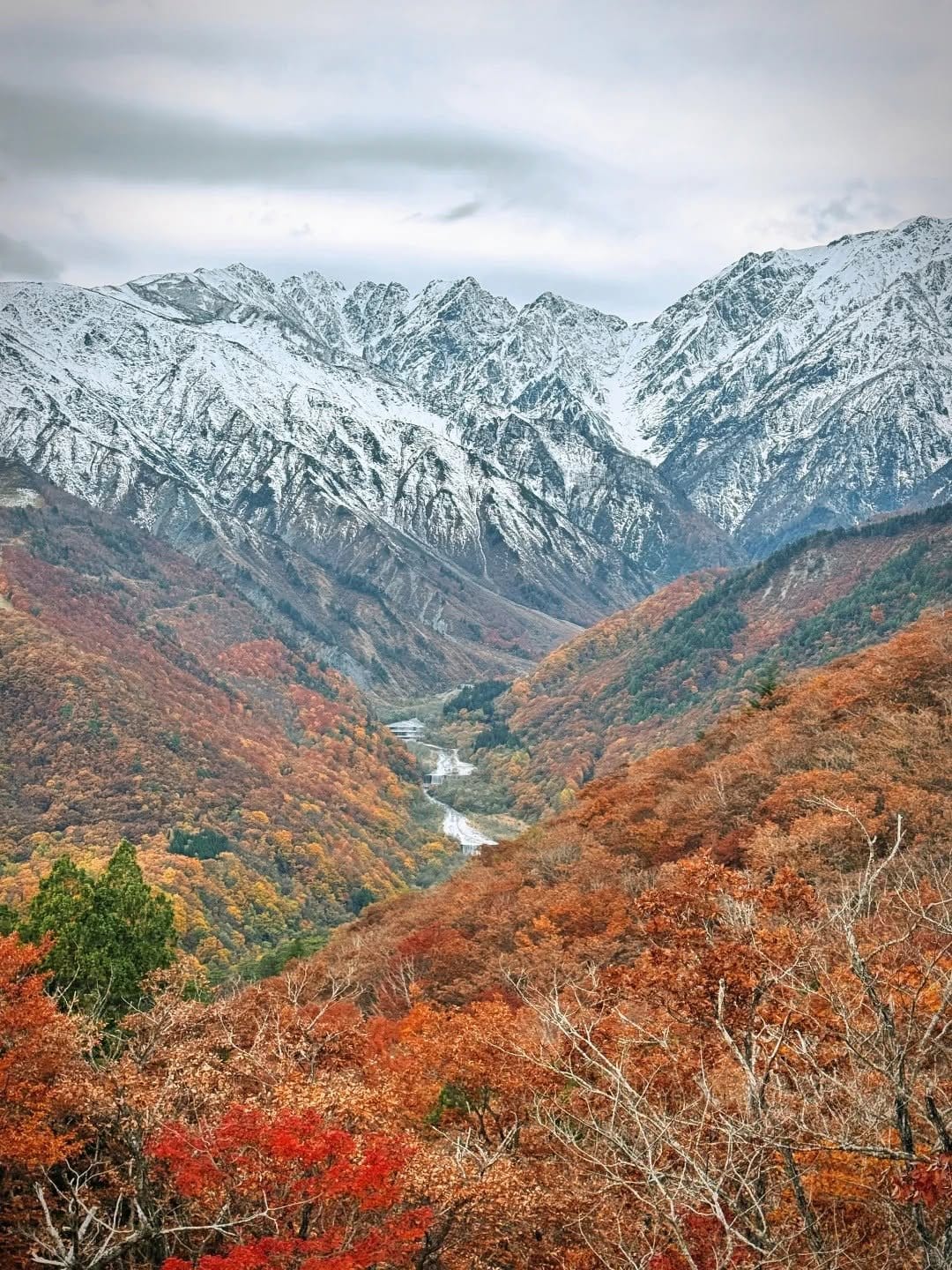
Chasing Autumn Colors in Hakuba: 10 Frames and the Golden Hours for Shooting
22 min · tips
Hakuba 2026 — The Complete Camp & Outdoor Guide
2 min · tips
Hakuba in Autumn and the “Three-Tiered Fall Foliage” Phenomenon: Catch the Right Two Weeks in Late October
20 min · tips