Hakone Weekend: Ryokan, Onsen and the Loop Course Done Right
Plan your Hakone escape from India/Bangladesh! Discover the Hakone Free Pass, scenic loop, private onsen ryokans, black eggs, and Fuji views. All costs in INR.
Jul 10, 2026ยทโ๏ธ olablogยทโฑ 49 min read
Plan your Hakone escape from India/Bangladesh! Discover the Hakone Free Pass, scenic loop, private onsen ryokans, black eggs, and Fuji views. All costs in INR.
Tap a region to browse articles
Nestled just a short journey from Tokyo, Hakone offers a refreshing escape into Japan's natural beauty, famous hot springs, and breathtaking views of Mount Fuji. For first-time or seasoned travelers from India and Bangladesh, a weekend in Hakone promises a blend of tranquility and adventure, all made accessible and affordable with the right planning. Imagine soaking in a private onsen with your loved one, or cruising across a serene lake with Fuji-san as your backdrop, all for a well-managed budget. The Hakone Free Pass, for example, can save you significant costs, with a 2-day adult pass from Shinjuku priced around ยฅ6,100 (approximately โน3,416).
Why Hakone for Your Japan Trip?
When planning a trip to Japan, the sheer volume of incredible destinations can be overwhelming. While Tokyo dazzles with its metropolitan energy and Kyoto enchants with its ancient traditions, Hakone presents a unique, accessible alternative that combines natural beauty, relaxation, and iconic Japanese experiences. For travelers from India and Bangladesh, who might be on their first or second visit to Japan, Hakone offers a perfect balance without the extensive travel time required for more remote destinations.
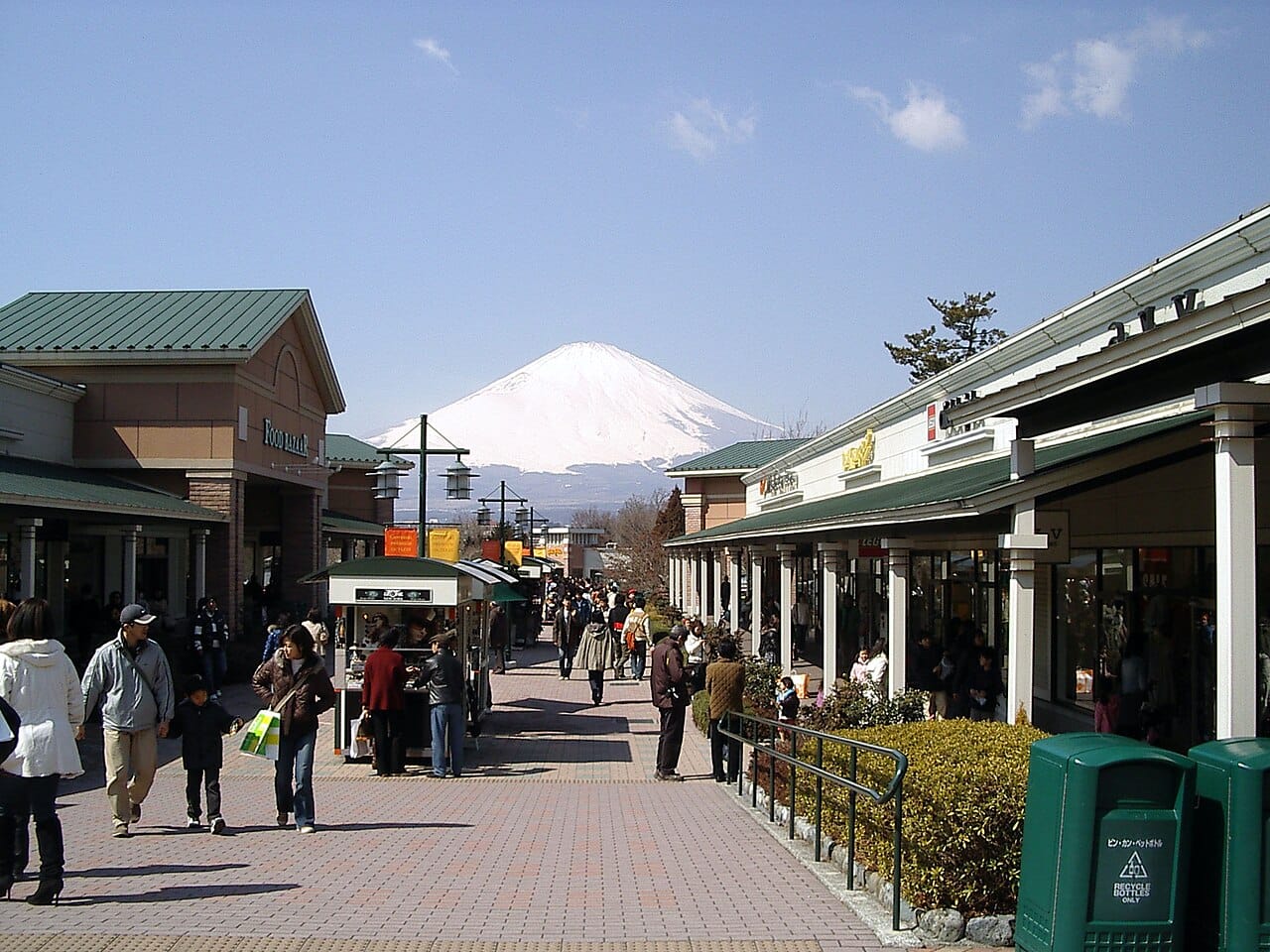
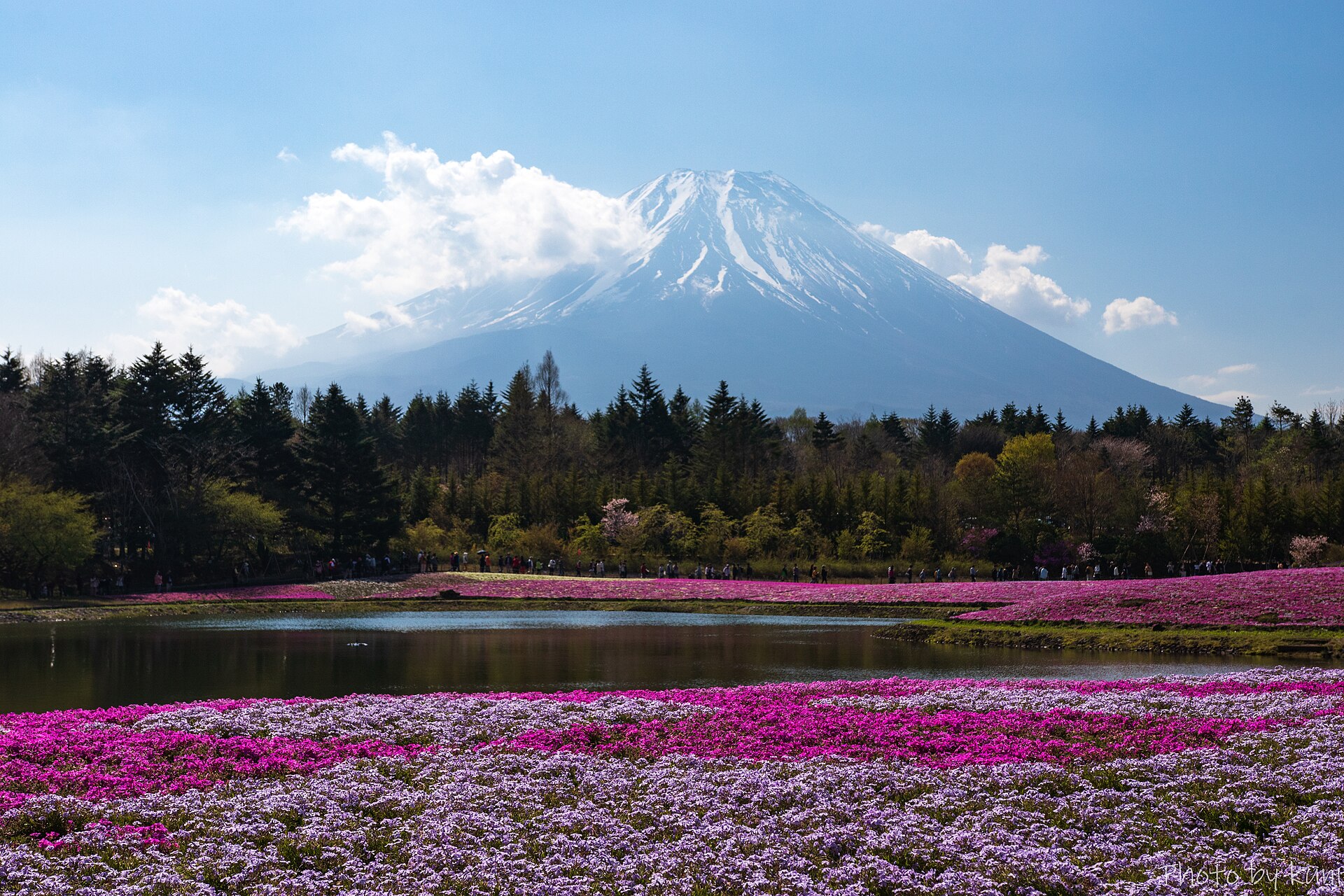
Hakone is part of the Fuji-Hakone-Izu National Park, meaning itโs rich in volcanic landscapes, serene lakes, and lush mountains. Itโs a place where you can witness the majestic Mount Fuji without venturing too far from Tokyo, often described as one of the most picturesque spots in the region. Unlike a sprawling city, Hakoneโs main attractions are interconnected by a unique "loop course" of diverse transportation, making sightseeing efficient and enjoyable. This structured approach to exploration can be particularly appealing for those navigating a new country, offering a clear path to experience its highlights.
Moreover, Hakone is renowned for its onsen (hot springs), which are deeply ingrained in Japanese culture as places of relaxation and rejuvenation. The opportunity to unwind in a traditional ryokan, perhaps even with a private onsen, offers an authentic cultural immersion that differs vastly from the urban hustle. This focus on relaxation and natural beauty can be a welcome contrast to the often-dense itineraries of city exploration, providing a much-needed respite. The cooler climate, especially during spring and autumn, can also be a pleasant change, offering a comfortable environment for exploration compared to the warmer seasons in parts of India and Bangladesh.
Decoding the Hakone Free Pass: Your Essential Ticket
For anyone planning to explore Hakone, the Hakone Free Pass is not just a convenience; it's a smart financial decision. This pass, offered by Odakyu Electric Railway, is specifically designed for tourists and covers unlimited rides on eight different modes of transportation within the Hakone area, including trains, buses, cable cars, ropeways, and even the iconic pirate ship on Lake Ashi. Think of it like a comprehensive metro card for an entire region, eliminating the hassle of buying individual tickets for each leg of your journey.
What it Covers and Why it's Worth It: The Free Pass covers almost all transportation required to complete the popular Hakone Loop Course. This includes the Hakone Tozan Railway, Hakone Tozan Cable Car, Hakone Ropeway, Hakone Sightseeing Cruise (the pirate ship!), and select Hakone Tozan Buses and Odakyu Highway Buses. Beyond transportation, the pass also offers discounts at approximately 70 tourist facilities, including museums, hot springs, and restaurants, adding further value to your trip.
To illustrate the savings, consider the individual fares for a basic loop: a round trip from Shinjuku to Odawara alone can cost around ยฅ1,800 (approximately โน1,008). Adding up all the segments of the loop (train, cable car, ropeway, pirate ship, bus) can easily exceed ยฅ6,800 (approximately โน3,808) if purchased separately. The 2-day Hakone Free Pass from Shinjuku is priced at ยฅ6,100 (approximately โน3,416) for adults, meaning you start saving money even on a single day trip if you complete the standard loop. For a 3-day pass, the cost is ยฅ6,500 (approximately โน3,640).
Purchasing Your Pass: You can purchase the Hakone Free Pass at the Odakyu Sightseeing Service Center located at Shinjuku Station in Tokyo, or at Odawara Station if you're arriving by Shinkansen. It's advisable to buy it upon arrival in Japan or even online in advance to save time. The pass is available in 2-day and 3-day options. For those planning a comfortable weekend, the 2-day pass is usually sufficient, but a 3-day pass allows for a more relaxed pace and deeper exploration.
Romancecar Upgrade: While the Hakone Free Pass includes the basic train journey from Shinjuku to Odawara, you have the option to upgrade to the "Romancecar" limited express for an additional fee. This direct express service significantly cuts down travel time from Shinjuku to Hakone-Yumoto (around 80 minutes) and offers a more comfortable, reserved-seat experience. The Romancecar surcharge is typically around ยฅ1,200 (approximately โน672) each way, making the total round trip cost for the Romancecar plus the 2-day Free Pass around ยฅ8,500 (approximately โน4,760). This is a worthwhile upgrade, especially if you value comfort and efficiency, akin to booking an AC chair car in Indian Railways for a premium experience.
The Hakone Loop Course: Your Scenic Adventure Mapped Out
The Hakone Loop Course, often referred to as the Hakone Round Course, is a meticulously designed sightseeing circuit that integrates five different modes of transport into one seamless journey. This counter-clockwise route is generally recommended to avoid crowds and offers a diverse range of landscapes, from dense forests to volcanic valleys and serene lake views.
Starting Your Journey (Hakone-Yumoto): Your Hakone adventure typically begins at Hakone-Yumoto Station, the gateway to the region. From Shinjuku, you can take the Odakyu Romancecar directly to Hakone-Yumoto. If you're using a JR Pass, you'd take the Shinkansen to Odawara Station and then transfer to the Hakone Tozan Railway for a short ride to Hakone-Yumoto.
Leg 1: Hakone Tozan Railway (Hakone-Yumoto to Gora) The first leg is a charming ride on the Hakone Tozan Railway. This mountain train slowly winds its way through a narrow, densely wooded valley, ascending over 300 meters in altitude. The journey from Hakone-Yumoto to Gora takes about 35-40 minutes, with departures every 15-20 minutes. Keep an eye out for the unique switchback system, where the train changes direction to navigate steep slopes. Along this route, youโll find stops for the Hakone Open-Air Museum, a must-visit for art lovers.
Leg 2: Hakone Tozan Cable Car (Gora to Sounzan) At Gora Station, you'll transfer to the Hakone Tozan Cable Car. This short, 10-minute ride takes you further up the mountain to Sounzan. The cable car operates every 15 minutes, offering panoramic views as you ascend. At Sounzan Station, you can enjoy a free footbath on the observation deck, a perfect mini-break to relax your feet while taking in the Hakone mountains.
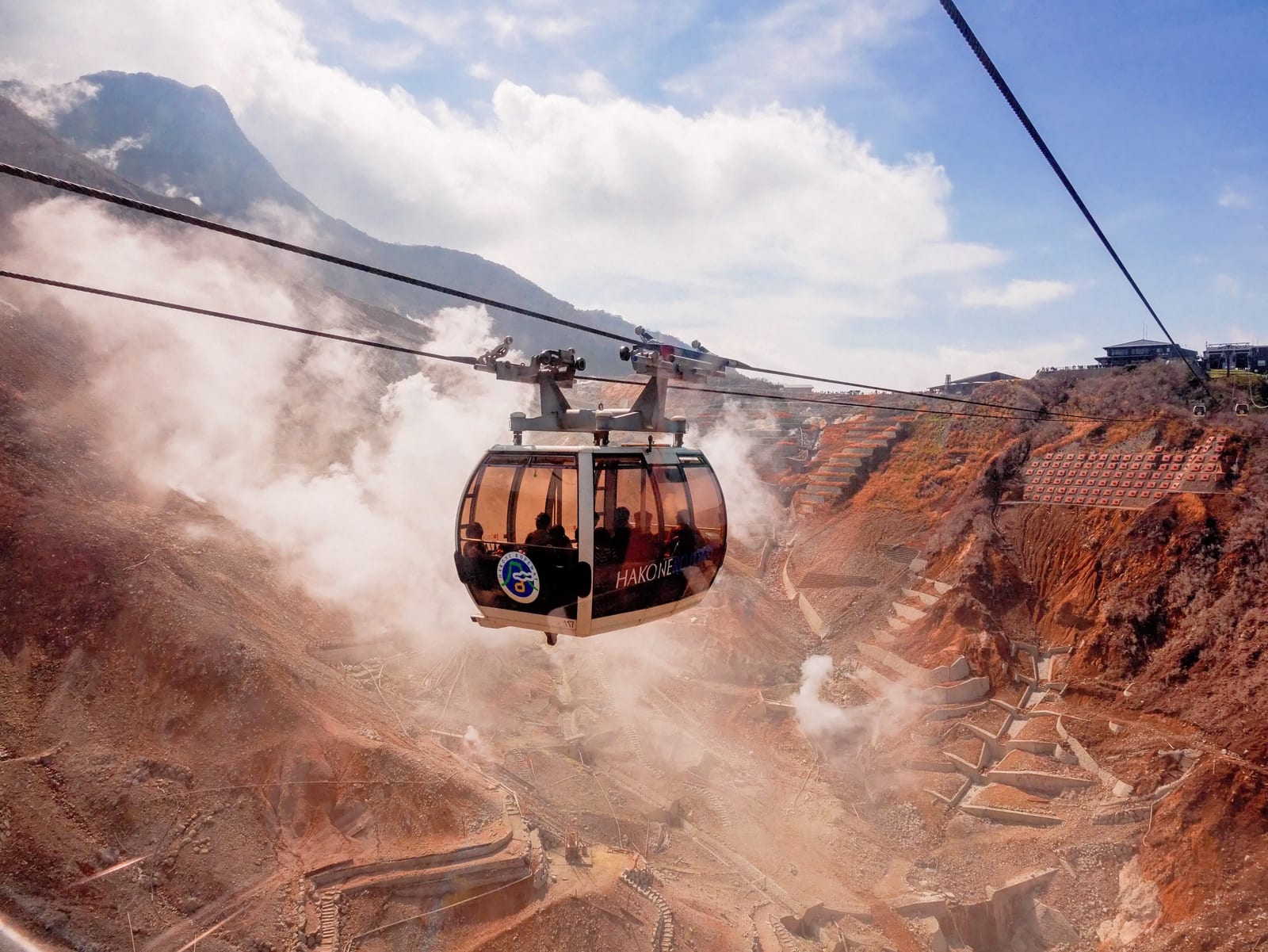
Leg 3: Hakone Ropeway (Sounzan to Togendai via Owakudani) The Hakone Ropeway is arguably the most spectacular part of the loop. From Sounzan, you'll board a gondola that offers breathtaking aerial views. The ropeway departs every 5-10 minutes, and the full journey to Togendai takes about 30 minutes. The highlight of this leg is the stop at Owakudani, a volcanic valley known for its active sulfur vents and dramatic geothermal activity. On a clear day, you can get incredible views of Mount Fuji from the ropeway.
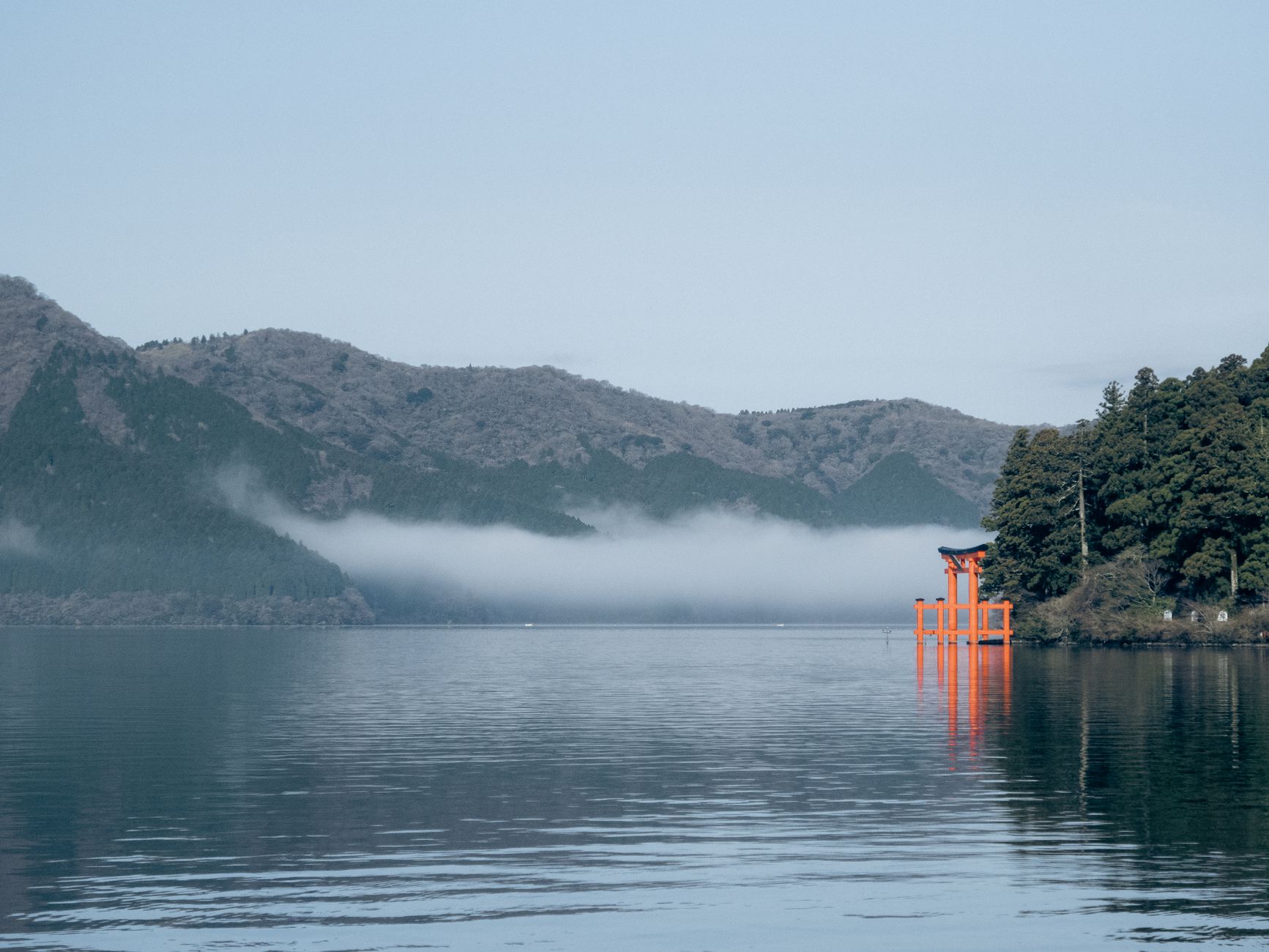
Leg 4: Hakone Sightseeing Cruise (Togendai to Moto-Hakone/Hakone-machi) Upon reaching Togendai, you'll embark on the Hakone Sightseeing Cruise, often referred to as the "pirate ship" for its distinctive design. This cruise across Lake Ashi (Ashinoko) offers serene views of the lake, surrounding mountains, and most importantly, iconic glimpses of Mount Fuji, especially on clear days. The boat trip to Moto-Hakone or Hakone-machi takes about 25-40 minutes, with departures every 30-40 minutes. Moto-Hakone is the ideal stop for visiting the famous Hakone Shrine and its "floating" torii gate.
Leg 5: Hakone Tozan Bus (Moto-Hakone/Hakone-machi to Hakone-Yumoto) The final leg of the loop involves a bus ride from Moto-Hakone or Hakone-machi back to Hakone-Yumoto Station. This bus journey takes approximately 35-40 minutes. This completes your full circuit, bringing you back to the starting point where you can then take your train back to Tokyo or check into your accommodation. The entire loop can be completed in a full day if you start early, but it's best enjoyed over two days with an overnight stay to truly soak in the experiences.
Onsen & Ryokan Bliss: Indulging in Japanese Hospitality (Especially for Couples)
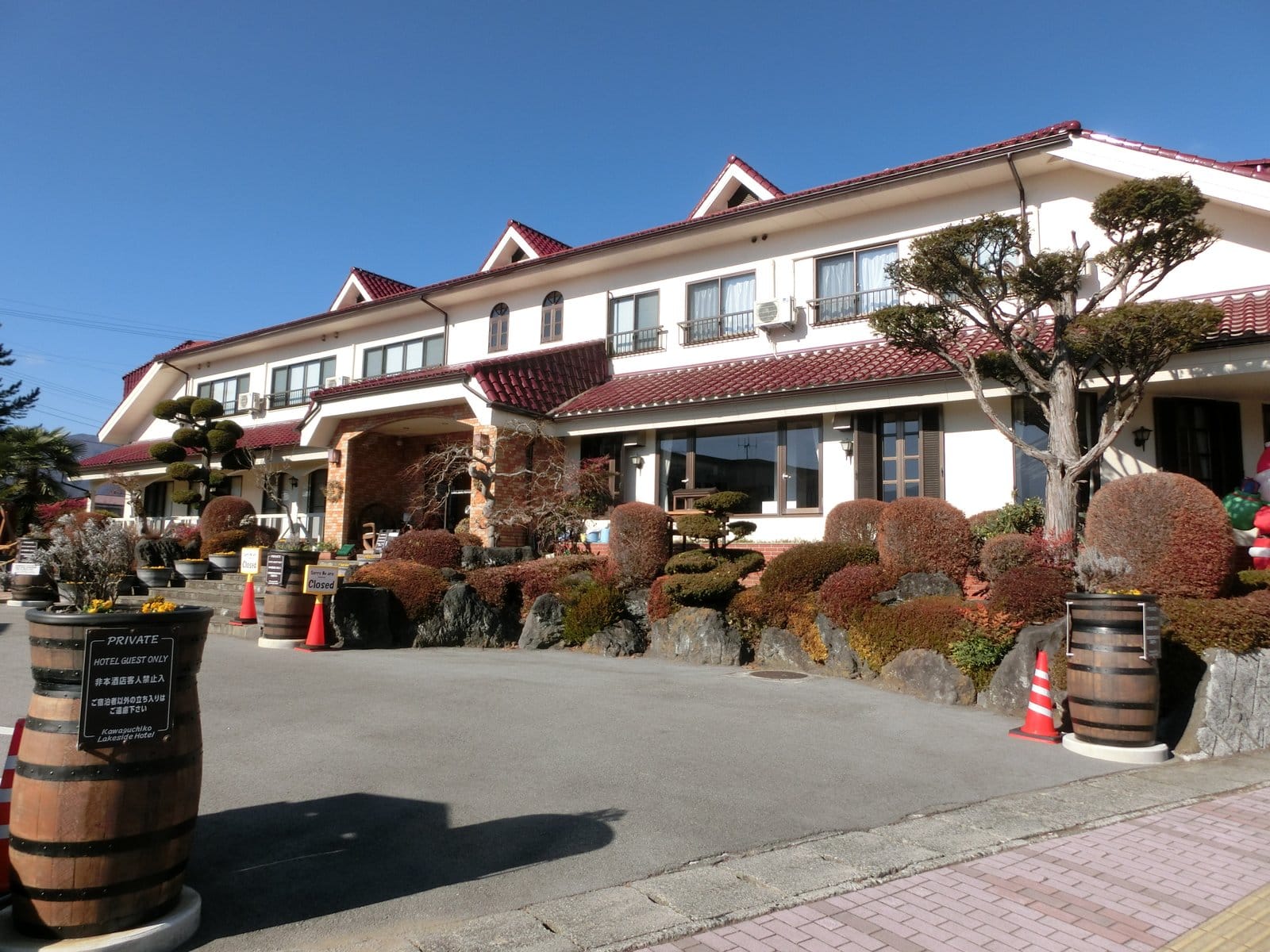
A trip to Hakone is incomplete without experiencing a traditional Japanese ryokan and indulging in the therapeutic waters of an onsen. For couples from India and Bangladesh, this can be an intimate and culturally rich experience, offering a serene escape from daily life. Ryokans are traditional inns, characterized by tatami-matted rooms, futon bedding, exquisite multi-course meals (kaiseki), and access to hot spring baths.
The Allure of Private Onsen: While communal onsen are a staple of Japanese culture, many Indian and Bangladeshi travelers, particularly couples, might prefer the privacy of a private onsen. This is where ryokans with "kashikiri-buro" (reservable private baths) or, even better, rooms with their own "rotenburo" (open-air hot spring baths) or "uchi-buro" (indoor private baths) become highly desirable. These private options allow couples to relax together without any inhibitions, providing a deeply personal and romantic experience. Several ryokans in Hakone cater specifically to this, offering a blend of traditional hospitality with modern comforts and privacy.
Choosing Your Ryokan: When selecting a ryokan, several factors come into play, especially for our audience:
- Privacy: Prioritize ryokans that explicitly offer private onsen within the room or reservable private baths. Websites like Booking.com or Japanican often allow you to filter for these options. It's always best to confirm directly with the ryokan regarding their policies, especially concerning tattoos, as public baths often have strict rules.
- Meal Options: Traditional kaiseki dinners are a highlight of a ryokan stay. However, these often feature seafood and various meats. For vegetarian or halal guests, it's crucial to check with the ryokan in advance if they can accommodate dietary restrictions. Some ryokans are more flexible than others, offering vegetarian-friendly "shojin ryori" (Buddhist temple cuisine) or adapting their menus. If a ryokan cannot guarantee suitable meals, consider booking a room-only plan and dining outside, or bringing some ready-to-eat vegetarian/halal options from Tokyo.
- Location: Ryokans are scattered throughout Hakone. Some are near Hakone-Yumoto for easy access, while others in Gora or along Lake Ashi offer more secluded settings or scenic views.
- Budget: Ryokan prices vary significantly. A good quality ryokan with an in-room private onsen for two can range from ยฅ40,000 to ยฅ70,000 (approximately โน22,400 to โน39,200) per night. Luxury options can exceed ยฅ80,000 (approximately โน44,800). Budget-friendly options with reservable private baths might start around ยฅ25,000-ยฅ40,000 (approximately โน14,000 to โน22,400). Prices can double during peak seasons like cherry blossom or autumn foliage.
Booking Tips: It's highly recommended to book your ryokan several months in advance, especially if you're traveling during peak season or seeking a specific type of private onsen room. Use reputable booking sites and always double-check the cancellation policy. When contacting ryokans about dietary needs, be specific about what you can and cannot eat (e.g., "no meat, no fish, no dashi made from fish, no alcohol").
Ryokan Etiquette: Upon arrival, you'll typically remove your shoes at the entrance. You'll be provided with a yukata (a casual kimono) to wear throughout your stay, which is comfortable and enhances the traditional experience. Remember to shower thoroughly before entering any onsen (private or communal). The atmosphere is generally calm and quiet, encouraging relaxation.
Owakudani & the Black Eggs: A Volcanic Marvel
Owakudani, often translated as the "Great Boiling Valley," is a highlight of the Hakone Ropeway journey and a truly unique natural spectacle. This volcanic valley is a testament to Hakone's active geological past, with steaming sulfur vents and bubbling hot springs creating an otherworldly landscape. The air carries a distinct sulfurous scent, a clear reminder of the volcanic activity beneath your feet, which some might compare to the geysers of Iceland.
The Legendary Black Eggs (Kuro-tamago): The most famous attraction in Owakudani is undoubtedly the "Kuro-tamago," or black eggs. These are chicken eggs boiled in the naturally sulfur-rich hot springs. The sulfur in the water reacts with the eggshells, turning them black. Legend has it that eating one black egg adds seven years to your life, making them a popular and fun snack for tourists.
You can typically buy these eggs in bags of five for around ยฅ500 (approximately โน280). They are sold at various shops and stalls in the Owakudani area. For vegetarian travelers, these eggs are generally a safe and interesting food item to try, as they are simply boiled eggs. However, for strict halal diets, while the eggs themselves are permissible, it's always wise to be cautious about any other snacks or prepared foods in the area, as cross-contamination or non-halal ingredients might be present in other offerings.
Safety and Views: Due to the active volcanic nature, sometimes certain areas of Owakudani may be restricted if gas levels are high, so it's always good to check for real-time information. Even from the ropeway, the views of the steaming vents are impressive. On a clear day, Owakudani also offers some of the most dramatic and unobstructed views of Mount Fuji, making it a prime spot for photography. Make sure to turn around from the geothermal activity to capture Fuji-san in its full glory.
Chasing Fuji: Top Viewpoints in Hakone
Mount Fuji, or Fuji-san, is Japan's most iconic peak, and catching a glimpse of its majestic, often snow-capped cone is a highlight for many visitors. Hakone, being part of the Fuji-Hakone-Izu National Park, offers numerous excellent vantage points. However, clear views are dependent on weather conditions, so patience and a bit of luck are often required. Winter months generally offer the best chances for clear views due to lower humidity.
Here are some of the best spots to chase that perfect Fuji view in Hakone:
- Hakone Ropeway (Owakudani to Togendai): As mentioned, the ropeway journey provides incredible aerial perspectives. When traveling from Owakudani towards Togendai (or vice-versa), keep your camera ready. On clear days, the panoramic windows of the gondola perfectly frame Mount Fuji against the backdrop of the surrounding mountains and Lake Ashi.
- Lake Ashi (Ashinoko): The tranquil waters of Lake Ashi are famed for reflecting Mount Fuji on calm days, creating a quintessential Japanese postcard image.
- Hakone Sightseeing Cruise: The pirate ships cruising across Lake Ashi offer fantastic moving viewpoints. Head to the top deck for the best, unobstructed vistas of Fuji towering over the lake.
- Moto-Hakone and Hakone-machi: From the shores around these port towns, particularly near the Hakone Shrine's iconic torii gate that stands in the water, you can capture Fuji. The sight of Fuji framed by the red torii is a truly memorable shot.
- Onshi-Hakone Park: Located near Moto-Hakone, this park offers elevated views from its Lakeside Observation Building. Itโs a peaceful spot to escape crowds and enjoy Fuji and Lake Ashi.
- Narukawa Art Museum: For art enthusiasts, this museum near Moto-Hakone not only houses beautiful Japanese art but also boasts a panoramic lounge with an ultra-wide, 50-meter window specifically designed to frame Mount Fuji, the red torii gate, and Lake Ashi. Itโs an excellent spot for photographers.
- Sengokuhara Pampas Grass Fields: During autumn (late September to early December), the golden and silvery hues of the pampas grass fields in Sengokuhara provide a stunning foreground for Mount Fuji. Walking along the trails in open areas can reveal beautiful views.
Tips for a Clear View:
- Time of Day: Early mornings often offer the clearest views before atmospheric haze builds up.
- Season: Winter (December to February) generally provides the highest chance of seeing Fuji due to crisp, dry air.
- Check Forecasts: Before heading out, check local weather and live webcams if available. A cloudy day can completely obscure the peak.
Beyond the Loop: Other Hakone Highlights
While the Hakone Loop Course covers the region's main attractions, if you have more time or specific interests, Hakone offers a wealth of other experiences that can enrich your visit.
- Hakone Open-Air Museum: Located near Chokoku-no-Mori Station on the Hakone Tozan Railway, this was Japan's first open-air museum. It features a vast collection of modern and contemporary sculptures by renowned artists, including a dedicated Picasso Pavilion. Strolling through its expansive grounds with art set against the lush mountain backdrop is a delightful experience. The Hakone Free Pass offers a discount on entry.
- Hakone Shrine (Hakone Jinja): A deeply spiritual site nestled on the shores of Lake Ashi, surrounded by ancient cedar trees. Its iconic red torii gate, known as the "Heiwa no Torii" (Gate of Peace), stands majestically in the lake, making for an incredibly picturesque photo opportunity, especially with Mount Fuji in the background on clear days. The main shrine is accessible via a long, lantern-lined stone stairway.
- Hakone Checkpoint Museum: Located in Hakone-machi, this meticulously restored checkpoint offers a fascinating glimpse into Edo-period Japan. It was once a crucial control point on the Tokaido Road, inspecting travelers entering and leaving Edo (modern-day Tokyo). The museum recreates the original buildings, weapons, and tools, bringing history to life.
- Narukawa Art Museum: As mentioned for its Fuji views, this museum also houses an impressive collection of contemporary Japanese paintings, particularly those by nihonga (Japanese-style painting) artists. The serene atmosphere and stunning panoramas make it a worthwhile stop.
- Hakone Glass Forest Venetian Glass Museum: If you're looking for something different, this museum transports you to Venice with its exquisite collection of Venetian glass art, including chandeliers and intricate sculptures. The museum grounds feature beautiful gardens, canals, and even a cafรฉ, creating a charming, European-inspired ambiance amidst the Japanese landscape.
- Sengokuhara Pampas Grass Fields (Susuki-Sogen): Beyond being a Fuji viewpoint, these fields are a beautiful destination in themselves, especially in autumn when the tall grasses turn a golden hue, creating a sea of shimmering gold. It's a popular spot for leisurely walks and photography.
- Souvenir Hunting at Hakone-Yumoto: Before departing, explore the shops around Hakone-Yumoto Station. You'll find a variety of local souvenirs, from hot spring manju (sweet buns) and traditional marquetry (yosegi-zaiku) to local crafts and snacks. It's a great place to pick up gifts and mementos of your Hakone trip.
Planning Your Hakone Weekend: A Sample Itinerary
Hereโs a practical two-day, one-night itinerary designed for Indian and Bangladeshi travelers, maximizing the Hakone Free Pass and incorporating key experiences while considering food preferences. This assumes you're traveling from Tokyo.
Day 1: Arrival, Mountain Railway & Ryokan Relaxation
- Morning (7:30 AM - 9:30 AM): Travel from Tokyo to Hakone-Yumoto.
- From Shinjuku Station, take the Odakyu Romancecar directly to Hakone-Yumoto Station. This comfortable journey takes approximately 80-90 minutes. Remember to purchase a separate Romancecar surcharge ticket in addition to your Hakone Free Pass.
- Cost: Romancecar surcharge ~ยฅ1,200 (approx. โน672) one way.
- Upon arrival at Hakone-Yumoto, you can store your luggage at the station's coin lockers or, if your ryokan allows, arrange for luggage delivery directly to your accommodation (check for services like Hakone Baggage Delivery Service).
- Late Morning (9:30 AM - 12:00 PM): Hakone Tozan Railway & Open-Air Museum.
- Activate your Hakone Free Pass. From Hakone-Yumoto, board the Hakone Tozan Railway towards Gora. Enjoy the scenic, winding ascent.
- Get off at Chokoku-no-Mori Station (one stop before Gora) to visit the Hakone Open-Air Museum. Spend 2-3 hours exploring the impressive outdoor sculptures and the Picasso Pavilion.
- Cost: Museum entry ~ยฅ1,600 (approx. โน896) with Hakone Free Pass discount.
- Lunch (12:00 PM - 1:30 PM): Gora Area.
- Head back to Gora Station. The area around Gora offers various dining options. Look for small local eateries. For vegetarian-friendly options, seek out places offering 'udon' or 'soba' noodles, confirming they use vegetable-based broth (dashi is often fish-based). Convenience stores like 7-Eleven or Lawson also offer vegetarian onigiri, salads, and bread.
- Afternoon (1:30 PM - 3:00 PM): Check-in & Relaxation.
- Take a bus or taxi to your chosen ryokan. Check-in, settle into your tatami room, and don your yukata.
- Late Afternoon/Evening (3:00 PM onwards): Onsen Experience & Kaiseki Dinner.
- Indulge in your private onsen or book a slot for the kashikiri-buro. This is your time to truly relax and rejuvenate.
- Enjoy a traditional kaiseki dinner at your ryokan. Remember to have pre-communicated any dietary restrictions (vegetarian/halal) with your ryokan well in advance. If no suitable meal is available, you might have opted for a room-only plan and brought your own food or planned to dine at a confirmed vegetarian/halal-friendly restaurant.
Day 2: The Full Loop Course & Departure
- Morning (8:00 AM - 9:00 AM): Ryokan Breakfast & Check-out.
- Enjoy breakfast at your ryokan.
- Check out and leave your luggage at the ryokan for forwarding to Hakone-Yumoto Station (if available) or carry it with you for direct storage at Sounzan or Togendai.
- Late Morning (9:00 AM - 1:00 PM): Cable Car, Ropeway & Owakudani.
- From Gora, take the Hakone Tozan Cable Car to Sounzan.
- Transfer to the Hakone Ropeway. Enjoy the panoramic views, and if the weather is clear, marvel at Mount Fuji.
- Stop at Owakudani. Explore the volcanic vents, try the famous black eggs (Kuro-tamago), and capture stunning photos of Fuji-san.
- Cost: Black eggs ~ยฅ500 (approx. โน280) for five.
- Lunch (1:00 PM - 2:00 PM): Togendai or Owakudani.
- There are restaurants and cafes at Owakudani and Togendai. For vegetarian/halal options, check for simple noodle dishes (confirming broth), or rely on convenience store offerings if available. The Italian restaurant La Terrazza near Moto-Hakone is known for halal-friendly and vegetarian options, but it's a bit out of the immediate loop at this point.
- Afternoon (2:00 PM - 4:00 PM): Lake Ashi Cruise & Hakone Shrine.
- From Owakudani, continue on the Hakone Ropeway down to Togendai.
- Board the Hakone Sightseeing Cruise (pirate ship) across Lake Ashi to Moto-Hakone. Enjoy the serene lake views and more chances for Fuji sightings.
- From Moto-Hakone, take a short walk to Hakone Shrine and its iconic "floating" torii gate.
- Late Afternoon (4:00 PM - 5:30 PM): Return to Hakone-Yumoto & Souvenirs.
- From Moto-Hakone, take the Hakone Tozan Bus back to Hakone-Yumoto Station.
- If time permits, browse the souvenir shops around Hakone-Yumoto Station for local specialties.
- Evening (5:30 PM onwards): Departure to Tokyo.
- Take the Odakyu Romancecar back to Shinjuku, or the Hakone Tozan Railway to Odawara and then the Shinkansen for other destinations.
This itinerary provides a comprehensive yet manageable experience of Hakone's best offerings.
Navigating Food in Hakone: Tips for Indian & Bangladeshi Travelers
Food is a significant part of any travel experience, and for Indian and Bangladeshi travelers, concerns about vegetarian and halal options are very real in Japan. While Japan is globally renowned for its culinary scene, traditional Japanese cuisine often features dashi (fish stock), bonito flakes, and other ingredients that may not align with dietary restrictions. However, with some planning, you can navigate Hakone's food landscape successfully.
Vegetarian Options:
- Communicate Clearly: Learning a few key Japanese phrases can be helpful. "Watashi wa bejitarian desu" (I am vegetarian), "Niku nashi" (No meat), "Sakana nashi" (No fish), "Dashi nuki" (Without dashi/fish stock). Showing a written note in Japanese can also be very effective.
- Tofu and Soba/Udon: Traditional Japanese restaurants might offer tofu dishes or soba/udon noodles. Always confirm if the broth is vegetable-based. "Okabe Zen" at SHIKA-JAYA near Hakone-Yumoto Station is a highly-rated vegetarian option, specializing in tofu and mountain yam dishes with kelp broth.
- Italian and Western Cuisine: Restaurants offering Western cuisine, particularly Italian, are often more adaptable. La Terrazza near Moto-Hakone is frequently cited as a good option, offering wood-fired pizzas, pasta, and having separate vegetarian and halal-friendly menus. It's advisable to make reservations and confirm their current offerings.
- Convenience Stores (Konbini): Stores like 7-Eleven, Lawson, and FamilyMart are your best friends. They offer a wide range of pre-packaged foods, including salads, bread, fruit, and some onigiri (rice balls) that are vegetarian-friendly (check ingredients carefully, as some might contain fish flakes or meat extracts). They are also great for picking up quick snacks and drinks.
- Supermarkets: Larger supermarkets will have a broader selection of fresh produce, bread, and packaged goods, which can be useful if you have self-catering facilities or prefer to prepare simple meals.
- Hotels/Ryokans: When booking your ryokan, as discussed earlier, explicitly inquire about vegetarian meal options. Some may offer "shojin ryori" (Buddhist vegetarian cuisine) if they have a temple connection, or can prepare special meals upon request, but this needs to be confirmed well in advance.
Halal Options:
- Limited Dedicated Halal Restaurants: Dedicated halal restaurants are rare in Hakone, especially compared to major cities like Tokyo.
- Muslim-Friendly Options: Some restaurants, like La Terrazza near Moto-Hakone, are identified as "Muslim-friendly" and offer halal-friendly or vegetarian options. However, for strict halal requirements, it's crucial to confirm directly with the staff about ingredients, cooking oils, and potential cross-contamination. Asking about "halal-friendly" rather than strictly "halal" might open up more options that avoid pork and alcohol, but may not be fully halal-certified.
- Vegan as a Backup: Many halal diners find vegan options to be a practical backup, as they avoid all animal products. Always check for alcohol (mirin, sake) in sauces and marinades, which are common in Japanese cooking.
- Bring Your Own: The safest approach for strict halal dietary needs is often to bring a packed halal bento or ready-to-eat meals from Tokyo. This allows you to explore without constant food anxiety.
- eHalal App: The eHalal app can be a useful tool to find nearby convenience stores with halal-ready meals and snacks, and to discover any new halal restaurants in the area.
By being proactive in your research, communicating clearly, and being prepared with backup options, you can enjoy the culinary journey in Hakone without unnecessary stress.
Key Takeaways
- The Hakone Free Pass is indispensable for cost-effective and convenient travel around Hakone, covering multiple transport modes and offering discounts.
- Consider upgrading to the Romancecar for a faster and more comfortable journey from Shinjuku to Hakone-Yumoto.
- The Hakone Loop Course is best experienced counter-clockwise, integrating the Hakone Tozan Railway, Cable Car, Ropeway, and Lake Ashi pirate ship.
- Prioritize ryokans with private onsen (in-room or reservable) for a comfortable and intimate experience, especially for couples from India and Bangladesh.
- Book ryokans and communicate dietary restrictions (vegetarian/halal) well in advance, as traditional Japanese meals often contain fish-based ingredients.
- Owakudani's black eggs are a unique must-try, and the area offers spectacular Mount Fuji views on clear days.
- For the best chance of seeing Mount Fuji, visit during winter or early morning, and explore viewpoints like the Hakone Ropeway, Lake Ashi, and Onshi-Hakone Park.
- Beyond the loop, explore attractions like the Hakone Open-Air Museum, Hakone Shrine, and Narukawa Art Museum.
- Be prepared for food challenges by learning key phrases, utilizing convenience stores, and considering Italian/Western restaurants, or bringing your own halal-certified snacks.
FAQ
Q. Is Hakone suitable for a day trip from Tokyo for Indian/Bangladeshi travelers? A. While a day trip is possible and popular, especially using the Hakone Free Pass, we highly recommend an overnight stay to fully experience Hakone's natural beauty, the relaxing onsen, and the comprehensive loop course without feeling rushed. An overnight stay allows for a more leisurely pace and includes the unique ryokan experience.
Q. How do I manage vegetarian food if I stay at a ryokan? A. When booking your ryokan, it is crucial to explicitly inform them about your vegetarian dietary requirements well in advance. Be specific about avoiding meat, fish, and dashi (fish stock). Some ryokans can prepare vegetarian-friendly meals or shojin ryori, but this varies. If they cannot guarantee suitable meals, consider booking a room-only plan and planning your meals at external restaurants or bringing your own prepared food.
Q. What's the best time of year to visit Hakone for Mount Fuji views? A. The best time for clear Mount Fuji views is generally during the colder, drier months from December to February. Early mornings in any season also offer a higher chance of clear skies. Autumn (October-November) is also popular for its beautiful foliage, often combined with decent Fuji visibility. [cite--- title: "Hakone Weekend: Ryokan, Onsen and the Loop Course Done Right" description: "Plan your Hakone escape from India/Bangladesh! Discover the Hakone Free Pass, scenic loop, private onsen ryokans, black eggs, and Fuji views. All costs in INR." date: "2026-07-10" cover: "/img/fuji.jpg" category: "destinations" utility: "destinations" author: "OlaChill Team" tags: ["India Travel", "Bangladesh Travel", "Hakone", "Onsen", "Mount Fuji", "Ryokan"]
Nestled just a short journey from Tokyo, Hakone offers a refreshing escape into Japan's natural beauty, famous hot springs, and breathtaking views of Mount Fuji. For first-time or seasoned travelers from India and Bangladesh, a weekend in Hakone promises a blend of tranquility and adventure, all made accessible and affordable with the right planning. Imagine soaking in a private onsen with your loved one, or cruising across a serene lake with Fuji-san as your backdrop, all for a well-managed budget. The Hakone Free Pass, for example, can save you significant costs, with a 2-day adult pass from Shinjuku priced around ยฅ6,100 (approximately โน3,416). [cite: 13]
Why Hakone for Your Japan Trip?
When planning a trip to Japan, the sheer volume of incredible destinations can be overwhelming. While Tokyo dazzles with its metropolitan energy and Kyoto enchants with its ancient traditions, Hakone presents a unique, accessible alternative that combines natural beauty, relaxation, and iconic Japanese experiences. For travelers from India and Bangladesh, who might be on their first or second visit to Japan, Hakone offers a perfect balance without the extensive travel time required for more remote destinations.
Hakone is part of the Fuji-Hakone-Izu National Park, meaning itโs rich in volcanic landscapes, serene lakes, and lush mountains. Itโs a place where you can witness the majestic Mount Fuji without venturing too far from Tokyo, often described as one of the most picturesque spots in the region. [cite: 7, 26] Unlike a sprawling city, Hakoneโs main attractions are interconnected by a unique "loop course" of diverse transportation, making sightseeing efficient and enjoyable. This structured approach to exploration can be particularly appealing for those navigating a new country, offering a clear path to experience its highlights.
Moreover, Hakone is renowned for its onsen (hot springs), which are deeply ingrained in Japanese culture as places of relaxation and rejuvenation. The opportunity to unwind in a traditional ryokan, perhaps even with a private onsen, offers an authentic cultural immersion that differs vastly from the urban hustle. This focus on relaxation and natural beauty can be a welcome contrast to the often-dense itineraries of city exploration, providing a much-needed respite. The cooler climate, especially during spring and autumn, can also be a pleasant change, offering a comfortable environment for exploration compared to the warmer seasons in parts of India and Bangladesh. [cite: 6, 24]
Decoding the Hakone Free Pass: Your Essential Ticket
For anyone planning to explore Hakone, the Hakone Free Pass is not just a convenience; it's a smart financial decision. This pass, offered by Odakyu Electric Railway, is specifically designed for tourists and covers unlimited rides on eight different modes of transportation within the Hakone area, including trains, buses, cable cars, ropeways, and even the iconic pirate ship on Lake Ashi. [cite: 13, 19, 33] Think of it like a comprehensive metro card for an entire region, eliminating the hassle of buying individual tickets for each leg of your journey.
What it Covers and Why it's Worth It: The Free Pass covers almost all transportation required to complete the popular Hakone Loop Course. This includes the Hakone Tozan Railway, Hakone Tozan Cable Car, Hakone Ropeway, Hakone Sightseeing Cruise (the pirate ship!), and select Hakone Tozan Buses and Odakyu Highway Buses. [cite: 19, 33] Beyond transportation, the pass also offers discounts at approximately 70 tourist facilities, including museums, hot springs, and restaurants, adding further value to your trip. [cite: 19, 33]
To illustrate the savings, consider the individual fares for a basic loop: a round trip from Shinjuku to Odawara alone can cost around ยฅ1,800 (approximately โน1,008). Adding up all the segments of the loop (train, cable car, ropeway, pirate ship, bus) can easily exceed ยฅ6,800 (approximately โน3,808) if purchased separately. [cite: 13] The 2-day Hakone Free Pass from Shinjuku is priced at ยฅ6,100 (approximately โน3,416) for adults, meaning you start saving money even on a single day trip if you complete the standard loop. [cite: 13] For a 3-day pass, the cost is ยฅ6,500 (approximately โน3,640). [cite: 13]
Purchasing Your Pass: You can purchase the Hakone Free Pass at the Odakyu Sightseeing Service Center located at Shinjuku Station in Tokyo, or at Odawara Station if you're arriving by Shinkansen. It's advisable to buy it upon arrival in Japan or even online in advance to save time. [cite: 17, 33] The pass is available in 2-day and 3-day options. For those planning a comfortable weekend, the 2-day pass is usually sufficient, but a 3-day pass allows for a more relaxed pace and deeper exploration. [cite: 13]
Romancecar Upgrade: While the Hakone Free Pass includes the basic train journey from Shinjuku to Odawara, you have the option to upgrade to the "Romancecar" limited express for an additional fee. This direct express service significantly cuts down travel time from Shinjuku to Hakone-Yumoto (around 80 minutes) and offers a more comfortable, reserved-seat experience. [cite: 25, 33, 36] The Romancecar surcharge is typically around ยฅ1,200 (approximately โน672) each way, making the total round trip cost for the Romancecar plus the 2-day Free Pass around ยฅ8,500 (approximately โน4,760). [cite: 36] This is a worthwhile upgrade, especially if you value comfort and efficiency, akin to booking an AC chair car in Indian Railways for a premium experience.
The Hakone Loop Course: Your Scenic Adventure Mapped Out
The Hakone Loop Course, often referred to as the Hakone Round Course, is a meticulously designed sightseeing circuit that integrates five different modes of transport into one seamless journey. [cite: 6, 11] This counter-clockwise route is generally recommended to avoid crowds and offers a diverse range of landscapes, from dense forests to volcanic valleys and serene lake views. [cite: 6, 11]
Starting Your Journey (Hakone-Yumoto): Your Hakone adventure typically begins at Hakone-Yumoto Station, the gateway to the region. From Shinjuku, you can take the Odakyu Romancecar directly to Hakone-Yumoto. If you're using a JR Pass, you'd take the Shinkansen to Odawara Station and then transfer to the Hakone Tozan Railway for a short ride to Hakone-Yumoto. [cite: 6, 25, 37]
Leg 1: Hakone Tozan Railway (Hakone-Yumoto to Gora) The first leg is a charming ride on the Hakone Tozan Railway. This mountain train slowly winds its way through a narrow, densely wooded valley, ascending over 300 meters in altitude. [cite: 11] The journey from Hakone-Yumoto to Gora takes about 35-40 minutes, with departures every 15-20 minutes. [cite: 6, 11] Keep an eye out for the unique switchback system, where the train changes direction to navigate steep slopes. Along this route, youโll find stops for the Hakone Open-Air Museum, a must-visit for art lovers. [cite: 6, 25]
Leg 2: Hakone Tozan Cable Car (Gora to Sounzan) At Gora Station, you'll transfer to the Hakone Tozan Cable Car. This short, 10-minute ride takes you further up the mountain to Sounzan. [cite: 6, 11] The cable car operates every 15 minutes, offering panoramic views as you ascend. [cite: 11] At Sounzan Station, you can enjoy a free footbath on the observation deck, a perfect mini-break to relax your feet while taking in the Hakone mountains. [cite: 6, 30]
Leg 3: Hakone Ropeway (Sounzan to Togendai via Owakudani) The Hakone Ropeway is arguably the most spectacular part of the loop. From Sounzan, you'll board a gondola that offers breathtaking aerial views. The ropeway departs every 5-10 minutes, and the full journey to Togendai takes about 30 minutes. [cite: 6, 11] The highlight of this leg is the stop at Owakudani, a volcanic valley known for its active sulfur vents and dramatic geothermal activity. [cite: 6, 11] On a clear day, you can get incredible views of Mount Fuji from the ropeway. [cite: 6, 11]
Leg 4: Hakone Sightseeing Cruise (Togendai to Moto-Hakone/Hakone-machi) Upon reaching Togendai, you'll embark on the Hakone Sightseeing Cruise, often referred to as the "pirate ship" for its distinctive design. [cite: 6, 27] This cruise across Lake Ashi (Ashinoko) offers serene views of the lake, surrounding mountains, and most importantly, iconic glimpses of Mount Fuji, especially on clear days. [cite: 7, 11, 25] The boat trip to Moto-Hakone or Hakone-machi takes about 25-40 minutes, with departures every 30-40 minutes. [cite: 6] Moto-Hakone is the ideal stop for visiting the famous Hakone Shrine and its "floating" torii gate. [cite: 7, 11]
Leg 5: Hakone Tozan Bus (Moto-Hakone/Hakone-machi to Hakone-Yumoto) The final leg of the loop involves a bus ride from Moto-Hakone or Hakone-machi back to Hakone-Yumoto Station. This bus journey takes approximately 35-40 minutes. [cite: 6] This completes your full circuit, bringing you back to the starting point where you can then take your train back to Tokyo or check into your accommodation. The entire loop can be completed in a full day if you start early, but it's best enjoyed over two days with an overnight stay to truly soak in the experiences. [cite: 17]
Onsen & Ryokan Bliss: Indulging in Japanese Hospitality (Especially for Couples)
A trip to Hakone is incomplete without experiencing a traditional Japanese ryokan and indulging in the therapeutic waters of an onsen. For couples from India and Bangladesh, this can be an intimate and culturally rich experience, offering a serene escape from daily life. Ryokans are traditional inns, characterized by tatami-matted rooms, futon bedding, exquisite multi-course meals (kaiseki), and access to hot spring baths. [cite: 9]
The Allure of Private Onsen: While communal onsen are a staple of Japanese culture, many Indian and Bangladeshi travelers, particularly couples, might prefer the privacy of a private onsen. This is where ryokans with "kashikiri-buro" (reservable private baths) or, even better, rooms with their own "rotenburo" (open-air hot spring baths) or "uchi-buro" (indoor private baths) become highly desirable. [cite: 9, 15, 20, 38] These private options allow couples to relax together without any inhibitions, providing a deeply personal and romantic experience. Several ryokans in Hakone cater specifically to this, offering a blend of traditional hospitality with modern comforts and privacy. [cite: 9, 15, 20, 34, 38]
Choosing Your Ryokan: When selecting a ryokan, several factors come into play, especially for our audience:
- Privacy: Prioritize ryokans that explicitly offer private onsen within the room or reservable private baths. Websites like Booking.com or Japanican often allow you to filter for these options. It's always best to confirm directly with the ryokan regarding their policies, especially concerning tattoos, as public baths often have strict rules. [cite: 20, 38]
- Meal Options: Traditional kaiseki dinners are a highlight of a ryokan stay. However, these often feature seafood and various meats. For vegetarian or halal guests, it's crucial to check with the ryokan in advance if they can accommodate dietary restrictions. Some ryokans are more flexible than others, offering vegetarian-friendly "shojin ryori" (Buddhist temple cuisine) or adapting their menus. If a ryokan cannot guarantee suitable meals, consider booking a room-only plan and dining outside, or bringing some ready-to-eat vegetarian/halal options from Tokyo. [cite: 8, 10, 16]
- Location: Ryokans are scattered throughout Hakone. Some are near Hakone-Yumoto for easy access, while others in Gora or along Lake Ashi offer more secluded settings or scenic views. [cite: 9, 38]
- Budget: Ryokan prices vary significantly. A good quality ryokan with an in-room private onsen for two can range from ยฅ40,000 to ยฅ70,000 (approximately โน22,400 to โน39,200) per night. [cite: 38] Luxury options can exceed ยฅ80,000 (approximately โน44,800). [cite: 38] Budget-friendly options with reservable private baths might start around ยฅ25,000-ยฅ40,000 (approximately โน14,000 to โน22,400). [cite: 38] Prices can double during peak seasons like cherry blossom or autumn foliage. [cite: 38]
Booking Tips: It's highly recommended to book your ryokan several months in advance, especially if you're traveling during peak season or seeking a specific type of private onsen room. Use reputable booking sites and always double-check the cancellation policy. When contacting ryokans about dietary needs, be specific about what you can and cannot eat (e.g., "no meat, no fish, no dashi made from fish, no alcohol").
Ryokan Etiquette: Upon arrival, you'll typically remove your shoes at the entrance. You'll be provided with a yukata (a casual kimono) to wear throughout your stay, which is comfortable and enhances the traditional experience. Remember to shower thoroughly before entering any onsen (private or communal). The atmosphere is generally calm and quiet, encouraging relaxation.
Owakudani & the Black Eggs: A Volcanic Marvel
Owakudani, often translated as the "Great Boiling Valley," is a highlight of the Hakone Ropeway journey and a truly unique natural spectacle. [cite: 6, 11] This volcanic valley is a testament to Hakone's active geological past, with steaming sulfur vents and bubbling hot springs creating an otherworldly landscape. [cite: 6, 22] The air carries a distinct sulfurous scent, a clear reminder of the volcanic activity beneath your feet, which some might compare to the geysers of Iceland. [cite: 22]
The Legendary Black Eggs (Kuro-tamago): The most famous attraction in Owakudani is undoubtedly the "Kuro-tamago," or black eggs. These are chicken eggs boiled in the naturally sulfur-rich hot springs. The sulfur in the water reacts with the eggshells, turning them black. [cite: 6] Legend has it that eating one black egg adds seven years to your life, making them a popular and fun snack for tourists. [cite: 6]
You can typically buy these eggs in bags of five for around ยฅ500 (approximately โน280). They are sold at various shops and stalls in the Owakudani area. [cite: 6] For vegetarian travelers, these eggs are generally a safe and interesting food item to try, as they are simply boiled eggs. However, for strict halal diets, while the eggs themselves are permissible, it's always wise to be cautious about any other snacks or prepared foods in the area, as cross-contamination or non-halal ingredients might be present in other offerings.
Safety and Views: Due to the active volcanic nature, sometimes certain areas of Owakudani may be restricted if gas levels are high, so it's always good to check for real-time information. Even from the ropeway, the views of the steaming vents are impressive. [cite: 6] On a clear day, Owakudani also offers some of the most dramatic and unobstructed views of Mount Fuji, making it a prime spot for photography. [cite: 7, 14, 22] Make sure to turn around from the geothermal activity to capture Fuji-san in its full glory. [cite: 22]
Chasing Fuji: Top Viewpoints in Hakone
Mount Fuji, or Fuji-san, is Japan's most iconic peak, and catching a glimpse of its majestic, often snow-capped cone is a highlight for many visitors. Hakone, being part of the Fuji-Hakone-Izu National Park, offers numerous excellent vantage points. However, clear views are dependent on weather conditions, so patience and a bit of luck are often required. Winter months generally offer the best chances for clear views due to lower humidity. [cite: 6, 26]
Here are some of the best spots to chase that perfect Fuji view in Hakone:
- Hakone Ropeway (Owakudani to Togendai): As mentioned, the ropeway journey provides incredible aerial perspectives. When traveling from Owakudani towards Togendai (or vice-versa), keep your camera ready. On clear days, the panoramic windows of the gondola perfectly frame Mount Fuji against the backdrop of the surrounding mountains and Lake Ashi. [cite: 7, 14, 22]
- Lake Ashi (Ashinoko): The tranquil waters of Lake Ashi are famed for reflecting Mount Fuji on calm days, creating a quintessential Japanese postcard image. [cite: 7, 14, 26]
- Hakone Sightseeing Cruise: The pirate ships cruising across Lake Ashi offer fantastic moving viewpoints. Head to the top deck for the best, unobstructed vistas of Fuji towering over the lake. [cite: 14]
- Moto-Hakone and Hakone-machi: From the shores around these port towns, particularly near the Hakone Shrine's iconic torii gate that stands in the water, you can capture Fuji. [cite: 7, 14] The sight of Fuji framed by the red torii is a truly memorable shot. [cite: 7]
- Onshi-Hakone Park: Located near Moto-Hakone, this park offers elevated views from its Lakeside Observation Building. Itโs a peaceful spot to escape crowds and enjoy Fuji and Lake Ashi. [cite: 14, 22]
- Narukawa Art Museum: For art enthusiasts, this museum near Moto-Hakone not only houses beautiful Japanese art but also boasts a panoramic lounge with an ultra-wide, 50-meter window specifically designed to frame Mount Fuji, the red torii gate, and Lake Ashi. [cite: 14] Itโs an excellent spot for photographers. [cite: 14]
- Sengokuhara Pampas Grass Fields: During autumn (late September to early December), the golden and silvery hues of the pampas grass fields in Sengokuhara provide a stunning foreground for Mount Fuji. Walking along the trails in open areas can reveal beautiful views. [cite: 30]
Tips for a Clear View:
- Time of Day: Early mornings often offer the clearest views before atmospheric haze builds up.
- Season: Winter (December to February) generally provides the highest chance of seeing Fuji due to crisp, dry air. [cite: 6]
- Check Forecasts: Before heading out, check local weather and live webcams if available. A cloudy day can completely obscure the peak.
Beyond the Loop: Other Hakone Highlights
While the Hakone Loop Course covers the region's main attractions, if you have more time or specific interests, Hakone offers a wealth of other experiences that can enrich your visit.
- Hakone Open-Air Museum: Located near Chokoku-no-Mori Station on the Hakone Tozan Railway, this was Japan's first open-air museum. [cite: 6, 37] It features a vast collection of modern and contemporary sculptures by renowned artists, including a dedicated Picasso Pavilion. [cite: 6, 25, 37] Strolling through its expansive grounds with art set against the lush mountain backdrop is a delightful experience. [cite: 6, 37] The Hakone Free Pass offers a discount on entry. [cite: 6]
- Hakone Shrine (Hakone Jinja): A deeply spiritual site nestled on the shores of Lake Ashi, surrounded by ancient cedar trees. Its iconic red torii gate, known as the "Heiwa no Torii" (Gate of Peace), stands majestically in the lake, making for an incredibly picturesque photo opportunity, especially with Mount Fuji in the background on clear days. [cite: 7, 27] The main shrine is accessible via a long, lantern-lined stone stairway.
- Hakone Checkpoint Museum: Located in Hakone-machi, this meticulously restored checkpoint offers a fascinating glimpse into Edo-period Japan. It was once a crucial control point on the Tokaido Road, inspecting travelers entering and leaving Edo (modern-day Tokyo). The museum recreates the original buildings, weapons, and tools, bringing history to life. [cite: 17, 33]
- Narukawa Art Museum: As mentioned for its Fuji views, this museum also houses an impressive collection of contemporary Japanese paintings, particularly those by nihonga (Japanese-style painting) artists. The serene atmosphere and stunning panoramas make it a worthwhile stop. [cite: 14]
- Hakone Glass Forest Venetian Glass Museum: If you're looking for something different, this museum transports you to Venice with its exquisite collection of Venetian glass art, including chandeliers and intricate sculptures. The museum grounds feature beautiful gardens, canals, and even a cafรฉ, creating a charming, European-inspired ambiance amidst the Japanese landscape.
- Sengokuhara Pampas Grass Fields (Susuki-Sogen): Beyond being a Fuji viewpoint, these fields are a beautiful destination in themselves, especially in autumn when the tall grasses turn a golden hue, creating a sea of shimmering gold. It's a popular spot for leisurely walks and photography. [cite: 30]
- Souvenir Hunting at Hakone-Yumoto: Before departing, explore the shops around Hakone-Yumoto Station. You'll find a variety of local souvenirs, from hot spring manju (sweet buns) and traditional marquetry (yosegi-zaiku) to local crafts and snacks. [cite: 25, 31] It's a great place to pick up gifts and mementos of your Hakone trip.
Planning Your Hakone Weekend: A Sample Itinerary
Hereโs a practical two-day, one-night itinerary designed for Indian and Bangladeshi travelers, maximizing the Hakone Free Pass and incorporating key experiences while considering food preferences. This assumes you're traveling from Tokyo.
Day 1: Arrival, Mountain Railway & Ryokan Relaxation
- Morning (7:30 AM - 9:30 AM): Travel from Tokyo to Hakone-Yumoto.
- From Shinjuku Station, take the Odakyu Romancecar directly to Hakone-Yumoto Station. This comfortable journey takes approximately 80-90 minutes. Remember to purchase a separate Romancecar surcharge ticket in addition to your Hakone Free Pass. [cite: 25, 36]
- Cost: Romancecar surcharge ~ยฅ1,200 (approx. โน672) one way.
- Upon arrival at Hakone-Yumoto, you can store your luggage at the station's coin lockers or, if your ryokan allows, arrange for luggage delivery directly to your accommodation (check for services like Hakone Baggage Delivery Service). [cite: 23]
- Late Morning (9:30 AM - 12:00 PM): Hakone Tozan Railway & Open-Air Museum.
- Activate your Hakone Free Pass. From Hakone-Yumoto, board the Hakone Tozan Railway towards Gora. Enjoy the scenic, winding ascent. [cite: 11, 25]
- Get off at Chokoku-no-Mori Station (one stop before Gora) to visit the Hakone Open-Air Museum. Spend 2-3 hours exploring the impressive outdoor sculptures and the Picasso Pavilion. [cite: 6, 25, 37]
- Cost: Museum entry ~ยฅ1,600 (approx. โน896) with Hakone Free Pass discount.
- Lunch (12:00 PM - 1:30 PM): Gora Area.
- Head back to Gora Station. The area around Gora offers various dining options. Look for small local eateries. For vegetarian-friendly options, seek out places offering 'udon' or 'soba' noodles, confirming they use vegetable-based broth (dashi is often fish-based). Convenience stores like 7-Eleven or Lawson also offer vegetarian onigiri, salads, and bread.
- Afternoon (1:30 PM - 3:00 PM): Check-in & Relaxation.
- Take a bus or taxi to your chosen ryokan. Check-in, settle into your tatami room, and don your yukata.
- Late Afternoon/Evening (3:00 PM onwards): Onsen Experience & Kaiseki Dinner.
- Indulge in your private onsen or book a slot for the kashikiri-buro. This is your time to truly relax and rejuvenate.
- Enjoy a traditional kaiseki dinner at your ryokan. Remember to have pre-communicated any dietary restrictions (vegetarian/halal) with your ryokan well in advance. If no suitable meal is available, you might have opted for a room-only plan and brought your own food or planned to dine at a confirmed vegetarian/halal-friendly restaurant.
Day 2: The Full Loop Course & Departure
- Morning (8:00 AM - 9:00 AM): Ryokan Breakfast & Check-out.
- Enjoy breakfast at your ryokan.
- Check out and leave your luggage at the ryokan for forwarding to Hakone-Yumoto Station (if available) or carry it with you for direct storage at Sounzan or Togendai.
- Late Morning (9:00 AM - 1:00 PM): Cable Car, Ropeway & Owakudani.
- From Gora, take the Hakone Tozan Cable Car to Sounzan. [cite: 11]
- Transfer to the Hakone Ropeway. Enjoy the panoramic views, and if the weather is clear, marvel at Mount Fuji. [cite: 11]
- Stop at Owakudani. Explore the volcanic vents, try the famous black eggs (Kuro-tamago), and capture stunning photos of Fuji-san. [cite: 6, 22]
- Cost: Black eggs ~ยฅ500 (approx. โน280) for five.
- Lunch (1:00 PM - 2:00 PM): Togendai or Owakudani.
- There are restaurants and cafes at Owakudani and Togendai. For vegetarian/halal options, check for simple noodle dishes (confirming broth), or rely on convenience store offerings if available. The Italian restaurant La Terrazza near Moto-Hakone is known for halal-friendly and vegetarian options, but it's a bit out of the immediate loop at this point. [cite: 10, 12, 18]
- Afternoon (2:00 PM - 4:00 PM): Lake Ashi Cruise & Hakone Shrine.
- From Owakudani, continue on the Hakone Ropeway down to Togendai. [cite: 11]
- Board the Hakone Sightseeing Cruise (pirate ship) across Lake Ashi to Moto-Hakone. Enjoy the serene lake views and more chances for Fuji sightings. [cite: 11, 25]
- From Moto-Hakone, take a short walk to Hakone Shrine and its iconic "floating" torii gate. [cite: 7, 27]
- Late Afternoon (4:00 PM - 5:30 PM): Return to Hakone-Yumoto & Souvenirs.
- From Moto-Hakone, take the Hakone Tozan Bus back to Hakone-Yumoto Station. [cite: 6]
- If time permits, browse the souvenir shops around Hakone-Yumoto Station for local specialties. [cite: 25, 31]
- Evening (5:30 PM onwards): Departure to Tokyo.
- Take the Odakyu Romancecar back to Shinjuku, or the Hakone Tozan Railway to Odawara and then the Shinkansen for other destinations.
This itinerary provides a comprehensive yet manageable experience of Hakone's best offerings.
Navigating Food in Hakone: Tips for Indian & Bangladeshi Travelers
Food is a significant part of any travel experience, and for Indian and Bangladeshi travelers, concerns about vegetarian and halal options are very real in Japan. While Japan is globally renowned for its culinary scene, traditional Japanese cuisine often features dashi (fish stock), bonito flakes, and other ingredients that may not align with dietary restrictions. However, with some planning, you can navigate Hakone's food landscape successfully.
Vegetarian Options:
- Communicate Clearly: Learning a few key Japanese phrases can be helpful. "Watashi wa bejitarian desu" (I am vegetarian), "Niku nashi" (No meat), "Sakana nashi" (No fish), "Dashi nuki" (Without dashi/fish stock). Showing a written note in Japanese can also be very effective.
- Tofu and Soba/Udon: Traditional Japanese restaurants might offer tofu dishes or soba/udon noodles. Always confirm if the broth is vegetable-based. "Okabe Zen" at SHIKA-JAYA near Hakone-Yumoto Station is a highly-rated vegetarian option, specializing in tofu and mountain yam dishes with kelp broth. [cite: 32]
- Italian and Western Cuisine: Restaurants offering Western cuisine, particularly Italian, are often more adaptable. La Terrazza near Moto-Hakone is frequently cited as a good option, offering wood-fired pizzas, pasta, and having separate vegetarian and halal-friendly menus. [cite: 10, 12, 18] It's advisable to make reservations and confirm their current offerings.
- Convenience Stores (Konbini): Stores like 7-Eleven, Lawson, and FamilyMart are your best friends. They offer a wide range of pre-packaged foods, including salads, bread, fruit, and some onigiri (rice balls) that are vegetarian-friendly (check ingredients carefully, as some might contain fish flakes or meat extracts). They are also great for picking up quick snacks and drinks.
- Supermarkets: Larger supermarkets will have a broader selection of fresh produce, bread, and packaged goods, which can be useful if you have self-catering facilities or prefer to prepare simple meals.
- Hotels/Ryokans: When booking your ryokan, as discussed earlier, explicitly inquire about vegetarian meal options. Some may offer "shojin ryori" (Buddhist vegetarian cuisine) if they have a temple connection, or can prepare special meals upon request, but this needs to be confirmed well in advance. [cite: 16]
Halal Options:
- Limited Dedicated Halal Restaurants: Dedicated halal restaurants are rare in Hakone, especially compared to major cities like Tokyo. [cite: 10]
- Muslim-Friendly Options: Some restaurants, like La Terrazza near Moto-Hakone, are identified as "Muslim-friendly" and offer halal-friendly or vegetarian options. [cite: 10, 12, 18] However, for strict halal requirements, it's crucial to confirm directly with the staff about ingredients, cooking oils, and potential cross-contamination. Asking about "halal-friendly" rather than strictly "halal" might open up more options that avoid pork and alcohol, but may not be fully halal-certified.
- Vegan as a Backup: Many halal diners find vegan options to be a practical backup, as they avoid all animal products. Always check for alcohol (mirin, sake) in sauces and marinades, which are common in Japanese cooking.
- Bring Your Own: The safest approach for strict halal dietary needs is often to bring a packed halal bento or ready-to-eat meals from Tokyo. [cite: 10] This allows you to explore without constant food anxiety.
- eHalal App: The eHalal app can be a useful tool to find nearby convenience stores with halal-ready meals and snacks, and to discover any new halal restaurants in the area. [cite: 35]
By being proactive in your research, communicating clearly, and being prepared with backup options, you can enjoy the culinary journey in Hakone without unnecessary stress.
Key Takeaways
- The Hakone Free Pass is indispensable for cost-effective and convenient travel around Hakone, covering multiple transport modes and offering discounts. [cite: 13, 19, 33]
- Consider upgrading to the Romancecar for a faster and more comfortable journey from Shinjuku to Hakone-Yumoto. [cite: 25, 36]
- The Hakone Loop Course is best experienced counter-clockwise, integrating the Hakone Tozan Railway, Cable Car, Ropeway, and Lake Ashi pirate ship. [cite: 6, 11]
- Prioritize ryokans with private onsen (in-room or reservable) for a comfortable and intimate experience, especially for couples from India and Bangladesh. [cite: 20, 38]
- Book ryokans and communicate dietary restrictions (vegetarian/halal) well in advance, as traditional Japanese meals often contain fish-based ingredients. [cite: 16]
- Owakudani's black eggs are a unique must-try, and the area offers spectacular Mount Fuji views on clear days. [cite: 6, 22]
- For the best chance of seeing Mount Fuji, visit during winter or early morning, and explore viewpoints like the Hakone Ropeway, Lake Ashi, and Onshi-Hakone Park. [cite: 6, 7, 26]
- Beyond the loop, explore attractions like the Hakone Open-Air Museum, Hakone Shrine, and Narukawa Art Museum. [cite: 6, 7]
- Be prepared for food challenges by learning key phrases, utilizing convenience stores, and considering Italian/Western restaurants, or bringing your own halal-certified snacks. [cite: 10, 16]
FAQ
Q. Is Hakone suitable for a day trip from Tokyo for Indian/Bangladeshi travelers? A. While a day trip is possible and popular, especially using the Hakone Free Pass, we highly recommend an overnight stay to fully experience Hakone's natural beauty, the relaxing onsen, and the comprehensive loop course without feeling rushed. [cite: 17] An overnight stay allows for a more leisurely pace and includes the unique ryokan experience.
Q. How do I manage vegetarian food if I stay at a ryokan? A. When booking your ryokan, it is crucial to explicitly inform them about your vegetarian dietary requirements well in advance. Be specific about avoiding meat, fish, and dashi (fish stock). Some ryokans can prepare vegetarian-friendly meals or shojin ryori, but this varies. If they cannot guarantee suitable meals, consider booking a room-only plan and planning your meals at external restaurants or bringing your own prepared food.
Q. What's the best time of year to visit Hakone for Mount Fuji views? A. The best time for clear Mount Fuji views is generally during the colder, drier months from December to February. Early mornings in any season also offer a higher chance of clear skies. Autumn (October-November) is also popular for its beautiful foliage, often combined with decent Fuji visibility. [cite
Comments
No reviews yet โ be the first!