Tokyo Nightlife in Golden Gai and Omoide Yokocho: A Guide to Shinjuku's Tiny 6-Seat Bars
Discover Golden Gai and Omoide Yokocho at night: tiny 6-seat bars, cover charges, how to spot tourist-friendly spots, and essential etiquette.
Aug 8, 2026·✍️ olablog·⏱ 7 min read
Discover Golden Gai and Omoide Yokocho at night: tiny 6-seat bars, cover charges, how to spot tourist-friendly spots, and essential etiquette.
Tap a region to browse articles
Amidst flashy 新宿(Shinjuku) with its giant LED screens, there exist two "time oases" as if someone forgot to turn off the switch to the 1950s: 新宿ゴールデン街(Shinjuku Golden Gai) and 思い出横丁(Omoide Yokocho). These are mazes of narrow alleyways barely wide enough for two people to pass each other, packed with hundreds of bars and grill joints so small that an entire "restaurant" holds just six seats. For many travelers, a night spent weaving through these narrow alleys thick with charcoal smoke and laughter is far more memorable than any Tokyo observation deck. But for that evening to go smoothly, you need to know a few unwritten rules of the yokocho world.
Two Tiny Worlds in the Heart of Shinjuku

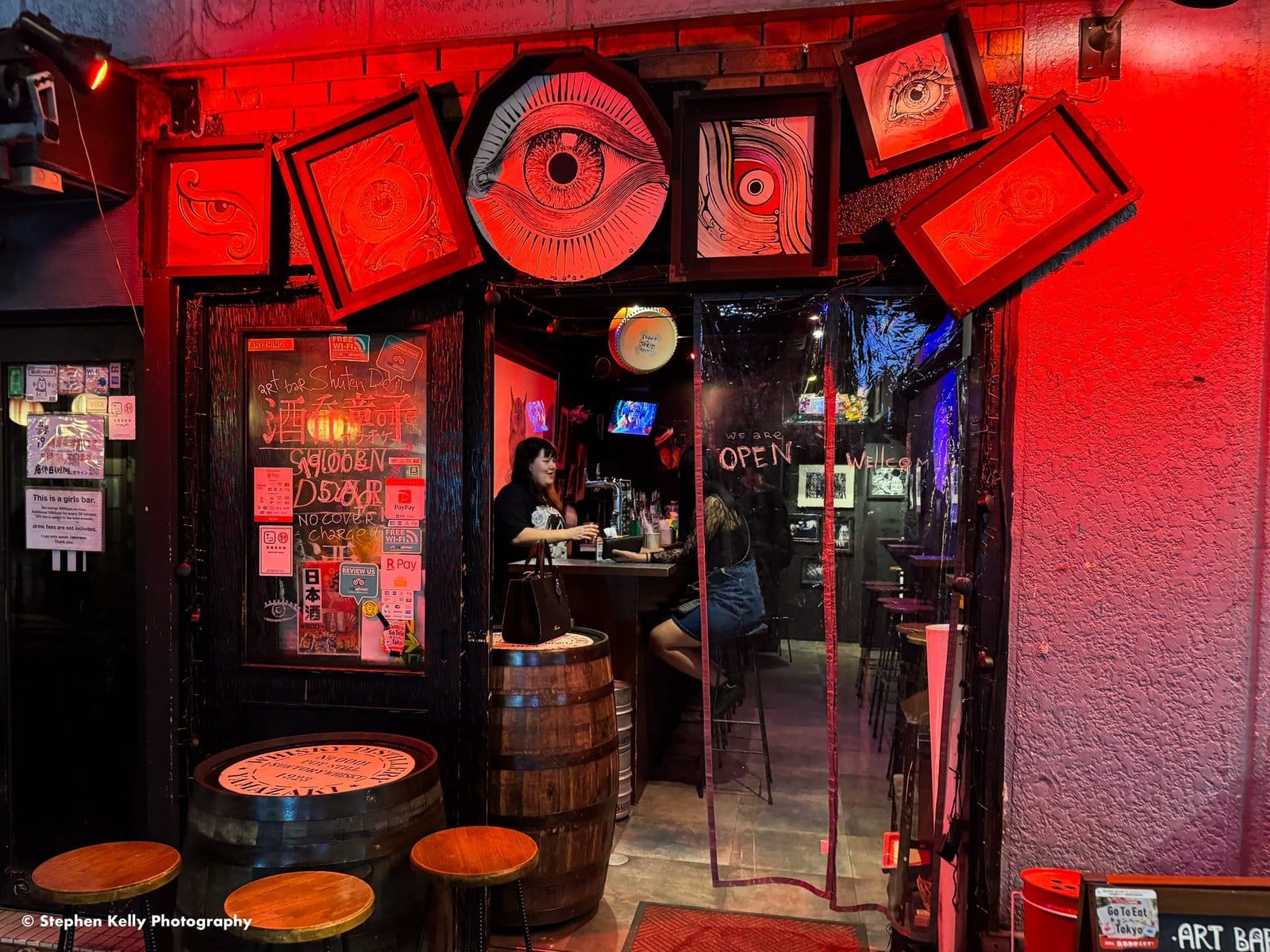
新宿ゴールデン街(Shinjuku Golden Gai) sits adjacent to the 歌舞伎町(Kabukicho) district, comprising six narrow alleys packed with nearly 280 tiny bars squeezed shoulder-to-shoulder inside two-story wooden post-war buildings. Each bar possesses its own distinct personality: a punk rock bar, a hangout for cinephiles, a joint that screens only horror films, or an establishment run by a master who has stood behind the counter for forty years. Bars here typically open around 8:00 PM–9:00 PM and stay open until dawn.
思い出横丁(Omoide Yokocho)—"Memory Lane," though formerly known by the far less poetic nickname "Piss Alley"—is located right next to the West Exit of 新宿駅(Shinjuku Station) and leans more toward grilled food eateries than drinking bars. Around 80 yakitori stalls and casual izakayas squeeze together underneath glowing red lanterns, billowing charcoal smoke continuously from late afternoon until late at night. If Golden Gai is a place for drinking and conversation, Omoide Yokocho is where you feast on piping-hot grilled skewers alongside a cold beer or a cup of sake.
Cover Charge: Seating Fees Are Not a Rip-Off

The most misunderstood concept in Golden Gai is the cover charge—a seating fee usually ranging from 500 to 1,500 JPY (approx. $3.30–$10 USD, assuming 1 USD ≈ 150 JPY) per person, added to your bill on top of your drinks. In a venue with only 6 to 8 seats, this fee is how the bar survives: you are not just buying a drink, but also renting the "right to sit" in a remarkably rare pocket of real estate in Tokyo. Many bars post their fee structure directly on the door; if you don't see one, simply ask "Cover charge arimasu ka?" (Is there a cover charge?) before sitting down—it is entirely polite and appreciated by the owner.
In Omoide Yokocho, instead of a cover charge, most places serve otoshi—a mandatory small appetizer costing a few hundred yen, just like standard Japanese izakayas. Overall, a night hopping through 2 to 3 bars across these two areas usually costs around 3,000 to 6,000 JPY (approx. $20–$40 USD) per person depending on how much you drink. Keep in mind that many bars only accept cash, so load up your wallet with yen before heading out, even if you rely on IC cards like SUICA or PASMO during the day.
Identifying Tourist-Friendly Bars

Not every bar in Golden Gai is open to newcomers—some function as exclusive gathering spots for regulars, and signs reading "members only" or "regulars only" mean exactly that, so avoid pushing the door open. Conversely, welcoming signs are easy to spot: English menus posted out front, clearly listed cover charges, phrases like "tourists welcome," or simply a door left slightly ajar so you can catch a glimpse of the atmosphere inside.
A practical tip: walk through the alleys first to see which bar catches your vibe before committing. Bars located near the main alley entrances are generally more accustomed to hosting international visitors. In Omoide Yokocho, the barrier to entry is much lower—most skewer joints feature picture menus or English translations, and staff are very accustomed to travelers. If you are turned away somewhere, don't take it personally: the place only has six seats, and sometimes all six belong to regulars who have sat in those exact spots every night for the past twenty years.
Bar Etiquette in a Six-Seat Space
The smaller the space, the more important etiquette becomes:
- Order at least one drink per person—it is the implicit "seat rent." Sitting down without ordering anything is a major faux pas.
- Keep your group small: 2 people is ideal; 4 people already takes up half the bar. Larger groups should split up.
- Ask before taking photos, especially if the shot includes the owner or other patrons. In the alleyways, refrain from filming right up against bar windows—the patrons inside are enjoying their private evening.
- Keep your conversation volume modest: when you are sitting inches apart, nobody needs to shout. The same goes for out in the alleys—residents live directly above these tiny bars.
- Striking up a conversation is part of the fun: Golden Gai bars were built for strangers to talk to each other. A friendly "kanpai" (cheers!) to the person sitting next to you can lead to the most memorable conversation of your trip.
- Don't camp out for too long when it's busy—the culture here is to enjoy a drink or two before hopping to the next spot, a practice fondly known as retro Showa-style bar hopping.
Furthermore, strictly refrain from smoking in the alleyways except in designated areas, and never bring outside drinks from convenience stores inside—these are precisely the infractions that previously led some bars to put up signs restricting tourists.
A Suggested Night Itinerary
A popular sequence used by many travelers: start around 6:00 PM–7:00 PM at Omoide Yokocho while you're still hungry—order a few yakitori skewers, a highball, or a glass of sake, and sit at the counter watching the chef fan the charcoal. Around 9:00 PM, take a 10-minute stroll over to Golden Gai just as the bars light up, picking a venue with a vibe that matches your mood to sip your second drink and chat. Wrap up before the last train (around midnight)—easily accessible via your JR Pass or SUICA IC card at Shinjuku Station—or, if you are feeling adventurous, stay until the alleys quiet down and grab a taxi back to your hotel.
If you prefer a guide fluent in both Japanese and the "yokocho language," OlaChill's Japan tours can arrange an evening Tokyo food nightlife tour tailored to your own pace.
A Side of Tokyo Not Found on Postcards
Golden Gai and Omoide Yokocho are where Tokyo keeps an unedited version of itself—cramped, smoky, and surprisingly warmhearted. As long as you respect the minor ground rules of these tiny spaces, you will be rewarded with unscripted encounters that no itinerary could ever plan. Remember that Japanese law requires you to be at least 20 years old to consume alcohol; drink slowly, know your limits, maintain politeness in the narrow alleys, and never drink and drive. A night in Shinjuku is long—but it's best enjoyed when you're sober enough to remember it clearly.