
Fushimi Inari in Kimono: Torii Tunnels, Crowd-Free Hours and Walking in Zori
Photograph a kimono in the torii tunnels of Fushimi Inari: which section to use, the crowd-free hours, how far up zori can go, and the trip from Kiyomizu.
Sep 14, 2026·✍️ olablog·⏱ 6 min read
Photograph a kimono in the torii tunnels of Fushimi Inari: which section to use, the crowd-free hours, how far up zori can go, and the trip from Kiyomizu.
Tap a region to browse articles
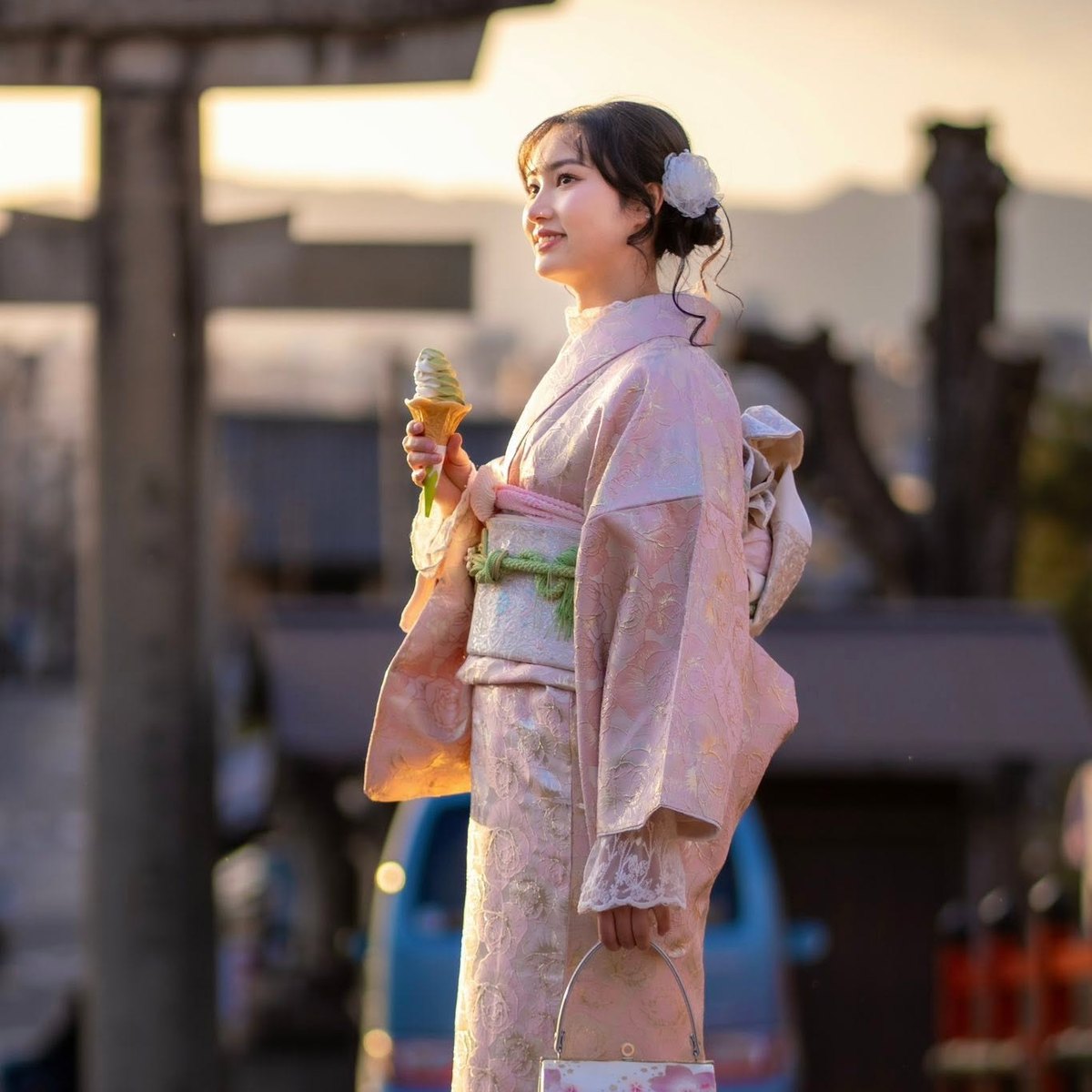
Fushimi Inari Taisha (伏見稲荷大社) is the shrine of ten thousand vermilion torii gates climbing a mountain south of Kyoto, and a kimono inside those tunnels is one of the most recognisable photographs in Japan. It is also free, open 24 hours, and 7 minutes by train from the Kiyomizu area, which is why it is crowded from mid-morning to late afternoon every day. The trick is knowing which stretch of tunnel to use, when, and how far up a mountain you can reasonably walk in zori. This guide covers all three.
Getting there from Kiyomizu
From OlaChill's Kyoto Kiyomizu shop, walk down to Kiyomizu-Gojo Station on the Keihan line (about 15 minutes) and ride south four stops to Fushimi-Inari Station (about 7 minutes, ¥220). The shrine's entrance is a 5-minute walk east along a street of shops. JR Inari Station, on the JR Nara line from Kyoto Station, is directly opposite the first torii and is the better option if you start from the station area.
A taxi from Higashiyama takes about 20 minutes and is the comfortable option for a group of three or four in kimono; a chauffeured car can wait at the shrine's car park and take you on to Arashiyama or Nara afterwards (OlaChill's private car service is quoted per trip).
The mountain in sections
| Section | From the entrance | Walking surface | Crowds | Kimono verdict |
|---|---|---|---|---|
| Romon gate, main hall, first flight of large torii | 0 to 10 minutes | Paved and gravel, gentle | Heavy all day | Photos at the gate only; keep moving |
| Senbon Torii (千本鳥居): the twin tunnels of small gates | 10 to 15 minutes | Paved, slight incline | Very heavy 10:00 to 16:00 | The classic frame; the right-hand tunnel is emptier than the left |
| Okusha Hōhaisho (奥社奉拝所) and the fox ema | 15 minutes | Flat platform | Heavy | The turning point for most groups; rest here |
| To Kumatakasha and Mitsutsuji junction | 15 to 40 minutes | Stone steps, moderate | Thins quickly | Best combination of empty gates and manageable steps |
| Yotsutsuji (四ツ辻) viewpoint | 40 to 50 minutes | Steep stone steps | Light | Kyoto spread below; the top limit in zori for most people |
| Summit loop (Ichinomine) | 50 to 90 minutes | Steep, uneven | Very light | Not in kimono |
The tunnels you want are the ones between Okusha and Yotsutsuji. Most visitors turn back at Okusha, and within five minutes beyond it you can stand in an empty vermilion corridor at 11:00 on a Saturday.
The hours that work
- Before 08:30. The grove of gates is nearly empty and the light comes sideways through the pillars. Our shop opens at 09:00, so this needs a kimono taken the previous day with next-day return (+¥1,100), returned before 10:00 after your shoot (the Keihan gets you back in 25 minutes). Our Fushimi Inari at 6 AM guide shows the reward.
- After 16:30. Tour groups leave, the lanterns light at dusk, and the tunnels turn a deeper red. Return to the shop before 18:00 is impossible from here, so this also needs next-day return.
- Midday, beyond Okusha. If you keep the same-day return, dress at 09:00, arrive by 10:00, walk straight through the crowded Senbon Torii without stopping, and shoot above Okusha. It works.
Photographing the tunnels
- Stand in the centre of the tunnel and have the photographer shoot from low, so the gates frame you overhead and converge behind.
- Wait for a gap: people come in waves of 20 to 30 seconds. Count them and shoot in the pause.
- The black inscriptions face downhill; shoot uphill (looking up the mountain) for clean orange, downhill for the calligraphy.
- A paper parasol does not fit inside the gates; leave it folded here.
- Kimono colour: white, cream, pale blue or black read best against the vermilion. Deep red vanishes.
Walking in zori: how far is reasonable
Zori and tabi on stone steps are fine for the first 40 minutes if you take short steps and use the handrails on the steeper flights. Beyond Yotsutsuji the path is uneven, wet after rain, and steep enough that even hiking shoes slip. Turn around at Yotsutsuji, which has a view, benches and a tea house. Our walking in zori guide covers the technique for stairs; the short version is heel first on the way up and toe first on the way down, hem held in your outside hand.
Plan your day (same-day return version)
- 09:00 Dressing at the Kiyomizu shop. Choose the lightest set: the Komongi (¥5,500) or, in summer, a yukata (¥4,500). Hair set (¥1,500) so the climb does not undo it.
- 09:45 Keihan to Fushimi-Inari.
- 10:00 Romon gate, main hall, quick pass through Senbon Torii.
- 10:30 to 11:30 Shoot in the tunnels above Okusha; walk up to Yotsutsuji if legs allow.
- 12:00 Lunch on the shrine's approach street: inari sushi (sweet tofu pockets, the fox's favourite) and kitsune udon.
- 13:00 Keihan back north. Higashiyama for the afternoon: Sannenzaka, Yasaka Pagoda.
- 17:30 Return to the shop before 18:00.
Checklist
- Next-day return if you want dawn or dusk
- Blister plasters and thick tabi
- A small bottle of water; the shops end at the entrance
- ¥100 coins for the fox omikuji and the tiny torii you can buy and dedicate at Okusha
- No parasol in the tunnels; a folding fan instead
FAQ
Is Fushimi Inari open at night? Yes, all night, and lit. In kimono, dusk is enough; after dark the upper path is very quiet and the steps are hard to see.
Can I do Fushimi Inari and Arashiyama in one kimono day? With a car, yes: Fushimi Inari at 10:00, Arashiyama by 12:30. By train it is possible but long; see the Arashiyama in kimono guide.
Is there a guided option? Our Fushimi Inari local tour goes in the early morning with a guide who knows the quiet stretches.
Are there bathrooms on the mountain? At the entrance, near Okusha and at Yotsutsuji. Use the one at Okusha before going up.
Can children in kimono walk the tunnels? To Okusha easily; above it, the steps are long for small legs in zori. Children's kimono sets (¥8,000) and yukata (from ¥3,000) are available at the shop.
Book your Fushimi Inari kimono day
Reserve the earliest slot at the Kyoto Kiyomizu shop, or the day before with next-day return for dawn in the gates. Styles and prices are on the kimono rental page.
More from this region — Kyoto, Nara & Kansai
View all →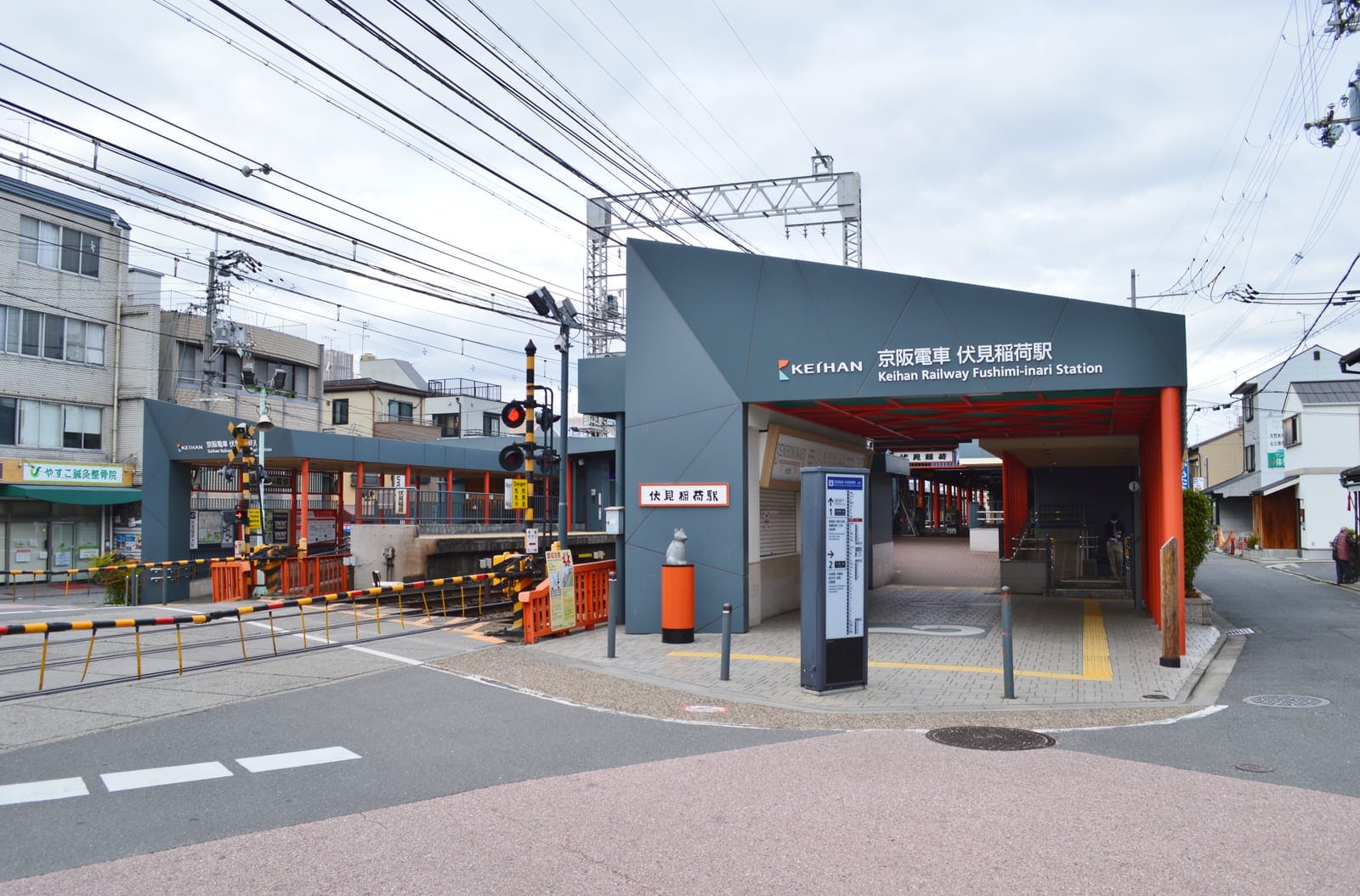
Fushimi Inari at 6 AM — How to Photograph 10,000 Torii Gates With No One in the Shot
3 min · destinations
Gion Matsuri in Kimono: Yoiyama Nights, Float Routes and Where to Change
7 min · culture

Hatsumode in Kimono: First Shrine Visit of the Year in Asakusa and Kyoto
7 min · culture
Walking the Kumano Kodo: A Guide to the World Heritage Pilgrimage Route
2 min · experiences