
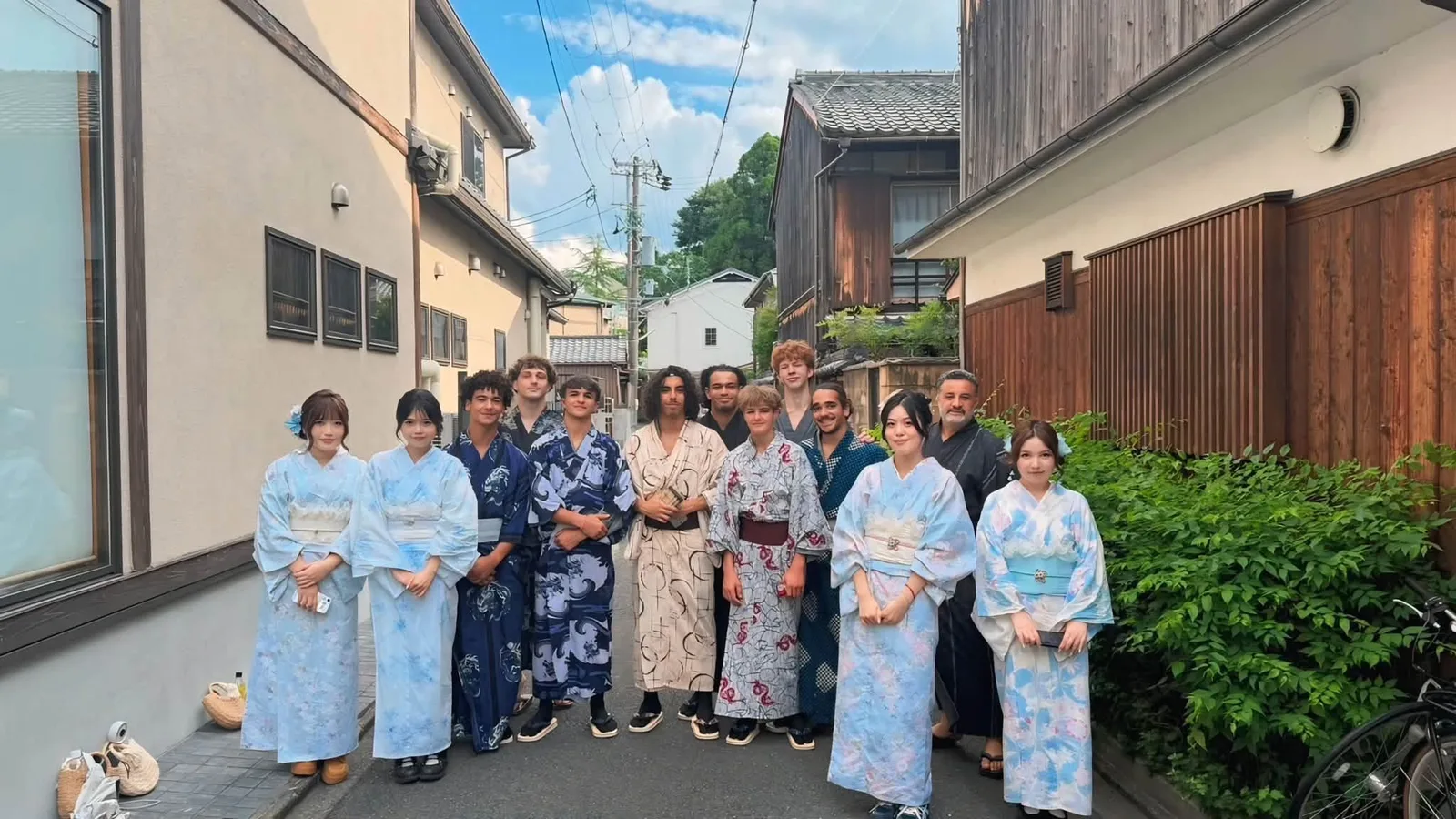
Gion Matsuri in Kimono: Yoiyama Nights, Float Routes and Where to Change
Wear a kimono or yukata to Gion Matsuri in Kyoto: Yoiyama evening timing, the Yamaboko float route, crowd tactics, and how to change near Kiyomizu.
Sep 14, 2026·✍️ olablog·⏱ 7 min read
Wear a kimono or yukata to Gion Matsuri in Kyoto: Yoiyama evening timing, the Yamaboko float route, crowd tactics, and how to change near Kiyomizu.
Tap a region to browse articles
Gion Matsuri (祇園祭) runs the whole month of July, but the nights everyone remembers are the Yoiyama evenings, when the towering Yamaboko floats stand lit with lanterns in the streets around Shijo and Karasuma and half of Kyoto walks between them in yukata. If you are going to wear traditional dress once in Japan, this is the night to do it. The catch is logistics: the streets close, the trains fill, and most rental shops shut before the lanterns are even lit. This guide sorts that out.
When the festival actually happens
The festival is built around two processions and the three evenings before each one. Dates are fixed on the calendar every year, so you can plan months ahead.
| Event | Date (every year) | What you see |
|---|---|---|
| Yoiyoiyoiyama | July 14 | Floats assembled and lit, quieter crowds |
| Yoiyoiyama | July 15 | Shijo and Karasuma closed to cars from evening |
| Yoiyama | July 16 | The big night: food stalls, pedestrian streets, peak crowds |
| Saki Matsuri procession (Yamaboko Junko) | July 17 | 23 floats pulled from Shijo-Karasuma from 09:00 |
| Ato Matsuri Yoiyama | July 21 to 23 | Smaller, no food stalls, far more relaxed |
| Ato Matsuri procession | July 24 | 11 floats, the reverse route, starting from Karasuma-Oike |
If you only get one evening, July 16 is the spectacle and July 23 is the one where you can actually move in a kimono. Photographers quietly prefer the 23rd.
Kimono or yukata for July in Kyoto
Kyoto in mid-July sits around 33 to 35°C in the afternoon with heavy humidity, and it barely cools after dark. A lined kimono is the wrong tool for this job. Yukata, the single-layer cotton garment made for summer evenings, is what locals wear to Yoiyama, and it is what you should rent.
At OlaChill's Kyoto Kiyomizu shop, women's yukata is ¥4,500 and men's is ¥4,000, each with obi, geta sandals and a drawstring bag included, tax included. Booking online takes 10% off. If you want something dressier for the daytime procession on the 17th, the Komongi (traditional kimono) at ¥5,500 is a light, everyday-pattern option, but for the evening walk, stay with cotton.
The one thing that breaks most Gion Matsuri kimono plans
Yoiyama does not get going until about 18:00, and the food stalls and lantern light are best from 19:00 to 21:00. Our Kyoto shop, like nearly every rental shop in the city, closes at 18:00. So a same-day return does not work for Yoiyama.
The fix is the next-day return option (+¥1,100 per person): you keep the yukata overnight and bring it back before 10:00 the following morning. Alternatively, choose hotel return (+¥1,100) and staff collect it from your hotel, which is easier if you are staying near Gion and do not want to walk back up to Kiyomizu in the morning. Book either option when you reserve, not at the counter on the day, because July slots go fast.
Where to change and how to get to the floats
The Kyoto Kiyomizu shop sits a short walk below Kiyomizu-dera in Higashiyama. Dressing takes about 30 minutes, 45 if you add the hair set (¥1,500). From there, the Yoiyama zone around Shijo-Karasuma is roughly 25 to 30 minutes away:
- Walk downhill to Kiyomizu-Gojo Station on the Keihan line (about 15 minutes).
- Ride one stop north to Gion-Shijo.
- Cross the Shijo bridge over the Kamo River and walk west along Shijo-dori. The first floats (Naginata Hoko is the most famous) appear around Karasuma.
On July 15 and 16, Shijo and Karasuma become pedestrian-only in the evening. Walking west from the river is the natural way in; do not try to arrive from the west by subway at Shijo Station after 19:00 unless you enjoy a slow-moving queue in the heat.
Plan your day
- 15:00 Arrive at the shop, choose a yukata, get dressed and have hair done. Leave big bags in the free shop lockers.
- 16:00 Walk down through Sannenzaka and Ninenzaka while the light is soft; these lanes are quieter in the late afternoon than at noon.
- 17:00 Keihan to Gion-Shijo. Buy a cold drink at a konbini before you cross the river, because stall queues get long.
- 18:00 to 19:30 Walk Shijo-dori from the river to Karasuma while there is still daylight for float details: the tapestries on the Kikusui Hoko and Tsuki Hoko are worth a close look.
- 19:30 to 21:00 Lanterns on. Head into the smaller streets north and south of Shijo (Muromachi-dori, Shinmachi-dori) where the yama floats sit in front of the machiya houses that own them; this is where the good photos are.
- 21:00 Leave before the 21:30 exodus, or wait it out with a drink until 22:00.
Yoiyama etiquette in yukata
- Many floats let you climb up for a small offering, usually in exchange for buying a chimaki (a straw charm hung on doorways for the year). Some floats only admit men, a rule as old as the festival; do not argue it, just move to the next float.
- Walk on the left, keep your sleeves in when eating skewers, and hold the hem slightly when you go up the float steps.
- Geta and a crowd of 300,000 are not friends. Take short steps and keep your feet under you.
Checklist for the evening
- Next-day or hotel return booked
- Small towel and a folding fan (uchiwa fans are handed out free by shops along Shijo)
- Cash in small bills for stalls and chimaki
- Phone at full charge; the streets are dense and you will lose your group
- A meeting point agreed (the Naginata Hoko corner at Shijo-Karasuma is the classic one)
Beyond the floats
Come back the next morning for the procession on the 17th if you can; the floats turn corners on wet bamboo slats (tsuji-mawashi), which is the moment the crowd waits for. For the full month-by-month schedule, see our Gion Matsuri complete guide, and for other summer festivals worth a yukata, the summer matsuri overview. An evening walk through Gion after the festival is covered by our Gion evening local tour.
FAQ
Can I wear yukata to the daytime procession on July 17? Yes, and many people do. Bring a parasol; the route along Shijo and Kawaramachi has almost no shade before 11:00 and the procession runs until about 13:00.
Is the festival cancelled if it rains? Yoiyama evenings go ahead in rain. The processions on the 17th and 24th run in all but severe weather. Our shop lends umbrellas free of charge, and a wet cotton yukata dries quickly.
Can I book a yukata for two consecutive days, for Yoiyama and the procession? Book two separate rental days, or one day plus next-day return and bring it back before 10:00. Ask when reserving and we will suggest the cheaper arrangement for your dates.
Are children's yukata available for the festival? Yes. Boys' yukata is ¥3,000 and girls' is ¥4,000 at both shops, accessories included. Accompanying adults who do not rent pay nothing to wait in the shop.
Where can I sit down? Almost nowhere on Shijo itself. The grounds of Bukkoji temple (a few minutes south of Shijo on Takakura-dori) and the benches along the Kamo River are the usual rest stops.
Book your Gion Matsuri yukata
Reserve at the Kyoto Kiyomizu shop, add next-day return, and tell us the date is July 16 so we can pencil in an afternoon dressing slot. Prices, add-ons and the full 14-style list are on the kimono rental page.
More from this region — Kyoto, Nara & Kansai
View all →
Hatsumode in Kimono: First Shrine Visit of the Year in Asakusa and Kyoto
7 min · culture
Walking the Kumano Kodo: A Guide to the World Heritage Pilgrimage Route
2 min · experiences
Hina Matsuri in Kimono: Doll Displays, Sweets and a Spring Kimono Walk in Kyoto
6 min · culture
Ise Jingu – Japan's Sacred Shrine Deep in a Thousand-Year-Old Forest
6 min · tips