
Lake Yamanakako Through the Seasons: Fuji Views and Access
Lake Yamanakako, the largest and highest of the Fuji Five Lakes: how to get there, where to see Mount Fuji, and what spring to winter brings.
May 4, 2026·✍️ olablog·⏱ 5 min read
Lake Yamanakako, the largest and highest of the Fuji Five Lakes: how to get there, where to see Mount Fuji, and what spring to winter brings.
Tap a region to browse articles
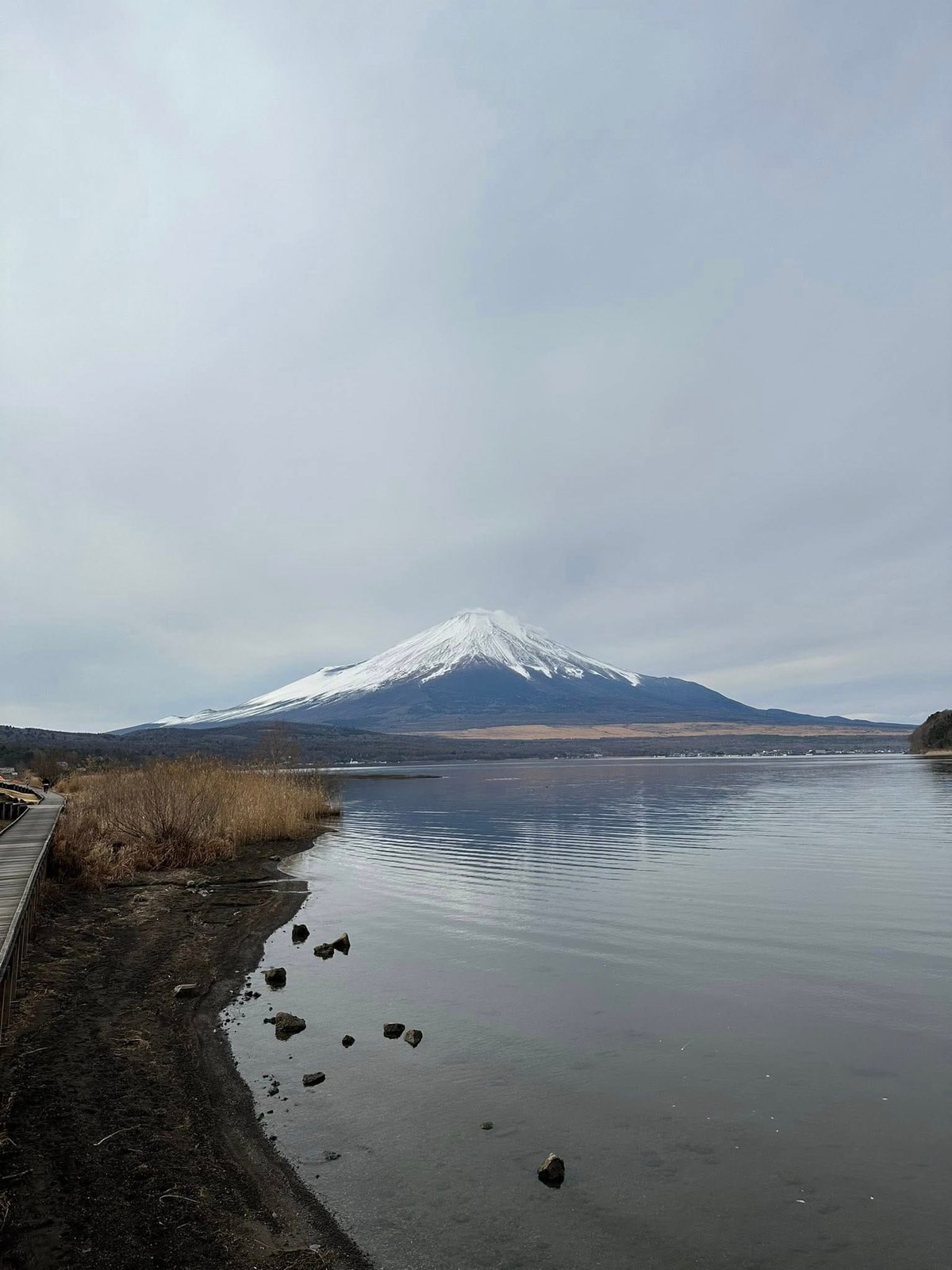
Lake Yamanakako sits on the eastern side of Mount Fuji, closer to the mountain than any of the other Fuji Five Lakes, and it feels quite different from busy Kawaguchiko. The shore is open and low, the village is spread out among pine woods and holiday lodges, and from the north and east banks Fuji fills the sky across the water. It has been a summer escape for Tokyo residents for generations, and in the colder months it is one of the best places in Japan to watch the sun set directly onto the summit.
Why Yamanakako
Yamanakako is the largest of the five lakes by area and the highest, at close to 1,000 m, which keeps summers cooler than the lowlands and winter nights properly cold. Because the mountain lies to the south-west, the classic views are from the north and east shores. The lake also sits on the road between Kawaguchiko and Gotemba, with the spring ponds of Oshino Hakkai a short drive away.
Getting there
- Highway bus. Some highway buses from Busta Shinjuku run through to Lake Yamanaka, and the trip takes a similar time to the Kawaguchiko route. Traffic on weekends and holidays can add a lot, so book both directions in busy periods.
- Train and local bus. Take the train to Fujisan Station on the Fujikyu Line (via Otsuki, or on a through Fuji Excursion train from Shinjuku) and continue by local bus. A loop bus circles the lake and is the easiest way to hop between viewpoints without a car.
- From the Shizuoka side. Buses between Gotemba and Kawaguchiko pass the lake, which makes Yamanakako a natural stop between Hakone and the other lakes.
- By car. The Yamanakako interchange on the Higashi-Fujigoko Road puts you at the lake. A car is genuinely useful here, because the shoreline is long and the viewpoints are spread out.
Where to see Mount Fuji
Nagaike Shinsui Park. On the north shore, this lakeside park has open lawns running down to the water, facing straight across to the mountain. It is the favourite spot for reflections on calm mornings.
Panorama-dai. A roadside lookout above the south-east side of the lake, on the road climbing toward Mikuni Pass. From here you see the lake and the mountain in one frame, and in autumn the slopes around it are covered in silver pampas grass.
Hana no Miyako Park. A large flower park on the way toward Oshino, with fields planted in seasonal waves and Fuji as the backdrop. Tulips open in spring, sunflowers in summer and cosmos toward autumn.
The south shore around Asahigaoka. The lakeside green spaces here are good for sunset and draw Diamond Fuji watchers during the season.
Benifuji no Yu. A public hot-spring bath with views of the mountain. The name refers to "red Fuji", the pink glow that sometimes lights the snowy summit at sunrise on winter mornings.
The lake through the seasons
Spring. The cherry trees bloom several weeks after Tokyo's because of the altitude, often around late April. It is also moss phlox season around Fuji: the best-known display, the Fuji Shibazakura Festival, is held near Lake Motosu, a drive to the west, from around late April into May.
Summer. Yamanakako is a place to escape the heat. Expect water sports, lakeside cycling and plenty of families. Fuji is often hidden in haze in the middle of the day, so go looking for it early. The Hokosai lake festival on August 1 fills the sky over the water with fireworks.
Autumn. Leaves around the shore turn from late October into early November, the pampas grass at Panorama-dai turns silver, and fresh snow starts to appear on the summit. This is also when the Diamond Fuji season begins.
Winter. Diamond Fuji, when the setting sun sits exactly on the summit and flares like a jewel, can be seen from around the lake from roughly mid-to-late October to the end of February. Because the point where the sun sets shifts through the season, the right spot moves along the shore from day to day. Winter is also the season for wakasagi (pond smelt) fishing from heated dome-shaped boats moored on the lake.
Things to do beyond the views
- The KABA amphibious bus drives off the road and straight into the lake for a short cruise.
- A swan-shaped sightseeing boat makes loops around the water, and real swans are a familiar sight near the shore.
- The cycling path follows much of the shoreline, and bikes are easy to rent.
- The Forest of Literature in Yamanakako village includes the Mishima Yukio Literary Museum, a quiet choice for a cloudy afternoon.
Practical tips
- Plan around the buses. Services are less frequent than at Kawaguchiko, so note return times.
- Dress warmly. Even in autumn, evenings at this altitude are cold, and Diamond Fuji watchers stand still for a long time.
- Arrive early for Diamond Fuji. The sun touches the peak well before the official sunset time, and popular spots fill with tripods on clear weekends.
- Check the summit first. Live webcams show whether Fuji is clear; a cap of cloud in early afternoon often means no sunset show.
- Drive carefully in winter. Roads around the lake can be icy on winter mornings, so a rental car should come with snow tyres.
Plan your trip
A relaxed day links Yamanakako with its neighbours: start at Oshino Hakkai before the tour buses arrive, spend the middle of the day on the lake, then pick a sunset spot. Between October and February, our guide to Diamond Fuji at Lake Yamanaka explains how to choose where to stand for a given date. With a night at the lake, add a winter sunrise to catch red Fuji before breakfast.
More from this region — Mt. Fuji
View all →
Hakone in a Day — The Complete Round Course Loop from Tokyo
9 min · destinations
The Ultimate Hakone Onsen Day-Trip Guide from Tokyo: Romancecar, Odawara Transfers, and Popular Ryokan
20 min · destinations
Hakone Loop by Private Van: Ropeway, Lake Ashi and Museums
9 min · tips
Hakone Weekend: Ryokan, Onsen and the Loop Course Done Right
24 min · destinations