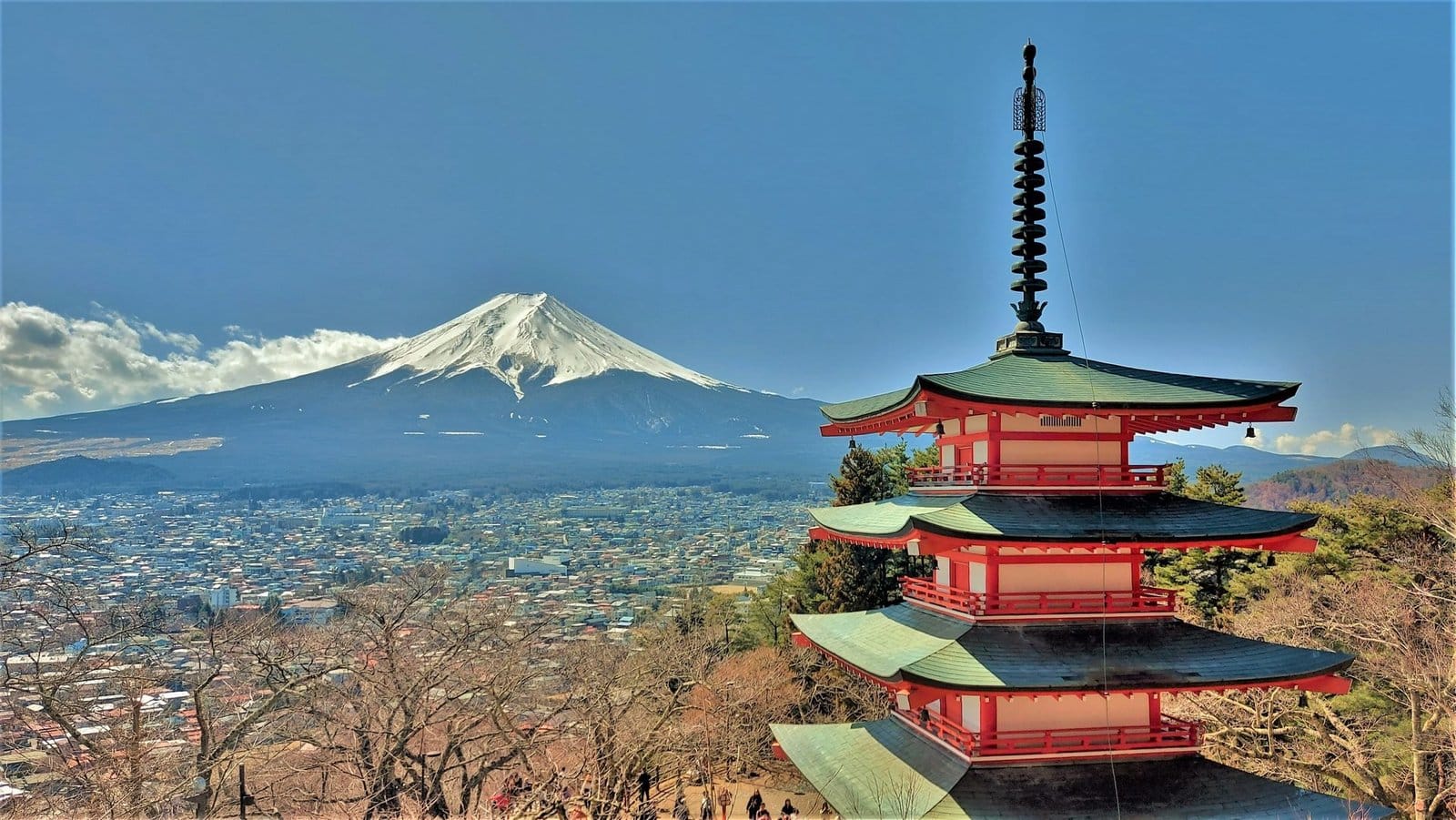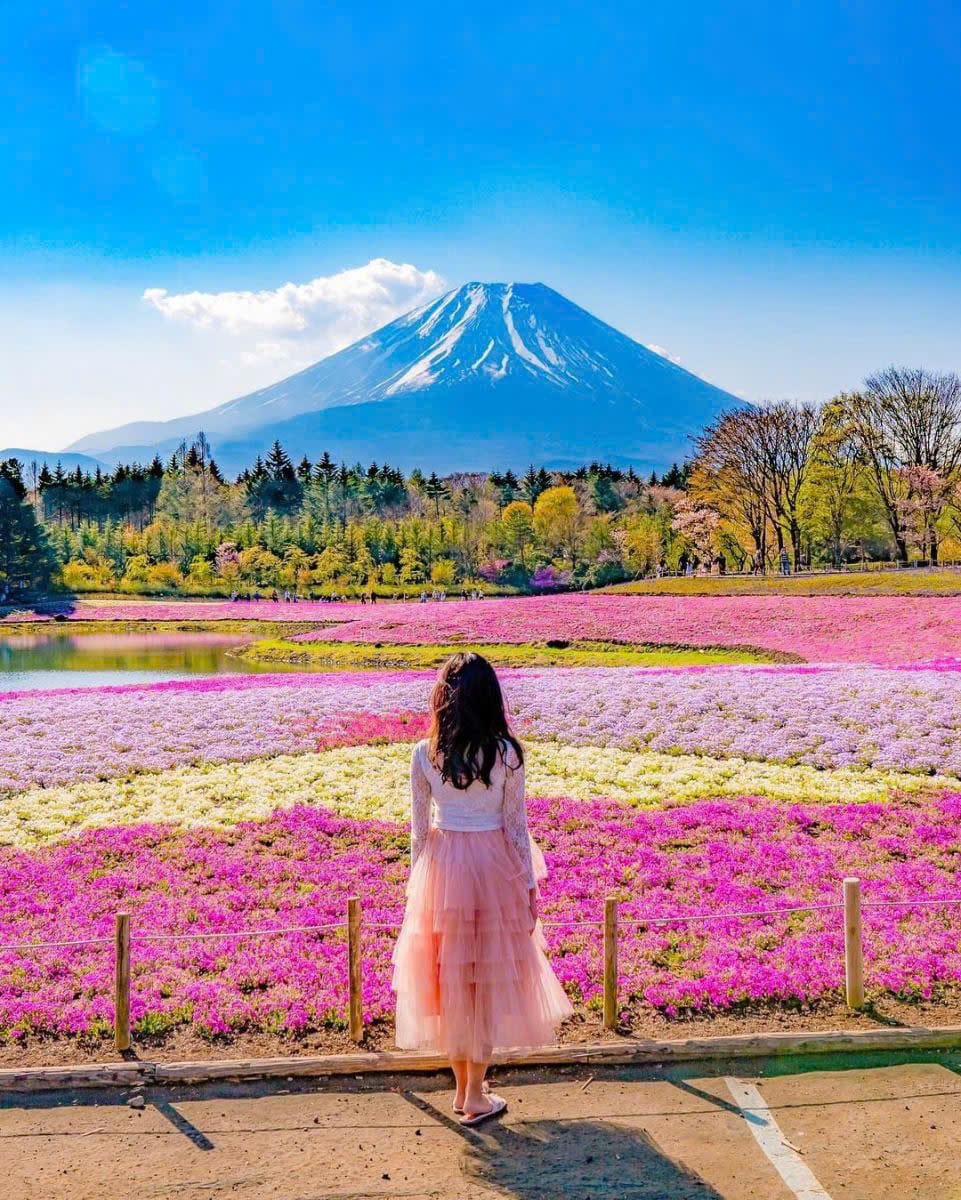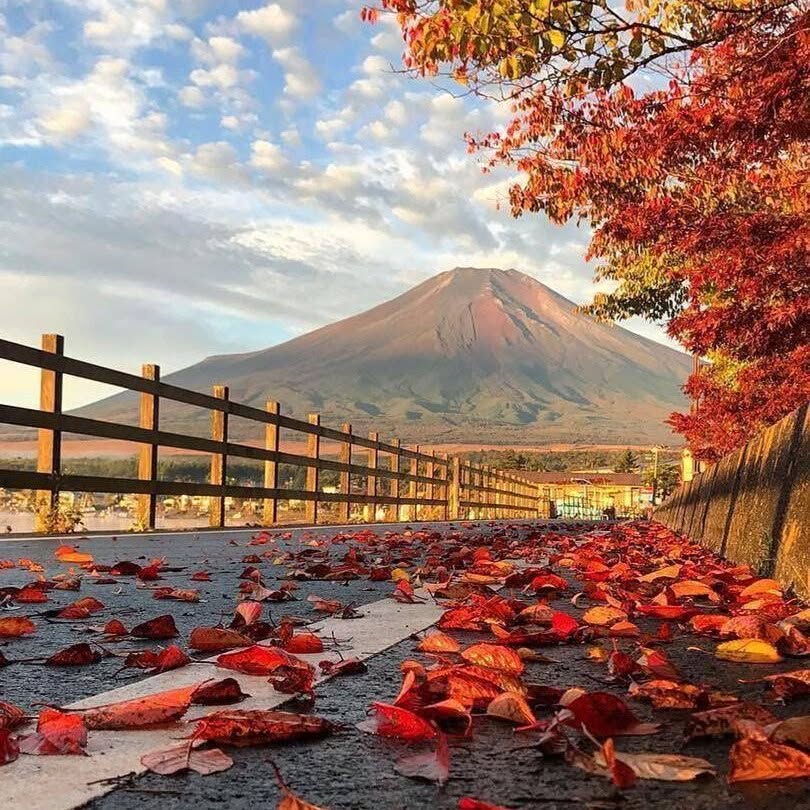
Diamond Fuji at Lake Yamanaka: An Autumn Guide to Dates and Viewing Spots
From mid-October onward, the setting sun aligns with the mountain summit at a different spot around the lake each day: how to check the dates, choose a shoreline position, time your shot, and catch the upside-down mountain reflection at dawn.
Aug 12, 2026·✍️ olablog·⏱ 18 min read
From mid-October onward, the setting sun aligns with the mountain summit at a different spot around the lake each day: how to check the dates, choose a shoreline position, time your shot, and catch the upside-down mountain reflection at dawn.
Tap a region to browse articles
The first time I went to Lake Yamanaka to photograph the sun “touching” the summit of Mount Fuji, I timed everything according to the weather app on my phone: sunset was just before 17:00, so arriving at 16:30 should have given me plenty of time. Instead, I got off the bus just as a row of tripods along the lakeshore was being packed away. A few Japanese photographers smiled kindly as they folded up their gear and said, “It’s over. Fifteen minutes ago.” It sounds like a ridiculous mistake, but it’s the most common one—because Mount Fuji’s 3,776 m summit, viewed from the lake, still sits more than ten degrees above the horizon. That means the sun disappears behind the mountain almost an hour before the official sunset time.
Diamond Fuji (in Japanese: ダイヤモンド富士) is the phenomenon in which the sun aligns perfectly with the mountain summit, sending out a burst of light like a diamond set atop a snow-covered cone. At Lake Yamanaka, the afternoon viewing season begins around mid-to-late October and continues through the end of February—but here’s the interesting part: you need to stand in a different place every day. As winter solstice approaches, the setting sun gradually shifts southward, so the viewing spot must also move along the shoreline. There is no single “best spot”—only the “right spot for that day.”
This guide is for people visiting in autumn: how to understand the pattern of the shifting sun and choose your own position for the date of your visit, approximate time windows for different areas around the lake, how to get the timing right, and the bonus waiting for you the following morning—the “upside-down Fuji” (逆さ富士) reflected on the glassy water. One important caveat: all dates in this article are approximate and may shift by a few days depending on how many meters away from the ideal position you stand. Before setting out, cross-check them with the schedule published by Yamanakako Village for that season and with a sun-position app.
Why Your Viewing Spot Has to Change from Day to Day
Three Factors That Determine a Diamond Fuji Frame
For the sun to land precisely on the summit, three things must line up at once: direction (the azimuth from your position to the summit must match the sun’s azimuth at that moment), date (which determines whether the sun sets farther north or south), and clear skies along the western horizon (even a thin strip of cloud sitting directly above the mountain’s shoulder can ruin the entire session).
From Lake Yamanaka, Mount Fuji lies to the west-southwest, approximately 14–15 km away. In October, the sun still sets fairly close to due west; by December, it has shifted farther south. To keep the sun aligned with the summit, you have to move your position.
A One-Sentence Rule to Remember
Facing the mountain, the later it gets in autumn, the farther you need to shift to your right—that is, toward the northern shore of the lake. Early in the season (October), the best areas are the southern shore and southeastern tip; in mid-season (early November), the eastern tip and the eastern part of the northern shore; and toward the end of the season (from the second half of November onward), the northern shore gradually shifts westward before leaving the lakeshore altogether and moving up toward Hana no Miyako–Oshino around the winter solstice. After the winter solstice, the pattern reverses, creating the February Diamond Fuji season that the village celebrates with a dedicated event.
How Much Room for Error Do You Have?
The good news is that Mount Fuji’s summit, viewed from the lake, is not just a single dot. The volcanic crater rim is roughly 700–800 m wide, equivalent to about 3 degrees in the field of view, while the sun’s disk is only about half a degree across. That gives you a reasonably generous margin: being off by one day is roughly equivalent to being off by 100–200 m along the shoreline. Even if you visit two or three days off, you can still get beautiful shots of the sun dropping beside the mountain’s shoulder—what Japanese photographers jokingly call “diamond-adjacent”—and if you are willing to walk a few hundred meters along the shore, you can often salvage the shot. That is why I always arrive early and scout along the shoreline instead of settling into one spot.
Reference Dates and Viewing Spots around Lake Yamanaka
Here is a seasonal reference guide for autumn, arranged chronologically. Again, these are approximate windows, not train times.
Around Early October — Elevated Spots on the Southeastern Edge
At the very beginning of the season, the sun still sets too far north relative to the lake, so the best viewing points are the elevated outcrops in the southeast: the Mikuni Pass (三国峠) area, Panorama-dai viewpoint (パノラマ台), and the summit of Teppōnoki-no-atama (鉄砲木ノ頭, also known as Mount Myōjin)—about a 20–30-minute climb over grassy terrain from the pass. The advantage of being at this elevation is that you can fit both the lake and the mountain into one frame, while the season’s first snow on the summit (初冠雪, usually appearing around early October depending on the year) makes the diamond shine even more brightly. The downside is that Panorama-dai has very limited parking, and on a sunny weekend it can fill up from early afternoon.
Around the Second Half of October — The Southern Shore and Asahigaoka
This is when the phenomenon reaches the lakeshore. The best place to stand is around Yamanakako Kirara (山中湖交流プラザ きらら) on the southern shore, with its broad lawn, direct view across the water to the mountain, parking, and restrooms. Next is the southeastern shoreline around Asahigaoka (旭日丘) and the “Yūyake no Nagisa” (夕焼けの渚) area—the same place that hosts the lakeside autumn-leaf festival in late October and early November. Visit at this time and you get two experiences in one trip: hunt for the diamond in the afternoon, then stroll beneath the illuminated trees in the evening.
Around Early November — The Eastern Tip and Nagaike Park
In November, the viewing point moves to the Hirano (平野) area at the lake’s eastern tip, then to Nagaike Water Park (長池親水公園) on the northern shore—a name familiar to anyone who photographs Fuji. Nagaike has a viewing deck right beside the water, and the lake is often calmer here than along the other shores. It is also one of the few places where you may catch a “double diamond” (ダブルダイヤモンド富士): one diamond on the summit and another reflected upside down in the water. The wind needs to be almost completely still—difficult on an autumn afternoon, but on a calm day, the resulting image can be unforgettable.
Around the Second Half of November — Moving West along the Northern Shore
From mid-November, continue west along the northern lakeside road toward the Nagasaki area, where scattered openings in the pine forest reveal the water. Local photographers often refer to these spots by their own informal names. There are fewer people here than at Nagaike, but parking is also much more limited, and many sections are private property—park in designated lots and do not pull over on the narrow roadside.
From Late November to the Winter Solstice — Leaving the Lake and Heading North
As the winter solstice approaches, the viewing route moves away from the lake and northward toward Hana no Miyako Park (花の都公園) and the Oshino area. By this point, most of the autumn leaves around the lake have fallen, the air is cold and dry, and December’s clarity is exceptional—you can capture images sharp enough to reveal the mountain’s ridgeline.
How to Check the Right Date for Your Visit
Do not rely on a single blog post—not even this one—for an exact date. These are the three steps I always take before a trip:
- Check the official schedule: Yamanakako Village and tourism websites for the Fuji area often publish Diamond Fuji schedules along with maps showing the viewing spots for each season. These are the most reliable sources, so be sure to check the official website, as the schedule is updated every year.
- Use a sun-position app: Apps such as Sun Surveyor and PhotoPills let you drop a pin on a map, select a date, and see whether the sun’s path intersects the mountain summit. This is the only way to verify your exact position rather than just a general “area.”
- Check live cameras before leaving: There are many public webcams around the lake and mountain. If the summit is wearing a cloud cap in the early afternoon, you still have time to switch to another plan.
Timing: The Summit Moment Comes Earlier Than You Think
This is what leaves many people empty-handed even when they are standing in the right place. The sunset time shown in a weather app is when the sun reaches a flat horizon. But from Lake Yamanaka, Mount Fuji’s summit rises more than ten degrees above the horizon, so the sun disappears behind the mountain much earlier—in my experience, and according to photographers around the lake, about 45 to 70 minutes earlier.
What you should actually do:
- Take that day’s sunset time and subtract one and a half hours. That is when you should already be at your spot with your tripod set up.
- Spend the first 20–30 minutes walking along the shore to find the exact viewing position and track the sun as it moves.
- The actual “diamond” window lasts only around one to two minutes. Start shooting continuously while the lower edge of the sun is still slightly below the summit.
- Do not leave as soon as the sun disappears. Fifteen minutes later, the western sky turns pink and orange, the mountain becomes a silhouette, and the lake changes color—some of the best photographs happen during this stage.
The Following Morning: Hunting for “Upside-Down Fuji” on the Water
If you have made it to the lake, do not limit yourself to one afternoon. The reward for staying overnight is an extra morning session—and at Lake Yamanaka, the water is usually calmest around dawn.
Conditions for a Reflection
Wind is everything. The lake produces a sharp reflection only when the air is nearly still, usually from before sunrise until about an hour afterward. By mid-morning, mountain winds pick up and immediately break up the surface. Before going to bed, check the next morning’s wind-speed forecast—anything below about 1–2 m/s gives you a chance. A clear night followed by thin fog that dissipates quickly after sunrise is also a good sign.
There is another seasonal bonus: once snow has settled on the summit, the first light of day turns the entire snowcap pink—the Japanese call this Beni Fuji (紅富士). If the water is calm too, you get two pink mountains, one upright and one inverted.
Three Areas Worth Trying for Calm Water
- Nagaike Park (northern shore): faces southwest directly toward the mountain and has a small wind-sheltered bay with a wooden deck beside the water. Autumn mornings here often bring low-lying mist—wait patiently for 15 minutes to let the lower layer clear.
- The Hirano shoreline (eastern tip): the farthest point from the mountain, so Fuji appears smaller in the frame, but you get a wider expanse of water and fewer tripods.
- The cycling path along the northern shore: between Nagaike and the Nagasaki area, there are several neat openings. Walk or cycle along the path to find your own private angle.
Tips for Photographing Reflections
Lower your camera as close to the water as possible—the lower you go, the longer the reflection becomes and the less likely shoreline grass is to cut across it. Place the horizon directly through the middle of the frame for perfect symmetry; if you want to emphasize the water, lower it to one-third of the frame. Use a circular polarizer (CPL) sparingly: turn it too far and the reflection disappears entirely, a common mistake among beginners. Finally, try a 1–2-second ND exposure to smooth the water into a milky surface—on a day with gentle ripples, this can rescue the image.
Equipment, Settings, and Safety
Camera
A telephoto lens is your best friend for Diamond Fuji. From the lakeshore, around 100–300 mm gives the mountain pleasing proportions; go longer and the summit fills the frame, which is ideal for isolating the diamond. You should also bring either a second body or a wide-angle lens for scenes including the lake, mountain, and sky. An aperture of f/8 to f/11 creates sharp sunstars, while the lowest ISO and spot metering on the sky beside the sun help preserve detail. Shoot RAW and use exposure bracketing because the contrast in this scene is extreme. Use a sturdy tripod, along with electronic image stabilization or a remote shutter release.
Phone
You can still get good results with a 3x or 5x telephoto lens. Tap and hold to lock focus, then drag the brightness slider down until the summit is not blown out. Use burst mode during the decisive moment and adjust the colors afterward. Do not push digital zoom past 10x, or the image will fall apart.
Eye and Camera Safety
Never look directly at the sun through the optical viewfinder of a DSLR, especially with a telephoto lens attached—that is the fastest way to damage your eyes. Use the rear screen or an electronic viewfinder instead. Also, do not leave the camera pointed at the sun for too long at a long focal length while the sun is still high and intense; wait until the light has softened near the mountain.
Logistics: Getting There, Where to Sleep, and What to Wear
From Tokyo to the lake: The easiest option is a highway bus from Shinjuku Station directly to Yamanakako, stopping at Asahigaoka and Hirano. The journey takes around two and a half hours depending on traffic; traffic jams are common on autumn-leaf weekends, so allow extra time. Another option is taking a train to Fujisan Station and then catching the bus that circles the lake, which takes an additional half hour or so. Fares and timetables change seasonally, so book ahead and check the bus operator’s official website.
Getting around the lake: The sightseeing bus that circles the lake (ふじっ湖号) runs on a fixed timetable, and day passes are often available for passengers making multiple stops—you should check the schedule at the counter or on the official website. But to be frank, the whole point of this guide is “standing in the right place for the date,” and the bus will not drop you exactly where you want to be. It also runs infrequently around dusk. If you are traveling with two or more people, renting a car is the most practical option; solo travelers should consider cycling during the day and taking a taxi for the late-afternoon and evening session.
What to wear: The lake sits at an elevation of about 980 m, making it the highest of the five Fuji Five Lakes, so it is noticeably colder than Tokyo. In late October, pre-dawn temperatures can be only a few degrees; by November, they hover around 0 degrees and frost can whiten the wooden decks. Wear a windproof jacket, a wool hat, thin gloves that still allow you to operate the camera, and slip-resistant shoes. Camera batteries drain very quickly in the cold—bring spares and keep them in an inner pocket.
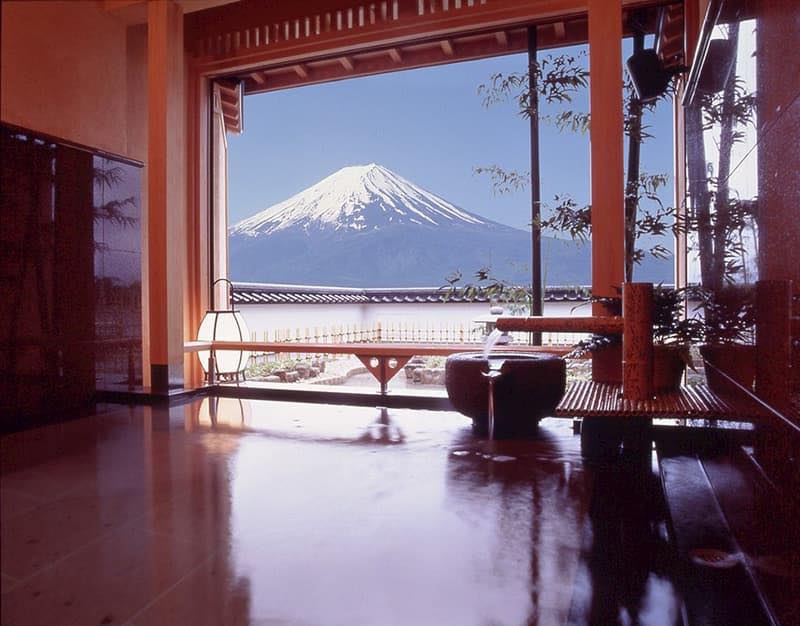
Where to stay: There are many pensions and small hotels around the lake; book several weeks ahead for autumn-leaf weekends. Prioritize accommodation near the northern or eastern shore so you can walk to a shooting spot in a few minutes rather than driving through fog in the dark. The area also has onsen with mountain views, but opening hours and closing days vary by season, so check in advance.
Suggested Two-Day, One-Night Itinerary
- Afternoon of day 1: Arrive at the lake before 14:00, have a light meal, and scout the shoreline in the area corresponding to your date. Be at your chosen position at least one and a half hours before the official sunset time. Photograph Diamond Fuji, then stay another 20 minutes for the post-sunset glow.
- Evening of day 1: If you are visiting in late October–early November, stop by the lakeside Asahigaoka area to see the autumn leaves illuminated at night. Eat dinner early, check the next morning’s wind forecast, and go to bed early.
- Morning of day 2: Get up about 45 minutes before sunrise and head to the northern shore to hunt for upside-down Fuji and Beni Fuji. Have breakfast afterward, take a walk or cycle around the lake, visit an onsen, and then head home.
Mistakes That Leave You Empty-Handed
- Timing your visit according to the sunset time in a weather app. The number-one mistake, as mentioned above.
- Choosing a “famous spot” instead of the “right spot for the date.” Nagaike really is beautiful, but if you stand there on the wrong day, you will only watch the sun slide down the mountain’s slope.
- Having no backup plan when the mountain is covered in cloud. Prepare another spot a few kilometers away, and accept that this phenomenon depends entirely on weather luck.
- Parking carelessly along a narrow road or on private property to claim a good angle. This is causing barriers to be installed at several photography spots around the Fuji area—use designated parking, keep quiet in the early morning, and take your trash with you.
- Arriving too close to the key moment on a sunny weekend. The best positions fill up with tripods very early, and latecomers usually have to shoot from behind the rows.
Frequently Asked Questions
Can I see Diamond Fuji at Lake Yamanaka in autumn, or do I have to wait until February? You can see it in autumn. The afternoon season here runs roughly from mid-to-late October through the end of February; the only difference is that the viewing spot shifts from day to day. February is better known because the village holds an event and the lake is often calmer, making a “double diamond” easier to capture. Autumn, on the other hand, offers lakeside autumn leaves and more comfortable weather.
Which spot is the safest bet if I can only visit for one session? There is no spot that is “sure to work” regardless of the date. The correct approach is to choose your date first, then check which area it corresponds to—late October generally favors the southern shore and Asahigaoka, while early November favors the eastern tip and Nagaike Park—and use a sun-position app to finalize the exact location.
Is there still a chance if it is cloudy? Low clouds covering the western horizon are a deal-breaker, but high clouds can produce beautiful images after the sun disappears. In my experience, the odds are best on days after a cold front has passed, when the air is dry and the wind is northerly. If the mountain is cloud-covered at 15:00, do not give up immediately—the clouds around Fuji can change very quickly.
Can I get around without a private car? Yes, but it is more difficult. The highway bus from Shinjuku takes you to the lake, after which you depend on the lake-circling bus, which runs infrequently in the late afternoon and evening. The practical solution is to stay right in the area where your date’s viewing spot is located, then walk to and from the site.
Do I really need to get up that early for upside-down Fuji? You should be at the shore about 30–45 minutes before sunrise, because the calmest and most beautiful conditions usually occur around first light. About an hour after sunrise, the wind typically picks up and the water is no longer flat.
Can I photograph it with a phone, or do I need a camera? You can photograph it with a phone, especially one equipped with a telephoto camera. The biggest difference is dynamic range: a camera shooting RAW preserves detail around the bright sun far better. With a phone, lock the exposure and drag the brightness down aggressively, then lift the shadows during post-processing.
Is there a moon version as well? Yes, it is called Pearl Fuji (パール富士)—a full moon aligned with the mountain summit. It is rarer because it depends on both the lunar phase and the direction of moonrise or moonset. You generally need to check it separately for each month, but if it coincides with your trip, it is absolutely worth trying.