
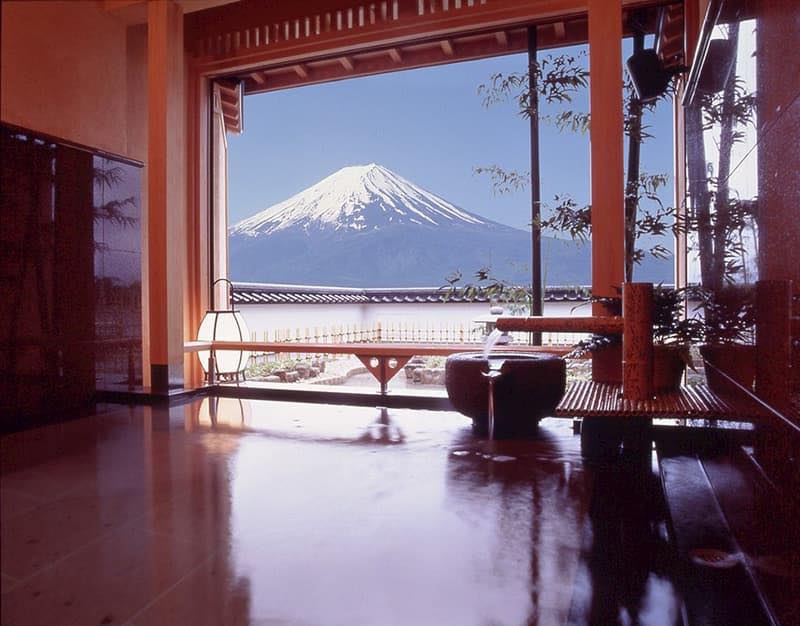
Lake Kawaguchiko Guide: Mount Fuji Views, Access and Seasons
How to reach Lake Kawaguchiko from Tokyo, where to stand on the north shore for Mount Fuji, what each season brings, and how to avoid the midday clouds.
May 4, 2026·✍️ olablog·⏱ 5 min read
How to reach Lake Kawaguchiko from Tokyo, where to stand on the north shore for Mount Fuji, what each season brings, and how to avoid the midday clouds.
Tap a region to browse articles
Of the five lakes strung along the northern foot of Mount Fuji, Kawaguchiko is the one most visitors end up at. It has the railway terminus, the largest cluster of hotels and hot-spring inns, and a north shore that looks straight across open water to the mountain. With one day around Fuji, spend it here; with two, it makes a comfortable base for the rest of the region.
Why Kawaguchiko works as a base
The lake sits at roughly 830 m, with the station and the main part of Fujikawaguchiko town at its eastern end and Fuji rising to the south. That layout matters: the classic "Fuji across the lake" photographs are taken from the north shore looking south. Kawaguchiko Station handles the sightseeing buses around the lakes, the buses up to the Fuji Subaru Line 5th Station, and most highway buses to and from Tokyo.
Getting there from Tokyo and beyond
- Highway bus. The simplest option. Buses leave Busta Shinjuku throughout the day and take about two hours in normal traffic, and other services leave from the Tokyo Station area. Weekend traffic can stretch the ride considerably, so reserve your return seat too. You can compare routes on our Japan highway bus page.
- Train. Take the JR Chuo Line west to Otsuki and change to the Fujikyu Line, which climbs to Kawaguchiko. A few Fuji Excursion limited express trains run straight through from Shinjuku without the change, in about two hours. A JR Pass covers only the JR section as far as Otsuki; the Fujikyu part is paid separately.
- By car. The Chuo Expressway reaches the lake via the Kawaguchiko interchange. Driving gives you freedom at dawn, but car parks fill up on busy weekends.
- From the south. Buses link Gotemba with the lakes by way of Lake Yamanaka, a useful approach from Hakone, but services are infrequent.
Getting around the lake
Retro-styled sightseeing buses run from Kawaguchiko Station along the north shore, stopping at the ropeway, the museums and Oishi Park, while other lines continue toward Lake Saiko. Passes are sold at the station and pay off quickly if you plan several stops. Bicycles are easy to rent near the station, and the mostly flat lakeside road links the east and north shores.
What to see and do
Mt. Fuji Panoramic Ropeway. Still widely known by its old name, the Kachi Kachi Ropeway, it starts a short walk from the station and lifts you up Mount Tenjo in a few minutes. The top has decks looking over the lake to Fuji and down to the town, and a footpath lets you walk back down if the weather is kind.
Oishi Park. This long garden on the north shore is the postcard view: flower beds in the foreground, water in the middle and Fuji filling the sky. Lavender blooms in early summer and the rounded kochia bushes turn crimson in autumn.
Momiji Corridor. Also on the north shore, a short stretch of old maple trees arches over a small stream. The leaves usually peak in November, when the trees are lit after dark during the local autumn leaves festival.
Ubuyagasaki. A quiet cape with a small shrine, and one of the better places around the lake to catch "upside-down Fuji", the mountain reflected in still water. Early mornings, before the wind rises, give the best chance.
Itchiku Kubota Art Museum. Dedicated to the textile artist Itchiku Kubota, whose kimono are dyed as sweeping landscapes, it sits in a wooded garden on the north side of the lake.
A short cruise. Sightseeing boats leave from the pier near the ropeway base and give a low-angle view of the mountain from the middle of the lake.
Many visitors also stop at Chureito Pagoda in neighbouring Fujiyoshida, near Shimoyoshida Station on the Fujikyu Line. Our Chureito Pagoda guide covers the climb and the timing.
When to go
The sky matters more than the month. Fuji hides in cloud more often than first-time visitors expect, especially in hazy, humid summer. Winter mornings are the clearest of the year, and because clouds build around the summit as the day warms, an early start is worth more than any particular season.
- Spring: because of the altitude, cherry trees around the lake bloom later than in Tokyo, usually around mid-April, with snow still on the peak.
- Summer: lavender and green hills. The official climbing season on the Yoshida Trail opens in July, and the Kawaguchiko Lake Festival puts fireworks over the water in early August.
- Autumn: kochia turns red around Oishi Park, then the maples take over in November.
- Winter: the clearest views and thinner crowds outside the New Year holidays.
Practical tips
- Check a live webcam before you leave; if the summit is under cloud, start with the museums.
- Stay one night if you can. Sunrise on the north shore, before the day-trippers arrive, is the lake at its best, and dawn is chilly even in spring and autumn.
- Parts of the shoreline are private or residential. Use marked car parks, keep off private jetties and never block a local road for a photograph.
- If you plan to climb Fuji, read the current Yoshida Trail rules before you go. Yamanashi has introduced a climbing fee and a daily limit in recent seasons, and buses to the 5th Station follow a seasonal timetable.
Plan your trip
For a day trip, take an early bus or train, ride the ropeway while the mountain is clear, then work along the north shore by sightseeing bus: Oishi Park, the Kubota museum and, in November, the Momiji Corridor. Stop at Shimoyoshida on the way back for Chureito Pagoda. With a night at the lake, add sunrise on the north shore, then continue to Oshino Hakkai and Lake Yamanaka, both a short bus ride east.
More from this region — Mt. Fuji
View all →
A 2–3-Day Autumn Arc: Fuji Five Lakes, Hakone Pampas Grass, and Gotemba Outlet
17 min · tips

Momiji Matsuri Kawaguchiko – A Radiant Corridor of Light at Night
20 min · tips

A Week-by-Week Fall Color Calendar for the Fuji Five Lakes
17 min · tips
An Autumn Day at the Foot of Mount Fuji: From Tokyo and Back by Evening
21 min · tips