
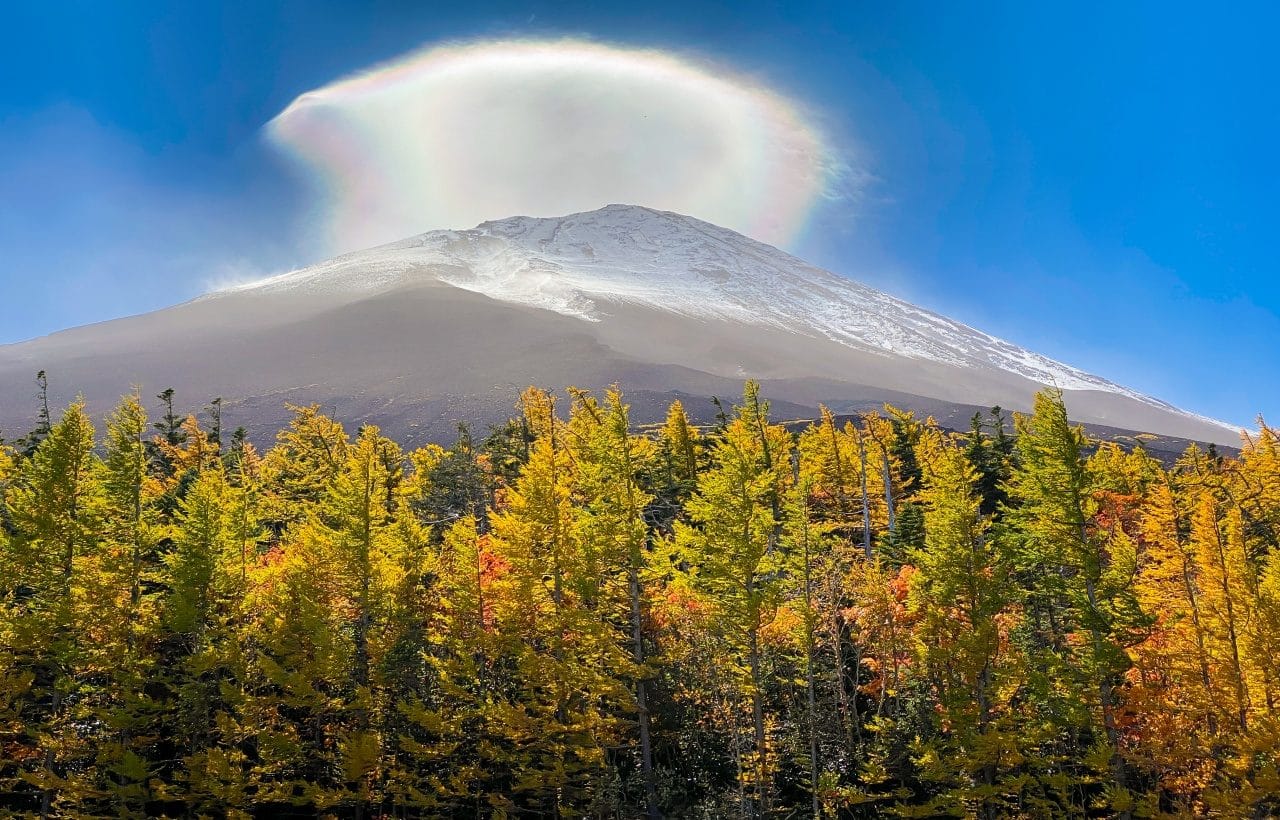
An Autumn Day at the Foot of Mount Fuji: From Tokyo and Back by Evening
Climb nearly 400 stone steps in the morning to catch the season’s first snowcap, eat hoto by Lake Kawaguchi at noon, stroll beneath red maple canopies in the afternoon, and still make the evening train — with backup plans for when the weather turns.
Aug 12, 2026·✍️ olablog·⏱ 21 min read
Climb nearly 400 stone steps in the morning to catch the season’s first snowcap, eat hoto by Lake Kawaguchi at noon, stroll beneath red maple canopies in the afternoon, and still make the evening train — with backup plans for when the weather turns.
Tap a region to browse articles
There’s a moment that anyone who has climbed every step at Arakurayama on an early-November morning remembers forever: you’re breathing hard, your undershirt is already damp with sweat even though it’s only around 5–6 degrees outside, and you turn around — and there stands Mount Fuji, its first snowcap of the season glowing in the sunlight. Below it is the vermilion five-story pagoda, surrounded by maple trees blazing red. I’ve stood there three times in three different autumns. One time it was completely white with fog, another time I could see only the lower half of the mountain, and once the view was so perfect that I had to sit down on the stone steps for a full ten minutes because I had no idea how to take enough photos of it.
The funny thing is that all three times I left Tokyo at the same hour and followed the same route. The difference was the weather — something you can’t control — and whether you had a Plan B, which is entirely in your hands. Many Vietnamese people living in Japan have just one free day off each week, can’t stay overnight in Kawaguchiko, and can’t simply “wait for a nicer day.” This article is written for exactly that situation.
Below is a one-day itinerary I’ve repeated and refined over time: head up to Arakurayama in the morning to hunt for the pagoda–snow–autumn foliage composition, return to Kawaguchiko at noon for food and a lakeside walk, stroll through the maple corridor along the stream in the afternoon, and catch a train back to Tokyo in the evening before you’re completely worn out. I’ve also included specific times, key deadlines to stick to, and ways to adapt when the weather turns — because in the Fuji area, sudden weather changes are perfectly normal.
Why late October to mid-November is the “golden window”
The appeal of this trip is that you’re chasing two things at once: the season’s first snow on the mountain peak and red maple leaves at its foot. Those two sights don’t always overlap.
When does the first snow arrive?
The first snow cover on the summit of the year — what the Japanese call hatsukansetsu — is usually recorded around early October. But “usually” doesn’t mean guaranteed: 2024 was a record-breaking late season, and Mount Fuji didn’t actually get snow until early November. Countless people who visited in October that year could photograph only a bare mountain in brownish gray. So if snow is your priority, going toward the end of this window is the safer choice.
Red leaves at the foot of the mountain
Around Lake Kawaguchi and Fujiyoshida, the maple trees are usually at their best from early to mid-November — roughly two or three weeks later than Nikko or higher mountain areas. Arakurayama tends to peak slightly earlier than the lakeshore. In other words, the first and second weeks of November are when both snow and red foliage have the highest chance of appearing together in one frame. The exact timing varies from year to year, so before settling on a date, check the autumn foliage forecast and announcements on the official Fujikawaguchiko town website.
Early morning is when the mountain is easiest to see
This is the most important point in the entire article. Mount Fuji is often hidden by clouds around midday and in the afternoon, when moisture rises and condenses around the slopes. In autumn and winter, the air is drier, and the easiest time to see the mountain is from sunrise until around 9–10 in the morning. That’s why this itinerary puts Arakurayama in the morning rather than the afternoon — reverse the order and you cut your chances in half.
The general schedule for a day
This is the framework I use; you can adjust it depending on the actual train schedule:
| Time (approx.) | Activity |
|---|---|
| 6h00–6h30 | Leave Shinjuku (by train or highway bus) |
| 8h00–8h30 | Arrive at Shimoyoshida Station or Fujiyoshida bus stop |
| 8h30–10h30 | Climb Arakurayama, take photos, and descend |
| 11h00–11h30 | Travel to Kawaguchiko Station |
| 11h30–13h00 | Lunch (hoto, soba, or coffee with a mountain view) |
| 13h00–15h00 | North shore of the lake: Oishi Park and museums |
| 15h00–17h00 | Momiji Corridor along the Nashi River |
| 17h00–18h30 | See the illuminations (if it’s festival season) or visit an onsen |
| 18h30–19h30 | Board the train/bus back to Tokyo |
| 21h00–21h30 | Arrive in Shinjuku |
It may sound packed, but it’s actually quite relaxed because the stops are close together. The only truly tiring part is the 30-minute stair climb in the morning.
Morning: from Tokyo to Arakurayama
Three ways to leave the city
Fuji Excursion limited express (from Shinjuku Station). This is the most convenient option: the train runs directly from Shinjuku to Kawaguchiko, with no transfers, and takes about 2 hours. Every seat is reserved, so you need to buy a ticket in advance — you can’t just hop on. On autumn foliage weekends, early-morning trains sell out quickly, so booking a few days ahead is safest. A one-way ticket costs around 4.000 yen, but check again yourself because fares and the number of daily services can change by season. The first train of the day usually leaves Shinjuku shortly after 7 in the morning.
The budget route: JR Chuo to Otsuki, then transfer to the Fujikyu Line. Take a rapid Chuo Line train from Shinjuku (or Tokyo) to Otsuki Station, which takes around 1 hour 15 minutes to 1 hour 30 minutes, then transfer to a Fujikyu train toward Shimoyoshida / Fujisan / Kawaguchiko for another 45–55 minutes. This option is considerably cheaper, doesn’t require a seat reservation, and, importantly, has earlier departures than the Fuji Excursion — ideal if you want to reach Arakurayama before 9. Note that Fujikyu is a private railway, so JR tickets and JR passes cannot be used for the section beyond Otsuki.
Highway bus from the Shinjuku bus terminal (Busta). The bus runs directly to Kawaguchiko Station in around 1 hour 45 minutes to 2 hours when traffic is clear, and costs around two thousand yen — usually the cheapest and least tiring option. Its one major drawback is also a significant one: traffic jams. On peak autumn weekends, the Chuo Expressway can become congested, and your bus may arrive 30–60 minutes late. Traffic is rare early in the morning, so many people take the bus outbound and the train back (or vice versa, depending on ticket availability and prices).
My personal tip: if I’m going on a Saturday or Sunday in November, I always book both directions in advance. Not to save money, but to avoid standing at Kawaguchiko Station at 6 in the evening, staring at a “sold out” sign for three consecutive departures.
Which station should you use for Arakurayama?
The nearest station is Shimoyoshida on the Fujikyu Line — not Kawaguchiko Station. From Shimoyoshida, it’s about a 10–15-minute walk to the foot of Arakurayama Sengen Park. If you take a highway bus directly to Kawaguchiko, travel back by Fujikyu train for around 15–20 minutes. You’ll usually need to change trains or wait at Fujisan Station, since trains reverse direction there.
If you’re taking the highway bus, another option is to get off at a stop in the Fujiyoshida area and take a local bus — but honestly, for first-time visitors, sticking with the train is simpler.
The 398 steps and the queues
From the park entrance to Chureito Pagoda, there are nearly 400 stone steps. They climb steadily and take around 15–20 minutes at a slow pace. There’s also a gentler, longer path for people with strollers or anyone who dislikes stairs; it’s much easier on the legs.
One thing few people mention in advance: the best photo spot isn’t by the pagoda, but on the viewing terrace a little above it, where you can look down and see the pagoda roof neatly framed beneath the mountain. The terrace is fairly narrow, and during peak season people queue to take turns standing in that exact spot. Going early — arriving before 9 — is the only way to avoid spending 30–40 minutes just waiting.
A few practical notes:
- Early mornings in late autumn are noticeably colder here than in Tokyo. A difference of several degrees is normal, and the wind at the top can be biting. Wear layers, along with a hat and thin gloves.
- The stone steps can be slippery if it rained or there was heavy dew the night before. Shoes with good grip are essential; don’t wear smooth-soled shoes or sandals.
- In recent years, the area has had to address overcrowding and has introduced additional rules concerning visitor numbers and opening hours, with management fees even being discussed. Before you go, check the latest notices on the official Fujiyoshida city website.
- This is a shrine precinct, not a film set. Don’t climb onto railings or the pagoda platform for photos — staff will warn you, and the Japanese visitors around you will notice.
On your way down, if you still have time, you can detour to nearby Honcho Street — the street with the classic “Japanese town street with Mount Fuji at the end” composition. Remember to stay on the sidewalk and don’t step into the road to take photos; this has already caused more than enough trouble for local residents.
Noon: back to Kawaguchiko, a filling lunch, and the right lakeshore
You should aim to reach Kawaguchiko Station around 11 in the morning. It’s the transport hub for the entire area: the bus ticket counters, coin lockers, restaurants, and departure points for the buses circling the lake are all here.
What to eat
The must-try dish in this area is hoto — wide noodles simmered in miso broth with pumpkin, potatoes, mushrooms, and vegetables. It’s piping hot and keeps you warm well into the afternoon. A serving usually costs around one and a half to two thousand yen. The Fujiyoshida area is also famous for Yoshida udon — the noodles are so chewy that first-time diners may be surprised, the price is very reasonable, and many restaurants open only for lunch before closing for the day.
If you’re visiting on a weekend, popular hoto restaurants around the station can have long lines around noon. Eating early at 11h15–11h30 or later after 13h30 will be much easier.
Buses around the lake
Kawaguchiko Station has sightseeing buses that circle the area, divided by color: one route circles Lake Kawaguchi, another goes to Lake Sai, and another heads toward Shojin–Motosu. The Lake Kawaguchi loop is the one you need; it passes the museums, Oishi Park, and the Momiji Corridor. Buses run every 15–30 minutes depending on the season and route.
Day passes (and two-day passes) are available for unlimited travel on these routes. If you plan to get on and off at three or more stops, the day pass will almost certainly save you money. Ask at the station counter about the price and validity period, as these can be revised from year to year.
The north shore: Oishi Park
If the sky is still clear, spend the early afternoon along the lake’s north shore. Oishi Park faces the mountain across the water and is a familiar spot for photographing “Mount Fuji reflected in the lake.” In autumn, the kochia grass turns red and then brown, while rows of flowers and ornamental trees line the lakeside path. Admission to the park is free, and there’s a food area selling snacks made with local ingredients.
Nearby, there are also several small museums that are ideal for an afternoon: one devoted to traditional kimono dyeing techniques, with a maple garden that’s beautiful in November, and another featuring mechanical musical instruments and a flower garden. Both charge separate admission, and their opening hours and weekly closing days vary by season, so check ahead before adding them to your schedule.
If clouds begin rolling in and covering the mountain — something that often happens after noon — don’t regret it. Move on to the next part of the itinerary earlier than planned, because the Momiji Corridor is beautiful whether or not you can see the mountain.
Afternoon: the Momiji Corridor along the stream
This is my favorite part of the entire day, and also the part many day-trippers to Fuji miss because they’re too busy chasing mountain viewpoints.
The Momiji Corridor (紅葉回廊 – momiji kairo) is a stretch of path along the Nashi River on the northern side of Lake Kawaguchi. Mature maple trees on both sides spread their branches overhead, forming a canopy of leaves. At peak season, the entire walkway is washed in red, the water reflects the foliage, and from certain angles Mount Fuji appears just behind the maple canopy — exactly the kind of composition often used on Japanese postcards.
The autumn foliage festival and illuminations
Around the first half to the middle of November each year, the area hosts an autumn foliage festival. Food stalls line the walkway, local products are sold on both sides, and in the evening the maple canopy is illuminated. The lights usually come on after dark, around 4h30–5h in November, and stay on until around 9–10 at night. The festival’s start and end dates vary each year depending on whether the leaves change color early or late, so be sure to check the official announcements before you go.
A good way to schedule it is to arrive at the corridor around 3h30–4h in the afternoon. You’ll have nearly an hour of natural light to walk through it and take photos, then you can stay to watch the illuminations come on. The red maples beneath the lights against a deep blue sky — the “blue hour” lasting around 15–20 minutes after sunset — make the most beautiful scene of the day, even better than the morning view.
A note about buses: during the festival, the lake loop usually adds a stop near the corridor. But bus frequency drops in the evening, and the last bus back to Kawaguchiko Station may be earlier than you expect. As soon as you get off, take a photo of the last-departure timetable. This is the most common mistake among day-trippers: they get absorbed in the illuminations, then discover they have to call a taxi to the station at a decidedly unpleasant price.
If you’re tired of walking
Not far away, there’s also a ropeway up to an observation deck on Mount Tenjo, overlooking the entire lake and facing Mount Fuji directly. The round trip takes only around 30–45 minutes, including viewing time. The ropeway operates on a fixed schedule and stops running in strong winds, so if you want to ride it, it’s better to schedule it in the early afternoon rather than at the end of the day.
Evening: getting back to Tokyo without rushing
The general rule is: book your return ticket before leaving Tokyo in the morning. The last evening departure on an autumn foliage weekend is the busiest of the day, and if there are no seats, you may have to stand the entire way on the Fujikyu Line and then sit on the floor at Otsuki while waiting for your train.
- If you’re returning on the Fuji Excursion: the last train of the day usually leaves Kawaguchiko around the start of the evening. Don’t aim for the final departure; choose the one before it so you have some buffer in case the bus from the Momiji Corridor reaches the station late.
- If you’re returning by highway bus: some services run quite late, but allow an extra 30–60 minutes for traffic on the approach to Tokyo, especially on Sunday afternoons.
- If you’re returning via Otsuki: this is the most flexible option because Chuo Line trains run frequently and don’t require reservations. The trade-off is that you have to transfer and will reach Shinjuku around 30 minutes later.
If you have 40–50 minutes before your train, there are several dinner spots and souvenir shops around Kawaguchiko Station. Local Yamanashi wine or mountain-shaped bean-paste cakes make safe souvenir choices.
When the weather is bad: four scenarios and how to adapt
This is the section I most want you to read carefully, because the chances of needing it are far from small.
Scenario 1: The mountain is covered by clouds, but it isn’t raining
This is the most common situation. Continue as planned — just change your priorities. Cut down the time spent at mountain viewpoints such as Oishi Park and the ropeway, and devote more time to places that are beautiful in their own right: the Momiji Corridor, the gardens at the museums, and the old streets. Red leaves can actually look richer and more evenly colored under a gray sky than in harsh sunlight.
One small tip: the clouds around Mount Fuji can change within minutes. Don’t leave immediately when everything looks white — many times I’ve waited another 20 minutes and watched part of the mountain emerge. Before setting out, check several live webcams pointed toward the mountain to see how thick the clouds are.
Scenario 2: Rain
The stone steps at Arakurayama become slippery and visibility is nearly zero, so climbing in the morning isn’t worth it. Instead:
- Go straight to Kawaguchiko and spend the morning at the indoor museums along the north shore.
- Visit the reconstructed thatched-roof village beside Lake Sai. Walking among the old houses in the autumn rain has its own charm, and many of the buildings can be entered.
- Go to Oshino Hakkai: a compact cluster of crystal-clear underground spring ponds nearby that is quick to visit and still beautiful in the rain.
- Spend the afternoon at an onsen with an outdoor bath facing the mountain. Soaking in hot water while the rain falls is still a wonderful way to spend an afternoon, even if you can’t see the summit.
- The Momiji Corridor is still walkable in light rain and will be much less crowded; bring an umbrella rather than relying only on a thin rain jacket.
Scenario 3: Strong winds or a typhoon
Late October can still be affected by typhoons. When the winds pick up, the ropeway and sightseeing boats on the lake are the first services to stop, followed by the Fujikyu Line — which is quite sensitive to wind and may temporarily suspend service or run slowly. If strong winds or heavy rain are forecast, the right move is to cancel the trip the night before and switch to another destination near Tokyo. Don’t go and risk getting stranded: having a train stop at 7 in the evening in a mountainous area is extremely unpleasant, and taking a taxi back to Tokyo is not a realistic option.
Scenario 4: The weather is perfect and the crowds are overwhelming
It sounds like a joke, but this is another kind of “bad weather.” On a sunny Sunday in early November, Arakurayama may have long queues, the lake loop buses may be packed, and you may have to stand for the entire ride. The solution is to walk or rent a bicycle instead of waiting for the bus — the road along the lake’s north shore is fairly flat, and bicycles can be rented near the station — and move the Momiji Corridor visit later, after tour groups leave around 4 in the afternoon.
A few things to prepare in advance
- Book your outbound and return tickets in advance, especially on November weekends. This makes the biggest difference between a pleasant day and an exhausting one.
- Cash. The lakeside area accepts cards and e-wallets more widely than it used to, but festival stalls, some small noodle shops, and local buses still prefer cash.
- An IC card works on most JR sections; for the Fujikyu Line, check in advance or simply buy a paper ticket at the counter.
- Layered clothing. Arakurayama is cold in the morning, the lakeshore can be warm and sunny at noon, and the streamside is chilly again at night. A thin waterproof windbreaker plus a heat-retaining base layer is enough.
- A power bank. Cold weather drains phone batteries quickly, and you’ll be taking photos and checking maps all day.
- Coin lockers are available at Kawaguchiko Station but often fill up during peak periods. Traveling light is still better.
Is this itinerary worth it?
Honestly, if you have two days, stay overnight in Kawaguchiko. The early-morning view of the lake when the water is perfectly still and the mountain is reflected in it is something a day trip almost never manages to catch.
But if you only have one day — and most of us really do have only one day — this itinerary captures nearly everything the area can offer: the most prized photo composition at the time when you have the best chance of seeing it, a proper lunch, a relaxed afternoon by the lake, and an evening beneath red maple leaves. I’ve done this route many times, including on days when I couldn’t see the mountain at all, and I’ve never regretted spending my day off this way.
Frequently asked questions
Can I make a day trip from Tokyo, or do I need to stay overnight? Yes, as long as you leave Tokyo before 7 in the morning and have already booked your return ticket. Total travel time there and back is around 4–5 hours, leaving the rest of the day for sightseeing. The only things you give up are sunrise by the lake and the option to “wait until tomorrow if the mountain is cloudy.”
Should I choose the train or the bus? The bus is cheaper and takes you directly to Kawaguchiko Station, but it comes with the risk of traffic. The Fuji Excursion train is more expensive, more punctual, and requires a seat reservation. A common strategy is to take the bus early in the morning, when the roads are quiet, and return by train in the evening, when the expressway is more likely to be congested.
Do I need a day pass for the lake loop buses? If you follow this itinerary and get on and off at least three times (station → Oishi Park → Momiji Corridor → station), the day pass will usually save you money. Ask at the counter at Kawaguchiko Station when you arrive.
Is the climb to Chureito Pagoda very strenuous? There are nearly 400 steps, climbing steadily. Most people take 15–20 minutes at a slow pace, and there are places to rest along the way. A gentler alternative path is available for anyone who dislikes stairs or is traveling with young children or a stroller.
When are the autumn leaves at their best around Lake Kawaguchi? Usually from early to mid-November, but the timing can shift by several days to a week depending on the year. Before booking your tickets, check the foliage forecast and festival announcements on the local authority’s official website.
What should I skip if I’m traveling with young children or older adults? Skip the morning stair climb and take the ropeway up to the observation deck on Mount Tenjo instead — you’ll still see the mountain and lake without the physical exertion. The Momiji Corridor is flat and suitable for everyone.
If the forecast says it will rain all day, should I still go for just one day? If your main goal is to photograph the mountain, it’s better to postpone. If you’re going for autumn foliage, an onsen, and the seasonal atmosphere, it can still be worthwhile. Just shift your focus to indoor attractions and the Momiji Corridor, which is beautiful even without sunshine.
More from this region — Mt. Fuji
View all →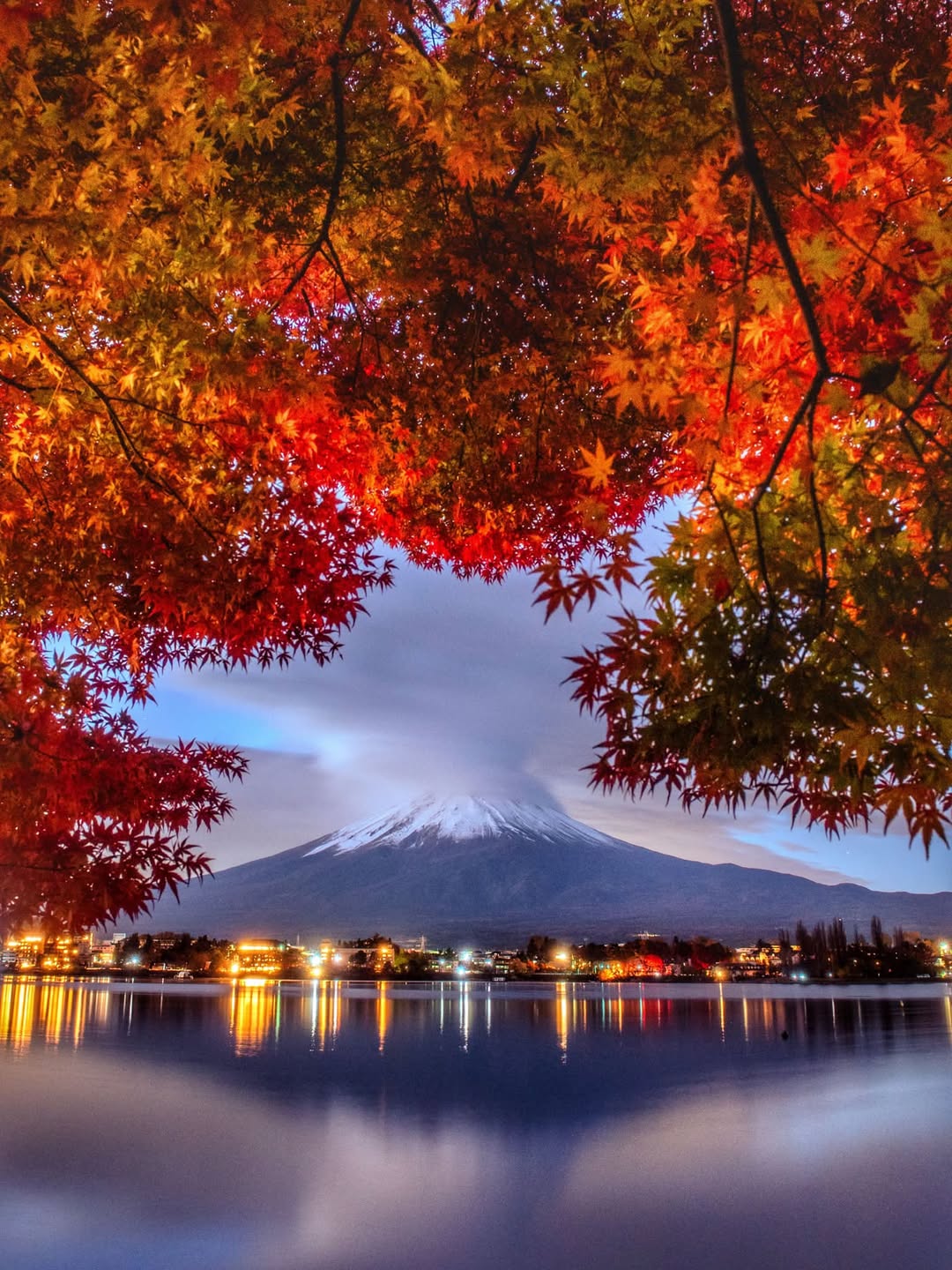
The Fuji Five Lakes in Autumn: Two Days and One Night, and How to Choose Where to Stay
19 min · tips

Beating the Crowds and Budgeting Properly for Fall Foliage Beneath Mount Fuji
17 min · tips

Soak in an open-air onsen with views of Mount Fuji amid the autumn colors
18 min · tips
Oshino Hakkai: Mount Fuji's Spring-Fed Ponds and How to Visit
5 min · destinations