

Beating the Crowds and Budgeting Properly for Fall Foliage Beneath Mount Fuji
Quiet hours at Chureito and the Momiji Corridor, the less-visited Shoji and Motosu lakes, plus sample budgets for a day trip and a two-day, one-night trip during the November peak.
Aug 12, 2026·✍️ olablog·⏱ 17 min read
Quiet hours at Chureito and the Momiji Corridor, the less-visited Shoji and Motosu lakes, plus sample budgets for a day trip and a two-day, one-night trip during the November peak.
Tap a region to browse articles
The first time I went hunting for fall foliage around Mount Fuji, it was a Saturday in late November. The bus left Shinjuku at 8 a.m. and should have taken two hours, but at noon we were still inching along the road into Kawaguchiko. By the time I reached the foot of Chureito’s hill, the stairs had turned into a long line of people, all holding up their phones and waiting for their turn in the exact same photo spot. I got two shots, was gently reminded by the people behind me to move along, and went back down. By then, the midday clouds had already covered most of the mountain.
On my second trip, also in late November but on a Tuesday, I changed my approach: I stayed overnight in Kawaguchiko and was standing at the Chureito observation deck at 6:30 a.m. with just four other people. The sky was crystal clear, and snow-capped Mount Fuji appeared in full behind the red maple leaves. Same season, same place, but two completely different trips. The difference wasn’t luck; it came down to two very specific things: choosing the right day and choosing the right time.
I wrote this for anyone visiting the Fuji Five Lakes during peak fall foliage — roughly mid- to late November — and looking for two things: a way to avoid the crowds and a clear idea of how much the trip will cost. Later in the article, you’ll find sample budgets for a one-day trip from Tokyo and a 2-day, 1-night trip, broken down into budget and comfortable options. All figures are estimates based on experience and recent prices. Be sure to check the official websites of the bus operators and hotels before booking, as prices can rise very quickly during peak season.
How the Crowds Around Mount Fuji Form
To avoid the crowds, you first need to understand where they come from. The Fuji Five Lakes region has one feature that causes visitors to pile up much more intensely than in Kyoto or Nikko:
First, almost everyone on a day trip arrives within the same time window. Highway buses from Shinjuku, group tours run by travel companies, and private cars from Tokyo all leave in the morning and pour into Kawaguchiko between 10 a.m. and 11:30 a.m. From 11 a.m. to 3 p.m., the area is packed, and then day-trippers begin leaving to catch their rides home.
Second, there is essentially only one road around the lake. There are no bypasses. One full parking lot or a single stretch where pedestrians are crossing can trigger a chain reaction of traffic along the entire Red Line bus route. During fall foliage season, the bus ride from Kawaguchiko Station to Oishi Park can sometimes take longer than walking.
Third, there are too few “must-photograph” spots for the number of visitors. Chureito, the Momiji Corridor on the north shore of Lake Kawaguchi, and Oishi Park attract almost everyone. Meanwhile, the three western lakes are nearly empty.
Fourth, festivals and evening illuminations funnel visitors into weekend nights. The Lake Kawaguchi Autumn Leaves Festival usually runs from around early November through the end of the month and includes evening illuminations. Weekends during the festival are the absolute peak.
Once you understand these four points, the strategy for avoiding the crowds becomes obvious: move against the flow of day-trippers, and avoid the busiest peak weekends.
Weekdays vs. Weekends: How Big Is the Difference?
In short: the difference is enormous, both in crowds and in cost.
Crowd levels. Tuesdays, Wednesdays, and Thursdays during peak season are still busier than ordinary days at other times of year, but you can still get around, find a seat in a café, and take photos without people in the frame if you’re willing to wait a few minutes. Saturdays and Sundays are a different story: parking lots fill up before 10 a.m., buses may make you wait for the next departure because they’re full, and lunch queues can last 30–45 minutes.
Room prices. This is where the difference is easiest to measure. At the same hotel around Lake Kawaguchi, a Tuesday night during fall foliage season might cost around 9,000–14,000 yen per person, while a Saturday night in the same week can jump to 16,000–25,000 yen or more for a ryokan with a mountain view. A mid-range ryokan with two meals generally starts at around 25,000 yen per person on a peak weekend. Simply shifting your trip from Saturday to Tuesday can save nearly as much as the cost of your round-trip transportation.
Travel time. On weekdays, the Shinjuku–Kawaguchiko bus usually takes about 2 hours as scheduled. On a Saturday morning or a Sunday afternoon during foliage season, adding 1–2 hours for traffic is perfectly normal. If you’re taking a day trip and lose 3 hours each way, you’ve effectively lost half the trip.
The days to avoid most during Mount Fuji’s fall foliage season are the public holidays at the beginning of November (Culture Day on 3/11) and at the end of the month (Labor Thanksgiving Day on 23/11), especially when they combine with a weekend to create a three-day holiday. If that coincides with an illuminated festival weekend, you’ll be traveling through a sea of people.
If You Can Only Travel on Weekends
For most Vietnamese people working in Japan, weekends are the only option. There are still ways to make it work:
- Stay Friday night, explore Saturday morning, and leave early Saturday afternoon. This lets you avoid both the wave of visitors arriving Saturday morning and the Sunday afternoon wave heading home. Friday-night room rates are also usually considerably lower than Saturday-night rates.
- If you’re doing a day trip, choose Sunday rather than Saturday and take the earliest bus possible, around 6–7 a.m. from Shinjuku.
- Reverse the standard itinerary. Most visitors go to Chureito in the morning and then head to the lake; if you have to arrive late, do the opposite.
- Prioritize the western lakes around midday, and save Lake Kawaguchi for late afternoon, when many day-trippers have already left.
Quiet Hours at Chureito and the Momiji Corridor
This is the most valuable part of the entire article. At the same location, shifting your visit by just two hours can create two completely different experiences.
Chureito: Before 8 a.m. or After 15:30
The five-story Chureito Pagoda in Arakurayama Sengen Park, near Shimoyoshida Station, offers the most iconic view: the red pagoda, maple leaves, and Mount Fuji all in one frame. That’s also why, from around 9:30 a.m. to 2 p.m., the observation deck above the pagoda is almost always filled with people taking turns standing in the same marked spot.
There are two genuinely quiet time slots:
- Before 8 a.m. This is the absolute golden hour. It’s quiet, and visibility is also most likely to be best because the midday clouds haven’t arrived yet. To do this, you’ll almost certainly need to stay overnight in the area — the biggest reason I always recommend a 2-day, 1-night trip over a day trip.
- After 15:30 until sunset. Day-trip tours have already left to catch their afternoon buses. The late-day light falling across the mountain is beautiful, although the risk of clouds covering the summit is higher than in the morning.
A few practical notes: the route up has nearly 400 steps, so wear athletic shoes and allow about 10–15 minutes for a relaxed climb. There is a gentler detour for anyone who wants to avoid the stairs. During peak season, staff usually manage the flow of visitors, and separate rules may apply regarding hours, routes, or landscape-maintenance fees. Check the official information from Fujiyoshida City before your visit. The parking lots at the foot of the hill are very small, so during fall foliage season, taking the Fujikyu train to Shimoyoshida Station and walking about 10–15 minutes is the easiest option.
The Momiji Corridor on Lake Kawaguchi’s North Shore: Early Morning or Just Before the Lights
The Momiji Corridor is a walking path along a small stream on the lake’s north shore, where two rows of old maple trees form a red vaulted canopy. During the festival, food stalls line both sides and the area is illuminated at night.
The best time slots are:
- From sunrise until around 9 a.m. The food stalls haven’t opened, tour groups haven’t arrived, and mist still hangs over the lake. This is also when you’re most likely to catch “reverse Mount Fuji” reflected in the water if the wind is calm.
- Around 16–17:00, just before the illuminations come on. Day-trippers have gone home, while evening visitors have yet to arrive. You’ll have a relatively comfortable 30–45 minutes, and can stay to watch the lights afterward.
- The busiest times to avoid: 11 a.m. to 2 p.m., and around 18–20:00 on illuminated weekend evenings, when the entire area is packed.
A small tip: most visitors walk through the main section of the corridor and then turn back. If you continue a few hundred meters west along the lakeshore, the crowds thin out noticeably while the foliage remains beautiful. You’ll also find viewpoints that capture the entire lake and mountain.
Oishi Park and the Lakeside Route
Oishi Park on the north shore, with its foreground flowers and Mount Fuji in the background, is just as busy. The same rule applies: go before 9 a.m. or after 16:00. For getting around, during peak season I honestly recommend renting a bicycle rather than relying on buses along the north shore. Rentals generally cost around 1,500–2,500 yen for half a day for a standard bicycle, while electric-assist bikes cost more. Buses get stuck in traffic; bicycles don’t.
Two Nearly Empty Lakes: Shoji and Motosu
If you’re tired of squeezing through crowds, this is the most worthwhile part. Of the five lakes, Kawaguchi and Yamanaka attract most visitors, Saiko sees a moderate number, while Shoji and Motosu in the west are quiet enough to surprise you — the same mountain, the same season.
Lake Shoji: The Smallest and Most Unspoiled
Shoji is the smallest of the five lakes and has the fewest buildings, giving you a wonderfully “clean” view of Mount Fuji: no utility poles, no high-rises, just forest and mountain. Photographers call the classic view here “Mount Fuji embracing a child.” From certain points on the north side, the smaller Mount Omuro fits neatly in front of the larger mountain. There are a few small cafés and family-run lodges around the lake, but almost everything goes dark at night. In autumn, you may spend an entire morning here and encounter only a few anglers.
Lake Motosu: The Bluest Water and the ¥1,000 Note View
Motosu is the deepest and clearest lake, and is also the scene printed on the back of the ¥1,000 note. The viewpoint is in the Nakanokura area on the lake’s northwest side. The lakeshore has a large campground, with golden and red leaves scattered along the water’s edge in autumn. You can look straight across at the mountain without a fence blocking the view. On a calm morning, the water is as smooth as a mirror, and it can feel as though you have the whole lake to yourself.
How to Include These Two Lakes in Your Itinerary
The simplest option by public transportation is the Blue Line bus from Kawaguchiko Station, which passes Saiko and Shoji before reaching Motosu; the final stretch takes about an hour. Buses run much less frequently than on the Red Line — in autumn, there may be only a few departures per day according to a separate timetable — so be sure to photograph the schedule at the bus stop before getting off, and check the timetable on the official Fujikyu website before your trip. Missing the last bus at Motosu is a very unpleasant situation.
By car, it’s much easier: Motosu is only about 30–40 minutes from Kawaguchiko, the lakeside road is scenic, and parking lots are spacious and often free or inexpensive. This is one of the few situations where I truly think renting a car in the Fuji Five Lakes region is worth it — not to save money, but to buy yourself flexibility.
A Practical Budget for Peak Season
First, here are the individual expense categories. All figures are estimates and can change depending on the season, day, and room type:
| Item | Estimated cost | Notes |
|---|---|---|
| Highway bus Shinjuku–Kawaguchiko (one way) | approximately 2,000–2,500 yen | Book in advance; seats sell out quickly during foliage season |
| JR + Fujikyu train via Otsuki (one way) | approximately 2,500–3,500 yen | More expensive than the bus but unaffected by traffic |
| Direct limited express from Shinjuku (one way) | from approximately 4,000 yen | Reserved seating required; convenient but infrequent |
| Regional sightseeing bus pass (2 days) | approximately 1,500–2,000 yen | Red/Green/Blue Line |
| Bicycle rental | approximately 1,500–2,500 yen for half a day | Electric bikes cost more |
| Small rental car | approximately 7,000–10,000 yen/day | Excludes fuel and expressway tolls |
| Hoto or noodle lunch | approximately 1,200–2,000 yen | Popular restaurants require a wait |
| Lakeside-view coffee | approximately 600–1,200 yen | |
| Day-use onsen | approximately 1,000–2,500 yen | Some places charge extra for towels |
| Standard hotel, weekday | approximately 9,000–14,000 yen/person | During peak season |
| Standard hotel, weekend | approximately 16,000–25,000 yen/person | |
| Ryokan with dinner, weekend | from approximately 25,000 yen/person | Mountain views cost even more |
| Guesthouse or hostel | approximately 4,000–8,000 yen/person | Only available if booked early |
Admission to Arakurayama Sengen Park and the Momiji Corridor is generally free, but landscape-maintenance fees or parking charges may apply during the festival. These rules change from year to year, so check the official website before you go.
One-Day Trip from Tokyo
Budget option, traveling on a weekday and using buses and a bicycle:
| Expense | Estimated cost |
|---|---|
| Round-trip highway bus | 4,000–5,000 yen |
| Regional bus pass or bicycle rental | 1,500–2,500 yen |
| Lunch + drinks | 2,000–3,000 yen |
| Snacks, water, incidentals | 1,000–1,500 yen |
| Total per person | approximately 8,500–12,000 yen |
If you add a day-use onsen and a proper dinner before heading home, add approximately 3,000–4,500 yen. On weekends, the cost may not rise much, but the travel time increases dramatically — and that is the real cost.
2-Day, 1-Night Trip
Budget option, traveling on a weekday and staying at a standard hotel or guesthouse:
| Expense | Estimated cost |
|---|---|
| Round-trip highway bus | 4,000–5,000 yen |
| 2-day regional bus pass | 1,500–2,000 yen |
| One night’s room (weekday) | 9,000–14,000 yen |
| Food for 2 days | 5,000–7,000 yen |
| Onsen, incidentals | 2,000–3,000 yen |
| Total per person | approximately 21,500–31,000 yen |
Comfortable option, traveling on a weekend, staying at a ryokan with dinner, and splitting a rental car between two people:
| Expense | Estimated cost |
|---|---|
| Round-trip train | 5,000–7,000 yen |
| Rental car + fuel + expressway, split between two people | 6,000–9,000 yen |
| One night at a ryokan with 2 meals, weekend | 25,000–35,000 yen |
| Lunch, coffee, souvenirs | 4,000–6,000 yen |
| Total per person | approximately 40,000–57,000 yen |
Three easily overlooked items when planning your budget are accommodation tax at some properties, parking fees at popular spots during the festival, and extra costs caused by traffic. If you miss your return bus and have to change your ticket or take a taxi to the station, a few thousand yen can disappear very quickly. Add a 10% contingency to stay comfortable.
Money-Saving Tips That Won’t Ruin the Trip
- Swap one weekend night for one weekday night. This is the single most effective way to save, more powerful than all the other tips combined.
- Book your highway bus early to get the lowest fare; bus companies often vary prices by date and occupancy.
- Have a late lunch around 14:00 — you’ll avoid the queues and the busiest outdoor hours.
- Buy breakfast at a konbini the night before. The shops and cafés won’t be open when you visit Chureito early, and you won’t want to waste time.
- Don’t try to cram all five lakes into one day. Seeing fewer places at the right time is better than rushing around and finding crowds everywhere.
Two Sample Itineraries Designed to Avoid the Crowds
One-day trip (weekday): Take the earliest bus from Shinjuku and go straight to Shimoyoshida Station for Chureito before the tour groups arrive. Around midday, take the Blue Line or a taxi to the Saiko–Shoji area for a late lunch. In the early afternoon, return to the north shore of Lake Kawaguchi and rent a bicycle. Around 16:00, visit the Momiji Corridor while it is still quiet, stay for the illuminations, and then take an evening bus back to Tokyo.
2-day, 1-night trip (the optimal option): On day one, depart later and arrive in the early afternoon. Visit Motosu and Shoji while most visitors are concentrated around Kawaguchiko. Return in the late afternoon to check in, enjoy the onsen, and see the illuminations in the evening, arriving around 18:00. On day two, wake up at 5:30 and reach Chureito just as the sky begins to brighten. Have breakfast after coming back down the mountain, cycle along the north shore during the morning, eat a late lunch, and return to Tokyo before the afternoon wave of visitors heads home.
Frequently Asked Questions
When is peak fall foliage season in the Fuji Five Lakes region?
The leaves usually begin changing color in early November and look their best from mid- to late November. At some of the lower lakeside spots, the season can extend into early December. Since timing depends on the weather each year, follow the foliage forecasts and local tourism websites during the two weeks before your trip.
Is a day trip enough, or do I have to stay overnight?
A day trip is manageable if you travel on a weekday and take an early departure. However, the best time slots — before 8 a.m. at Chureito and the calmest lake conditions at sunrise — are realistically available only to visitors staying overnight. If this trip matters to you, one night is worth far more than the cost of the room.
Should I take the bus or train during peak season?
The highway bus is cheaper and drops you directly in central Kawaguchiko, but it is vulnerable to traffic. The train costs more but runs on a reliable schedule, and if Chureito is your first stop, the Fujikyu train to Shimoyoshida Station is even more convenient. On a busy peak-season weekend, I would choose the train.
Can I visit Lakes Shoji and Motosu without renting a car?
Yes, using the Blue Line bus from Kawaguchiko Station, but departures are infrequent. You’ll need to follow the timetable closely and always know when the last bus of the day leaves. Check the operator’s official autumn schedule and photograph the timetable at the bus stop as soon as you get off.
What can I do if the mountain is hidden by fog?
There is still plenty to enjoy: the Momiji Corridor is beautiful even without the mountain, as are the lakeside cafés and Iyashi-no-Sato Nenba near Lake Saiko. You could also simply spend the afternoon soaking in an onsen. The lesson is not to stake your entire trip on a single morning — another reason to go for 2 days, giving you two chances for clear skies.
What should I bring?
Bring a windbreaker and a warm base layer, since early November mornings around the lakes can approach 0 degrees even when daytime temperatures are comfortable. Also pack walking shoes for the Chureito stairs, a portable charger because cold weather drains phone batteries quickly, and cash for the small lakeside shops and cafés, not all of which accept cards.
More from this region — Mt. Fuji
View all →
Soak in an open-air onsen with views of Mount Fuji amid the autumn colors
18 min · tips
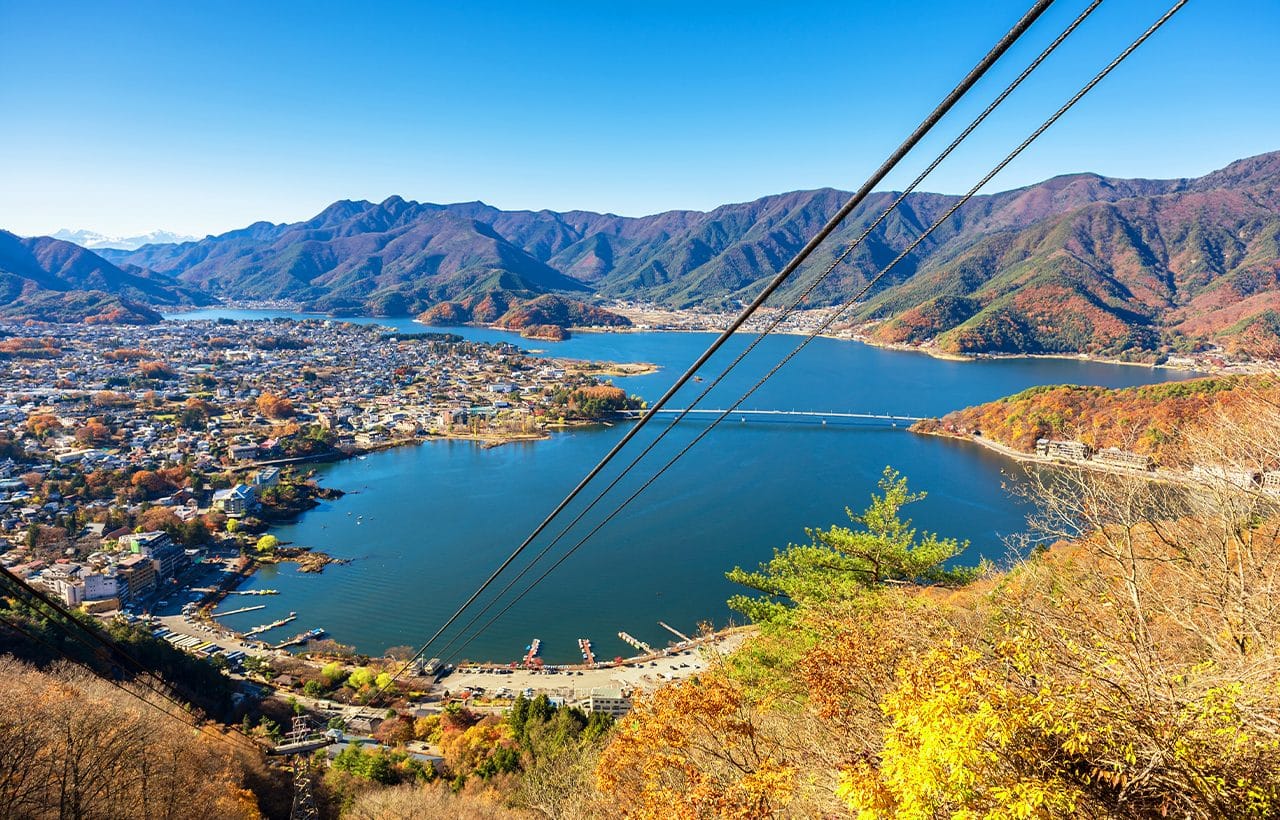
Oshino Hakkai: Mount Fuji's Spring-Fed Ponds and How to Visit
5 min · destinations
Fuji Panorama Line – The Ultimate Scenic Drive Around Mount Fuji
6 min · destinations
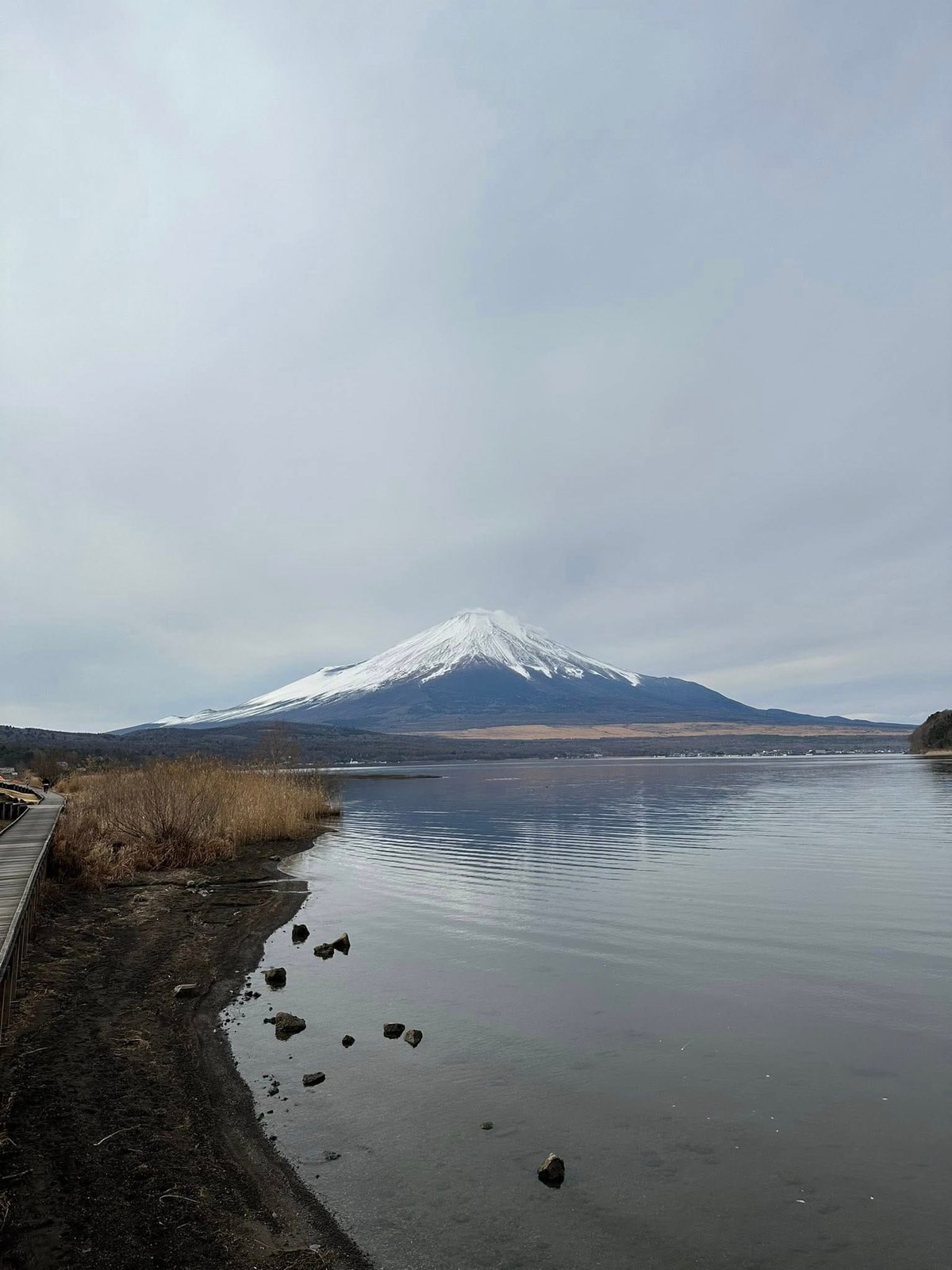
Lake Yamanakako Through the Seasons: Fuji Views and Access
5 min · destinations