From Tokyo to the Fuji Five Lakes in Fall: Train, Bus, or Pass?
Book the Fuji Excursion exactly one month ahead; Shinjuku buses are cheaper but can get caught in Chuo Expressway traffic, while the two-day retro bus pass is ideal for anyone who hates walking — plus tips for securing a Sunday-afternoon seat.
Aug 12, 2026·✍️ olablog·⏱ 19 min read
Book the Fuji Excursion exactly one month ahead; Shinjuku buses are cheaper but can get caught in Chuo Expressway traffic, while the two-day retro bus pass is ideal for anyone who hates walking — plus tips for securing a Sunday-afternoon seat.
Tap a region to browse articles
There’s one morning in early November that I still remember vividly: at 6 a.m., I was standing on the 4th floor of Busta Shinjuku. It was still dark, and the line outside the bus boarding area stretched beyond the waiting zone. Everyone was clutching a backpack and a cup of hot coffee. We were all headed in the same direction — the Fuji Five Lakes region at the foot of Mount Fuji. The bus I had booked two weeks earlier left on time, but as we neared Otsuki, traffic on the Chuo Expressway began to crawl, turning what should have been a 1-hour 45-minute journey into more than 3 hours. By the time I reached Lake Kawaguchi, it was nearly noon. The sun was already harsh, the lake was rippling, and the photo I had dreamed of all year — “Mount Fuji reflected in the water beneath a forest of autumn leaves” — would have to wait for another trip.
That lesson cost me exactly one vacation day and taught me something very simple: in the Fuji Five Lakes region, the hardest part isn’t finding a beautiful spot — they’re everywhere — but getting there on time during the three peak weeks of the autumn-leaf season. From around early to mid-November, when the Momiji Kairo festival opens along the northern shore of Lake Kawaguchi and visitors arrive from all over Japan, every transportation option comes under pressure: train tickets sell out, bus seats disappear, roads jam up, and the taxi lines at the station stretch endlessly.
In this guide, I’ve gathered everything you need to know about traveling from Tokyo to the Fuji Five Lakes during the peak autumn-leaf period: the Fuji Excursion train running directly from Shinjuku, the “budget” route via Otsuki, highway buses from Busta Shinjuku, a realistic comparison of prices and travel times, which passes are worth buying (and which ones you’ll regret buying), plus a detailed booking timeline so you don’t open the app only to find a big red “sold out” message. I’m listing approximate prices because operators change fares by season and time slot — be sure to check the official website again before booking.
When is the autumn-leaf peak in the Fuji Five Lakes region?
The Fuji Five Lakes region (Fuji Goko) sits at an elevation of around 830–1,000 meters, so the leaves change color later than in the mountains of Nagano but earlier than in central Tokyo. Based on my experience over the years:
- Late October: the leaves begin changing color in higher areas such as the road to the 5th Station (Fuji Subaru Line) and around Lake Yamanaka. It’s busy, but not yet overwhelmed.
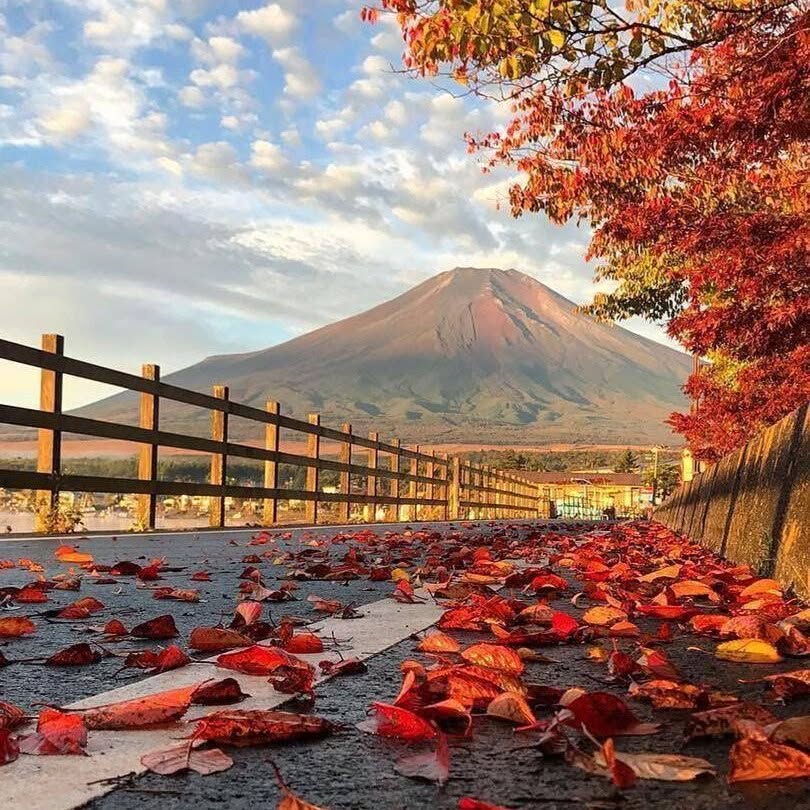
- The first through the third week of November: peak foliage around Lake Kawaguchi and Lake Sai. This is also when Momiji Kairo (the maple-lined promenade along Lake Kawaguchi’s northern shore) takes place, usually with evening illuminations. This is by far the most challenging period for tickets and traffic.
- From late November onward: the leaves fall quickly and the crowds thin out. In return, the odds of seeing a clear, cloud-free view of Mount Fuji are much higher because the air is cold and dry.
The exact timing can vary by as much as a week from year to year, so check the koyo forecast for Yamanashi or the Fujikawaguchiko town website before booking. Also remember that the weeks containing November 3 (Culture Day) and November 23 (Labor Thanksgiving Day) include Japanese public holidays. Combined with the weekend, visitor numbers can double.
Fuji Excursion: the direct train from Shinjuku
This is the option I recommend if you’re traveling on a peak weekend and hate sitting in a vehicle wondering when you’ll arrive.
How the train operates
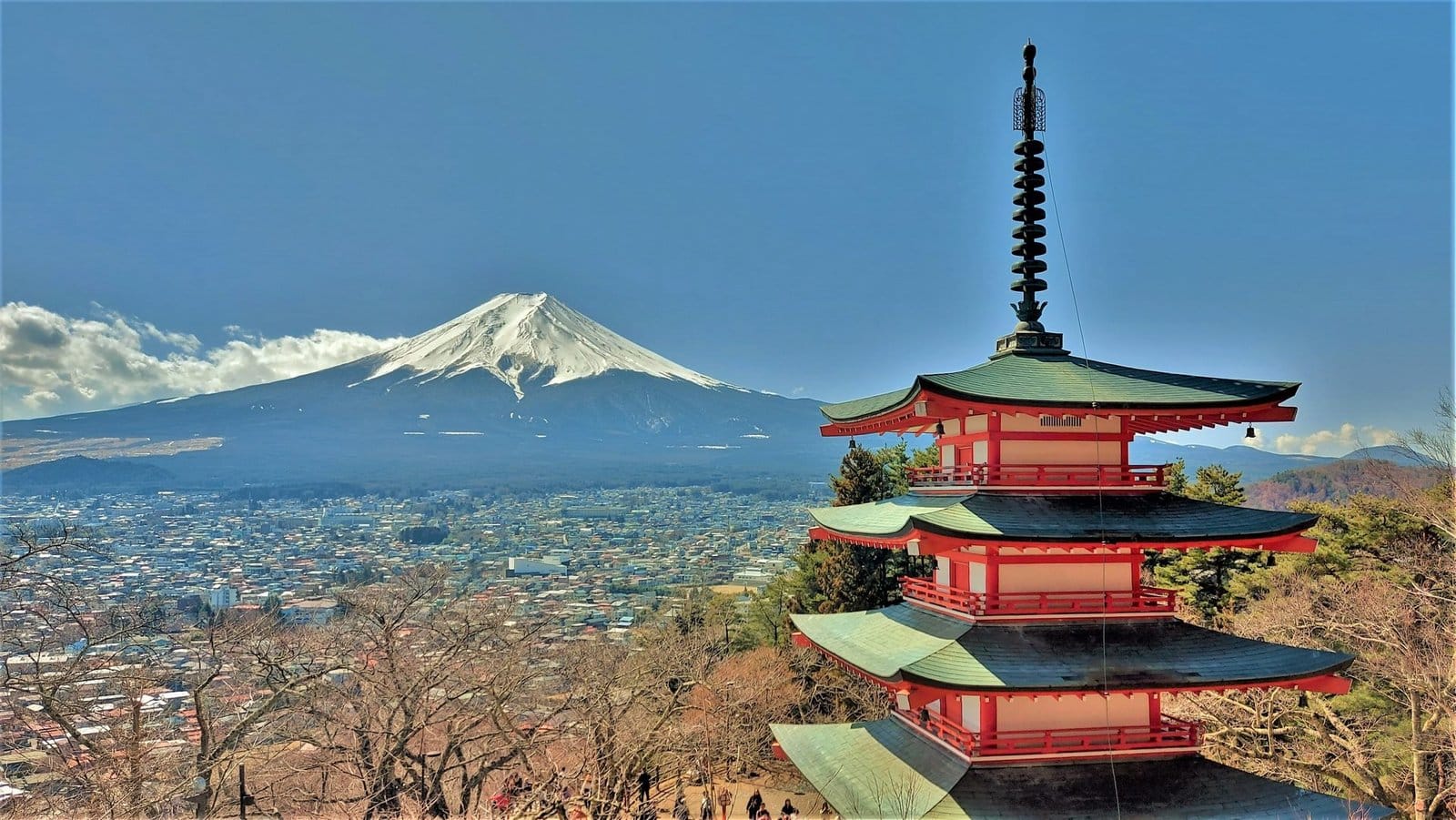
The Fuji Excursion is a limited express operated by JR East that runs directly from Shinjuku Station to Kawaguchiko Station without a transfer. It travels along the JR Chuo Line to Otsuki, then continues directly onto the private Fujikyuko Line. The journey takes approximately 1 hour 50 minutes to 2 hours, depending on the service. Along the way, the train stops at stations such as Tachikawa, Hachioji, and Otsuki. In the Fuji area, it stops at Shimoyoshida (the station nearest Chureito Pagoda), Fujisan (formerly Fujiyoshida), and finally Kawaguchiko.
The key thing to remember is that there are very few services each day — usually only a few in each direction, concentrated in the morning for outbound travel and the afternoon for the return. During busy periods, JR may add extra services or special rapid trains on weekends, but don’t count on it. Check the actual timetable for your travel date.
The second key point — and the one that catches many people out — is that every seat on the Fuji Excursion is reserved. There are no unreserved cars where you can simply board and stand as you can on regular trains. Without a reserved ticket, you cannot board.
Ticket prices and how to buy them
A one-way ticket from Shinjuku to Kawaguchiko costs around 4,000 yen, including the base fare, limited express surcharge, and the fare for the Fujikyuko section. The price varies according to each year’s policies, so check the JR East or Fujikyu Railway website before booking.
The most common ways to buy a ticket are:
- Eki-net (JR East’s booking website) — book online, then collect your ticket from a ticket machine or counter. This is the method I usually use because it lets me book at the exact minute sales open.
- Midori-no-madoguchi counters at major JR stations — reliable, but weekend lines can be long, and you won’t be able to grab a seat at the exact second sales open.
- Ticket vending machines with limited express seat-reservation functions and English menus.
JR reserved-seat tickets go on sale exactly one month in advance, at 10 a.m. Japan time. On weekends during the Momiji Kairo season, morning seats can disappear within minutes. If you absolutely need a specific service, log in to Eki-net by 9:55 a.m., prepare your itinerary, and click at exactly 10:00.
The Fuji Excursion’s drawbacks
- Few services, so missing the morning train can throw off your entire day.
- The last train back to Shinjuku usually runs fairly early (around late afternoon), making it unsuitable if you want to see the evening autumn-leaf illuminations. To see the lights, you’ll need to stay overnight or return by bus.
- Noticeably more expensive than the bus if you’re traveling in a group of 3–4 people.
The budget route: take the Chuo Line and transfer at Otsuki
If the Fuji Excursion is sold out — and during peak season, that is almost guaranteed to happen on some days — there is another train route that many Vietnamese travelers overlook.
Take the JR Chuo Line from Shinjuku to Otsuki Station (by a kaisoku rapid train or a Kaiji/Azusa limited express). The journey takes around 1 hour to 1 hour 30 minutes, depending on the train. Then transfer to the Fujikyuko Line and continue to Kawaguchiko, which takes another 50–55 minutes. The total journey is around 2 hours 30 minutes to 3 hours, with a fare of approximately 2,500 yen if you use regular trains throughout.
The biggest advantage is that the regular-train section does not require a reservation. Just go to the station and board. You may have to stand on the Fujikyuko section during peak times, but at least you can be confident you’ll get on a train. This route also offers sightseeing services such as the Fujisan View Express. Its wooden interior is beautiful, and some cars require a separate ticket, making it worth considering during the autumn-leaf season.
One small note: the Fujikyuko section is a private railway, and ticket policies and IC card usage (Suica/PASMO) are not the same as on JR at every station. To be safe, carry some cash and buy a paper ticket at the counter.
Highway buses from Shinjuku: cheap and frequent, but a gamble with traffic
Where they depart, how long they take, and how much they cost
Long-distance buses to the Fuji Five Lakes region mainly depart from Busta Shinjuku (the bus terminal on top of Shinjuku Station, near the South Exit). This is the most frequent route, with dozens of services a day and buses departing roughly every 20–30 minutes during popular time slots. Operated by Keio and Fujikyu, the buses run directly to Fuji-Q Highland, Fujisan Station, and Kawaguchiko Station. Some services continue around Lake Yamanaka.
- Scheduled travel time: approximately 1 hour 45 minutes to 2 hours 15 minutes.
- Fare: around 2,000 yen one way. Some time slots are cheaper or more expensive because operators use date-based dynamic pricing. A round-trip ticket or early booking may sometimes be slightly cheaper.
There are also services from Tokyo Station, Shibuya (Mark City), Shinagawa, Yokohama, and both Haneda and Narita airports. If you’re staying in eastern or southern Tokyo, taking a direct bus from a nearby terminal may be more convenient than going all the way to Shinjuku.
The real risk: the Chuo Expressway during autumn-leaf season
This is the part I really want you to read carefully. Buses to the Fuji Five Lakes use the Chuo Expressway, and on autumn-leaf weekends, the section around Sagamiko–Otsuki–the Kawaguchiko Interchange is almost predictably congested. I’ve personally been delayed by more than 1 hour 30 minutes, and I’ve heard of much worse delays on public holidays. My rule of thumb now is:
- Weekdays: the bus offers the best value for money.
- Saturdays, Sundays, and public holidays in November: if you’re taking the bus, choose the earliest possible service (around 6–7 a.m.), while the roads are still clear.
- The return journey: never schedule anything urgent in Tokyo that same evening.
Another strategy that few people use is to take the train outbound for a more reliable arrival time, then return by bus. If you get back late, traffic doesn’t matter as much, and buses offer more evening services than trains.
Where to book bus tickets
- Highway Bus (highwaybus.com) — Keio’s website, available in English and accepts international cards.
- Kosokubus.com / Japan Bus Online — aggregates multiple operators and has a beginner-friendly interface.
- The ticket counter at Busta Shinjuku — same-day tickets are still sold, but on peak weekends, services are often completely sold out in advance.
Bus tickets usually go on sale about one month in advance. You don’t need to click at the exact minute as you do with train tickets, but on weekends during the Momiji Kairo season, 7–9 a.m. services selling out a full week ahead is perfectly normal.
A quick comparison of the three options
To make things easier to visualize, here’s the mental comparison I use whenever I plan a trip (prices are approximate one-way fares for one adult):
- Fuji Excursion: around 4,000 yen — fastest, most reliable, and no transfer required. Downsides: few services, advance reservations required, and tickets sell out early.
- Chuo Line + Fujikyuko via Otsuki: around 2,500 yen — no reservation required and there’s always a way to get there, but it takes longer, requires a transfer, and you may have to stand.
- Highway bus from Busta Shinjuku: around 2,000 yen — cheapest, most frequent, and drops you right in central Kawaguchiko. Downside: you’re gambling on traffic.
For two people making a day trip, the round-trip difference between the limited express and the bus is roughly the price of a good meal. For me, during peak season, the certainty of arriving on time is worth the extra money — especially when you only have one day and want to catch the morning light on the lake.
Passes: which ones are worth it and which aren’t
This is where it’s easiest to buy the wrong thing, because the names of the various passes sound so similar.
A 2-day pass for the retro buses around the lakes
Once you arrive, you’ll still need transportation because the autumn-leaf viewing spots around Lake Kawaguchi and Lake Sai are several kilometers apart. Fujikyu’s sightseeing bus network (often called the retro buses because of their nostalgic paint schemes) operates color-coded routes: one around Lake Kawaguchi, one to Lake Sai and Aokigahara Forest, and one to Lake Shoji and Lake Motosu.
There is a 2-day free pass covering these routes, priced at around 1,500 yen, and sold at the bus counter beside Kawaguchiko Station. It pays for itself after a few rides, so if you’re staying overnight or planning to visit several places in one day, it is almost always worthwhile. There is also a cheaper 1-day ticket for short visits. Prices and route coverage can change by season, so ask at the counter or check Fujikyu’s official website.
One peak-season warning: the retro buses get extremely crowded and can get stuck in traffic just like cars on the lakeside roads. On some short stretches — for example, from Kawaguchiko Station to the Momiji Kairo area — walking or renting a bicycle can be faster than waiting for a bus.
Fujikyuko Railway free pass
If you plan to travel repeatedly between Kawaguchiko, Fujisan, and Shimoyoshida (Chureito Pagoda), a 1–2-day unlimited pass for the Fujikyuko railway section is a sensible option. A round trip to Chureito in one day will almost pay for the pass by itself.
The Mt. Fuji Pass and Fujikyu packages
Fujikyu sells the Mt. Fuji Pass (1-, 2-, and 3-day versions) for visitors holding foreign passports. It covers buses in the region and the Fujikyuko Railway, along with discounts or free admission to attractions such as the ropeway and sightseeing boats on the lake. Some versions also include admission to Fuji-Q Highland. Vietnamese citizens living in Japan can still purchase it because the requirement is that your passport is not Japanese, but policies can change, so check the official website before visiting the counter.
This package is only worthwhile if you’re staying for 2 days or more and will genuinely use the ropeway, sightseeing boat, and buses extensively. For a one-day trip focused simply on photographing autumn leaves around the lake, buying individual tickets is cheaper.
Fuji-Q Highland: don’t confuse the two types of passes
Many people hear “Fuji-Q pass” and assume it’s a transportation pass. It isn’t: Fuji-Q Highland’s Free Pass is an unlimited ride ticket for the amusement park, and has nothing to do with transportation. You don’t need it if your trip is purely about viewing autumn foliage. On the other hand, if you’re traveling with children or a group of young friends and want to add a half-day at the park, bus operators sell packages combining a round-trip bus ticket from Shinjuku with park admission — these packages are usually cheaper than buying the tickets separately.
JR Tokyo Wide Pass
This 3-day JR East pass costs around 15,000 yen and includes the Fuji Excursion and the Fujikyuko section. It is only worthwhile if you’re also visiting places such as Karuizawa, Nikko, GALA Yuzawa, or Izu during those 3 days. If you’re visiting only the Fuji Five Lakes region, you’ll lose money. This pass also requires a non-Japanese passport, and its price is adjusted from year to year, so check the JR East website.
When not to buy any pass
If you’re taking a day trip, setting out early, focusing on just one area (for example, the northern shore of Lake Kawaguchi and the Momiji Kairo area), and mostly walking, individual round-trip tickets are all you need. Passes are designed for people who move around a lot, not for travelers who plan to sit in one place admiring the mountain all afternoon.
How to book ahead and avoid sold-out tickets during peak weeks
This is the most important section of the article. I’ve organized it by timeline to make it easier to remember.
6–8 weeks ahead: finalize your dates and accommodation
If you plan to stay overnight (which I strongly recommend, because the lake in the early morning is the most beautiful part), hotels and ryokan around Kawaguchiko sell out even earlier than transportation tickets. For the first weekends of November, book as early as possible and prioritize accommodation within walking distance of a station or bus stop.
Exactly 1 month ahead: be ready when ticket sales open
- JR train tickets (including the Fuji Excursion): sales open at 10 a.m., exactly one month before the departure date. Book both the outbound and return journeys during the same login session.
- Highway bus tickets: these also go on sale about one month ahead. You don’t need to click at the exact second, but don’t leave it until the last minute.
1–2 weeks ahead: finalize your return journey
The real bottleneck during autumn-leaf season is Sunday afternoon. Everyone wants to return to Tokyo between 16:00 and 19:00. My advice: book a return service about one hour earlier than you think you need, or choose a much later service after 20:00, when the roads have cleared. If you’re taking the bus, allow at least an extra hour for traffic before any appointment in Tokyo.
Plan B when everything is sold out
- Take the Chuo Line + Otsuki route — there is always a way to get there; it simply takes longer.
- Change your departure terminal: try services from Tokyo Station, Shibuya, Yokohama, or Mishima/Gotemba to the south.
- Get off at Fujisan Station instead of Kawaguchiko, then continue one station by local train — occasionally, seats are still available on this section.
- Move your trip to a weekday. The same scenery, but Wednesday and Sunday are two completely different worlds.
Sample itineraries for a peak day
Day trip, with punctuality as the priority: Take an early-morning Fuji Excursion from Shinjuku and arrive in Kawaguchiko shortly after 9 a.m. Buy a retro bus pass, go straight to the northern lakeshore to see the autumn leaves and photograph Mount Fuji while the sky is still clear. Have houtou for lunch (Yamanashi’s specialty flat noodles stewed in rich miso), then take the Kachi Kachi Ropeway for panoramic views. In the afternoon, leisurely return to the station and take either the train or bus, depending on which tickets are still available.
Stay overnight for a much more relaxed trip: On day one, take an inexpensive bus up later in the morning, then visit Oshino Hakkai or tour Lake Sai in the afternoon and see the autumn-leaf illuminations in the evening. On day two, wake before dawn to photograph the glasslike lake, visit Chureito Pagoda from Shimoyoshida Station in the morning, and return to Tokyo before the rush of traffic begins.
A few tips for peak season
- Dress in layers: early mornings by the lake in November can be only a few degrees above freezing, while the midday sun can make it feel much warmer.
- Carry cash: many bus counters, small restaurants, and local ticket booths still prefer cash.
- Coin lockers at Kawaguchiko Station fill up very quickly on weekends — if you’re taking a day trip, try to keep your luggage to a single backpack.
- Consider renting a bicycle: the roads along Lake Kawaguchi are fairly flat, and during peak season, cycling can often be faster than sitting in a bus.
- Don’t rely on just one weather forecast: Mount Fuji creates its own clouds. Early morning is the time of day when you’re most likely to see the mountain.
Frequently asked questions
Can I board the Fuji Excursion without booking in advance?
No. Every seat on this train is reserved, and there are no unreserved cars. If it’s sold out, take the Chuo Line to Otsuki and transfer to the Fujikyuko train, or take a highway bus.
How much more expensive are the bus and train?
For a one-way journey from Shinjuku to Kawaguchiko, the bus costs around 2,000 yen, while the limited express costs around 4,000 yen. The regular train route via Otsuki falls in between at approximately 2,500 yen. These are approximate prices; operators adjust fares by season, so check the official website when booking.
Is the bus often delayed by traffic during the autumn-leaf season?
On weekends and November public holidays, almost certainly. Delays of 30–60 minutes are normal, and they can be longer during the busiest periods. Taking the earliest service of the day is the best way to reduce the risk.
Is the 2-day retro bus pass worth buying?
Yes, if you’re staying overnight or plan to visit several places around Lake Kawaguchi and Lake Sai in one day. If you’re only going between the Momiji Kairo area and Kawaguchiko Station, walking or cycling is enough.
Can Vietnamese citizens living in Japan buy the Mt. Fuji Pass or JR Tokyo Wide Pass?
These passes generally apply to holders of non-Japanese passports, so many Vietnamese residents in Japan can still buy them — remember to bring your passport when exchanging or collecting the ticket. Requirements can change each year, so check the official JR East and Fujikyu websites before traveling.
What should I take back to Tokyo if I want to see the evening autumn-leaf illuminations?
The last direct train to Shinjuku usually runs fairly early, so the practical options are a late highway bus or staying overnight. If you choose the bus, book ahead and check the last departure as soon as you start planning.
Which day should I choose for good foliage with fewer crowds?
Weekdays between the first and third weeks of November offer the best balance. If you have to travel on a weekend, leave Tokyo before 7 a.m. and book an early or very late return to avoid the busiest period.