
Daisetsuzan National Park: Hikes, Autumn Leaves and Onsen in Hokkaido
Daisetsuzan guide: Asahidake and Kurodake ropeways with fares, hikes for every level, Japan's earliest autumn leaves, Sounkyo's gorge and onsen, and access.
Feb 5, 2026·✍️ olablog·⏱ 14 min read
Daisetsuzan guide: Asahidake and Kurodake ropeways with fares, hikes for every level, Japan's earliest autumn leaves, Sounkyo's gorge and onsen, and access.
Tap a region to browse articles
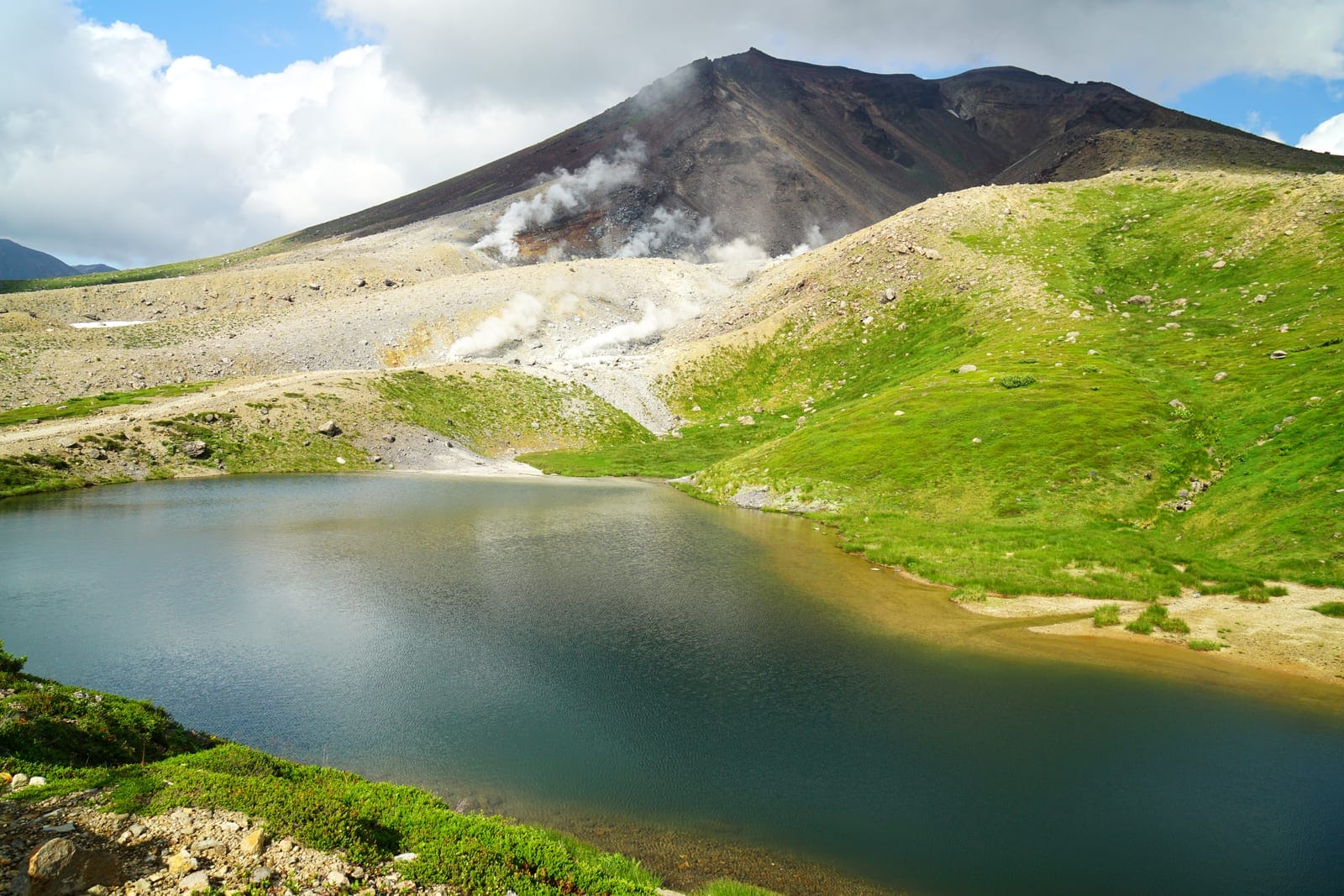
Daisetsuzan National Park (大雪山国立公園), in the heart of Hokkaido (北海道), is the largest land-based national park in Japan. It covers roughly 230,000 hectares, an area big enough to hold the whole of Tokyo (東京都). The Daisetsuzan mountain range (大雪山連峰), crowned by Asahidake (旭岳), is known as "the Roof of Hokkaido", a sweep of grand mountain terrain shaped by ancient volcanic activity. The Ainu (アイヌ) people called it Kamuy Mintara (カムイミンタラ), "the playground of the gods", and its wild, unspoiled nature still captivates everyone who visits.
Because Daisetsuzan lies so far north, its peaks reach only about 2,000 metres, yet they have an alpine environment comparable to the 3,000-metre mountains of Honshu (本州). A wide variety of alpine plants flourishes here, and rare wildlife lives in the park, including the Ezo pika (エゾナキウサギ), said to be a survivor of the Ice Age.
1. What is Daisetsuzan National Park?
The park is broadly divided into three areas: Omote-Daisetsu (表大雪), Higashi-Daisetsu (東大雪) and the Tokachidake area (十勝岳). Each has its own natural environment and rich ecosystem, so the scenery varies a great deal from one to the next.
Inside the park you will find volcanoes that are still active, a great gorge lined with cliffs of columnar-jointed rock, beautiful waterfalls and fields of alpine flowers. At the foot of the mountains, hot springs such as Asahidake Onsen (旭岳温泉), Sounkyo Onsen (層雲峡温泉) and Daisetsu Kogen Onsen (大雪高原温泉) are the perfect place to soothe tired legs after a hike or a walk.
About 90 years have passed since Daisetsuzan was designated a national park, and its pristine nature is still carefully protected. The Ministry of the Environment (環境省) manages the park to balance protecting its outstanding scenery with letting people enjoy it, and actively promotes conservation measures such as the use of portable toilets on the mountains.
2. The four seasons of Daisetsuzan
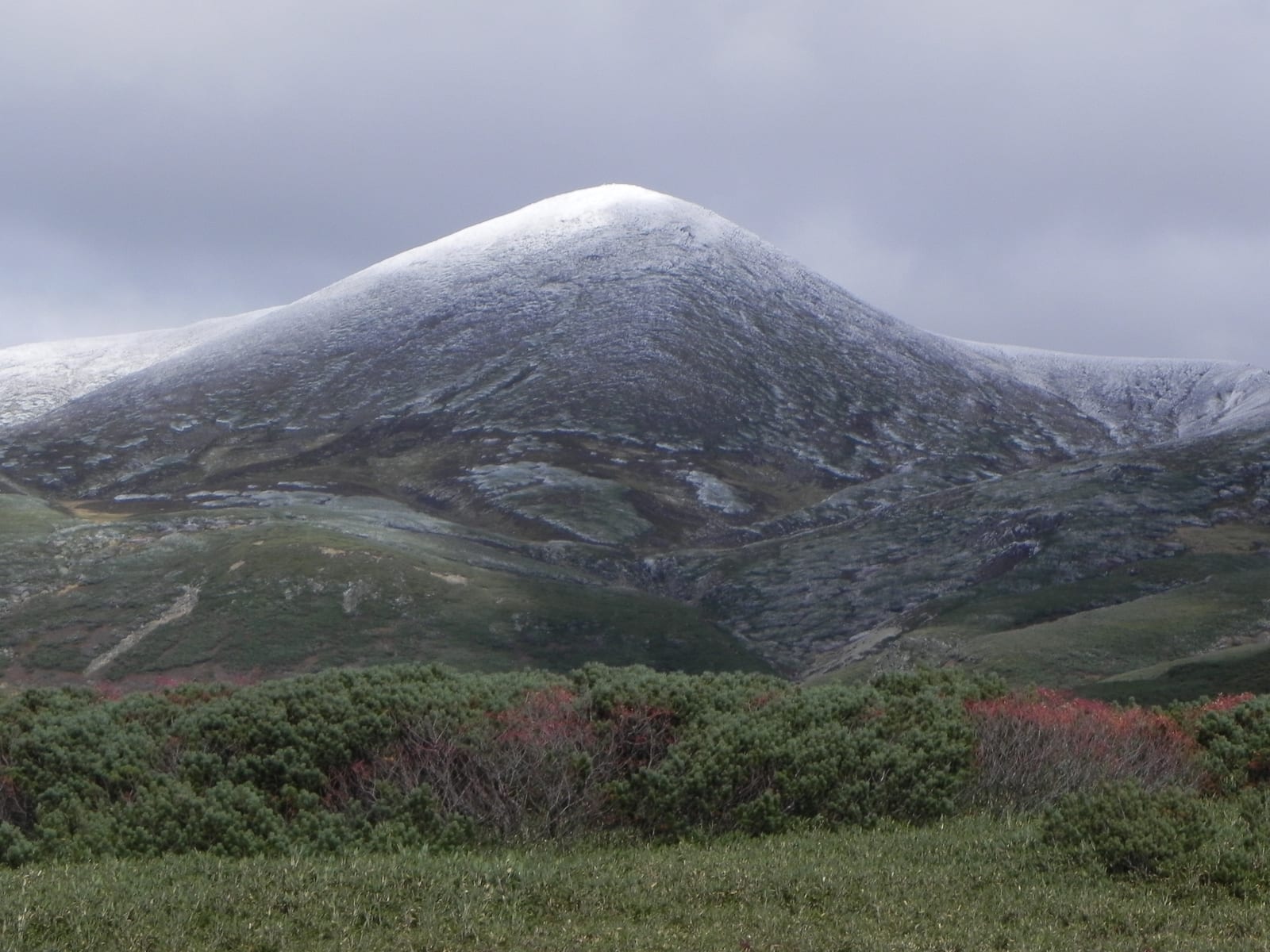
Each season shows a different side of these mountains, from Japan's last cherry blossoms in June to its first autumn leaves in late August and deep powder snow in winter.
Spring (April to June): snowmelt and first flowers
In April the snow begins to melt in the lowlands and spring reaches Daisetsuzan. Snow still lingers on the high ground, but the green creeps steadily upward as the landscape turns from winter to spring.
Around mid-June, the Kuril cherry (チシマザクラ), known as the last cherry blossom to bloom in Japan, flowers around the Asahidake car park and adds a delicate touch of colour to the mountainside. This is also when the alpine plants begin to sprout, ahead of the summer flowering season.
Summer (July to August): a paradise of alpine flowers
July and August are Daisetsuzan's liveliest months. The weather is settled, which makes this the ideal time for hiking under clear blue skies.
At Susoaidaira (裾合平) on Asahidake, great drifts of chinguruma (チングルマ, Aleutian avens) cover the ground, their white petals wrapped around yellow centres, a sight that enchants hikers. In all, around 250 species of alpine plants bloom here, including yellow rhododendron (キバナシャクナゲ) and Aleutian mountain heath (エゾノツガザクラ). It is a scene that truly lives up to the name "playground of the gods".
Autumn (late August to October): Japan's earliest autumn leaves
Daisetsuzan is known as the place where the autumn colours start earliest in Japan. The leaves usually begin to turn near the summits in late August, and the colour works its way down to the foothills by around late September.
Akadake Ginsendai (赤岳銀泉台) is especially famous as the first autumn foliage spot in Japan, where slopes of red, yellow and green create a breathtaking tapestry. On Kurodake, you can look down on the carpet of autumn leaves from the gondola of the ropeway, a truly spectacular view.
Winter (November to March): a silver world and winter sports
From November, Daisetsuzan lies under deep snow and becomes a magical silver world. The bitter cold produces powder snow that offers superb conditions for skiers and snowboarders, and the ski areas on Asahidake and Kurodake draw people in search of top-quality snow.
In Sounkyo, the Sounkyo Ice Waterfall Festival (層雲峡氷瀑まつり) opens every year from late January, with giant ice sculptures built in the depths of winter, illuminations and fireworks. With luck, you may also witness natural wonders such as diamond dust and sun pillars.
3. Recommended courses for every level
Daisetsuzan has well-maintained courses for everyone from beginners to experienced hikers. Choose one that suits your fitness, experience and the time you have.
Asahidake and the Sugatami Pond loop (beginners)
This is the easiest way to experience the grandeur of Asahidake, Hokkaido's highest peak. Ride the Asahidake Ropeway up to Sugatami Station, then follow an alpine walking loop of about 1 hour 30 minutes.
On calm, windless days, Sugatami Pond (姿見の池) mirrors an upside-down reflection of Asahidake. Chinguruma and other alpine flowers bloom around the pond, and you may meet wildlife such as the Ezo chipmunk (エゾシマリス).
You do not need full mountaineering gear: comfortable walking shoes and warm clothing are enough. The Asahidake Visitor Center has information on Asahidake and the surrounding nature, and it is a good place to check conditions before you head up.
- Time needed: about 10 minutes on the ropeway (one way), plus about 1 hour 30 minutes for the pond loop
- Access: Asahidake Ropeway, from the base station to Sugatami Station
- Fare: Daisetsuzan Asahidake Ropeway return ticket, 3,500 yen for adults and 1,750 yen for children (peak season, 1 June to 20 October)
- Parking: Asahidake Ropeway car park, 150 standard cars, 500 yen per visit (June to October)
Kurodake trek (intermediate)
From Sounkyo Onsen, the Daisetsuzan Sounkyo Kurodake Ropeway and a chairlift take you up to the seventh station of Kurodake. From there it is about 1.7 km to the summit, a trek of about 1 hour 30 minutes each way.
From mid-June to August the slopes fill with alpine flowers, and in autumn you can admire Japan's earliest autumn colours from the ropeway gondola. From the summit, the whole Daisetsuzan range spreads out in a magnificent panorama.
- Time needed: ropeway about 7 minutes and chairlift about 15 minutes (each one way), plus about 1 hour 30 minutes from the seventh station to the summit (one way)
- Access: from Sounkyo Onsen village to the base station of the Daisetsuzan Sounkyo Kurodake Ropeway
- Fares: ropeway return 3,000 yen for adults and 1,500 yen for elementary school children; chairlift return 1,200 yen for adults and 600 yen for elementary school children; ropeway and chairlift set ticket (summer only) 3,900 yen for adults and 1,950 yen for elementary school children
- Parking: Daisetsuzan Sounkyo Kurodake Ropeway car park, about 60 spaces, free
Daisetsu Kogen Onsen pond trail (intermediate)
Starting from Daisetsu Kogen Onsen, this trek loops past as many as 80 ponds, large and small. In the autumn foliage season, the reflections of the coloured leaves in the water are famously beautiful. This is brown bear country, so before you set off you must attend a briefing at the Brown Bear Information Center (ヒグマ情報センター) and carry the right equipment.
- Time needed: about 6 hours (day course)
- Access: from the Sounkyo multi-storey car park (層雲峡立体駐車場) by shuttle bus or your own car to Daisetsu Kogen Onsen; registration at the Brown Bear Information Center is required
- Fee: free, although a portable toilet or a conservation contribution may be required
Fares and operating periods can change from year to year, so check the latest information before you go.
4. Must-see spots in Daisetsuzan National Park
Asahidake (旭岳)
At 2,291 metres, Asahidake is the highest mountain in Hokkaido and the main peak of the Daisetsuzan range, and its commanding presence overwhelms first-time visitors. By mid-September its slopes are already in autumn colour, among the earliest anywhere in Japan, and the mountain is busy with visitors.
- Location: Asahidake Onsen, Higashikawa Town, Kamikawa District, Hokkaido
Sugatami Pond (姿見の池)
A walking course that circles the crater ponds near Sugatami Station on the Asahidake Ropeway. It includes Kagami-ike (鏡池) and Meoto-ike (夫婦池), and on still days Asahidake is beautifully reflected in the water. The area is also a treasure house of alpine plants, with large colonies of chinguruma.
- Location: around Sugatami Station, Asahidake Ropeway
Sounkyo Gorge (層雲峡)
A great gorge on the upper Ishikari River that stretches for about 24 kilometres. Its sheer cliffs of columnar-jointed rock, formed by eruptions tens of thousands of years ago, are an overwhelming sight.
- Location: Sounkyo, Kamikawa Town, Kamikawa District, Hokkaido
Ryusei and Ginga Falls (流星の滝・銀河の滝)
Sounkyo's two most famous waterfalls are both on the list of Japan's 100 best waterfalls. Ryusei Falls drops 90 metres in a single powerful stream, while Ginga Falls tumbles 120 metres in fine white threads. From the Sobakudai viewpoint (双瀑台) you can see both falls at once.
- Location: Sounkyo, Kamikawa Town, Kamikawa District, Hokkaido
Kurodake (黒岳)
At 1,984 metres, Kurodake is one of the peaks of the Daisetsuzan range, and the ropeway and chairlift from Sounkyo Onsen make it easy to reach. The views from the fifth and seventh stations are superb, and it is well known for its alpine flowers and autumn leaves.
- Location: Sounkyo, Kamikawa Town, Kamikawa District, Hokkaido
5. Activities and hot springs
Hiking and mountaineering
Daisetsuzan has about 300 km of hiking trails, from easy walking paths for beginners to serious climbing routes for experienced mountaineers.
- Asahidake Trail: a route to the summit of Asahidake, Hokkaido's highest peak. It suits intermediate to advanced hikers and is about 10 km and 5 to 6 hours for the round trip. On the way you pass traces of volcanic activity and steaming fumaroles, with superb views of the surrounding mountains.
- Kurodake Trail: a route from Sounkyo to the summit of Kurodake for intermediate hikers. The ropeway and chairlift make it approachable even if you are not confident of your fitness (see the Kurodake trek above).
- Akadake loop from Akadake Ginsendai: a route through beautiful alpine meadows to the summit of Akadake (赤岳). It suits intermediate hikers and is about 14 km and 7 to 8 hours for the round trip. The autumn leaves and summer flowers are especially fine.
- Mount Tomuraushi Trail (トムラウシ山): one of the most demanding routes in Daisetsuzan and only for experienced mountaineers. Allow about 16 km and 8 to 10 hours for the round trip. The rewards are untouched primeval forest and spectacular scenery.
Skiing and snowboarding
In winter, Daisetsuzan is a mecca for winter sports, with deep, top-quality powder snow. There are ski areas on Asahidake and Kurodake, and backcountry skiing is popular too.
Hot springs
The hot springs are one of the great pleasures of Daisetsuzan, and a soak after a day on the mountain is a real luxury.
- Asahidake Onsen: a hot-spring village at the foot of Asahidake with a history going back to the Taisho era. Its soft, colourless, clear water is rich in metasilicic acid, which is said to help keep skin moisturised, and it is known as a "beauty bath". Resort hotels and lodges are scattered around, and the setting is peaceful and relaxing.
- Location: Asahidake Onsen, Higashikawa Town, Kamikawa District, Hokkaido
- Sounkyo Onsen: the largest hot-spring resort in the Daisetsuzan mountains, visited by around 3 million people a year. Modern hotels line the gorge beneath its towering cliffs of columnar-jointed rock, and the food makes the most of the local mountains and rivers. The water is a simple hydrogen sulfide spring, traditionally said to ease neuralgia and rheumatism.
- Location: Sounkyo, Kamikawa Town, Kamikawa District, Hokkaido
- Daisetsu Kogen Onsen: a remote hot spring high up at 1,350 metres, known for its milky-white water and its setting in a forest of Ezo spruce. The pond trail nearby is a famous autumn foliage spot.
- Location: Daisetsu Kogen Onsen, Sounkyo, Kamikawa Town, Kamikawa District, Hokkaido
6. Getting there and getting around
Most trips into Daisetsuzan start from one of its two main bases: Asahidake Onsen (Higashikawa Town), for the Asahidake Ropeway and the Sugatami Pond loop, or Sounkyo Onsen (Kamikawa Town), for the Kurodake Ropeway, Sounkyo Gorge and the waterfalls. Daisetsu Kogen Onsen and its pond trail are reached from Sounkyo.
- Arriving in Hokkaido: A common route for international visitors is to fly into New Chitose Airport and continue by JR train or bus to Asahikawa or Kamikawa.
- Reaching the bases: From there, getting to the hot-spring villages and trailheads, and between the different sights, means taking a bus or driving. Some services run only in certain seasons, so check timetables and connections before you set off.
- Parking: Asahidake Ropeway car park (150 standard cars, 500 yen per visit from June to October) and the Kurodake Ropeway car park at Sounkyo (about 60 spaces, free). For Daisetsu Kogen Onsen, start from the Sounkyo multi-storey car park.
- Winter roads: Mountain roads can be closed in winter or in bad weather. The Hokkaido Regional Development Bureau (北海道開発局) publishes road information, so check it before you leave.
A car gives you the most freedom to link Asahidake, Sounkyo and the quieter corners of the park at your own pace. If you are driving in the snow season, read our guide to renting a car in Hokkaido in winter first.
✨ Want to explore Daisetsuzan on your own schedule? Rent a car with OlaChill and stop wherever the mountains call you.
7. Practical tips
- 🐻 Respect bear country: Brown bears live in the park. For the Daisetsu Kogen Onsen pond trail, the briefing at the Brown Bear Information Center is compulsory, and on any trail you should carry appropriate equipment.
- 🚻 Carry a portable toilet: The park actively promotes portable toilets to protect the fragile alpine environment, and some trails may require one.
- 🧥 Dress for the mountains: These peaks have an alpine climate comparable to much higher mountains on Honshu. Even on the easy Sugatami Pond loop, bring warm clothing along with good walking shoes.
- ℹ️ Check conditions first: Stop at the Asahidake Visitor Center for trail and nature information before you head up.
- 💴 Carry some cash: In the mountains, not every shop or transport service accepts credit cards or electronic payment, so keep some Japanese yen on hand.
- ⛽ Fill up and save offline maps: If you are driving, start with a full tank and download offline maps, as signal can be weak in the mountains.
Vast, wild and still largely untouched, Daisetsuzan rewards every kind of traveller, from a gentle ropeway ride and pond walk on Asahidake to a long day on the high ridges. Pick your season, check the conditions and the bear information, and give yourself time to soak in an onsen afterwards. If you are exploring more of central Hokkaido, the famous Blue Pond in Biei makes a beautiful addition to your trip.
More from this region — Hokkaido
View all →
Furano's Lavender Fields – Hokkaido's Most Breathtaking Purple Landscape
5 min · seasonal
Japan's Summer Fireflies – Magical Nights of Dancing Green Light
7 min · destinations
Hokkaido Travel Guide: Land of Lavender, White Snow, and Fresh Seafood
9 min · destinations
Hokkaido for Your First Real Winter
20 min · destinations