
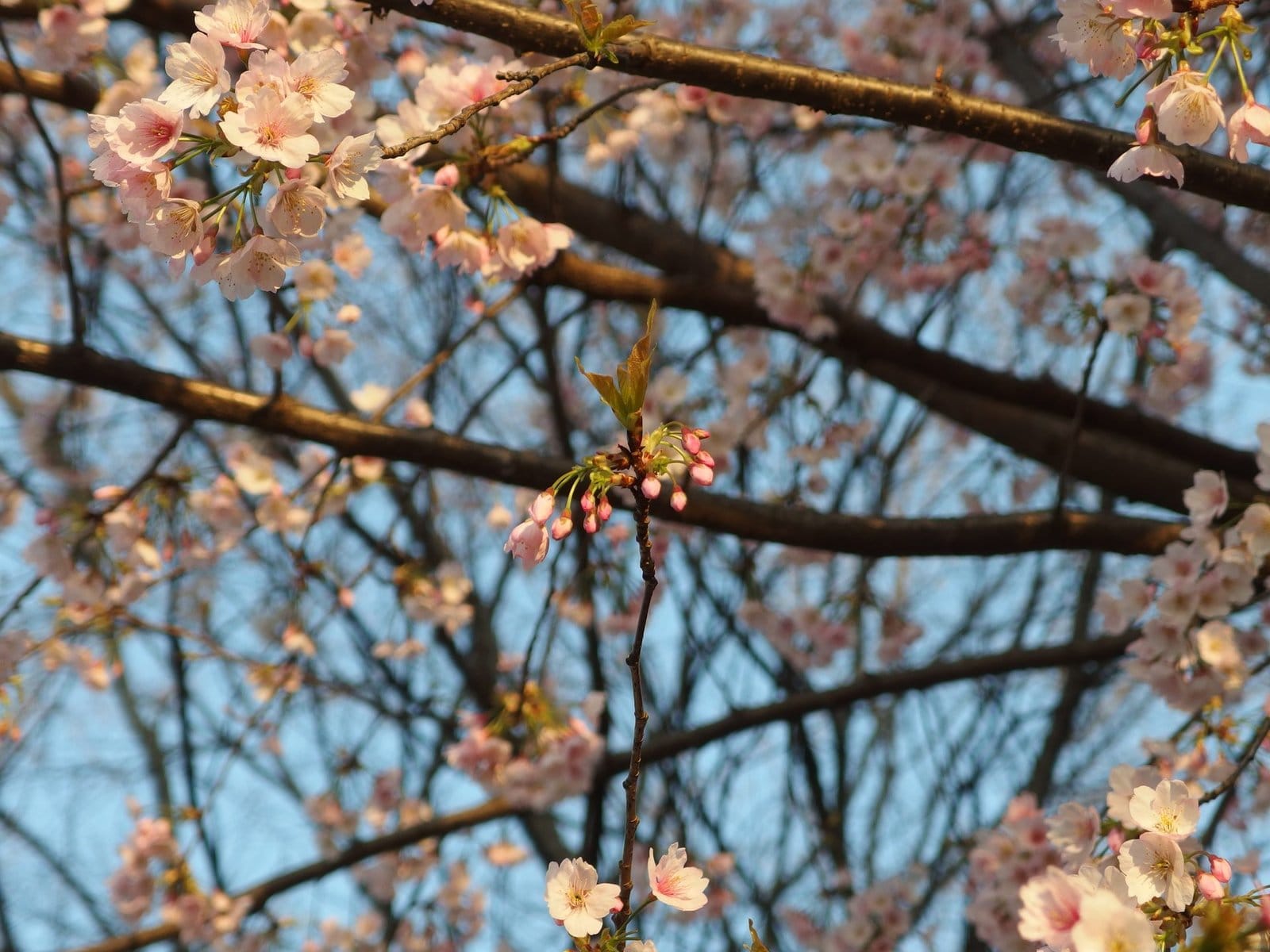
Cherry Blossom Forecast Calendar
This guide provides a detailed 2026 cherry blossom forecast for major regions across Japan, including Tokyo, Kyoto, Osaka, and Hokkaido. Discover the blooming periods for each area, specific information on must-visit scenic *hanami* spots, and tips to maximize your enjoyment of Japan's iconic spring flowers.
Jan 10, 2026·✍️ olablog·⏱ 16 min read
This guide provides a detailed 2026 cherry blossom forecast for major regions across Japan, including Tokyo, Kyoto, Osaka, and Hokkaido. Discover the blooming periods for each area, specific information on must-visit scenic *hanami* spots, and tips to maximize your enjoyment of Japan's iconic spring flowers.
Tap a region to browse articles
Cherry blossoms, symbolizing Japanese spring, captivate countless people every year. The cherry blossom front (桜前線), moving from south to north as the snow melts, truly allows you to feel the beautiful transition of seasons in Japan. In this article, we will provide a detailed (tentative) 2026 cherry blossom forecast, specific information on carefully selected hanami (お花見 - cherry blossom viewing) spots across Japan, and tips to maximize your enjoyment of the cherry blossoms.
2026 Cherry Blossom Forecast: Japan's Cherry Blossom Front (Tentative)
While cherry blossom blooming times vary depending on the year's weather conditions, we can predict the movement of the 2026 cherry blossom front based on annual trends. Japan's cherry blossoms begin in Okinawa (沖縄), move north through Kyushu and Honshu, and finally reach Hokkaido. If you are planning a longer trip, taking the blooming periods of several regions into account lets you enjoy the beauty of the cherry blossoms for longer.
The forecast has not been finalized at the time of writing, so the table below summarizes the typical blooming periods based on past data. For the latest information, check the announcements from the Japan Meteorological Agency and weather forecasting companies.
| Region | First bloom (average year) | Full bloom (average year) | Petals start to fall (average year) |
|---|---|---|---|
| Okinawa | Late January | Early February | Mid-February |
| Kyushu (Fukuoka) | Mid-March | Late March | Early April |
| Shikoku (Kochi) | Mid-March | Late March | Early April |
| Chugoku (Hiroshima) | Late March | Early April | Early April |
| Kansai (Osaka) | Late March | Early April | Mid-April |
| Tokai (Nagoya) | Late March | Early April | Mid-April |
| Kanto (Tokyo) | Late March | Early April | Mid-April |
| Koshinetsu (Nagano) | Early April | Mid-April | Late April |
| Hokuriku (Kanazawa) | Early April | Mid-April | Late April |
| Tohoku (Sendai) | Early April | Mid-April | Late April |
| Tohoku (Hirosaki) | Late April | Early May | Early May |
| Hokkaido (Sapporo) | Late April | Early May | Mid-May |
As a rule of thumb, it takes about a week from first bloom to full bloom, and about another week from full bloom until the petals start to fall. To avoid missing the best viewing period, we recommend leaving some flexibility in your travel plans.
Tokyo's Cherry Blossom Spots: Spring Arrives in the City
Japan's capital, Tokyo, is dotted with hanami spots of many kinds, from modern scenery where skyscrapers and cherry blossoms meet to the refined blossoms of historic gardens.
Shinjuku Gyoen
The spacious Shinjuku Gyoen is planted with more than 1,000 cherry trees of about 65 varieties, including Somei Yoshino, Yamazakura, Shidarezakura and Kanzakura, so you can enjoy different cherry blossoms over a long period. Its gardens combine three different styles (a French formal garden, an English landscape garden and a Japanese garden) and form an oasis where you can forget the bustle of the city.
- Address: 11 Naito-machi, Shinjuku-ku, Tokyo
- Access:
- About 10 minutes on foot from Shinjuku Station (JR, Keio Line, Odakyu Line)
- About 5 minutes on foot from Shinjuku-gyoemmae Station (Tokyo Metro Marunouchi Line)
- About 5 minutes on foot from Shinjuku-sanchome Station (Toei Shinjuku Line)
- Admission: General 500 yen, high school students 250 yen, elementary and junior high school students free
- Hours: 9:00–16:00 (the garden closes at 16:30)
- Closed: Mondays (if Monday is a public holiday, the garden opens and closes the following weekday instead), and the New Year period (December 29 to January 3)
- During special opening periods (such as cherry blossom season), the garden may open every day.
- Highlights: You can have a picnic on the wide lawns or admire cherry blossoms reflected in the pond of the Japanese garden. With so many varieties, from early-blooming to late-blooming trees, it is also worth visiting at different times.
Ueno Onshi Park
Right outside JR Ueno Station, Ueno Onshi Park has been known as a cherry blossom spot since the Edo period. About 800 cherry trees color the park, and "Sakura-dori" in the center of the park in particular becomes a tunnel of cherry blossoms at full bloom, crowded with hanami visitors. The park also has many museums and galleries, so you can enjoy culture and cherry blossoms at the same time.
- Address: Ueno Park, Taito-ku, Tokyo
- Access:
- Right by the Park Exit of JR Ueno Station
- About 2 minutes on foot from Ueno Station (Tokyo Metro Ginza Line and Hibiya Line)
- About 1 minute on foot from Keisei Ueno Station (Keisei Electric Railway)
- Admission: Free (separate fees for facilities in the park)
- Hours: 5:00–23:00 (the park itself is open 24 hours)
- Highlights: The lively hanami parties under the rows of cherry trees are the perfect way to experience Japan's hanami culture. You can also enjoy cherry blossoms around Shinobazu Pond, and even view them from the water on a rowing boat.
Chidorigafuchi Greenway
Running along the moat of the Imperial Palace, the Chidorigafuchi Greenway is one of the most romantic cherry blossom spots in Tokyo, with about 260 cherry trees, mainly Somei Yoshino. The tunnel of blossoms seen from a boat on the moat is especially memorable, and the petals scattered on the water add to the atmosphere.
- Address: 1-chome Kojimachi to 2-chome Kudan-minami, Chiyoda-ku, Tokyo
- Access:
- About 5 minutes on foot from Hanzomon Station (Tokyo Metro Hanzomon Line)
- About 5 minutes on foot from Kudanshita Station (Tokyo Metro Tozai Line and Hanzomon Line, Toei Shinjuku Line)
- Admission: Free. Boat rental is charged separately (e.g., 800 yen for 30 minutes, with extensions available)
- Hours: Open 24 hours. The boat pier is usually open 10:00–17:30 (varies by season, with extended hours during cherry blossom season)
- Highlights: Looking up at the blossoms from a boat feels a world away from central Tokyo. The trees are also illuminated at night, so you can enjoy a dreamlike evening view.
Cherry Blossoms in the Old Capitals: Kyoto and Osaka
Historic Kyoto and lively Osaka each show a different side of the cherry blossoms. The contrast between historic buildings and cherry blossoms never fails to captivate visitors.
Maruyama Park
Located in Kyoto's Higashiyama district, Maruyama Park is one of the oldest parks in Kyoto and is designated a national Place of Scenic Beauty. The huge weeping cherry tree in the center of the park, affectionately known as the "Gion Night Cherry", is said to be over 200 years old, and it takes on a magical look when it is lit up at night.
- Address: Maruyama-cho, Higashiyama-ku, Kyoto
- Access:
- About 10 minutes on foot from Gion-Shijo Station (Keihan Main Line)
- About 15 minutes on foot from Kyoto-Kawaramachi Station (Hankyu Kyoto Line)
- About 3 minutes on foot from the "Gion" city bus stop
- Admission: Free
- Hours: Open 24 hours. The illumination runs from sunset to around 22:00 (held to coincide with the cherry blossom season)
- Highlights: During the day the park is packed with hanami visitors, and food stalls line up during the night-cherry season. The illuminated weeping cherry tree is breathtakingly beautiful.
Philosopher's Path
Running about 2 km along the Lake Biwa Canal from Ginkaku-ji to Kumano Nyakuoji Shrine, the Philosopher's Path turns into a magnificent tunnel of cherry blossoms in season. It is said to be named after the Japanese philosopher Kitaro Nishida, who walked this path deep in thought, and it is recommended for anyone who wants to enjoy the blossoms quietly in a charming setting.
- Address: Jodoji Ishibashi-cho to Nyakuoji-cho, Sakyo-ku, Kyoto
- Access:
- From Demachiyanagi Station (Keihan Main Line), take a city bus to "Ginkakuji-michi", then walk about 10 minutes
- From JR Kyoto Station, take a city bus to "Ginkakuji-michi", then walk about 10 minutes
- Admission: Free to walk
- Hours: Open 24 hours
- Highlights: You can stroll slowly through the tunnel of cherry blossoms while listening to the murmur of the canal. When the petals start to fall, you may even see hanaikada ("flower rafts") of petals floating on the water, a truly atmospheric sight.
Osaka Castle Park
In the heart of Osaka, Osaka Castle Park is the city's signature hanami spot, with about 3,000 cherry trees in bloom against the backdrop of Osaka Castle's main keep. The Nishinomaru Garden in particular is planted with about 300 cherry trees, mainly Somei Yoshino, and is illuminated at night. The contrast between the historic castle and the cherry blossoms creates a spectacular view.
- Address: Osakajo, Chuo-ku, Osaka
- Access:
- Right by Osakajokoen Station (JR Osaka Loop Line)
- Right by Morinomiya Station (JR Osaka Loop Line)
- About 15 minutes on foot from Temmabashi Station (Osaka Metro Tanimachi Line)
- Admission: The park is free. Nishinomaru Garden is usually 200 yen (a special paid period applies during cherry blossom season, and prices may change). Osaka Castle Main Tower is 600 yen for adults.
- Hours: The park is open 24 hours. Nishinomaru Garden is open 9:00–17:00 (it may open at night during cherry blossom season). Osaka Castle Main Tower is open 9:00–17:00 (last entry 16:30).
- Highlights: Photos of cherry blossoms with the castle keep behind them are something only Osaka can offer. The illuminated night cherry blossoms of Nishinomaru Garden have a magical beauty.
Cherry Blossoms in Tohoku and Hokuriku: The Beauty of Late Bloomers
In the northern part of Honshu, the Tohoku and Hokuriku regions, the cherry blossoms peak later than in Kanto and Kansai. Having come through a harsh winter, these blossoms feel all the more beautiful.
Hirosaki Park
In Hirosaki, Aomori Prefecture, Hirosaki Park has about 2,600 cherry trees planted within the grounds of Hirosaki Castle and is counted among Japan's three great cherry blossom spots. Highlights include the contrast between the castle keep and the blossoms, the hanaikada petals that cover the moat, and tunnels of cherry blossoms. The trees here are known for a unique pruning technique that lets a single branch bear a large number of flowers.
- Address: 1 Shimoshirogane-cho, Hirosaki, Aomori
- Access:
- From JR Hirosaki Station, take a bus to "Shiyakusho-mae", then walk about 4 minutes
- About 30 minutes on foot from JR Hirosaki Station
- Admission: The park is free. The Hirosaki Castle Honmaru and Kita-no-Kuruwa area and the botanical garden cost 320 yen for adults and 100 yen for children.
- Hours: Honmaru and Kita-no-Kuruwa are open 9:00–17:00 (7:00–21:00 during the cherry blossom festival).
- Highlights: During the Hirosaki Cherry Blossom Festival, held to coincide with the blooming season, you can enjoy night illuminations and food stalls. The hanaikada of fallen petals covering the moat is a breathtaking sight.
Kenrokuen and Kanazawa Castle Park
In Kanazawa, Ishikawa Prefecture, Kenrokuen is a stroll-style garden counted among Japan's three great gardens. About 400 cherry trees are planted in the garden, and the blossoms around Kasumigaike Pond are particularly beautiful. About 200 cherry trees also bloom in the neighboring Kanazawa Castle Park, where you can enjoy cherry blossoms framed by stone walls and turrets.
- Address: 1 Kenroku-machi, Kanazawa, Ishikawa (Kenrokuen); 1-1 Marunouchi, Kanazawa, Ishikawa (Kanazawa Castle Park)
- Access:
- From JR Kanazawa Station, take a bus to "Kenrokuen-shita / Kanazawa-jo"; the stop is right there
- Admission:
- Kenrokuen: Adults 320 yen, children 100 yen
- Kanazawa Castle Park: Free (Hishi Yagura, Gojikken Nagaya, Hashizume-mon Tsuzuki Yagura and Hashizume-mon cost 320 yen for adults and 100 yen for children)
- Hours:
- Kenrokuen: 7:00–18:00 (March 1 to October 15), 8:00–17:00 (October 16 to the end of February)
- Kanazawa Castle Park: 7:00–18:00 (March 1 to October 31), 8:00–17:00 (November 1 to the end of February)
- During cherry blossom season, free admission days and illuminations are sometimes held.
- Highlights: The harmony between Kenrokuen's pond-and-stroll garden and the cherry blossoms is Japanese beauty at its finest. The combination of Kanazawa Castle's historic buildings and cherry blossoms is also a must-see.
Cherry Blossom Spots in Other Regions: Distinctive Scenery Across Japan
Japan has countless cherry blossom spots with their own regional character. From whole mountains covered in blossoms to old castles framed by cherry trees, enjoy the scenery that only each place can offer.
Mount Yoshino
In Yoshino, Nara Prefecture, Mount Yoshino is one of Japan's finest cherry blossom spots, with about 30,000 cherry trees blooming across the whole mountain, so many that it is described as "a thousand trees at a glance" (hitome senbon). The blooming period differs by altitude across the Shimo Senbon, Naka Senbon, Kami Senbon and Oku Senbon areas, so you can enjoy the cherry blossoms over a long period. It is also part of the World Heritage Site "Sacred Sites and Pilgrimage Routes in the Kii Mountain Range".
- Address: Yoshinoyama, Yoshino-cho, Yoshino-gun, Nara
- Access:
- From Yoshino Station (Kintetsu Yoshino Line), take the ropeway or a bus
- Admission: Free to walk (some facilities charge separately). The ropeway costs 450 yen one-way and 800 yen round trip for adults.
- Hours: Open 24 hours (ropeway and bus operating hours vary by season)
- Highlights: The carpet of cherry blossoms seen from the observation decks is simply overwhelming. As you climb the mountain, you can enjoy cherry blossoms with different expressions.
Matsumoto Castle
In Matsumoto, Nagano Prefecture, Matsumoto Castle is known for the beautiful contrast between its jet-black main keep, designated a National Treasure, and the cherry blossoms around it. The reflection of the blossoms and the keep in the moat in particular captivates visitors. The castle is also lit up at night, offering a dreamlike atmosphere different from the daytime.
- Address: 4-1 Marunouchi, Matsumoto, Nagano
- Access:
- About 15 minutes on foot from JR Matsumoto Station
- Admission: A combined ticket for Matsumoto Castle Main Keep and Matsumoto City Museum costs 700 yen for adults and 300 yen for elementary and junior high school students.
- Hours: 8:30–17:00 (last entry 16:30)
- Opening hours are sometimes extended during cherry blossom season.
- Highlights: The contrast between the black keep and the pale cherry blossoms is striking and perfect for photos. Walking along the moat, you can enjoy the castle and the cherry blossoms from many angles.
Goryokaku Park
In Hakodate, Hokkaido, Goryokaku Park is a Special Historic Site known for its star-shaped fortress. About 1,500 Somei Yoshino cherry trees line the star-shaped moat, and the view of the blossoms from Goryokaku Tower is spectacular. Cherry blossoms in Hokkaido bloom later than on Honshu and often peak around Golden Week.
- Address: 44 Goryokaku-cho, Hakodate, Hokkaido
- Access:
- From JR Hakodate Station, take the Hakodate City Tram to "Goryokaku-koen-mae", then walk about 15 minutes
- From JR Hakodate Station, take a bus to "Goryokaku-koen Iriguchi", then walk about 10 minutes
- Admission: The park is free. Goryokaku Tower costs 1,000 yen for adults, 750 yen for junior high and high school students, and 500 yen for elementary school students.
- Hours: The park is open 24 hours. Goryokaku Tower is usually open 9:00–18:00 (varies by season).
- Highlights: From Goryokaku Tower you can take in the spectacular star-shaped spread of cherry blossoms. Strolling through the park or viewing the blossoms from a boat on the moat is also recommended.
Tips for Making the Most of the Cherry Blossoms: Experience Hanami Culture
Cherry blossom viewing is not just about looking at the flowers; it is a wonderful opportunity to experience Japan's rich hanami culture.
Visit Early in the Morning for a Quiet View
Popular hanami spots get very crowded during the day. If you want to enjoy the beauty of the cherry blossoms in peace, visit early in the morning. Before 7 a.m., when there are still few people around, the blossoms lit by the morning sun are especially beautiful, and you can take your time in the fresh air. This is particularly recommended if you want to avoid the crowds and enjoy a calm moment.
Yozakura: Illuminated Cherry Blossoms at Night
Many cherry blossom spots hold night illuminations during the blooming season. Lit by the warm glow of lanterns or carefully designed lighting, the blossoms take on a dreamlike look completely different from the daytime. At Ueno Onshi Park, Maruyama Park and Hirosaki Park, for example, many people come during the night-cherry season to enjoy this mysterious beauty. Illuminations generally run from sunset until around 21:00 or 22:00, but times vary by location, so check in advance.
Share a Hanami Bento and Experience Japanese Culture
The classic Japanese hanami is a "hanami party", enjoying food and drinks under the cherry trees. Convenience stores and supermarkets sell seasonal "hanami bento" and cherry-themed sweets at this time of year. Spreading out a picnic sheet and eating with friends or family while gazing at the blossoms is a quintessential spring tradition in Japan and makes for a memorable experience. However, some places restrict eating and drinking or require you to take your rubbish home, so please follow the rules.
Check the Latest Bloom Status on Apps and Websites
Cherry blossom conditions change daily with the weather, so getting the latest information is very important when planning your trip. Use the cherry blossom forecast websites run by weather information companies and smartphone apps that show real-time bloom status. Sites such as "Weathernews" and "tenki.jp" by the Japan Weather Association, for example, let you check detailed forecasts for first bloom and full bloom, as well as current conditions, by prefecture.
Chase the Cherry Blossom Front by Rental Car
Instead of staying in one area, you can also travel along with the cherry blossom front and visit several famous spots. Especially in regions where the blossoms advance over a wide area, such as Tohoku and Hokkaido, a rental car lets you enjoy cherry blossoms in different places efficiently. In Tohoku, for example, you can follow the front north, starting with the Miharu Takizakura in Fukushima Prefecture, continuing to the Shiroishi River Embankment Hitome Senbon Zakura in Miyagi Prefecture, and ending at Hirosaki Park in Aomori Prefecture.
Summary
This season, too, beautiful cherry blossoms will bloom all across Japan. Use the forecast and the spot information in this article to plan your own ideal hanami. Admire the blossoms quietly in an urban oasis, enjoy the meeting of cherry blossoms and history in the old capitals, or be moved by the grand sight of blossoms covering a whole mountain. We hope you enjoy Japan's symbol of spring to the fullest and create unforgettable memories.
More from this region — Kyoto, Nara & Kansai
View all →
Kyoto Temples with Beautiful Goshuin and a One-Day Stamp Itinerary
7 min · culture
Solo Travel in Japan: The Ultimate Guide from Tokyo to Kyoto
9 min · experiences
Fushimi Inari in Kimono: Torii Tunnels, Crowd-Free Hours and Walking in Zori
6 min · culture
Fushimi Inari at 6 AM — How to Photograph 10,000 Torii Gates With No One in the Shot
3 min · destinations