
Late September in Nagoya: Weather, Packing and Group Comfort Tips
Late September weather in Nagoya for Asian Games groups: 20 to 30 degrees, humidity, typhoon-season rain, what to pack and using a charter bus as a base.
Sep 5, 2026·✍️ olablog·⏱ 7 min read
Late September weather in Nagoya for Asian Games groups: 20 to 30 degrees, humidity, typhoon-season rain, what to pack and using a charter bus as a base.
Tap a region to browse articles
The Asian Games Aichi-Nagoya 2026 run from 19 September to 4 October, with the Asian Para Games following from 18 to 24 October. In Nagoya that means warm, humid weather, roughly 20 to 30 degrees, with typhoon season not yet finished. It is not cold, but it is sticky, it rains hard when it rains, and a group that packs for a European autumn will suffer.
This is a group leader's guide to keeping twenty to fifty people comfortable across two weeks of sessions, queues and day trips. It covers what to pack, how to manage heat and rain on venue days, and why groups moving by charter coach treat the vehicle as a mobile base rather than just transport.
What the weather actually does
Expect daytime highs near the upper end of the 20 to 30 degree range early in the Games, easing towards the lower end into October. Humidity stays high, so the air feels warmer than the thermometer says and clothes dry slowly. Rain comes as short heavy showers or, if a typhoon approaches, as a day or more of wind and rain that can disrupt outdoor sessions and transport.
Evenings are mild. The opening ceremony at Paloma Mizuho Stadium runs 18:00 to 20:00 on 19 September, and you will not need a coat, but you may need a dry layer after an afternoon of queuing in humidity.
Packing list for group members
Send this to everyone before departure.
Clothing
- Light, quick-drying tops; two per day is not excessive in humidity
- One light long-sleeve layer for air-conditioned indoor venues, which can feel cold after the heat outside
- Comfortable walking shoes that tolerate getting wet, plus a second pair
- A compact rain jacket; umbrellas are awkward in crowds and queues
- A hat and sunglasses for outdoor sessions and race-walk or marathon spectating
Health and comfort
- Refillable water bottle
- Small towel or cooling towel; locals carry one for a reason
- Sunscreen
- Blister plasters and any personal medication in hand luggage
- Insect repellent for evenings outdoors
Paperwork and tech
- Printed and phone copies of tickets and Supporter ID details; opening and closing ceremonies involve ID checks for every registered person
- Passport or ID
- Portable battery; hot weather and constant map use drain phones
- A travel eSIM or local data plan, so the group can regroup by message if separated
Hydration and heat on venue days
The biggest comfort failures at outdoor events in this weather are dehydration and sunburn, and both hit hardest during the waits, not the sessions. Ceremony days involve long queues for ID checks. Athletics at Paloma Mizuho Stadium from 23 to 29 September includes daytime sessions in full sun. Build hydration into the group routine: a water stop before boarding the coach, a reminder at drop-off, and a rule that the group leader carries spare water for anyone who runs out.
Check venue rules on what containers can be brought in; policies vary, and the official venue pages will state them.
Rain plans and typhoon days
A typhoon in late September is not unusual, and organisers may change schedules. Your response as a group leader has three parts:
- Information. Check the official schedule the evening before and again in the morning. Do not rely on last week's timetable.
- Indoor alternatives. Nagoya has plenty: museums, the Osu shopping arcade, Sakae and Oasis 21, the aquarium at Nagoya Port. Have two options ready so a cancelled outdoor session does not become a lost day.
- Transport flexibility. Public transport runs in rain but crowds at stations get worse, and heavy wind can disrupt services. A group with a coach has more options for regrouping and rerouting, as long as the hours are agreed with the operator and safety on the day permits.
Never assume a coach can wait outside a venue during a downpour. Waiting and parking depend on the venue and the day, and a drop-off point agreed in advance is worth more than hope.
The coach as a mobile base
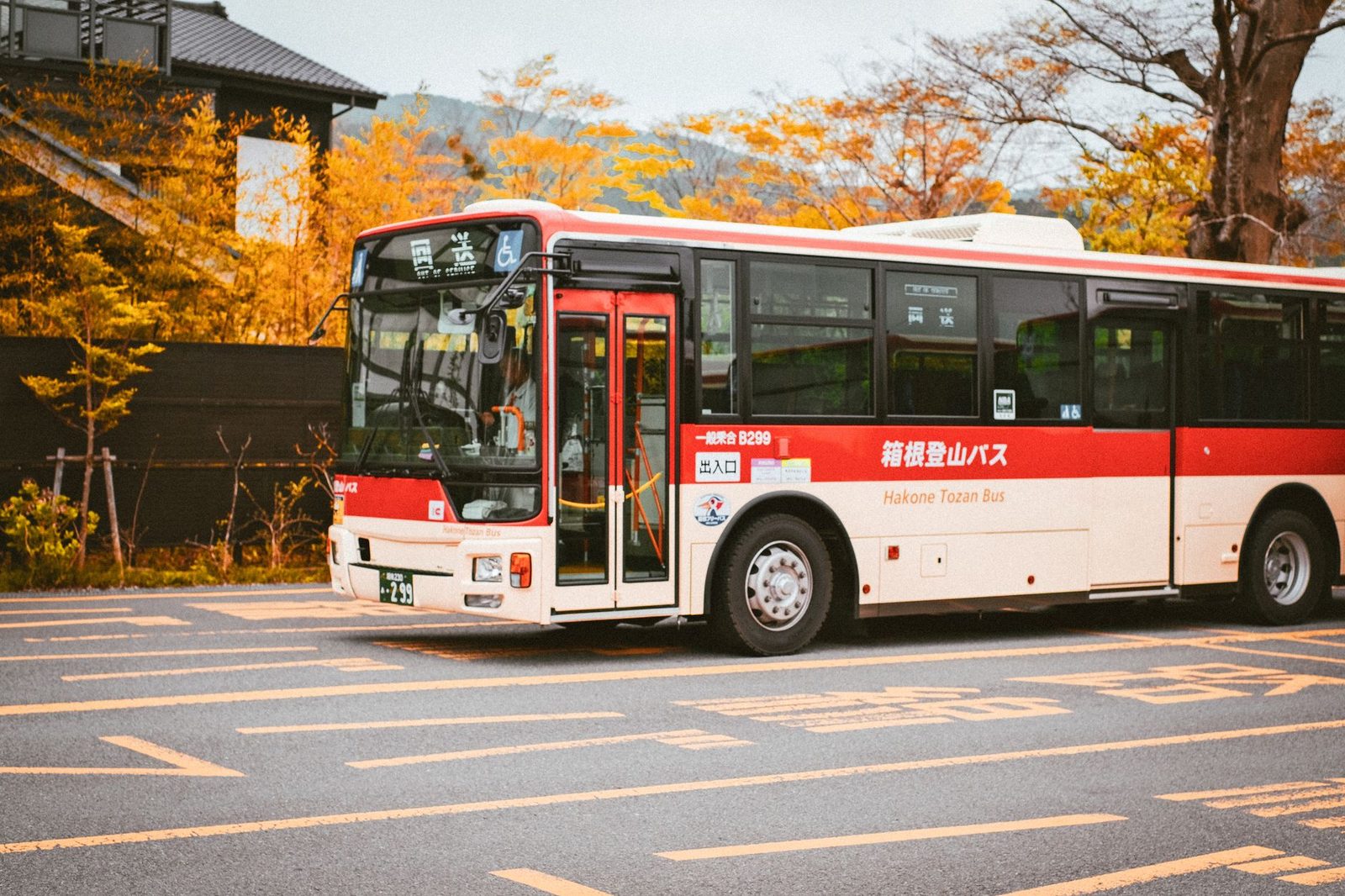
Groups that charter a coach for the Games consistently mention the same benefit: a dry, air-conditioned place that travels with them. In this weather that translates into concrete uses.
| Situation | How the coach helps |
|---|---|
| Sudden heavy shower before a session | Group waits on board rather than in the open |
| Wet clothes after a rainy session | Spare dry layers stored on board |
| Heat between morning and evening sessions | Somewhere cool to sit, drink and rest |
| Flags, drums, banners | Stored on board rather than carried all day |
| Older members or children tiring | A rest stop that does not require a walk to a café |
| Late finish after a final | Direct return without the last-train crush |
The limits are as real as the benefits. Whether the coach can stay near the venue depends on the venue's arrangements, which vary and are never guaranteed. Plan for the coach to drop the group, leave, and collect at an agreed point and time. In between, everything you want from the coach must already be with you.
Vehicle classes OlaChill arranges run from a 7-seat Alphard minivan and 17 to 22-seat minibuses through 26 to 29-seat Coasters to 44 to 53-seat full-size coaches, all with a professional Japanese driver. The right size is the smallest one that seats everyone with room for bags, because a smaller vehicle has more options at tight drop-off points.
Getting between venues in the heat
Many venues are outside central Nagoya: Toyota Stadium and Sky Hall Toyota are roughly 40 to 60 minutes by road, Okazaki 50 to 70 minutes, Ichinomiya 30 to 40 minutes, Gamagori 60 to 80 minutes, all traffic-dependent. A group crossing the prefecture by train in 30-degree humidity with flags and bags arrives tired. The same group in a coach arrives rested and dry, at the cost of the hire. For a full day of moving around, that trade often makes sense; for a single city-centre session, the subway is quicker and cheaper.
Comfort for mixed-age groups
Families and supporter clubs often span children to grandparents. In this weather, the older and younger members set the pace. Shorten walking distances by agreeing drop-off points as close to venues as the venue allows, schedule a sit-down break every two to three hours, and keep the coach hours long enough that nobody is standing in the sun waiting for a pickup that is not due for another hour.
How to book with OlaChill
Send your dates, venues, group size and hotel through the charter quote form at https://olachill.com/en/japan-charter-bus, and we reply within 24 hours with a plan and a quote; pricing depends on hours, distance, tolls, parking and driver costs, so we do not publish fixed figures here. For keeping the group connected between sessions, a travel eSIM is at https://olachill.com/en/japan-travel-esim. For a small family group, the hourly private car at https://olachill.com/en/japan-chauffeur-hourly may suit better than a coach.
FAQ
How hot is Nagoya during the Asian Games?
Roughly 20 to 30 degrees with high humidity, warmer at the start of the Games in September and easing into October. It feels hotter than the number because of the humidity, so plan for sweat, not for cold.
Should we bring umbrellas or rain jackets?
Rain jackets. Umbrellas are difficult in crowds and queues and are often unwelcome in stands. A compact jacket keeps hands free for tickets and bags.
Can the coach wait outside the venue if it rains?
Not reliably. Whether a coach can wait or park depends on the venue and the day, and it is never guaranteed. Agree a drop-off and pickup point in advance and treat waiting on site as a bonus if it happens.
What if a typhoon cancels a session?
Check the official schedule for changes, switch to an indoor alternative in Nagoya, and confirm your coach hours with the operator. Refund or rescheduling of tickets is a matter for the official ticketing site.
What is the one item people forget?
A small towel. Locals carry one throughout summer and early autumn for exactly this weather, and it makes the difference between damp misery and mild inconvenience during long queues.
More from this region — Chubu (Nagano, Kanazawa)
View all →
Nagoya Castle and Atsuta Jingu: Private Car Half-Day Before an Evening Session
7 min · itineraries
Charter Bus for the Asian Games in Nagoya: A Group Leader's Complete Guide
7 min · tips
Nagoya in One Day for a Visiting Group: Castle, Atsuta, Osu and Sakae
7 min · itineraries
Closing Ceremony Night in Nagoya: Coach Pickup Plans That Actually Work
7 min · events