
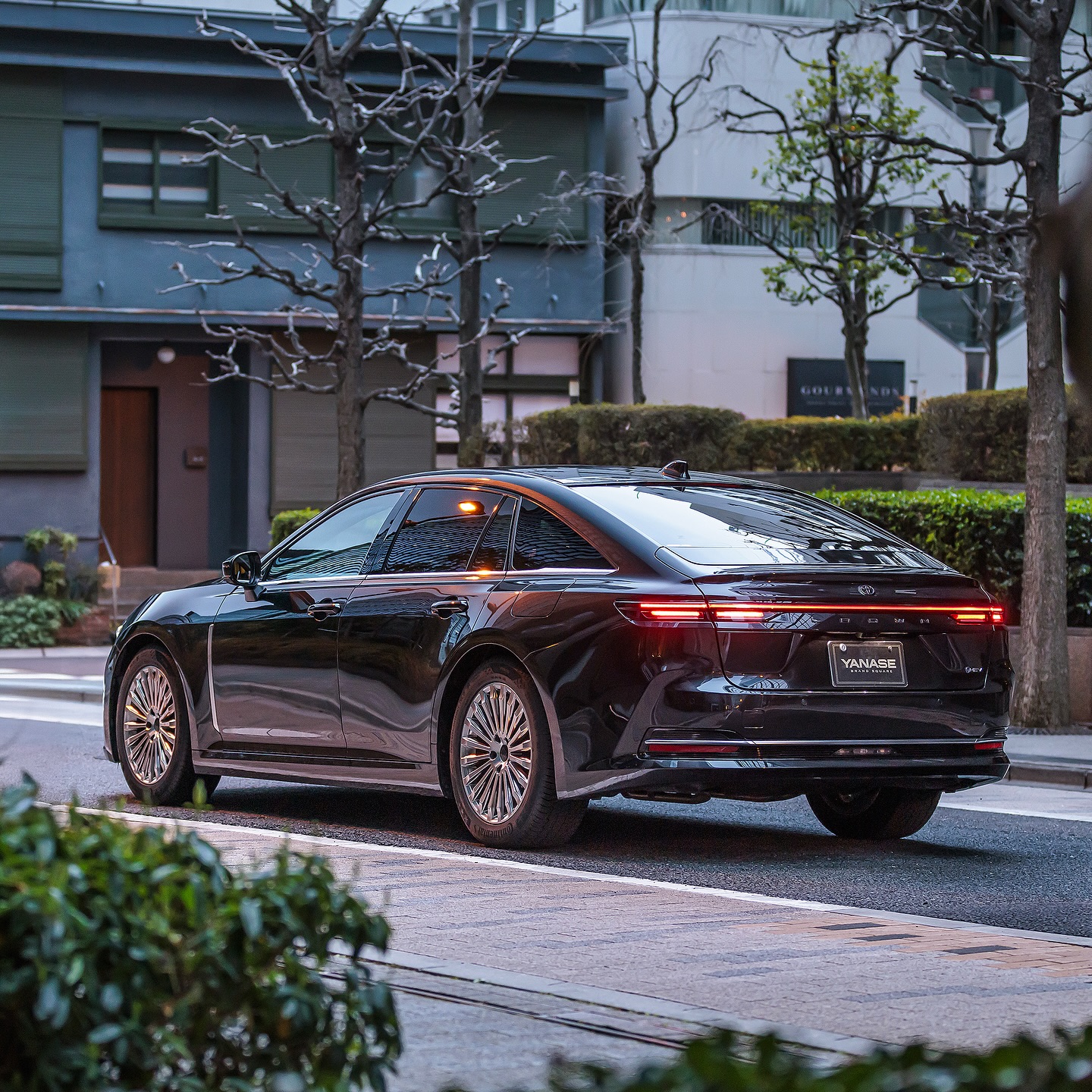
Hourly Chauffeur for Venue Hopping at the Asian Games
Use an hourly chauffeur to hop between Asian Games venues in Nagoya: hourly quotes from 2 hours, waiting time, a sample multi-stop day and when a day hire is simpler.
Sep 5, 2026·✍️ olablog·⏱ 7 min read
Use an hourly chauffeur to hop between Asian Games venues in Nagoya: hourly quotes from 2 hours, waiting time, a sample multi-stop day and when a day hire is simpler.
The Asian Games Aichi-Nagoya 2026 spread 43 sports across more than 50 venues, and the interesting days are the ones where you see two or three of them. Morning judo at IG Arena, afternoon tennis at Higashiyama Park, evening baseball at Vantelin Dome. On trains, that is three separate journeys with three sets of exits to find. With an hourly chauffeur, it is one car, one driver and one itinerary.
Here is how the hourly model works, how to count the hours honestly, and a sample day you can adapt once the official session times are published.
The rules of the hourly block
- Outside Tokyo, hourly hire is quoted on request, with a 2-hour minimum. Online, the car is booked as a day hire: in Aichi the booking form shows the Alphard day price as soon as you pick the date and pickup area, and one day covers up to 10 hours.
- Waiting time counts. While you are inside a venue, the clock runs.
- The published hourly table on https://olachill.com/en/japan-chauffeur-hourly applies to Tokyo's 23 wards, Musashino and Mitaka only; for Nagoya, the hourly price comes in your quote.
- Expressway tolls and any parking the driver pays are added on top.
- Extending on the day depends on the driver's availability and is not guaranteed.
The consequence of the last point: book the hours a realistic day needs, including a buffer for a session that runs long, rather than the tightest possible block.
Counting hours for a three-venue day
The mistake most people make is adding up driving time only. A venue-hopping day is mostly waiting, and waiting is billed. Use this sequence for each stop:
- Driving time to the drop-off point (traffic-dependent).
- The drop-off shuffle: private vehicles cannot stop at the gate, so add the walk in and out.
- The session itself, taken from the official schedule.
- Exit crowd time before you reach the pickup point.
Add all four for every venue, plus the final run to the hotel. That total is your block.
Sample day: three Nagoya venues
Session times below are placeholders. Replace them with the official schedule before booking; venue pages and the ticketing site publish the actual times.
| Block | Stop | Notes |
|---|---|---|
| Morning | Hotel to IG Arena (basketball, judo), beside Nagoya Castle and Meijo Park | Drop-off near the arena, short walk |
| Midday | Meijo Park area or Osu arcade for lunch | Driver repositions; you choose a spot within walking distance or the car moves you |
| Afternoon | Higashiyama Park Tennis Center, Chikusa-ku (tennis 27 Sept–3 Oct) | Cross-town drive; allow generous time |
| Evening | Vantelin Dome Nagoya, Higashi-ku (baseball) | Agree a pickup point away from the Nagoya Dome-mae Yada crowd |
| Night | Dome to hotel | Trains run but are packed; the car is why you booked |
A day like this runs to about 12 hours; send the full timings with your request, because one day covers up to 10 hours, with each extra hour at ¥15,000. If that feels long, drop the middle venue and use the saved hours for a proper meal.
Two venues, one out of town
Not every combination is inside Nagoya. Toyota Stadium (men's football final; tournament 15 September to 3 October) is roughly 40–60 minutes from Nagoya by road. Okazaki, the volleyball city, is 50–70 minutes. Ichinomiya, for badminton, is 30–40 minutes. All traffic-dependent, all with tolls.
A morning session in Nagoya followed by an afternoon in Toyota or Okazaki is doable with a chauffeur because the car carries you across the gap without a rail change. But be honest about the return: evening traffic out of Toyota after a big match is slow, and you will pay for those hours. Choose the out-of-town venue for the afternoon rather than the morning so nobody is stuck in traffic before the first session.
Where the chauffeur cannot help
Access. Organisers ask spectators to use public transport, and shuttle buses, park-and-ride and limited parking exist only at certain venues. A private car needs a pre-arranged drop-off, and even then it is a drop-off, not a bay. Expect to walk the last part at every venue and build that into the hours.
Speed on the simplest legs. Kanayama to the Mizuho area or Nagoya Dome-mae Yada to the Dome are short on the subway. If your day is one venue near a station, the chauffeur is a comfort purchase, not a time saving.
Who benefits most
- Groups of four to six who would otherwise need two taxis at each venue exit.
- Seniors and anyone with limited walking, because the car moves them between venues and the walking is limited to the venue perimeter.
- Mixed-interest groups: two people at judo while the others visit Nagoya Castle next door, all reunited at the same car.
- Photographers and media moving cases between venues, where a minivan and a driver who knows the drop-off points save real time.
- Visitors staying outside the centre in Gifu, Yokkaichi or Toyohashi, where the commute itself is 30–60 minutes and a car turns it into a sit-down.
The Alphard and beyond
The standard vehicle is the 7-seat Alphard minivan (up to six guests: 6 with 2 suitcases, or 4 with 4). If you want something else for the day, the chauffeured luxury fleet at https://olachill.com/en/japan-luxury-car lists saloons and larger vans, booked the same way. For seven or more people, a 17–22-seat minibus, arranged through the charter bus form, is the honest answer rather than two cars.
How to book with OlaChill
Send your dates, the venue list with session times from the official schedule, passenger count, hotel and any lunch or sightseeing stops through the chauffeur booking form, and a reply within 24 hours will confirm the vehicle, the block length and a written itinerary. OlaChill arranges the car and driver; venue access rules are the organisers' and can change.
FAQ
Can I book exactly the hours I need and add more on the day?
An hourly quote starts at 2 hours; online, the car is booked by the day, and one day covers up to 10 hours. Adding time on the day depends on the driver's availability and is charged as extra hours, so it is safer to book generously for days with evening sessions.
Does the driver wait outside the venue during a session?
The driver waits at a legal spot nearby and returns to the agreed pickup point at the agreed time. Do not expect the car to sit at the gate; venue perimeters are closed to private vehicles.
Is the waiting time cheaper than driving time?
No. The hourly block is one rate for the vehicle and driver regardless of whether it is moving. That is why counting waiting honestly matters when budgeting.
Can we split up during the day?
Yes, as long as everyone knows the pickup point and time. Two people at a session and four at Nagoya Castle can meet back at the car; the driver takes instructions from one named contact.
Which venues are worth a chauffeur and which are not?
Out-of-town venues (Toyota, Okazaki, Gamagori, Ichinomiya, Kasugai) and late evening finals anywhere are where the car earns its cost. A single daytime session at a venue next to a subway station usually is not.
More from this region — Other
View all →
Inuyama Castle by Private Car: Two Hours You Can Fit Between Sessions
6 min · itineraries
Ise-Shima by Private Car on an Asian Games Rest Day
6 min · itineraries
Two Venues in One Day at the Asian Games: A Realistic Coach Itinerary
7 min · itineraries
Nagashima and Nabana no Sato by Private Car: An Evening Away From the Stadium
6 min · itineraries