
Ise-Shima by Private Car on an Asian Games Rest Day
An Ise-Shima rest day by private car from Nagoya during the Asian Games: Ise Jingu, Toba coast, Meoto Iwa and the pearl island, about 2 hours each way by road.
Sep 5, 2026·✍️ olablog·⏱ 6 min read
An Ise-Shima rest day by private car from Nagoya during the Asian Games: Ise Jingu, Toba coast, Meoto Iwa and the pearl island, about 2 hours each way by road.
Every Asian Games itinerary has a gap: a day between your sessions, or a morning when your team is not playing. Ise-Shima in Mie Prefecture is the best use of that gap from Nagoya. Ise Jingu is the most revered shrine in Japan, the Toba coast is a short drive further, and the whole thing is roughly two hours by road from the city.
By private car with driver the day is simple: one pickup, a loop through the shrine and the coast, one drop-off at the hotel. Here is a realistic plan, the timing rules, and what to leave out if you have an evening session.
Why go by car rather than train
Rail to Ise exists, but the appeal of Ise-Shima is that the sights are spread out. Ise Jingu's two main precincts are a few kilometres apart, the Toba coast is further again, and Meoto Iwa, the wedded rocks off Futami, is on the way between them. A car threads these together in one direction without backtracking to a station. With a group of four to six, one Alphard also keeps everyone and the bags together.
In Aichi, a private car with driver is booked online as a day hire: the booking form shows the Alphard day price as soon as you pick the date and pickup area, one day covers up to 10 hours, and expressway tolls and parking are extra. Hourly hire outside Tokyo is quoted on request. A day to Ise is long: send the full timings, because one day covers up to 10 hours, with each extra hour at ¥15,000.
The day, as a loop
Times here are a template. Fix them once you know your session commitments.
Early morning: Nagoya to Ise. Leave the hotel early. The road time is roughly two hours, traffic-dependent, and an early start puts you at the shrine before the crowds thicken.
Mid-morning: Ise Jingu. The shrine complex has an Outer Shrine (Geku) and an Inner Shrine (Naiku). Most visitors give the Inner Shrine the most time; the approach through the forest and across the river bridge is the reason to come. Walk slowly. The driver waits at the car park and keeps your bags.
Lunch: Okage Yokocho. The old-style street beside the Inner Shrine is where you eat. Local specialities are easy to find; no reservation needed for a small group at lunch, but expect queues at the busiest stalls.
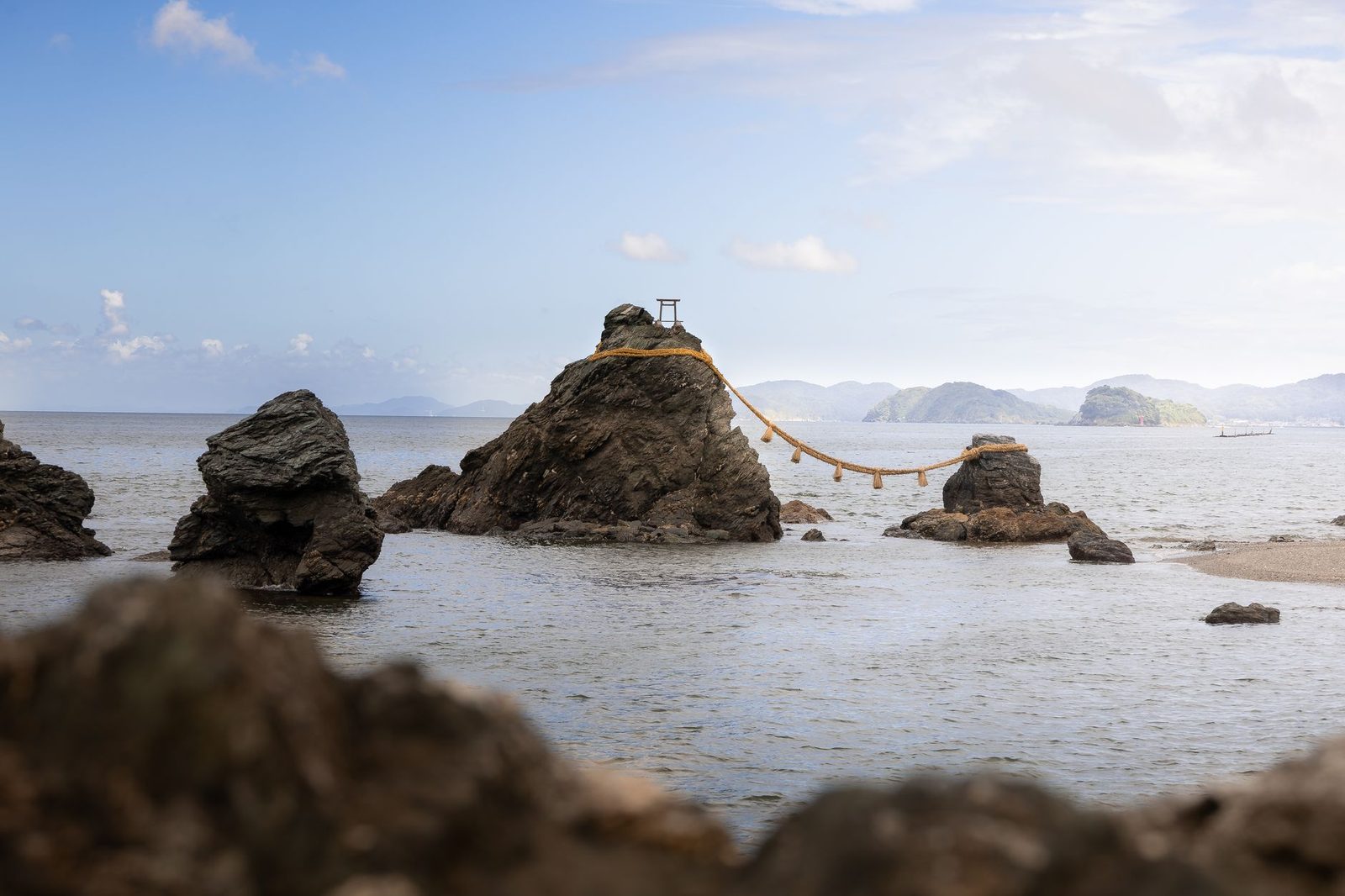
Afternoon: Futami and Toba. Drive out to the coast. Meoto Iwa, the pair of rocks joined by a rope, is a short stop and a good photograph. Toba has the pearl island museum and the harbour; check the opening hours before the day, as they are not something we can fix for you.
Late afternoon: back to Nagoya. Roughly two hours again. Arrive in time for dinner, or for an evening session if you have planned it tightly.
Timing against a session
| Your Games plan that day | What to do with Ise |
|---|---|
| No session | Full loop above, unhurried |
| Evening session in Nagoya | Skip Toba; do the shrine and lunch, leave Ise by early afternoon |
| Evening session in Toyota or Okazaki | Not recommended; the road back plus the venue run is too long |
| Morning session, free afternoon | Not enough time; save Ise for another day |
The reason for the caution: venue access for private cars is a drop-off near the perimeter, not a bay at the gate, and there is a walk. Arriving late from Mie into an evening crowd is the worst version of this day.
What to bring
- Comfortable shoes. The Inner Shrine grounds are a proper walk on gravel.
- Rain cover. Late September in this part of Japan is warm and humid, 20–30 °C, and typhoon season is not over. The car is a dry base, but the shrine paths are not.
- Cash for small stalls in Okage Yokocho.
- Your Games tickets and passport, kept with you rather than in the car.
- A working phone; a travel eSIM sorted before arrival saves time.
Variations
Add Nabana no Sato on the way back. It sits in Kuwana, on the Mie side of the border with Aichi. The autumn illumination usually starts in mid to late October, so it fits the Asian Para Games period (18–24 October) better than the main Games; check the dates before building it in.
Stay a night in Toba. If your Games schedule allows two clear days, an overnight on the coast turns a long day into a relaxed one, and the return to Nagoya the next morning is easy.
Combine with Kansai. Groups arriving from Osaka or Kyoto can route through Ise on the way to Nagoya instead of doing it as a return trip. That is a long-distance transfer quoted separately from the day hire.
Guided or self-directed
The driver is not a guide. If your group wants the shrine's history explained on the spot, either read up beforehand or consider a guided day tour with entry and commentary included; the options are listed at https://olachill.com/en/japan-tours. The private car suits groups who prefer to set their own pace and eat where they like.
How to book with OlaChill
Send the date, passenger count, hotel, whether you want the full loop or the shrine-only version, and any evening session you must be back for, through the chauffeur booking form; a written itinerary and quote come back within 24 hours. OlaChill arranges the vehicle and driver; shrine, museum and park hours are set by those places and are worth checking for your specific date.
FAQ
How many hours should we book?
Count roughly two hours each way, plus the time you want at the shrine, lunch and the coast. A full loop is a long day; the shrine-only version is shorter. Book generously, because extending on the day depends on availability.
Is a 7-seat Alphard enough for six adults?
For a day trip with daypacks, usually yes. Confirm on the form how many passenger seats remain once the driver is counted. For seven or more, a minibus arranged through the charter bus form is the right vehicle.
Can we start early and still make an 18:00 session in Nagoya?
Only with the shrine-only version and an early departure from Ise. Remember the venue drop-off is a walk from the entrance, and evening traffic into Nagoya is unpredictable. For a ceremony with ID checks, do not attempt it.
Does the driver come into the shrine with us?
No. The driver stays with the car and your bags at the car park and meets you at an agreed point and time.
Is Ise better than Takayama for a rest day?
Ise is a day trip; Takayama and Shirakawa-go are 2.5–3 hours by road and are better as an overnight. If you have one free day, Ise. If you have two, consider Takayama.
More from this region — Other
View all →
Two Venues in One Day at the Asian Games: A Realistic Coach Itinerary
7 min · itineraries
Nagashima and Nabana no Sato by Private Car: An Evening Away From the Stadium
6 min · itineraries
Nippon Gaishi Hall Aquatics Sessions: Getting Your Group There Comfortably
7 min · events
Okazaki Castle and Hatcho Miso: A Private Car Detour From Volleyball
6 min · itineraries