
Hosting VIP Guests at Aichi-Nagoya 2026: Alphard and Luxury Car Transfers
Plan Alphard and luxury car transfers for VIP guests at Aichi-Nagoya 2026: the hotel, venue and dinner loop, vehicle choices, discretion and booking steps.
Sep 5, 2026·✍️ olablog·⏱ 7 min read
Plan Alphard and luxury car transfers for VIP guests at Aichi-Nagoya 2026: the hotel, venue and dinner loop, vehicle choices, discretion and booking steps.
Tap a region to browse articles
If you are hosting a sponsor, a board member or a visiting federation official at the Asian Games Aichi-Nagoya 2026, transport is the part of the day your guest will notice most and remember least, provided it works. A chauffeured Alphard or luxury saloon waiting at the hotel door, a clean drop-off near the venue and a car already positioned for dinner is the standard you are aiming for.
This article covers the vehicles available, the classic hotel to venue to dinner loop, the etiquette that keeps it discreet, and the few venue realities that even a VIP budget cannot change.
Which vehicle for which guest
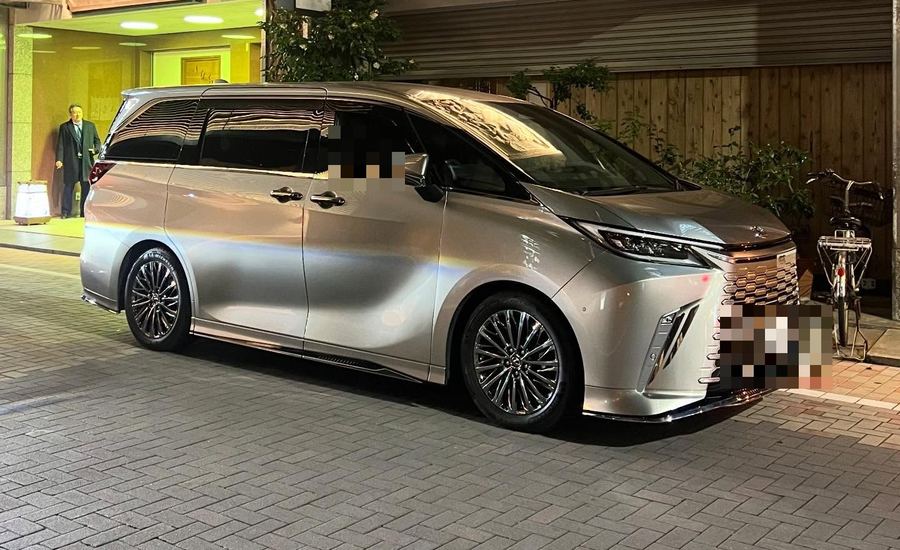
Our chauffeured luxury fleet is listed at https://olachill.com/en/japan-luxury-car and includes the Alphard, LM, V-Class, Crown, ES, LS and LX. Choosing between them is less about prestige and more about how many guests, how much space, and how they will get in and out.
| Guest party | Sensible choice | Reason |
|---|---|---|
| One or two executives, no luggage | Crown or LS saloon | Low profile, quick doors, fits city streets |
| Two to four guests who will talk on the move | Alphard or LM | Sliding doors, facing space, easy for older guests |
| Four to six with bags or coats | V-Class or Alphard | Room without splitting the party |
| A guest who expects an SUV | Lexus LX | Height, presence, still manageable in Nagoya |
Where a party is larger than one vehicle, resist the temptation to run a convoy of saloons. Two cars arriving at different times at a crowded venue perimeter create the exact awkwardness you are paying to avoid. One Alphard or LM keeps the group together.
The hotel, venue, dinner loop
Most corporate hospitality days at the Games follow the same shape, and the private car is booked for the whole day rather than as three separate transfers. In Aichi it is booked online as a day hire: the booking form shows the Alphard day price as soon as you pick the date and pickup area (one day covers up to 10 hours), other vehicle classes are estimates confirmed by email, and hourly hire outside Tokyo is quoted on request.
Leg 1: hotel to venue. Leave earlier than the session time suggests. Organisers ask spectators to use public transport, and private vehicles need pre-arranged drop-off points that differ by venue. Your guest will step out near, not at, the entrance, and there may be a short walk. Tell them this in advance; a surprise walk is worse than a planned one.
Leg 2: the wait. The driver repositions to a legal waiting spot and returns to an agreed pickup point at the agreed time. You are still on the clock, which is what makes the return instantaneous when the session ends.
Leg 3: venue to dinner in Sakae. Sakae, around Oasis 21, is the natural dinner district after a Nagoya session. The car drops at the restaurant, waits again, and takes everyone back to the hotel. No taxi hunting on a busy evening, and nobody has to think about the last train.
Ceremonies need extra care
For the opening ceremony on 19 September at Paloma Mizuho Stadium, running 18:00–20:00, and the closing ceremony on 4 October, every person in the party must be registered in advance and is ID-checked at entry. Queues are long. A chauffeured arrival does not bypass the check.
Practical consequences for a host: brief your guest on the ID requirement well before the day, hold the registration confirmations yourself, and plan the drop-off around the entry queue rather than the 18:00 start. On exit, agree a pickup point away from the immediate perimeter, because thousands of people leave at once and the car cannot be at the gate.
Discretion and driver etiquette
A professional Japanese driver will be punctual, quiet and formal. What they will not do is act as a host or a guide, so keep the introductions and small talk in your own hands. A few habits make the day feel seamless:
- Share the full itinerary in writing, in English and, if possible, Japanese place names.
- Give one contact number per vehicle, and answer it.
- Tell the driver who the principal guest is so the door they open is the right one.
- Decide in advance whether the guest prefers to be dropped first or last on multi-hotel runs.
- Do not change the dinner venue at the table without telling the driver; repositioning takes time in evening traffic.
Where the guest might stay and why it matters
Many hospitality programmes place guests near Nagoya Station or Sakae. From either, the main Nagoya venues are short drives. Out-of-town venues change the arithmetic: Toyota Stadium is roughly 40–60 minutes by road, Okazaki 50–70 minutes and Gamagori 60–80 minutes, all traffic-dependent and with expressway tolls charged on top of the day price. A car makes those venues comfortable, but it does not make them close, so build the hours in.
Arriving and departing
Chubu Centrair International Airport is on an island in Tokoname, about 40 km south of the centre, with a road time of 45–60 minutes depending on traffic. For a VIP arrival the car meets the guest at the terminal. Note that Centrair is not on the fixed-price airport transfer list, which covers Narita, Haneda, Kansai and New Chitose, so Nagoya airport runs are quoted individually.
Guests who continue to Tokyo afterwards have a 1h40 Shinkansen from Nagoya Station, and for a memorable send-off, a helicopter flight from Tokyo Heliport can be added there. There is no helicopter product in Nagoya itself.
How to book with OlaChill
Send the guest count, preferred vehicle class, hotel, venue sessions with dates, dinner plans and any airport legs through the luxury car or chauffeur form, and the reply within 24 hours will confirm vehicle, hours and a written itinerary. For the budget line: the booking form shows the Alphard day price for Aichi as soon as you pick the date, plus tolls and parking; hourly hire outside Tokyo is quoted on request via https://olachill.com/en/japan-chauffeur-hourly. OlaChill arranges the car and driver; venue access rules belong to the organisers.
FAQ
Can the same driver cover all four days of a guest's visit?
We try to keep one driver for continuity and will confirm at booking. Long days and late finishes are governed by driver hour rules, so a visit with several very late nights may need a second driver on some days.
Will the car have water or amenities?
Ask on the form. Simple requests can usually be arranged; do not assume anything is standard.
Can the guest be collected at the stadium gate after the ceremony?
No. The perimeter is closed to private vehicles and the exit crowd is heavy. Agree a pickup point a short walk away and brief the guest on where it is before they enter.
Is a luxury saloon or an Alphard better for a single senior executive?
If they travel alone and value a low profile, the saloon. If they carry a coat and bag, want to work en route, or find low seats awkward, the Alphard is easier to get in and out of.
Is OlaChill connected to the Asian Games organisation?
No. We arrange private vehicles and drivers for guests attending the Games. Tickets, accreditation and venue access are handled entirely by the organisers.
More from this region — Chubu (Nagano, Kanazawa)
View all →
Coach or Train for Your Group at the Asian Games? An Honest Comparison
8 min · tips
Centrair Airport to Nagoya Hotels by Charter Coach During the Asian Games
7 min · tips
Centrair Airport to Your Nagoya Hotel by Private Car During the Games
6 min · tips
What a Charter Coach Costs During the Asian Games in Nagoya
7 min · tips