
Hydrangea (Ajisai) Season in Japan: Bloom Calendar and Where to Go
When hydrangeas bloom across Japan each June and where to see them: Meigetsu-in, Hase-dera, the Hakone Tozan line and Mimuroto-ji, with hours and fees.
Apr 5, 2026·✍️ olablog·⏱ 14 min read
When hydrangeas bloom across Japan each June and where to see them: Meigetsu-in, Hase-dera, the Hakone Tozan line and Mimuroto-ji, with hours and fees.
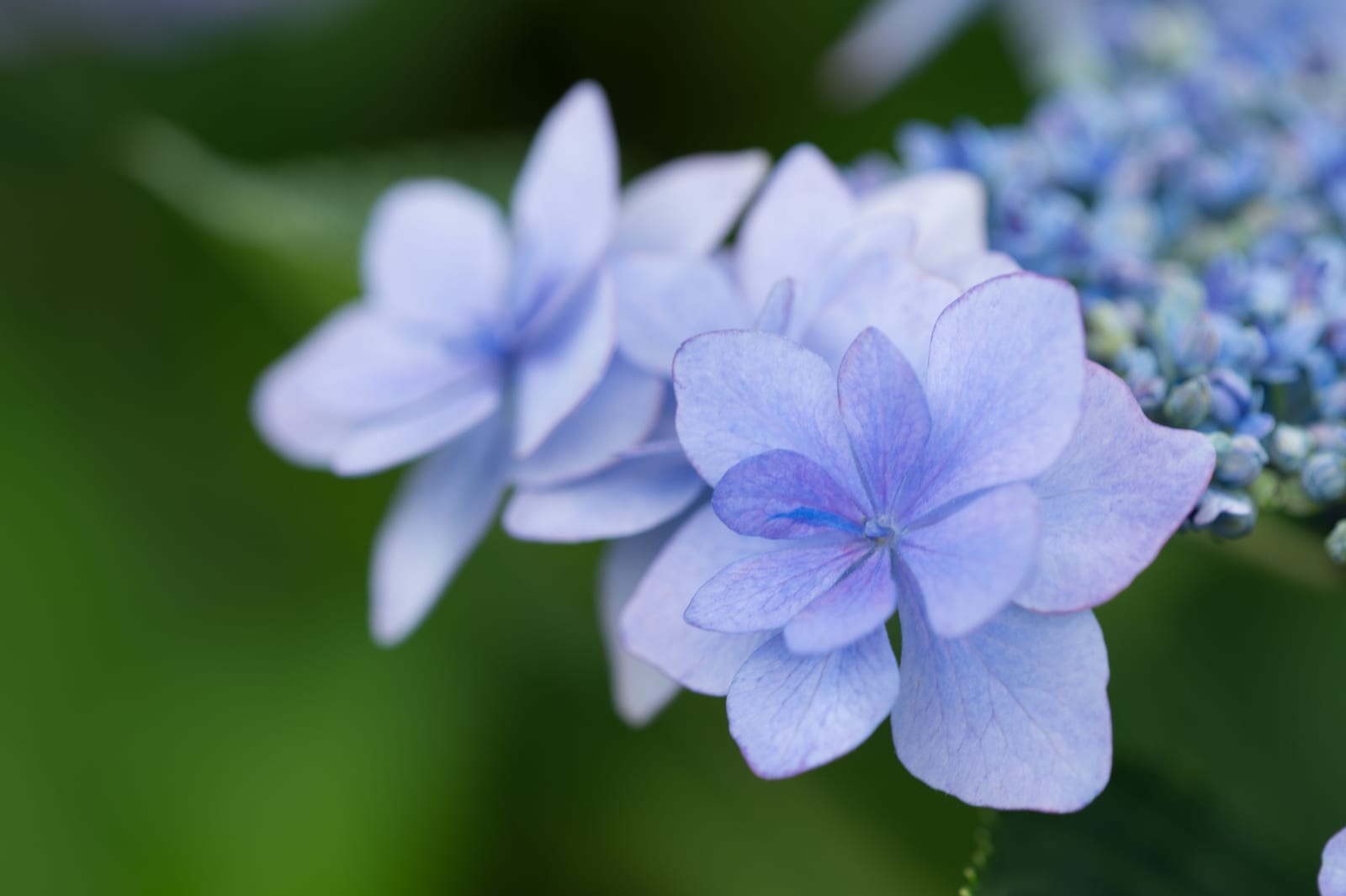
Hydrangea (ajisai, 紫陽花) is the flower of Japan's rainy season, tsuyu. From early June, when the soft summer rain sets in, hydrangeas open all over the country: around the old temples of Kamakura, along the mountain railway in Hakone, in the temple gardens of Kyoto and, later in the summer, as far north as Hokkaido. Blue, violet, pink and white blooms glisten with raindrops, and the whole scene has a quiet, slightly wistful beauty that feels very Japanese.
Japanese people like to say that hydrangeas are best seen in the rain, and they have a point. Raindrops beading on the flowers, a line of clear umbrellas on a temple path and the sound of a bell somewhere in the trees are what this season is about. This guide explains when hydrangeas bloom in each region, why their colours change, and where to see them, with hours, fees and access for each spot. It also includes a two-day Kamakura and Hakone plan, practical tips and etiquette, and a look at what the flower means in Japanese culture.
Hydrangea basics: when they bloom and why they change colour
The hydrangea is a deciduous shrub native to Japan and has been loved here for centuries. Its appeal lies in the vivid colours it brings to the rainy season and in how different each variety looks.
When is hydrangea season?
In most years hydrangeas are at their best from early June to early July. Timing shifts with region and altitude, but most places peak between mid and late June, and in higher areas you can often enjoy them until around mid-July. The season moves north across the country:
| Region | Best time | What to expect |
|---|---|---|
| Kyushu (Fukuoka, Nagasaki) | Early to mid-June | The earliest blooms in Japan |
| Kansai (Kyoto, Osaka, Nara) | Mid-June | Hydrangeas set against old temples and gardens |
| Kanto (Tokyo, Kamakura, Hakone) | Mid to late June | Peak season and the best-known spots |
| Tohoku | Early July | Quieter, with fewer visitors |
| Hokkaido | Mid-July | The latest blooms, easy to combine with lavender |
Bloom times vary with each year's weather, so check the official website or social media of the place you plan to visit for the latest flowering report before you set out.
Why hydrangeas change colour
What look like hydrangea petals are actually modified sepals, known in Japanese as sōshokuka ("decorative flowers"). Their colour depends on the acidity of the soil. Acidic soil generally gives deeper blues, neutral soil purples, and alkaline soil pinks and reds. That's why, even within a single temple garden, one bush can be sapphire blue and the next violet or blush pink. Many varieties also change colour gradually as the bloom goes on, from the first flowers to the last, and that fleeting shift is part of their charm.
Main types of hydrangea in Japan
| Type | Features | Where to see it |
|---|---|---|
| Hon-ajisai (mophead, temari-zaki) | Japan's most popular hydrangea, with dense round flower heads like a temari ball | Meigetsu-in, Hase-dera and many other temples |
| Gaku-ajisai (lacecap) | Small true flowers ringed by a "frame" of showy decorative flowers | Grows wild in warm areas such as the Izu Islands |
| Yama-ajisai (mountain hydrangea) | Small, thin leaves and small, delicate flowers | Wild in mountain valleys and on forest floors across Japan |
| Kashiwaba-ajisai (oakleaf hydrangea) | Large oak-like leaves and cone-shaped white flower clusters | Kobe Municipal Forest Botanical Garden, among others |
| Annabelle (smooth hydrangea) | Native to North America, with large white ball-shaped flowers and a long flowering season | Hakone Gora Park, among others |
Kanto: Kamakura's hydrangea temples and the Hakone mountain railway

The Kanto region has many famous hydrangea spots, most of them in and around the old capital of Kamakura, about an hour from Tokyo by train. Kamakura has two celebrated hydrangea temples, and in Hakone you can see the flowers from the window of a mountain train.
Meigetsu-in, Kamakura
Nicknamed Ajisai-dera, "the hydrangea temple", Meigetsu-in is Kamakura's signature hydrangea spot. About 2,500 hydrangea bushes grow in its grounds, most of them the Hime-ajisai variety. At peak bloom the whole temple turns a deep, almost mystical shade known as "Meigetsu-in blue".
- Address: 189 Yamanouchi, Kamakura, Kanagawa
- Access: About 10 minutes' walk from Kita-Kamakura Station on the JR Yokosuka Line
- Hours: Usually 9:00–16:00; extended to 8:30–17:00 in June
- Admission: ¥300 most of the year, ¥500 in hydrangea season. The rear garden behind the main hall costs an extra ¥500 and opens only for special viewings in the iris and autumn-leaf seasons.
- Crowds: June is extremely busy, and at the peak people queue from about 8:00. Come right at opening (around 8:30–9:00) or in the calmer late afternoon, after about 15:00.
- Parking: None. Come by public transport.
Hase-dera, Kamakura
Known as the "temple of flowers", Hase-dera has something in bloom in every season, but its June hydrangeas are the highlight. On the slopes of Kannon-yama, the hydrangea path (Ajisai-no-komichi) winds through about 2,500 bushes of around 40 varieties. From the lookout along the path you see the hydrangeas framed against Kamakura's rooftops and Yuigahama Beach on Sagami Bay, and it is one of the most popular photo spots of the season.
- Address: 3-11-2 Hase, Kamakura, Kanagawa
- Access: About 5 minutes' walk from Hase Station on the Enoshima Electric Railway (Enoden). Alternatively, take the Enoden bus from JR Kamakura Station to the Hase Kannon stop and walk about 5 minutes.
- Hours: Usually entry 8:00–16:30, with the gates closing at 17:00; from April to June entry until 17:00 and the gates close at 17:30
- Admission: Adults ¥400, elementary school children ¥200
- Crowds: Very busy in hydrangea season, and entry to the hydrangea path is sometimes restricted. Go early in the morning for a more relaxed visit.
- Parking: Paid parking for 30 cars (¥350 per 30 minutes) and 4 buses (¥1,000 per 30 minutes)
The Hakone Tozan Railway, the "hydrangea train"
In the rainy season the little Hakone Tozan Railway, which climbs through the mountains of Hakone, earns the nickname ajisai densha, "the hydrangea train". Around 7,000 hydrangeas are planted along the line between Hakone-Yumoto and Gora, and as the train slowly climbs the mountain they fill the windows. Because of the difference in altitude along the line, the bloom moves uphill in stages: around Hakone-Yumoto from mid-June, around Gora from late June to early July, and near Sounzan until mid-July. After dark the hydrangeas along the line are lit up and seem to float in the night, a completely different mood from the daytime. Special evening trains run slowly through the illuminated sections in season, and they are worth reserving early.
- Access: From Odawara Station (Odakyu Line or JR Tokaido Line), take the Hakone Tozan Line to Hakone-Yumoto and change there for a train to Gora.
- Fare: ¥460 between Hakone-Yumoto and Gora
- Best time: Mid-June to mid-July
- Enquiries: Odakyu Hakone, Railway Department, TEL: 0465-32-6823
Note that the Enoden in Kamakura and the Hakone Tozan Railway are not JR lines, so they are not covered by the Japan Rail Pass. Budget for these fares separately.
Kansai: Mimuroto-ji, the hydrangea temple of Uji
Kansai, and the old capital of Kyoto in particular, has its own atmospheric hydrangea spots, where the flowers fill historic temple gardens.
Mimuroto-ji, Uji (Kyoto)
Often called the finest hydrangea temple in Kansai, Mimuroto-ji is famous for its large hillside garden, planted with thousands of hydrangeas in some 50 varieties. You can compare many types in one place, including Western hydrangeas, lacecaps, oakleaf hydrangeas and shichidanka, a rare variety sometimes called the "phantom hydrangea". Visitors also enjoy hunting for the occasional heart-shaped flower head hidden among the bushes.
The hydrangea garden opens for about five weeks each year, from around the end of May to early July; the temple announces the exact dates. On Saturdays and Sundays during the opening period the garden is also lit up in the evening, when it takes on a dreamlike atmosphere quite different from the daytime.
- Address: 21 Todo Shigatani, Uji, Kyoto
- Access: About 15 minutes' walk from Mimurodo Station on the Keihan Uji Line
- Hours during the hydrangea garden opening: Entry 8:30–15:40, and everyone leaves the grounds by 16:30. Evening illumination: entry 19:00–20:30, and everyone leaves by 21:00. Day and evening visits are separate, and the grounds are cleared between the two.
- Admission during the hydrangea garden opening: Adults ¥1,000, children ¥500, the same for the illumination
- Enquiries: Mimuroto-ji, TEL: 0774-21-2067
Off the beaten track: Katahara Onsen Ajisai no Sato (Aichi)
Few overseas visitors know Katahara Onsen Ajisai no Sato in Aichi Prefecture, yet it has around 50,000 hydrangea plants. It's also a hot-spring area, so you can walk among the flowers and then end the day with a soak in the onsen.
Getting to the hydrangea spots
Most of the famous hydrangea spots are easy to reach by train, which is the simplest option on a first trip. Kamakura, Hakone and Kyoto are all well served by JR and local private railways.
For quieter places such as Katahara Onsen or the flower gardens in the mountains of Tohoku, or if you want to stop wherever the view is good, a rental car gives you far more freedom. Rain during tsuyu often comes in showers rather than lasting all day, so a rainy-season drive is less gloomy than it sounds.
A two-day hydrangea trip to Kamakura and Hakone
This plan pairs Kamakura's two hydrangea temples with the Hakone mountain railway and a night at a hot-spring hotel.
Day 1: Kamakura
- 07:30 Leave Tokyo on the JR Yokosuka Line for Kita-Kamakura (about an hour, around ¥940).
- 08:30 Arrive at Meigetsu-in as it opens, ahead of the crowds.
- 10:30 Ride the JR line one stop to Kamakura, change to the Enoden for Hase, and visit Hase-dera and its hydrangea path.
- 12:30 Lunch around Komachi-dori. Try shirasu-don, rice topped with tiny whitebait, a Kamakura speciality.
- 14:30 Visit the Great Buddha of Kamakura and walk along Yuigahama Beach.
- 17:00 Travel on to your hotel in Hakone and relax in the onsen.
Day 2: Hakone
- 08:00 Breakfast and check-out.
- 09:00 Ride the Hakone Tozan Railway and watch the hydrangeas slide past the windows.
- 11:00 Hakone Open-Air Museum, where art, landscape and flowers come together.
- 13:00 Lunch, then take the ropeway to Lake Ashi for views of Mount Fuji if the sky is clear.
- 16:30 Return to Tokyo via Odawara.
For more ideas on the Hakone side, see our guide to Hakone in a day from Tokyo.
Tips for enjoying hydrangea season
Before you go
- Rain gear: Rain is frequent in tsuyu, so pack a compact umbrella or a light rain jacket. Don't let the rain put you off, though: the flowers look their best just after a shower.
- Shoes: Wear comfortable, non-slip shoes. Many temples have mossy stone steps that get slippery in the rain.
- Timing: At popular spots, the first hour after opening and the last hour before closing are usually the quietest. Early morning, roughly 6:00 to 8:00 where gardens are open, is the best time for photos, with dew still on the flowers. Evening light is soft and atmospheric. Avoid harsh midday sun, which washes out the blues and purples in photos.
- Weekdays: If you dislike crowds, avoid Saturdays and Sundays. Weekdays are far quieter.
- Advance tickets: Where a temple offers advance or timed tickets, use them, especially for June weekends.
- Check the bloom: Flowering depends on the weather, so look at each site's official website or social media before you go.
- Photography: A macro lens, or your phone's close-up mode, is ideal for capturing raindrops on the flowers.
- Hydrangea sweets: In Kyoto, look out for ajisai wagashi, traditional sweets shaped like hydrangea flowers, sold in many shops in season for around ¥400–600 each.
Etiquette
- Look, don't touch: Hydrangeas are delicate. Don't break off flowers or branches, and avoid handling them.
- Respect private gardens: Picking hydrangeas from someone else's garden or a managed park without permission is not acceptable.
- Share the view: In crowded spots, take turns for photos and be considerate of others. Some places restrict tripods, so check the rules in advance.
- Take your rubbish home: Carry out everything you bring in and help keep these places beautiful.
Sights to combine with hydrangea viewing
Kamakura
- Hokoku-ji: Famous for its beautiful bamboo grove, where hydrangeas bloom against the green of the bamboo.
- Goryo Shrine: Known for the view of the Enoden passing right in front of its torii gate. Hydrangeas grow along the tracks here, a lesser-known spot for photographing the flowers and the train together.
- Komachi-dori and Tsurugaoka Hachimangu: Komachi-dori runs from Kamakura Station towards Tsurugaoka Hachimangu and is lined with snack stalls and souvenir shops. Depending on the timing, you may also find hydrangeas in the shrine grounds.
Kyoto and Uji
- Uji: After Mimuroto-ji, visit Byodo-in and Ujigami Shrine, both World Heritage sites, and try matcha sweets at one of Uji's specialist tea shops.
- Fushimi Inari Taisha: Thousands of torii gates line the paths of this shrine, one of Kyoto's most famous sights.
Hakone
- Hakone Open-Air Museum: An outdoor museum where art and nature meet, easy to combine with the hydrangea railway.
- Lake Ashi and the Hakone pirate ships: Cruise the lake on a pirate ship; on a clear day you can see Mount Fuji.
Hydrangeas in Japanese culture
The hydrangea is more than a pretty flower in Japan. It carries several meanings in customs and folklore.
Flower language and good luck
In hanakotoba, the Japanese language of flowers, the hydrangea stands for "patient love", but also "fickleness" and "pride". Because its colour changes, it is also called shichihenge ("seven transformations") and hassenka, and that changeability seems to have shaped its meanings.
The hydrangea has long been considered a lucky flower, too. Blooms cut in June on a day containing the number six (the 6th, 16th or 26th) are said to work as charms for love, protection from misfortune and good fortune with money. Hanging a hydrangea upside down (sakasa ajisai) at the front door or in the toilet was traditionally believed to ward off bad luck and women's illnesses. If you try the custom, keep to the etiquette: never pick flowers from someone else's garden without permission, and don't leave dried-out flowers hanging for too long.
Hydrangeas in art and literature
With its distinctive beauty, the hydrangea has appeared in Japanese painting and literature for centuries. The sight of hydrangeas wet with rain has moved many poets, and it appears again and again in waka and haiku. It remains the flower people associate most with the Japanese rainy season.
Why hydrangea season is worth planning for
Hydrangeas aren't as dazzling as cherry blossoms or as showy as autumn leaves, but their gentle beauty in the rain has a way of drawing people back to Japan every June. If you'd like to see a quieter, gentler side of the country than the crowded blossom season, this is it. Use the regional calendar above to pick your dates, check the bloom reports before you go, and don't let a rainy forecast stop you, because the hydrangeas are at their best in it.
More from this region — Other
View all →
Airport Pickup by Alphard from Haneda or Narita
8 min · tips
Shun — Seasonal Japanese Cuisine: What to Eat and When for the Authentic Flavor
8 min · food
American Chains in Japan — Starbucks, McDonald's + 12 More Surprises
6 min · food
Solo Travel Safety in Japan — A Complete Guide for First-Timers
7 min · tips