
Wedding Guest Shuttle Buses in Japan: A Practical Planning Guide
Plan a smooth wedding guest shuttle in Japan, from ceremony timelines and multi-stop pickups to vehicle sizes, decorations, and costs.
Aug 21, 2026·✍️ olablog·⏱ 9 min read
Plan a smooth wedding guest shuttle in Japan, from ceremony timelines and multi-stop pickups to vehicle sizes, decorations, and costs.
Why arrange a wedding shuttle in Japan?
A wedding in Japan may bring guests together from several hotels, train stations, airports, or sightseeing destinations. Even when the venue is close to a major city, coordinating everyone by train or taxi can be stressful—particularly when guests are wearing formal clothing, carrying luggage, or unfamiliar with local routes.
A private charter vehicle creates one clear travel plan. Guests know where to meet, the group arrives together, and the schedule can include return transport after the reception or a later after-party. OlaChill works with licensed Japanese operators, making it easier to arrange vehicles, pickup instructions, and communication for international groups.
The best shuttle plan starts with the wedding timeline, not simply the number of guests.
Understanding a typical Japanese wedding timeline
Japanese weddings vary by venue and couple, but many follow a structured day with several stages.
Guest arrival and reception desk
Guests often arrive before the ceremony to register at a reception desk, leave a congratulatory gift, and greet the family. Your shuttle should arrive with enough time for guests to walk from the drop-off point, check in, and find their seats.
If the venue has a designated bus bay, confirm whether the vehicle may wait there. Some city hotels and busy wedding venues require buses to drop off guests and move to a separate parking area.
The ceremony
The ceremony may take place at a hotel chapel, a shrine, a church-style venue, or a garden setting. Shrine ceremonies can have stricter access and arrival arrangements, while hotels may provide a more straightforward indoor drop-off.
Guests should not be rushed from the shuttle directly into the ceremony. Build in time for traffic, finding the entrance, and changing from travel clothes if necessary.
Wedding reception
The reception is usually a formal meal with speeches, performances, photographs, and several courses. It can last for a few hours, so the charter bus does not always need to remain directly outside the venue.
For a simple one-way transfer, the bus can drop guests off and return later. For a waiting service, the operator may need to park nearby, and parking or driver waiting arrangements should be confirmed in advance.
Nijikai and return travel
Some couples arrange a nijikai, or informal after-party, at a different restaurant or bar. This is one of the most useful times to have a shuttle, especially if guests are unfamiliar with the area or have been drinking.
If the celebration continues into the evening, confirm the final departure time and destination before the wedding day. A return shuttle may serve the original hotels, a central station, or several accommodation areas.
Planning pickups from multiple locations
A single pickup point is easiest, but wedding groups often stay in different hotels. A charter vehicle can usually follow a planned route with multiple stops, subject to road conditions, legal driving hours, and the operator’s approval.
Prepare these details:
- The full address and Japanese name of every hotel or meeting point
- A local contact number for the wedding coordinator or group leader
- The number of guests at each stop
- Whether guests have large suitcases, garment bags, or gifts
- The preferred order of pickups and the latest acceptable arrival time
- A backup meeting point if stopping directly outside a hotel is not possible
For international guests, a major station exit or hotel entrance is generally easier than an unfamiliar street address. Send the meeting instructions in English and, if possible, include a map pin and a photo of the exact location.
Multiple pickups add driving time and may affect the charter estimate. They can also make the schedule less flexible, so avoid setting the first pickup too close to the ceremony. In busy areas such as central Tokyo, Kyoto, or Osaka, traffic can change quickly around weekends and event times.
Choosing the right vehicle size
The number of seats is only one part of the decision. Wedding clothing, luggage, floral arrangements, and personal space can make a smaller vehicle feel full before every seat is occupied.
| Vehicle size | Best for | Comfortable planning group | Luggage and comfort notes |
|---|---|---|---|
| 5 seats | A couple, family, or VIP transfer | 1–4 guests | Suitable for light luggage; not ideal for a whole wedding party |
| 7 seats | Small family groups or airport-to-venue transfers | 4–6 guests | Check space for suitcases and formalwear |
| 10 seats | A compact guest group with one or two pickup points | 7–9 guests | Better for short transfers than long journeys with large luggage |
| 16 seats | A small wedding party or mixed hotel group | 10–14 guests | Leaves useful space for bags and avoids a cramped ride |
| 29 seats | Medium-sized guest groups | 20–26 guests | A practical choice for venue transfers and coordinated arrivals |
| 45 seats | Large wedding parties or several family groups | 35–42 guests | Best for keeping a large group together; confirm venue access and parking |
The comfortable planning figures are intentionally lower than the maximum seat count. If every guest has a suitcase, or if the route includes several hours of travel, consider a larger vehicle or separate luggage arrangements.
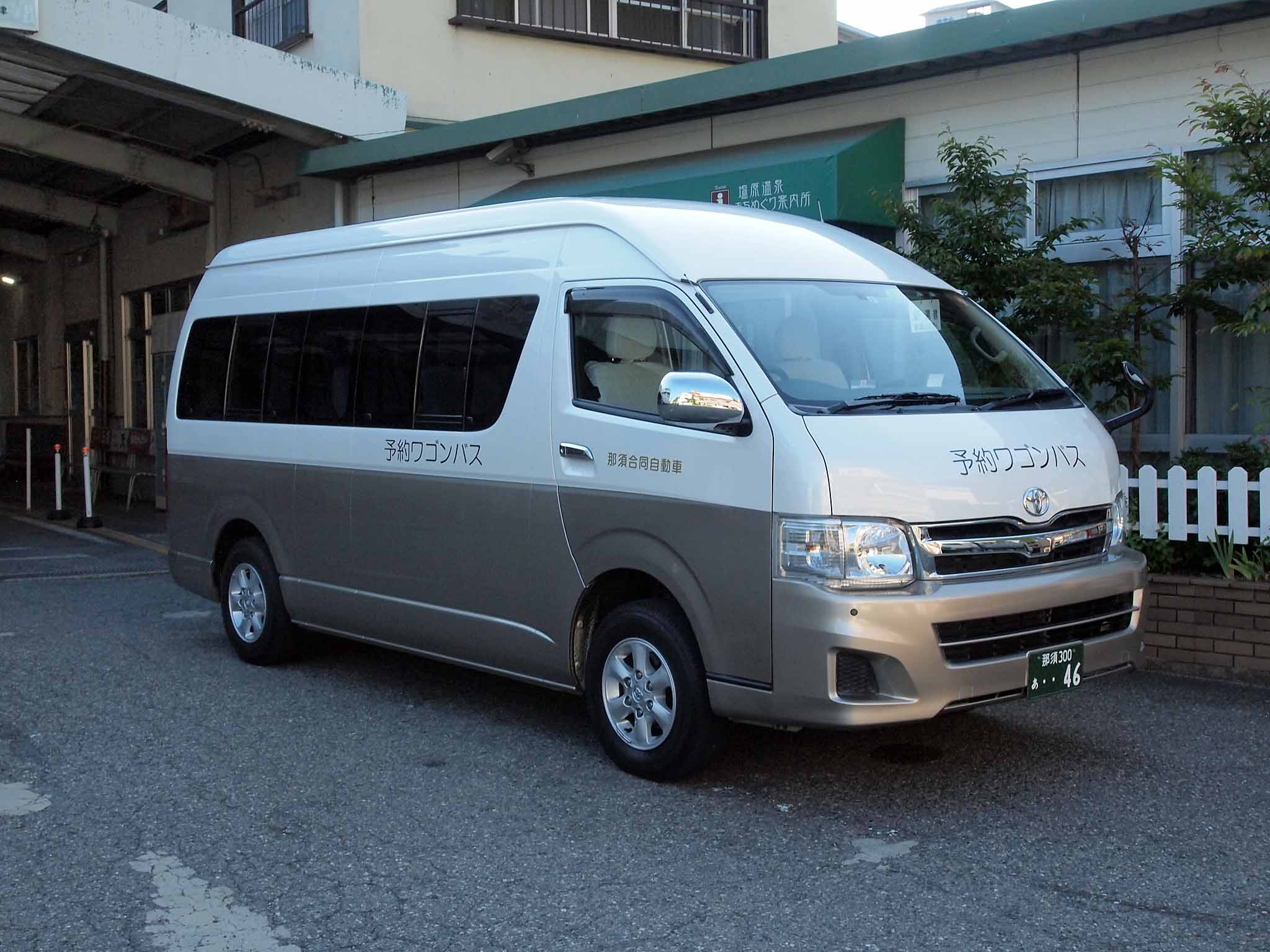
A 29-seat bus is often a good middle option for a wedding group that is too large for vans but does not need a full-size coach. A 45-seat vehicle is more efficient when most guests are traveling together, but it may need wider roads, a larger turning area, and a designated parking location.
For a small group, a 5-, 7-, or 10-seat vehicle can be more cost-effective. However, a 16-seat vehicle may provide a better experience when guests are wearing formal clothing or carrying gifts.
Wedding-appropriate decorations and onboard etiquette
You may be able to decorate the shuttle, but always request approval before the event. Japanese operators and venues may have strict rules about vehicle interiors, exterior panels, and loading areas.
Generally safer options include:
- Small removable signs placed in approved areas
- Ribbon or floral decorations secured without damaging surfaces
- A welcome board used during boarding rather than attached to the bus
- Matching seat cards or small guest welcome bags
Avoid tape, pins, glue, glitter, confetti, open flames, and anything that could obstruct windows, emergency equipment, or the driver’s view. Do not attach decorations to mirrors, doors, steps, or windscreen areas.
Tell the operator in advance if you plan to bring flowers, a large welcome sign, wedding gifts, or audio equipment. The driver may need extra loading time, and some items may require separate transport. Guests should also avoid eating messy food or bringing open drinks unless the operator permits them.
Cost planning and booking details
Charter prices depend on vehicle size, travel distance, total hours, waiting time, tolls, parking, pickup complexity, and whether the service continues after the reception. A multi-stop route or late-night return may cost more than a simple transfer.
Bus prices below use OlaChill's standard 10-hour day (29 seats ¥69,000, 45 seats ¥99,000, 60 seats ¥129,000; extra hours ¥15,000):
- 5–10 seats: Quoted on request
- 16 seats: Quoted on request
- 29 seats: ¥69,000 per 10-hour day
- 45 seats: ¥99,000 per 10-hour day
Expressway tolls, parking and, on overnight trips, the driver's lodging are added; the exact quote comes from the booking form.
For a smooth arrangement, request the charter as early as possible and provide the wedding venue, guest count, preferred vehicle size, pickup schedule, return plan, and luggage information. If the wedding date is not finalized, you can still prepare a provisional route and update the details later.
Request a free charter bus quote from OlaChill and receive a reply within 24 hours.
Final checklist for the wedding coordinator
Before confirming the shuttle, check:
- Ceremony, reception, and after-party start and finish times
- All hotel and station pickup points
- Venue bus access, parking, and drop-off rules
- Guest count plus luggage and garment bags
- Vehicle size and comfortable seating capacity
- Driver waiting arrangements
- Return destination and final departure time
- English meeting instructions for every guest
- Decoration approval and loading requirements
- A group leader available by phone on the day
A well-planned shuttle is more than transportation. It gives guests a calm start, protects the wedding schedule, and helps everyone enjoy the celebration without worrying about navigation or missed connections.
FAQ
Can one wedding shuttle collect guests from several hotels?
Often, yes. The route must be reviewed in advance because hotel access, stopping restrictions, traffic, and the ceremony deadline can affect what is practical. A central meeting point may be better if the hotels are widely spread out.
Should I book a bus based on the exact number of guests?
Not always. Leave room for luggage, formal clothing, gifts, and personal comfort. A vehicle filled to every available seat may feel crowded, especially on a long route.
Can we decorate the charter vehicle?
Usually, small removable decorations may be possible with prior approval. Do not use adhesive, pins, glitter, confetti, or anything that blocks safety equipment or the driver’s view. Confirm both operator and venue rules before preparing decorations.
Can the driver wait during the wedding reception?
Waiting may be available, but it depends on parking, venue access, operator scheduling, and the length of the reception. Ask for waiting service when requesting the quote rather than assuming the bus can remain outside.
Is a charter bus useful for an evening after-party?
Yes. A planned return shuttle can take guests from the reception to a nijikai, hotel area, or major station. Confirm the final departure time and destination early, particularly if the group will travel late at night.
More from this region — Other
View all →
What to Wear Under a Rental Kimono: Underwear, Layers and Season by Season
5 min · culture
Wheelchair-Accessible Private Vehicles in Japan
9 min · tips

Wheelchair Travel in Japan for Medical Guests: Airports, Private Cars, Hotels
5 min · tips

Which Kimono Should You Rent? Komon, Houmongi, Furisode, Tomesode and Montsuki Compared
9 min · culture