

Tokyo 2026 Fall Foliage Calendar: Which Week Is Best, and Where
Golden ginkgo reaches its peak in mid–late November, red momiji continues into early December, and Takao runs 1–2 weeks ahead of central Tokyo — plus how to read koyo forecasts and what to do if you miss the peak.
Aug 12, 2026·✍️ olablog·⏱ 16 min read
Golden ginkgo reaches its peak in mid–late November, red momiji continues into early December, and Takao runs 1–2 weeks ahead of central Tokyo — plus how to read koyo forecasts and what to do if you miss the peak.
Tap a region to browse articles
There’s one scene I seem to come across every year in Tokyo: in early November, a visitor stands in the middle of Rikugien Garden, phone in hand, looking at a photo of blazing red autumn leaves they saw online, while right in front of them is... a lush green garden with only a few scattered orange leaves. They haven’t done anything wrong — they’ve simply arrived about three weeks before Tokyo’s “time” has come. The opposite also happens: someone books a trip for mid-December thinking, “Well, I guess I’ve missed the season,” only to find one corner of Koishikawa Korakuen still glowing red, with a thick carpet of golden leaves underfoot as if someone had just rolled one out.
Tokyo is the city in Japan where it’s easiest to miscalculate the autumn foliage season. The reason is that central Tokyo enters autumn considerably later than the usual idea of “Japan’s November fall,” partly because its lower latitude and urban heat-island effect keep temperatures warmer for longer, and partly because the city runs on two clocks at once: the clock of golden icho (ginkgo) leaves and the clock of red momiji (maple) leaves, separated by roughly one to two weeks. On top of that, the mountains to the west, such as Takao, move a full beat ahead of central Tokyo. If you only hear the general statement “Tokyo is beautiful in November,” you could easily hit the very best week — or miss both colors entirely.
That’s why this article won’t cover the whole country (I wrote a separate regional guide to the nationwide koyo calendar, which you can find here: Japan 2026 autumn foliage calendar by region). Instead, we’re zooming in on one city: which parts of Tokyo are beautiful each week, why, and how to adjust if your trip falls outside the peak. All dates below are projected windows for 2026, based on long-term patterns and the recent trend toward later foliage — use them to book your trip, then check updated forecasts before you fly (I explain how to read those forecasts later).
Tokyo Has Two Autumn Clocks
The first thing to reset in your mind is this: in Tokyo, golden leaves and red leaves aren’t one season, but two seasons in succession.
Icho — golden ginkgo — ripens first. Ginkgo trees planted along boulevards and around business districts usually begin turning yellow from early to mid-November, reaching their brightest peak around mid- to late November. Ginkgo has one particularly photographer-friendly quality: when it turns yellow, it does so almost all at once, making an entire row of trees look as though the lights have been switched on together. Even after the leaves fall, the golden carpet beneath the trees can remain beautiful for another full week.
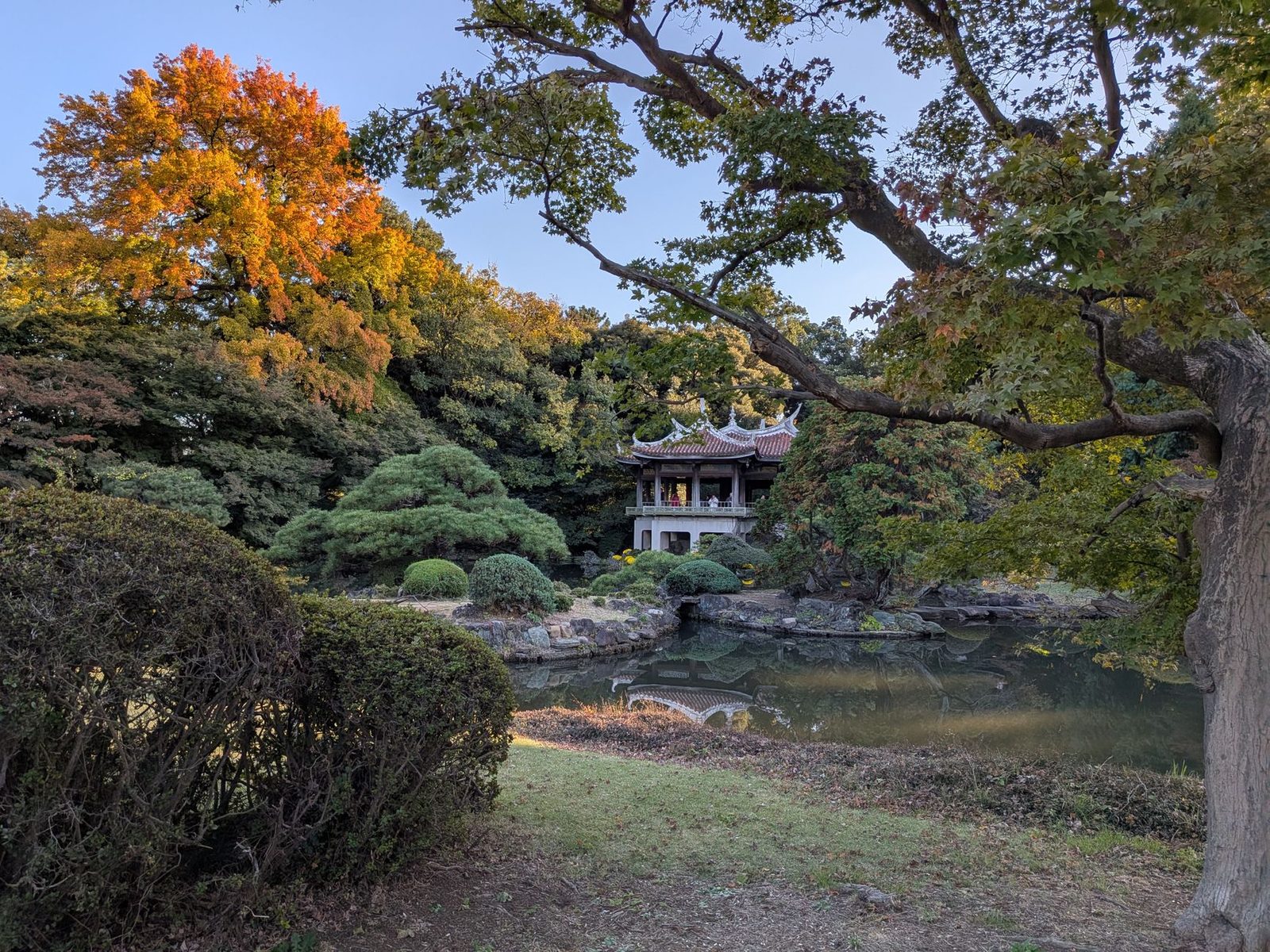
Momiji — red maple — ripens later. Traditional Japanese gardens in central Tokyo, such as Rikugien and Koishikawa Korakuen, usually don’t turn properly red until late November, peaking around the last week of November through the first week of December. In sheltered corners, the color can last into mid-December. In other words, central Tokyo’s momiji season is among the latest in Japan — later than many spots in Kyoto.
And there’s a third clock that runs fast: the western mountains. Mount Takao (Hachioji), and farther out Okutama and Mitake, sit on Tokyo’s western edge at higher, colder elevations, so the leaves change around 1–2 weeks earlier than in the city center. Takao is usually at its best from mid- to late November on the summit and upper slopes, while Okutama can be spectacular from early to mid-November.
Put the three clocks together and you get a Tokyo foliage season lasting roughly six weeks, from early November to mid-December — longer than in most other Japanese cities. That’s good news: almost every week in that window has at least one place in Tokyo at its best.
Week-by-Week Calendar: Where to Go (Projected 2026 Window)
The table below is the backbone of this article — dates can shift by 1 week depending on this year’s weather, and the general trend in recent years has been slightly later than traditional benchmarks:
| Timing | Places at their best | Main colors |
|---|---|---|
| Late October – week 1 of November | Okutama, Lake Okutama, Hatonosu Valley | Mountain reds and oranges |
| Weeks 1–2 of November | Mount Takao (summit area), Showa Kinen Park (ginkgo beginning to turn yellow) | Orange + early yellow |
| Weeks 2–3 of November | Takao at peak across the slopes; central Tokyo ginkgo turning clearly yellow; University of Tokyo (Hongo) | Yellow intensifying |
| Weeks 3–4 of November | Icho Namiki at Meiji Jingu Gaien at its peak; Rikugien beginning to turn deep red | Bright yellow + early red |
| Last week of November – week 1 of December | Rikugien, Koishikawa Korakuen, Shinjuku Gyoen at momiji peak | Deep red |
| Week 2 of December | Koishikawa Korakuen (later corners), Kyu-Shiba Rikyu, golden carpets beneath ginkgo rows | Late-season red + golden carpets |
Now let’s look at each spot in detail.
Mount Takao: One Beat Ahead of Central Tokyo
If you’re visiting Tokyo in the first half of November — when the city center is still green — Takao is the answer. From Shinjuku Station, the Keio Line runs directly to the foot of the mountain in about an hour, and it’s so affordable and convenient that Tokyo residents consider it their “backyard” for weekend trips. The leaves change according to elevation: the summit and Yakuoin Temple area turn red first, usually looking beautiful from around the second week of November, with the color gradually “flowing” down toward the foot of the mountain by the end of the month.
A practical tip: on weekends in mid-November, Takao can be so crowded that the cable car line may take a full hour. If possible, go on a weekday and arrive at the mountain’s base before 8 a.m.; or take Trail 1 on foot instead (a concrete path that is manageable for people who aren’t used to hiking, taking around 90 minutes to reach the summit) to avoid the cable car queue. On a clear day, you can see Mount Fuji from the summit of Takao beyond a sea of autumn leaves — a moment worth the entire trip.
Icho Namiki at Meiji Jingu Gaien: Japan’s Most Famous Ginkgo Avenue
This is Tokyo’s signature autumn scene: four rows of nearly 150 ginkgo trees, carefully pruned into pointed shapes, running in a straight line for about 300 meters toward the Meiji Memorial Picture Gallery. At peak — usually from mid- to late November, and in recent years often around 20–30 November — the avenue becomes a golden corridor. When the leaves begin to fall, the pavement remains covered in gleaming gold for roughly another week.
A few things to know before you go. First: it’s crowded. Extremely crowded. During the peak period, there is often an Icho Festival with food stalls, and the avenue can be packed with people. If you want a relatively empty frame, you’ll almost certainly need to arrive before 8 a.m. on a weekday. Second, the Gaien area has been affected in recent years by controversial redevelopment projects, and some sections may be fenced off for construction. This does not significantly affect the main ginkgo avenue, but it’s worth being prepared for a scene that may not look as “clean” as older photos. It’s just a few minutes’ walk from Gaienmae Station on the Ginza Line, and strolling along the avenue is free.
If you like ginkgo but would rather avoid the crowds, Tokyo has two other excellent options: the Hongo campus of the University of Tokyo, where an avenue of old ginkgo trees leading to the golden Akamon Gate turns yellow around the same time as Gaien but has a quiet campus atmosphere; and Showa Kinen Park in Tachikawa, with a ginkgo avenue more than 200 meters long and a Japanese garden. It usually turns yellow a few days earlier than central Tokyo, and it’s convenient to combine with Takao on the same day because both are in the west.
Rikugien: Central Tokyo’s Most Classic Momiji Garden
Rikugien is an Edo-period strolling garden in Bunkyo that is more than 300 years old. For me, it’s the best place in Tokyo to see momiji in the true Japanese garden style: red leaves reflected on the central pond, with maple trees leaning over paths that wind around artificial hills. The color usually peaks from late November through the first week of December — meaning that if you arrive in Tokyo in late November, Rikugien is almost impossible to get wrong.
The garden charges an entrance fee of a few hundred yen. In many years, Rikugien also holds evening openings with autumn illumination — red momiji glowing against the black sky and reflected in the pond in an almost surreal scene — but the format varies from year to year (some years require advance reservations). Check the official website for Tokyo’s gardens before planning your visit. The nearest station is Komagome on the Yamanote Line, just a few minutes away on foot.
Koishikawa Korakuen: The Ace Up the Sleeve for Late Arrivals
Like Rikugien, Koishikawa Korakuen is an old Edo garden in Bunkyo, and its foliage follows a similar schedule but often “holds onto its color” a little longer. Areas around the pond and sheltered paths may retain their red leaves into around the second week of December. The garden receives fewer international tourists than Rikugien, and its expansive grounds offer layered scenery — stone bridges, small rice paddies, and corners inspired by classical Chinese landscapes. If your trip falls in early December, switch your priorities: Koishikawa first, Rikugien second.
Other Names Worth Adding to Your Itinerary
- Shinjuku Gyoen: One of the few places with ginkgo, momiji, and bald cypress all changing color, extending the foliage season from mid-November to early December; ideal for a day when you also want to shop in Shinjuku. There is an entrance fee, and it is usually closed on Mondays — check again before you go.
- Jingu-dori’s ginkgo avenue and the area around the Imperial Palace: The ginkgo trees along the Imperial Palace moat between Otemachi and Hibiya turn beautifully golden in late November. It’s convenient to pass by and free to visit.
- Ueno Park and Yoyogi Park: Not peak foliage destinations, but convenient, with scattered color from late November to early December. They work well for a free morning between more tightly scheduled activities.
How to Read Koyo Forecasts Yourself: 15 Minutes to Avoid Leaving It to Chance
This is the section I most want you to read carefully, because it turns you from someone hoping for luck into someone who can take control. In Japan, people track the foliage season through koyo forecast websites — the most popular include the autumn pages on tenki.jp, Weathernews, and Walkerplus — which update the status of specific viewing spots, including Takao, Gaien, and Rikugien. The sites are in Japanese, but you only need to recognize three statuses:
- 色づき始め (irozuki-hajime) — “beginning to change color”: the leaves are only starting to show patches of color, and it’s not worth traveling far to see them yet. For momiji, it usually takes around 1–2 weeks from this point to peak.
- 見頃 (migoro) — “at its best”: this is the phrase you need. In Tokyo, this stage usually lasts around 1–2 weeks depending on the weather.
- 落葉 (rakuyou/ochiba) — “fallen leaves”: the peak has passed. With ginkgo, however, don’t dismiss this stage too quickly — the first few days are often when the golden carpet beneath the trees looks its best.
Three rules for reading forecasts that I’ve learned over many seasons:
- Use September forecasts only as a reference; make decisions based on forecasts issued 10–14 days ahead. The agencies begin publishing koyo forecasts in early autumn and adjust them continuously; it’s common for early projections to be off by an entire week.
- Watch temperatures, not just dates. Leaves change quickly when nights turn sharply cold while days remain sunny. A prolonged warm autumn will push every date later — in recent years, Tokyo has repeatedly been delayed for this reason. Conversely, a major rainstorm or strong winds right at peak can strip an entire row of ginkgo trees overnight, so if strong winds are forecast for the weekend, go before then rather than waiting.
- Check the specific location, not just “Tokyo.” As you’ve seen, Takao and Rikugien can differ by as much as two weeks; a generic forecast for “Tokyo” is practically meaningless.
One final tip: the latest location-tagged photos on social media (search for the place name in Japanese, such as 六義園 for Rikugien) are the most honest “forecast” of all — Japanese users are very diligent about posting real-time foliage photos.
Plan B: What to Do If You Miss the Peak
If you arrive early (late October – the first 10 days of November): central Tokyo will still be green, but don’t be disappointed — head west. Okutama and the valleys along the Ome Line are often already changing color from late October; Mount Mitake, with its mountaintop shrine and maple forests, makes a very worthwhile day trip. Takao is already beautiful around the summit at this stage. Alternatively, a day trip from Tokyo to Nikko or Hakone may coincide perfectly with the peak in those areas — think of it as borrowing your neighbors’ foliage.
If you arrive late (after the first week of December): there are still options, and some can be particularly beautiful. Prioritize Koishikawa Korakuen and sheltered corners of Shinjuku Gyoen; look for golden carpets beneath ginkgo rows — many places intentionally leave the leaves uncleared for a few days to preserve the scenery; and make use of the evenings for the year-end illumination events that become widespread across Tokyo from early December. One advantage that few people mention: from mid-December, Tokyo often enjoys its most consistently clear stretch of weather, and photos of blue skies with late-season leaves can sometimes look even better than the peak under gray skies.
If you have exactly one weekend and want the highest odds: choose the last week of November. This is the rare overlap when Gaien’s ginkgo trees are usually still beautiful (or have just entered the golden-carpet stage), Rikugien and Koishikawa are deep red, and Shinjuku Gyoen is at its best — giving you both colors in one trip.
Practical Tips for Tokyo’s Foliage Season
- Early weekday mornings are the universal key. Gaien at 7 a.m. and Gaien at 11 a.m. are two completely different worlds. Paid gardens usually open around 9 a.m.; arriving at opening time gives you the quietest 30–45 minutes.
- The best light for ginkgo is early afternoon sunlight, when the yellow leaves glow against the sun; momiji, on the other hand, looks best under slightly overcast skies or after rain, when the reds become richer and deeper.
- Don’t cram everything into one day. Combine Takao + Showa Kinen on one day (both are in the west); visit Rikugien + Koishikawa in one outing (both are in Bunkyo and only a short train ride apart); pair Gaien with Shibuya/Omotesando.
- Kinro Kansha Day (23/11) and the adjacent weekend are peak of the peak — if your schedule is flexible, avoid them entirely.
- Evening illumination events, ginkgo festivals, and nighttime opening hours all change from year to year — always check each garden’s official website before finalizing evening plans.
Tokyo’s foliage season, when you look closely, is Japan’s most forgiving: six weeks, two colors, and three foliage clocks running from the mountains toward the city. As long as you know which week of that mechanism you’re arriving in, almost no trip has to count as missing the season. If you’d like to include Tokyo in a longer autumn itinerary — Kyoto, Nikko, or Mount Fuji — take a look at OlaChill’s Japan autumn tours, or read more seasonal articles on the OlaChill blog.
Frequently Asked Questions
Which week is the “safest” for seeing both golden and red leaves in Tokyo? The last week of November (around 20–30/11) is the best overlap: Gaien’s ginkgo trees are usually still at peak or have just entered the golden-carpet stage, while Rikugien and Koishikawa Korakuen are already deep red. If I had to choose a single weekend for 2026, I’d choose this window and then monitor the near-date forecasts to fine-tune the itinerary.
Does it cost anything to see the ginkgo avenue at Meiji Jingu Gaien? Walking along the avenue is free. During the peak period, the area usually hosts a festival with food stalls; some activities or sections within the festival may charge separate fees, so check the 2026 event information before you go.
Does Rikugien have evening illumination during the autumn foliage season? Many years it does, and it’s well worth seeing, but the format changes from year to year — some years require advance reservations, while others limit visitor numbers. Check the official website for Tokyo’s parks and gardens around early November for the 2026 season plans.
Is Takao suitable for people who aren’t used to hiking or are traveling with young children? Yes. There is a cable car and a chairlift to the middle of the mountain, and from there the route to the summit follows a wide, paved path. Just note that on busy weekends in mid- to late November, the cable car queues can be quite long; going on a weekday and starting early is much easier.
Will the 2026 foliage season be earlier or later than the dates in this article? No one can say exactly in advance, but the recent trend in Tokyo has been later than traditional benchmarks because of prolonged warm autumns. The safest approach is to use the calendar in this article to book your flights and accommodation, then start following updated koyo forecasts for each location from about two weeks before your flight so you can decide the order of visits during your week.
More from this region — Tokyo & Kanto
View all →
Okutama – Mitake in 2 days, 1 night: an autumn escape without leaving Tokyo
18 min · tips

Tokyo in Autumn from September to December: A Complete Guide
18 min · tips
Chasing Tokyo’s Autumn Colors: Choosing Train Passes and Garden Tickets Wisely
15 min · tips
Tokyo in Fall: 10 Photo Spots and Golden-Hour Times
16 min · tips