
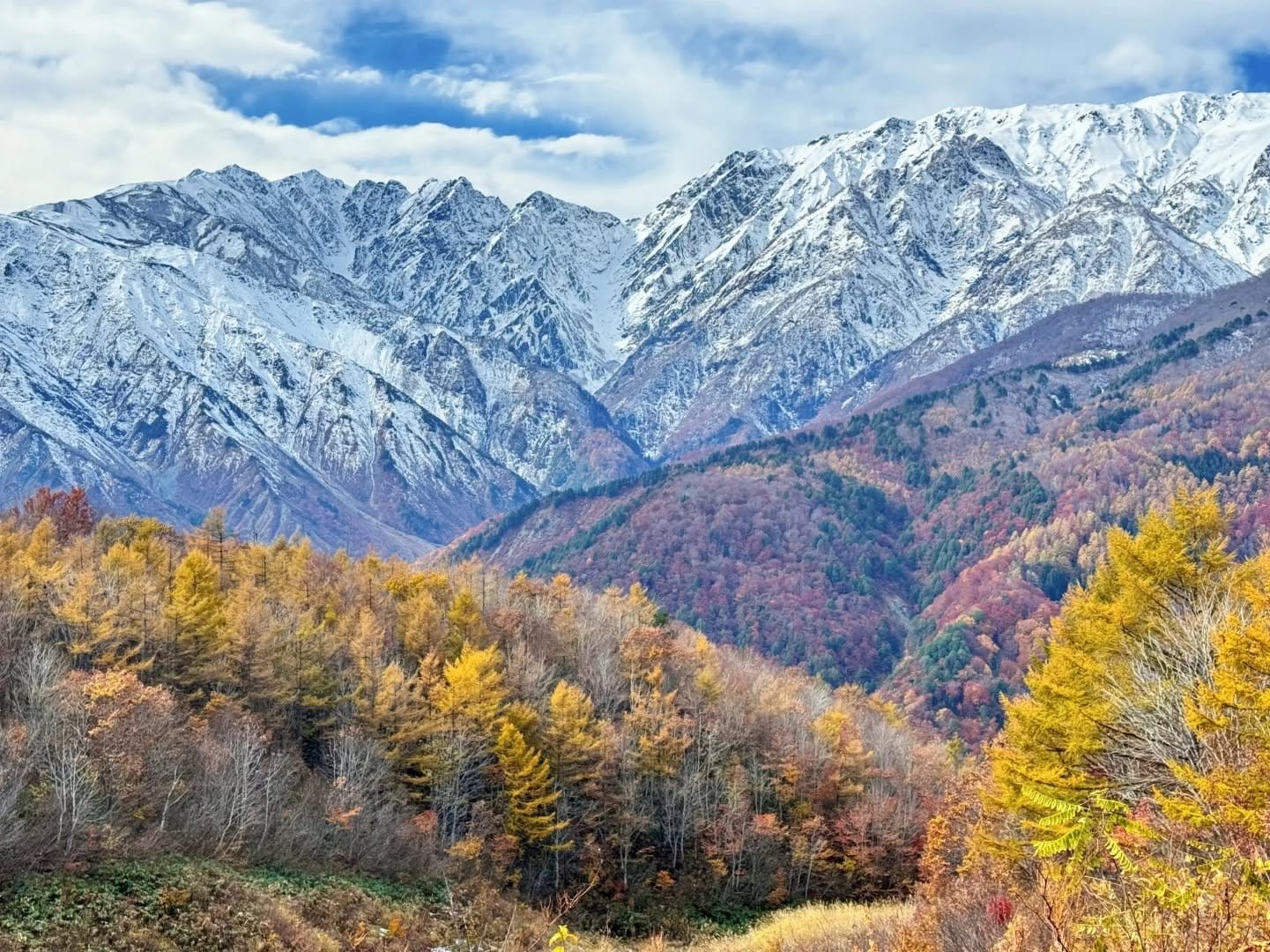
Tokyo’s Red Leaves at Night 2026: Rikugien, Chinzanso, Takao, and Gaien
Tokyo’s autumn truly comes alive after sunset: a schedule of illumination events, how to book timed-entry tickets, the most photogenic hours, and tips for staying warm while waiting.
Aug 12, 2026·✍️ olablog·⏱ 20 min read
Tokyo’s autumn truly comes alive after sunset: a schedule of illumination events, how to book timed-entry tickets, the most photogenic hours, and tips for staying warm while waiting.
Tap a region to browse articles
During my first autumn in Tokyo, I made the exact mistake nine out of ten people make: I waited for a sunny weekend, got up early, and took my camera to a park at 10 a.m. The result was a blazing-hot lunchtime, red leaves washed out in my photos, and three thousand people all standing on the same bridge. When I got home and looked at the pictures, all I could see was the crowd—not autumn.
The following year, I changed tactics: I went after sunset. That was when Tokyo revealed an entirely different autumn. In late November, the city gets dark from around 16:30—which means you can finish work at 6 p.m. and still stand beneath a brilliant red maple canopy lit from below, right in the heart of Bunkyo or Shinjuku, without taking a single day off. The leaves glow like colored paper when illuminated from underneath, while the background disappears completely into the darkness, making the crowds that are still there conveniently vanish from the frame.
In this article, I’ve rounded up the four best “gates” for seeing Tokyo’s autumn foliage at night in autumn 2026: Rikugien Garden, with its timed-entry ticket system that still catches many people out; the garden at Chinzanso, famous for its artificial mist; the momiji festival on Mount Takao (there’s one harsh truth you should know before you miss the last ride); and the golden ginkgo trees at Gaien. I’ve also included tips for timing the golden hour, shooting at night without a tripod, and staying warm—because standing still outdoors for two hours in November is much colder than you might expect.
When Tokyo’s autumn leaves change color—and why nighttime makes more sense
Tokyo is one of the major tourist destinations in Japan where the autumn foliage arrives latest. While Nikko and Hakone may already be blazing red from mid-October, central Tokyo usually has to wait until late November through around the first week of December for peak color. Ginkgo trees (ichou) along the avenues often run a little later than the maples, and in many years they don’t turn uniformly golden until early December.
That’s good news for you: if you miss the foliage season in the mountains, Tokyo makes for an excellent “second half.” But the weather varies from year to year, and when the heat lingers, peak color can be pushed back by an entire week. Before settling on your dates, check Japanese foliage forecasts (such as Weathernews or Japan Meteorological; search for 紅葉 見頃) and the official website for each destination. Don’t rely on last year’s calendar.
So why go in the evening? Three very real reasons:
- It gets dark early. In late November, the sun sets in Tokyo at around 16:30, and it is fully dark at about 17:00. You can visit after work or school without sacrificing a day from your itinerary.
- The photos are much better. Artificial light shining up through the leaves makes them glow like lanterns. During the day, harsh sunlight can flatten the red foliage and wash out the sky.
- The crowds become “invisible.” It is still busy, but with a dark background, your photos show only the leaves and the lights. This is the most effective psychological trick I’ve found.
The only downside is that Tokyo has far fewer autumn illumination events than Kyoto, and each one usually runs for only two to three weeks. You need to plan your timing fairly carefully.
Rikugien — the classic illumination and the timed-ticket puzzle
If I could choose only one place, I would choose Rikugien (六義園) in Bunkyo Ward. This is a classic Edo-period Japanese strolling garden, with a large pond in the center, small hills, stone bridges, and a maple grove tucked into the far corner. In autumn, the management extends the opening hours and illuminates the area around the pond and the maple grove. The most spectacular scene is the red maple canopy reflected in the perfectly still black surface of the pond, along with a ribbon of mist released in the inner grove. Walking into it feels like stepping into a painting.
About the schedule: the event usually takes place from mid/late November through early December, with opening hours extended until around 20:30–21:00. Last admission is usually about 30 minutes before closing. The exact dates vary each year and are generally announced around October, so be sure to follow the official website of the Tokyo Metropolitan Park Association for the confirmed 2026 details.
The ticket issue—the part most people get wrong: regular garden admission is very inexpensive, but the illumination is a separately ticketed event, with prices considerably higher than on ordinary days, and in recent years Rikugien has used online advance reservations with electronic tickets for specific time slots. You choose a slot in advance (for example, 18:00–18:30), pay online, and scan your code at the entrance during that window. Some years, same-day tickets are also sold if slots remain; in other years, there are hardly any.
My advice:
- Book as soon as sales open. The popular slots (around 17:00 to 18:30) on the last Saturdays and Sundays of November sell out very quickly. If you absolutely want to go on a weekend, watching for the ticket-release date is just as important as booking your train ticket.
- Prioritize weekdays. Tuesday and Wednesday evenings are much more relaxed, and it is easier to take photos without people constantly stepping into the frame.
- Choose the earliest or latest slot. An early slot gives you “blue hour”—the sky still has a blue-violet glow while the lights are already on. These are the most beautiful 20 minutes of the whole evening. Late slots have fewer people, so you can stand in one place for longer.
- Entrance: about a 7–10-minute walk from Komagome Station (JR Yamanote or Namboku Line). During the event, an additional entrance is often opened to help manage the flow of visitors—just follow the signs and the crowds.
- Parts of the garden have gravel paths and stone steps, which are quite dark at night. Wear flat shoes with good traction; avoid high heels and thin-soled sandals.
Hotel Chinzanso Garden — artificial clouds and a maple canopy right beside you
Not far from Rikugien, in the Mejiro/Sekiguchi area, Hotel Chinzanso Tokyo has a historic garden covering more than 6 acres, with a three-story pagoda, a small stream, stone lanterns, and plenty of maple trees. What has made the garden especially popular in recent years is the “Tokyo Sea of Clouds”—artificial mist released at set times, filling the garden valley before gradually dispersing, accompanied by color-changing lights. In autumn, white mist curling beneath red maple branches under the illumination creates a wonderfully surreal scene—the kind of photo that makes everyone assume you were somewhere in the mountains rather than in the middle of Tokyo.
A few things to know before you go:
- The mist appears at fixed times during the day, with each session lasting a few minutes and repeating several times in the evening. Check the day’s schedule on the hotel’s official website, then arrive 10–15 minutes before the show to choose a viewing spot.
- Check carefully whether you are allowed to enter. The garden has traditionally been open to non-hotel guests, but because of overcrowding, in recent years the hotel has repeatedly restricted evening garden access to staying guests or visitors with a reservation at a restaurant or café on the property, especially on weekends and during peak season. The policy changes from season to season, so you must check the latest announcement on the official website before visiting. The safest option is to book a meal or afternoon tea set at the hotel—you get a warm place to sit and peace of mind that you can enter the garden.
- Getting there: about a 10-minute walk from Edogawabashi Station (Yurakucho Line), or take a bus from Mejiro Station. The final stretch is uphill, so take it slowly.
- The garden has many stairways and winding paths, and the lighting at night is adequate rather than bright. If you are visiting with older adults, choose an earlier time slot.
Chinzanso’s biggest strength is that you can turn it into a complete evening: have dinner on the property, go outside to see the mist, then return indoors to warm up. For me, it is the best choice for a date or a trip with parents—you do not have to stand in line outside in the wind.
The Takao Momiji Festival — beautiful, but understand what “nighttime” really means
Mount Takao (Takaosan) is the most famous autumn-leaf destination within easy reach of Tokyo for a day trip: it takes only about 50 minutes by Keio Line from Shinjuku to Takaosanguchi Station. There is a cable car and a chairlift to the middle of the mountain, the venerable Yakuoin Temple, and in autumn the entire mountainside changes color. The Momiji Festival (もみじまつり) usually runs throughout November, from around the beginning to the end of the month, with a small stage at the plaza at the foot of the mountain, food stalls, taiko performances, and folk dancing on weekends. Peak foliage here generally arrives around mid- to late November, roughly one or two weeks earlier than in central Tokyo.
And here is the harsh truth I want you to know in advance: Takao does not have a nighttime autumn-leaf illumination event like Rikugien. The mountain gets dark very quickly, the trails have no lighting, and the cable car and chairlift usually stop operating in the late afternoon. Anyone who stays too late without planning their descent ends up feeling their way down in the dark—something that happens to visitors every year.
So how should you do Takao in the evening?
- Time it around sunset, then come straight back down. Go up in the early afternoon, visit Yakuoin and Trail 1, watch the sunset from near the summit (on a clear day, you can see Mount Fuji casting a dark silhouette against the orange sky—this view is worth the entire trip), and then take the final cable car/chairlift of the day. Before heading up, you must check the last departure time on the cable car company’s official website for the exact date of your visit, and allow an extra 30 minutes for the queue, because the line can be very long during foliage season.
- Watch for days with extended operating hours. During peak season or special nighttime-viewing periods, the operator sometimes extends service on certain dates. This information changes each year and is not fixed, so do not plan around it unless an official announcement has been posted.
- Finish the evening at the foot of the mountain. Around Takaosanguchi Station, there is an onsen right next to the station and several famous soba restaurants (tororo soba is a local specialty). Soak your feet, have dinner, and take the train back—it is far more pleasant than trying to linger on the mountain.
In other words, Takao is the daytime-and-sunset part of your itinerary. Save the nighttime portion for destinations in the city center.
The Icho Festival at Gaien — a golden tree tunnel and the smell of roasted sweet potatoes
From late November to early December, the rows of ginkgo trees along the avenue leading into Meiji Jingu Gaien turn an even golden yellow, forming a several-hundred-meter-long lemon-yellow tunnel—almost a symbol of autumn in Tokyo. The Icho Festival (いちょう祭り) takes place around the same time, with food stalls lining both sides: roasted sweet potatoes, skewered meat, hot sake, yakisoba, and more. The smell of charcoal grills mixed with the cold air is one of the things that made me love Japan’s autumn festivals even more than the scenery itself.
In the evening, the trees are usually illuminated during the festival period, generally until around 20:00, and the food stalls also stay open into the evening. But this detail changes every year—and the Gaien area has been undergoing redevelopment for several years, with construction sites around part of the area—so check the official website before you go for the festival dates, its scope, and whether illumination will take place.
Tips for visiting Gaien:
- Nearest stations: Aoyama-itchome (Ginza/Hanzomon/Oedo) or Gaienmae (Ginza), both just a few minutes’ walk away; from the JR side, get off at Shinanomachi.
- The classic photo spot is from the middle of the road near the Aoyama-dori end, looking straight toward the Picture Gallery (Kaigakan) at the far end of the avenue. Everyone wants that exact spot, so an informal “photo queue” tends to form—join the line and rotate through quickly. Do not stand in the middle of the road, as vehicles still pass along some sections.
- Ginkgo trees peak later than maples. If you visit Tokyo in early December and assume autumn is over, Gaien is often still beautiful. On the other hand, if you go in mid-November, half the leaves may still be green.
- Food here is fairly expensive, but it is worth trying one or two dishes for the atmosphere. Bring some small cash; some stalls still do not accept cards.
Golden hour: what time gives you the best photos?
This is the part I most want you to remember, because it determines 80% of the quality of your evening.
- “Blue hour” (about 20–30 minutes after sunset) is the peak. In late November in Tokyo, sunset is around 16:30, so the golden window falls roughly between 16:45 and 17:15. The sky still has a deep blue-to-purple glow, the lights are on, and the difference in brightness between the leaves and the background is just right—almost any camera can produce beautiful photos. After 17:30, the sky is pitch-black. The photos can still look beautiful in a different way, but they are more difficult to capture.
- The takeaway: if your destination uses timed-entry tickets, do everything you can to get the 16:30–17:00 slot. If entry is unrestricted, arrive about 15 minutes before sunset so you have time to choose a spot.
- The second quietest period is the final hour before closing. Many people leave after dinner, and visitor numbers drop noticeably. In exchange, you have to accept a black sky and less time to explore the entire garden.
- Tuesday through Thursday are the most comfortable days. Avoid the last two weekends of November if you dislike crowds—they are usually the busiest point of the entire season.
- Do not cancel too quickly because of light rain. After rain, wet stone and pond surfaces reflect the illumination, giving photos much more depth. All you need is a clear umbrella and a small lens cloth.
Night photography without a tripod: settings that actually help
Nearly all gardens and events ban tripods, and even tabletop mini-tripods are usually not allowed because the paths are narrow and crowded. Do not carry one around unnecessarily. Instead:
- Find something to brace against. Rest your camera on a railing, the edge of a bridge, or a lamp post. You can even press your back against a tree trunk and hold your breath as you press the shutter. This alone can save a surprising number of shots.
- For cameras: use the widest aperture possible (f/1.8–f/2.8), a minimum shutter speed of 1/60 second when shooting handheld, and set the ISO anywhere from 1600–6400—noisy photos are still better than blurry ones. Shoot RAW so you can recover the highlights and shadows later.
- Lower the exposure slightly (around −0.7 EV). The camera can be “tricked” by the dark background into brightening the whole image, blowing out the detail in the red leaves. Slightly underexposed photos can still be rescued; clipped highlights are gone for good.
- White balance: illumination in gardens is often very warm. On auto, photos can turn orange. Try setting it manually to around 3,800–4,200 K for more natural reds.
- For phones: turn on night mode, but keep the phone completely still for several seconds by bracing it against a railing. Tap the bright leaves to lock focus, then drag the exposure slider down. Turn off the flash—it will bleach out the foreground leaves and leave the background pitch-black.
- Look for reflections. The pond at Rikugien, puddles after rain, and wet stone floors can all produce striking symmetrical shots when photographed downward. These are some of the most rewarding images at illumination events.
- Clean your lens. Cold air, your breath, and mist from the machines can easily fog the lens without you noticing until you look at the photos at home.
Staying warm: standing still for two hours is completely different from walking for two hours
In November and early December, nighttime temperatures in Tokyo often drop to around 8–12 degrees. Near water and inside gardens, it can feel even colder because of the humidity and wind blowing off the ground. The trap is that you are standing still—waiting to enter, waiting for the mist, waiting for your turn to take photos—so your body does not generate heat the way it does when you are walking.
This is the gear I always bring:
- A thermal base layer (such as Heattech), a sweater or fleece mid-layer, and a lightweight windproof puffer on top. Three thin layers are warmer than one thick coat.
- Heat packs (kairo)—the adhesive kind for your back or lower abdomen, available at konbini and drugstores. They are cheap and surprisingly effective. Bring handheld ones too if you take lots of photos, because cold fingers make it hard to press the shutter steadily.
- A scarf and hat. Wind blowing down your neck is one of the biggest sources of heat loss.
- Touchscreen-compatible gloves. Constantly taking off your gloves to use your phone is the fastest way to freeze your hands.
- Thick socks and closed-toe shoes. When you stand on cold stone for a long time, your feet are usually the first things to start hurting from the cold.
- A spare battery, kept in an inner pocket. Low temperatures drain batteries quickly, both in phones and cameras. Keep spare camera batteries warm in your trouser pocket rather than in your backpack.
- A can of hot coffee from the vending machine at the entrance. Drink it while using it to warm your hands—a very Japanese ritual.
One more small tip: many illumination venues are in parks with restrooms but few warm places to sit. If you are traveling with young children or older adults, choose a café near the entrance in advance as your “rest stop” and divide the evening into two stages.
Putting together an efficient evening
Here are a few combinations that work well:
- After work on a weekday: book a 17:00 slot at Rikugien, spend around an hour and a half there, then have dinner around Komagome or Sugamo Station. You can be home before 21:00.
- A weekend date: reserve dinner at Chinzanso, time your visit to the garden around the mist show, and avoid queuing outside in the wind.
- A full day: spend the morning and afternoon at Takao (go up the mountain, watch the sunset, and come down on the final cable car), then return to Shinjuku for dinner. Visit an urban illumination spot the next day instead—do not cram both into one day, because Takao takes more out of you than you might expect.
- In early December, once the maples have faded: Gaien is still golden, while the Christmas illuminations around Marunouchi, Roppongi, and Shibuya are beginning to light up. The foliage season flows almost seamlessly into illumination season, so you can enjoy both in a single evening.
Frequently asked questions
Which week has the best autumn foliage in Tokyo?
Usually, the last week of November through around the first week of December is best for maples in central Tokyo, while golden ginkgo trees peak anywhere from a few days to a week later. Mount Takao is earlier, usually reaching its best color from mid- to late November. But if the year stays warm, everything can be delayed, so check the foliage forecasts in October–November rather than relying on an old calendar.
Do I have to book tickets in advance?
It depends on the destination. In recent years, Rikugien has sold electronic tickets for specific time slots, and weekends can sell out easily, so booking early is practically essential if you are visiting on Saturday or Sunday. Chinzanso depends on the policy for that season—the safest option is to book a meal or a room. Gaien and Takao are open spaces with no admission ticket required; you only pay for transportation and food.
How much do tickets cost?
Illumination tickets at public gardens are usually several times more expensive than regular daytime admission, but they are still reasonably priced compared with temples in Kyoto. I am not giving a specific figure because prices and sales methods change each year—you should check the destination’s official website once the 2026 schedule is announced (usually around October).
Is it safe to visit alone at night?
Very safe. These events are all crowded, staff are on hand to direct visitors, and the routes from the stations to the entrances are well lit and constantly busy. The real things to watch out for are not security concerns but dark steps and slippery gravel paths inside the gardens—wear decent shoes and you will be fine.
Can young children and older adults visit?
Rikugien and Chinzanso have plenty of steps, slopes, and gravel paths, with lighting that is only just sufficient at night. They are manageable, but choose an early time slot before the crowds become too heavy, and walk slowly. Gaien is flat and paved, making it the easiest of the group. For Takao, it is best to skip the nighttime portion.
Can I bring a tripod?
Almost certainly not. Tokyo’s gardens and illumination events nearly all ban tripods, and long selfie sticks are also often prohibited. Plan to shoot handheld and use railings and bridge edges as supports.
Should I go if it rains?
If it is only light rain, go ahead—wet pavement and ponds reflect the lights and can produce even better photos than dry weather, while the crowds thin out. All you need is a clear umbrella (so it does not block your view while shooting) and a cloth for wiping your camera. If there is heavy rain and strong wind, change your plans: strong winds can strip the leaves and affect the following days as well.
What can I do if I miss the foliage season?
From around late November, Christmas illumination displays in Marunouchi, Roppongi, Shibuya, and Shinjuku begin lighting up and continue until after New Year’s Day. At Gaien, the ginkgo trees often remain golden into early December, so the first week of December is when you may be able to catch both seasons in a single evening.
More from this region — Tokyo & Kanto
View all →
Tokyo 2026 Fall Foliage Calendar: Which Week Is Best, and Where
16 min · tips

Okutama – Mitake in 2 days, 1 night: an autumn escape without leaving Tokyo
18 min · tips

Tokyo in Autumn from September to December: A Complete Guide
18 min · tips
Chasing Tokyo’s Autumn Colors: Choosing Train Passes and Garden Tickets Wisely
15 min · tips