
School Excursion Buses in Japan: Safety, Comfort and Planning
Plan a safe school excursion in Japan with practical advice on 45–50-seat coaches, operator documents, seat belts and sample itineraries.
Aug 21, 2026·✍️ olablog·⏱ 8 min read
Plan a safe school excursion in Japan with practical advice on 45–50-seat coaches, operator documents, seat belts and sample itineraries.
Why a charter coach works well for a school excursion
A school trip in Japan often combines several stops: a museum in the morning, lunch in a different district, an outdoor activity in the afternoon and a hotel or station transfer before dinner. For an international school group, arranging all those movements by train can be stressful. Students may need to change lines, walk through busy stations and stay together in unfamiliar areas.
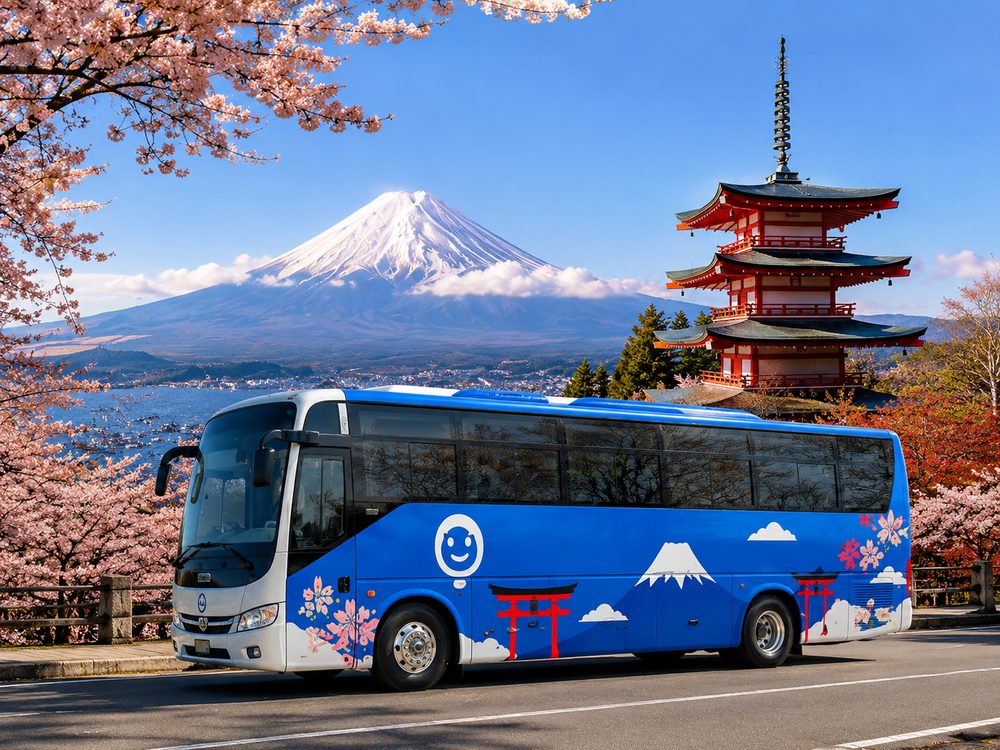
A full-size charter coach gives your group one meeting point and one dedicated vehicle for the day. A 45–50-seat coach is especially practical for large classes, teachers, chaperones and luggage. Everyone travels together, while the driver handles the roads, parking access and local route conditions.
A coach is not automatically suitable for every street or attraction. Japanese roads can be narrow, and some historic districts restrict large vehicles. A good itinerary therefore combines coach travel with short walks, local trains or smaller transfers where necessary.
What to expect from a 45–50-seat coach
A full-size Japanese coach is designed for longer-distance group travel. Depending on the vehicle, it may include reclining seats, air conditioning, overhead storage, a luggage compartment and a microphone for group announcements. Some coaches also offer a restroom, although this is not standard and must be requested when booking.
The available layout can vary. A “45–50-seat” description usually refers to the vehicle’s maximum seating capacity, not a promise that every seat will be available in every configuration. Luggage, teacher seating and accessibility requirements may affect the final arrangement.
| Planning point | 45–50-seat full-size coach | Smaller minibus or multiple cars |
|---|---|---|
| Best for | One large class, school group or mixed-age excursion | Smaller groups or separate activity teams |
| Group coordination | One vehicle and one driver | Several vehicles and meeting points |
| Luggage | Large underfloor luggage compartment on many models | More limited storage |
| Access | Comfortable on major roads and intercity routes | More flexible on narrow local roads |
| Considerations | Needs suitable drop-off and parking space | May require multiple drivers and more coordination |
When requesting a vehicle, share the number of students and adults separately. Tell the operator whether students will carry backpacks, sports equipment, musical instruments or suitcases. This helps the operator select a coach with the right usable capacity rather than simply choosing by seat count.
Safety standards for school groups
Safety planning begins before the bus arrives. In Japan, licensed passenger transport operators are expected to manage vehicle inspections, driver qualifications and operational safety. Your school or tour coordinator should still confirm the practical details in writing.
Ask the charter company about:
- The operator’s authorization to provide passenger transport
- The vehicle’s current inspection and maintenance status
- Commercial vehicle insurance and passenger liability coverage
- The driver’s appropriate Japanese driving license and experience
- Rest arrangements for the driver on a long or demanding route
- Emergency contact procedures and multilingual support
- The vehicle’s age, equipment and accessibility features
- Pick-up and drop-off procedures at each location
Japanese charter coaches use commercial registration. A common point of confusion is the phrase “blue-plate bus.” In Japan, a legal passenger charter coach generally has a green commercial license plate, distinguishing it from an ordinary privately registered vehicle. A blue-looking sign, company document or local description is not by itself proof that a bus is licensed for paid passenger transport.
For reassurance, ask the operator to confirm the company’s transport authorization, commercial registration, insurance and vehicle inspection documents. Reputable companies should be able to explain which documents are available and what can be shared before the trip. The booking confirmation should also identify the operator or transport partner responsible for the vehicle.
Three-point seat belts: what schools should know
Three-point seat belts are the familiar lap-and-shoulder belts used in cars. They provide better restraint than a lap belt when correctly positioned, particularly for older children and adults. However, belt availability depends on the coach model and seating configuration.
Do not assume that every seat on every Japanese coach has a three-point belt. When this feature is important for your school, request it explicitly and ask the operator to confirm:
- Whether three-point belts are installed at every passenger seat
- Whether the belts are suitable for the students’ height and size
- How students should adjust and wear them
- Whether booster seats or child seats are required for younger children
- Which seats should be allocated to teachers or students needing extra assistance
Before departure, a teacher or group leader should give a short safety briefing. Students should remain seated while the coach is moving, keep aisles clear and use their belts whenever fitted. Standing to retrieve luggage, changing seats on the road or distracting the driver should not be permitted.
Seat belts are only one part of the safety plan. Keep a current student list, emergency contacts, allergy information and medical details with the responsible teachers. Establish a buddy system and agree on what students should do if separated from the group.
Building a practical one-day itinerary
A comfortable excursion usually needs more time than a map suggests. Add time for boarding, attendance checks, restroom breaks, traffic, parking and walking from the coach bay to the entrance. Large groups also take longer to enter restaurants, museums and attractions.
Here is a flexible example for a school group:
- 08:30 – Pick-up from a hotel, school or designated station area
- 09:15 – Arrive at a museum, cultural site or educational facility
- 09:30–11:30 – Guided visit and class activity
- 11:30–12:15 – Restroom break, attendance check and transfer
- 12:30–13:30 – Pre-booked group lunch
- 13:45–15:30 – Hands-on workshop, nature walk or historical district visit
- 15:30–16:00 – Snack, restroom break and final headcount
- 16:00–17:00 – Return transfer, allowing extra time for traffic
- 17:00 – Drop-off at the hotel, station or evening activity
The schedule should include one responsible adult at the front and one near the rear of the group during boarding. Count students before departure, after every stop and before leaving the final venue. Give the driver a written itinerary with Japanese place names, phone numbers and the preferred coach entrance.
For popular destinations, reserve a coach parking space or confirm the designated drop-off area in advance. Some attractions allow buses to unload students but require the coach to park elsewhere. This can change the timing and walking distance.
Budgeting and booking advice
The cost of a 45–50-seat coach depends on the route, total hours, distance, toll roads, parking, season, driver arrangements and whether the service is one-way or a full-day charter. A 45-seat coach is ¥99,000 for the 10-hour day (60 seats ¥129,000), plus expressway tolls and parking. The exact quote comes from the booking form after the route and group requirements are reviewed.
To receive a useful estimate, prepare:
- Travel date and preferred pick-up time
- Pick-up and drop-off addresses
- Every planned stop
- Number of students, teachers and chaperones
- Luggage or equipment details
- Three-point seat-belt requirements
- Accessibility or child-seat needs
- Preferred language for communication
- Whether the vehicle needs to wait during visits
Avoid planning a route with too many distant stops. One well-organized educational area is often more enjoyable than several rushed attractions. If the group must travel between cities, consider using the coach for the longer transfer and scheduling activities close together at each destination.
Request a free quote for your Japan school excursion bus from OlaChill — complete the form and receive a reply within 24 hours.
Frequently asked questions
Can a 45–50-seat coach carry a full class and luggage?
Usually, yes, but the usable capacity depends on the seating layout and the amount of luggage. Provide the student count, adult count and luggage details so the operator can confirm the appropriate vehicle.
Do all Japanese charter coaches have three-point seat belts?
No. Belt type and availability vary by vehicle. If three-point belts are required, state this clearly in the booking request and ask for written confirmation before finalizing the trip.
How can we verify that a bus operator is licensed?
Ask for confirmation of commercial passenger transport authorization, commercial registration, insurance and current vehicle inspection. In Japan, licensed charter coaches generally use green commercial license plates rather than private white plates.
Should we reserve parking for the coach?
Often, yes. Attractions and city centers may have separate bus bays, time restrictions or remote parking areas. Confirm coach access with each venue and include walking time in the itinerary.
How far in advance should a school group book?
Book as early as possible for spring excursions, autumn school trips, weekends and major sightseeing areas. Early planning gives the operator more choice of vehicle, route and driver schedule.
More from this region — Other
View all →How to See a Doctor in Japan – A Practical Guide for English Speakers
3 min · tips

Paying for Bookings in Japan from India/Bangladesh
22 min · tips
Sharehouses in Japan: Honest Review, Real Rents from $200/Month (2026)
3 min · tips
Shichi-Go-San in Kimono for Visiting Families: Shrines, Photos and Kids' Sets
6 min · culture