Shichi-Go-San in Kimono for Visiting Families: Shrines, Photos and Kids' Sets
Shichi-Go-San on November 15: what the children's kimono rite means, which Tokyo and Kyoto shrines welcome visiting families, and how to rent kids' kimono sets.
Sep 14, 2026·✍️ olablog·⏱ 6 min read
Shichi-Go-San on November 15: what the children's kimono rite means, which Tokyo and Kyoto shrines welcome visiting families, and how to rent kids' kimono sets.
Shichi-Go-San (七五三, "seven-five-three") is the November rite in which Japanese families take daughters aged three and seven and sons aged five (three in some regions) to a shrine in kimono to give thanks for their growth. The formal date is November 15, but families visit on any weekend from late October through November, and shrine grounds on those days are full of small children in silk, chasing pigeons in zori. Visiting families with children of the right age are welcome to take part, and even without the prayer ceremony, a morning in kimono at a shrine in autumn is one of the gentlest cultural experiences Japan offers a family.
What the day means
The ages are the traditional milestones of childhood. At three, children were once allowed to grow their hair; at five, boys wore hakama for the first time; at seven, girls tied a proper obi instead of a cord. The visit to the shrine (o-mairi) gives thanks and asks for continued health. Children receive chitose-ame, "thousand-year candy," long red-and-white sticks in a bag decorated with cranes and turtles, symbols of long life.
There is no rule that you must be Japanese or Shinto to visit. A bow, a coin in the offering box, two claps and a quiet moment is the whole of the etiquette, and shrine staff are used to foreign families.
Kids' kimono at OlaChill
Both OlaChill shops (Tokyo Asakusa and Kyoto Kiyomizu) rent children's sets year-round; November is their busiest month.
| Set | Price | Includes |
|---|---|---|
| Girl's kimono | ¥8,000 | Full children's accessory set, dressing by staff |
| Boy's kimono | ¥8,000 | Full set including hakama-style outfit, dressing by staff |
| Girls' yukata (summer) | ¥4,000 | For warm-season visits, not November |
| Boys' yukata (summer) | ¥3,000 | Same |
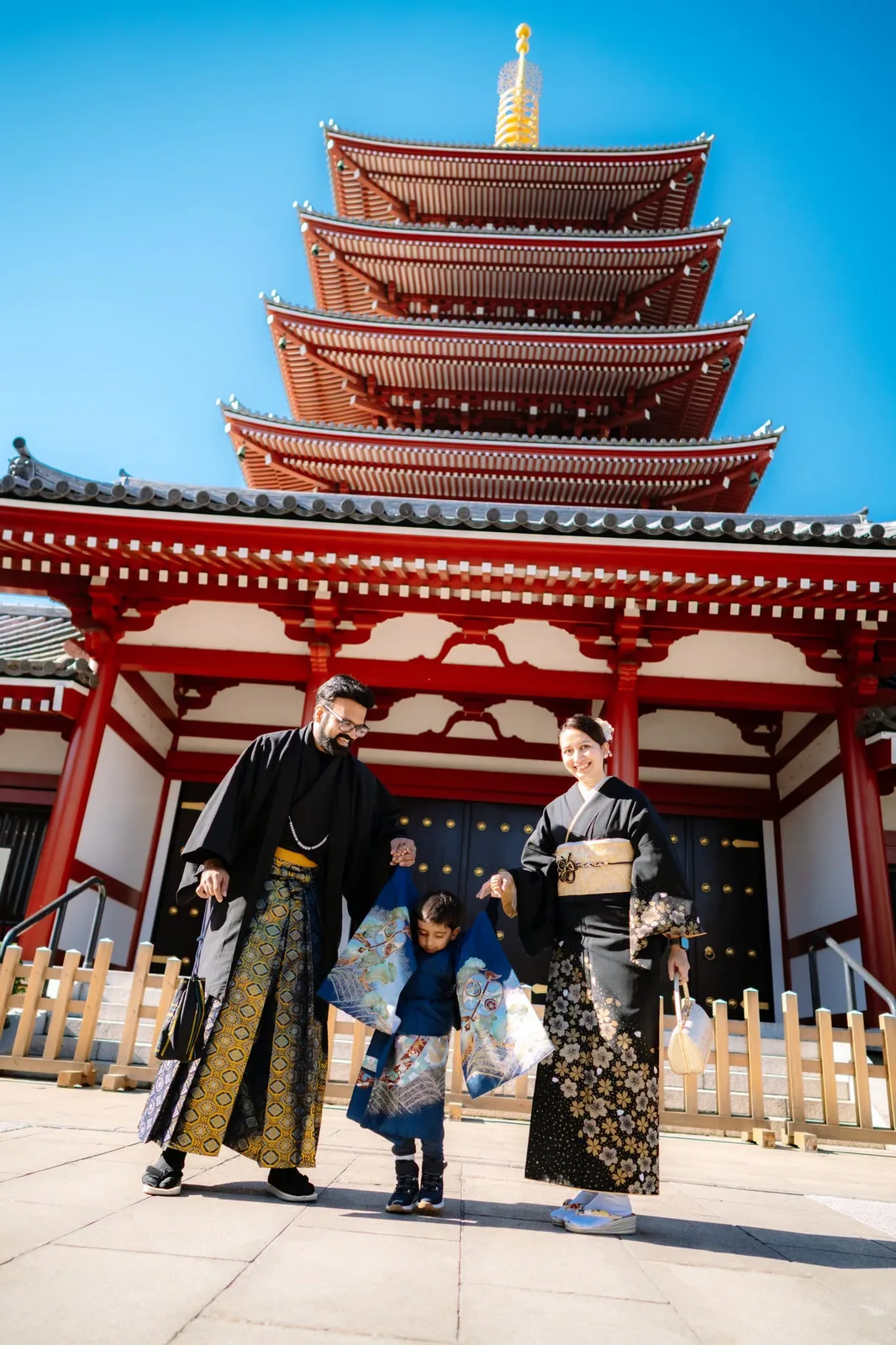
Prices include tax and the full accessory set. Accompanying adults who do not rent pay nothing to come into the shop and wait. Parents who want to dress too can add a Komongi (¥5,500) or men's traditional kimono (¥5,000); the classic family photo is a formal parent in Houmongi (¥12,000) or Montsuki (¥10,000) with the child in the centre.
Dressing a child takes about 15 minutes, and staff are practised at the wriggling stage. Add the hair set (¥1,500) for girls if you want the traditional updo with ornaments; the DECO option (¥1,100) gives unlimited hair accessories, which for a seven-year-old is the best ¥1,100 you will spend.
Shrines that work for visiting families
Tokyo
- Asakusa Shrine (浅草神社), beside Sensoji, one minute from our Asakusa shop. Small, friendly, with a proper Shichi-Go-San reception and chitose-ame. The temple grounds next door give you the five-storey pagoda as a backdrop.
- Meiji Jingu (明治神宮), Harajuku. The grand option: a forest approach, wide gravel paths, and hundreds of families on November weekends. About 35 minutes from Asakusa by Ginza line and JR Yamanote.
- Hie Shrine (日枝神社), Akasaka. Quieter, with an escalator up the hill (welcome with a three-year-old) and a red torii tunnel for photos.
Kyoto
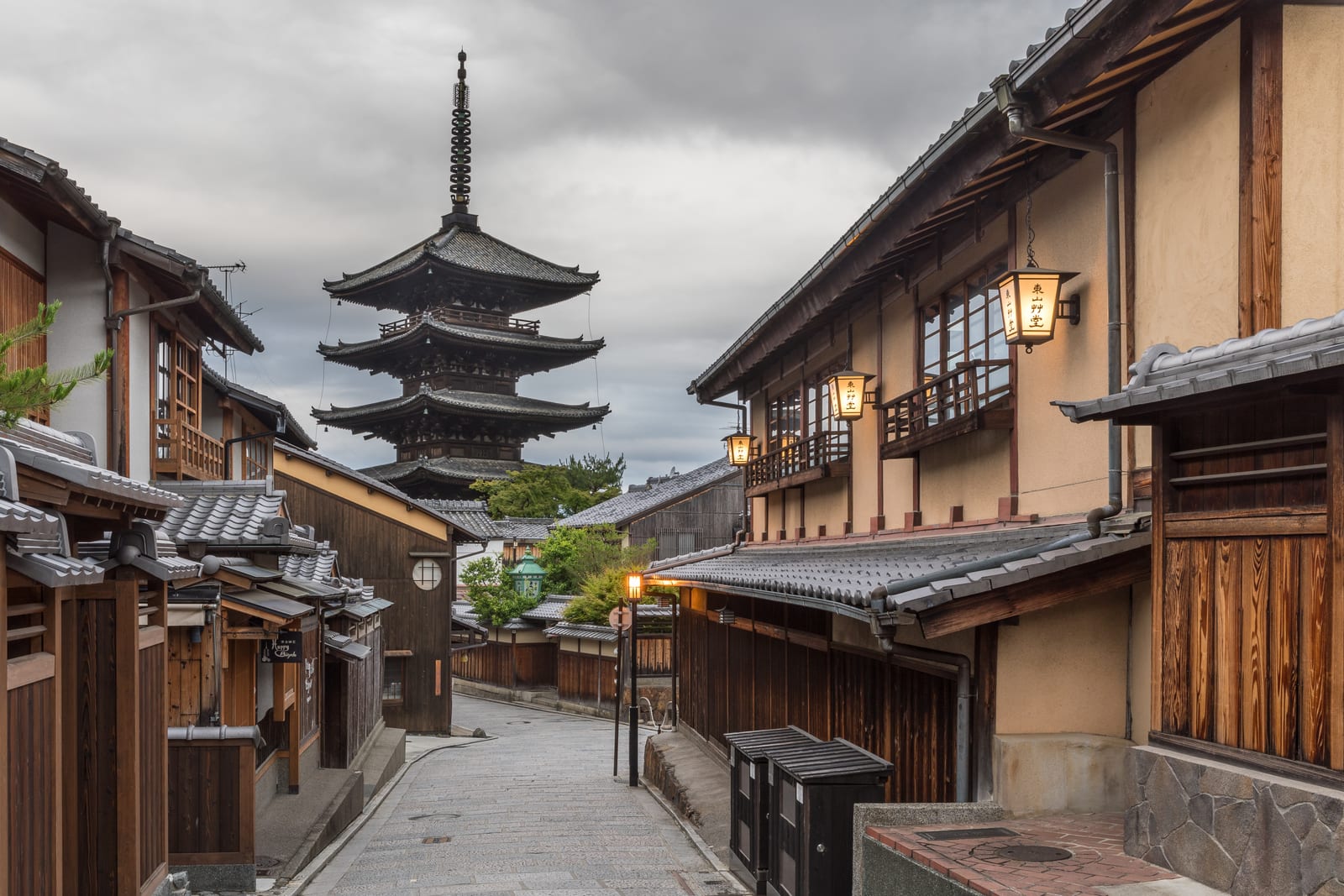
- Yasaka Shrine (八坂神社), Gion, a 20-minute walk from our Kiyomizu shop along Nene-no-michi. Busy but spacious, with Maruyama Park behind it for the running-about phase.
- Heian Shrine (平安神宮), Okazaki. Enormous gravel courtyard, vermilion buildings, plenty of room for a stroller.
- Kitano Tenmangu (北野天満宮), the shrine of learning, a traditional choice for families with school-age children.
Prayer ceremonies (kitō) are offered at the shrine office for a set offering; you do not need to reserve at most shrines on weekdays, but weekends in mid-November have queues. The ceremony lasts about 20 minutes and the child receives a blessing and a small gift.
Photos: how to get the good ones
November light is low and warm all day. The best family photos are taken within an hour of dressing, before the collar loosens and the child's patience runs out.
- Shoot at the shrine gate first, then the approach, then let the child play.
- Kneel to the child's height; a five-year-old in hakama photographed from adult height looks like a bundle.
- A professional photographer can join you: OlaChill's photo option is ¥15,000 and up for a 30-minute session with 30 retouched images, at Sensoji or in Higashiyama.
Plan your day
- 09:00 Dress the child first, then parents, at the shop. Allow one hour for a family of four.
- 10:00 Walk to the shrine while everyone is fresh. Bow, offer a coin, receive chitose-ame.
- 10:30 Photos at the gate and approach.
- 11:15 Prayer ceremony if you wish, otherwise let the children explore.
- 12:00 Lunch sitting on tatami if you can find it; children in kimono manage a low table better than a chair.
- 13:30 Second location for photos (the pagoda at Sensoji or the Yasaka Pagoda in Kyoto), then back to the shop; small children have about four hours in kimono before it becomes a struggle.
Checklist
- Book the children's sets first; they run out in November
- Tell us the child's height when booking
- Bring a change of clothes for the child in a small bag
- Snacks that do not stain (rice crackers, not chocolate)
- A stroller for a three-year-old, even one who insists on walking
- Tights or leggings under the kimono for a cold morning
FAQ
Our child is four. Can we still do it? Yes. The ages are traditional, not enforced, and shrines bless any child. Many families use the "counted age" system, which adds a year, so a Western four-year-old is often a Japanese "five."
Do we need to do the prayer ceremony? No. Most visiting families just visit, photograph and enjoy the day. The ceremony is a lovely addition if your child can sit still for 20 minutes.
Which is better for Shichi-Go-San, Tokyo or Kyoto? Both shops rent the same children's sets at the same prices. Kyoto gives you temple lanes and autumn colour; Tokyo gives you Sensoji's scale and easier transport with a stroller.
Can we return the kimono late if the child naps? Add next-day return (+¥1,100 per set) or hotel return (+¥1,100), and the afternoon is yours.
What about the wedding and Shichi-Go-San traditions in general? Our Japanese kimono traditions guide covers the customs in more depth.
Book a family Shichi-Go-San day
Reserve children's and adults' sets together at the Tokyo Asakusa shop or the Kyoto Kiyomizu shop, and choose a November weekday if you can; weekends at the shrines are wonderful but slow. All prices and styles are on the kimono rental page.