What’s the Difference Between Sake, Shochu, Umeshu, and Highballs? A Beginner’s Map to Japanese Drinks
Learn the differences between sake, shochu, umeshu, and highballs—their ingredients, alcohol content, proper serving styles, and best food pairings—so you can confidently order a drink at any Japanese restaurant.
Aug 8, 2026·✍️ olablog·⏱ 6 min read
Learn the differences between sake, shochu, umeshu, and highballs—their ingredients, alcohol content, proper serving styles, and best food pairings—so you can confidently order a drink at any Japanese restaurant.
When you pick up the drinks menu at a Japanese restaurant, you’ll see four names appearing again and again: sake, shochu, umeshu, and highballs. At first glance, they may seem pretty similar—all just “Japanese alcohol”—but in reality, they differ in everything from their ingredients and production methods to their alcohol content and ideal food pairings. Knowing how to tell them apart not only helps you order exactly what you like, but also lets you pair drinks and food like a true connoisseur. This article is a concise map to help you find your way around all four in a single read.
Sake: fermented rice wine, the soul of a Japanese meal
Sake (nihonshu) is a fermented rice drink, made in a way similar to how wine is made from grapes. Its alcohol content is around 14–16%. Its flavors range from rich, rice-forward notes in junmai styles to delicate, fruity aromas in ginjo and daiginjo styles, and it can be served chilled, warm, or hot depending on the type.
Sake was made to accompany Japanese cuisine: sashimi, sushi, salt-grilled fish, chilled tofu, and gently simmered dishes. The umami in sake enhances the umami in seafood rather than overpowering it, so if your meal centers on fresh seafood, sake is almost always the right choice. A cup at a restaurant usually costs around 500–900 yen, while a 720ml bottle at a typical shop ranges from around a thousand yen to several thousand yen.
Shochu: a distilled spirit with many personalities
If sake is Japan’s “wine,” then shochu is Japan’s “hard liquor”—though it is much gentler than vodka or whisky. Shochu is distilled from a wide variety of ingredients: sweet potatoes (imo), barley (mugi), rice (kome), and even brown sugar or buckwheat. Each ingredient gives it a distinct personality: imo shochu is powerfully aromatic, with a characteristic earthy scent; mugi shochu is smooth and mild, making it the easiest for beginners to drink; and kome shochu is clean and delicate, with a profile close to sake.
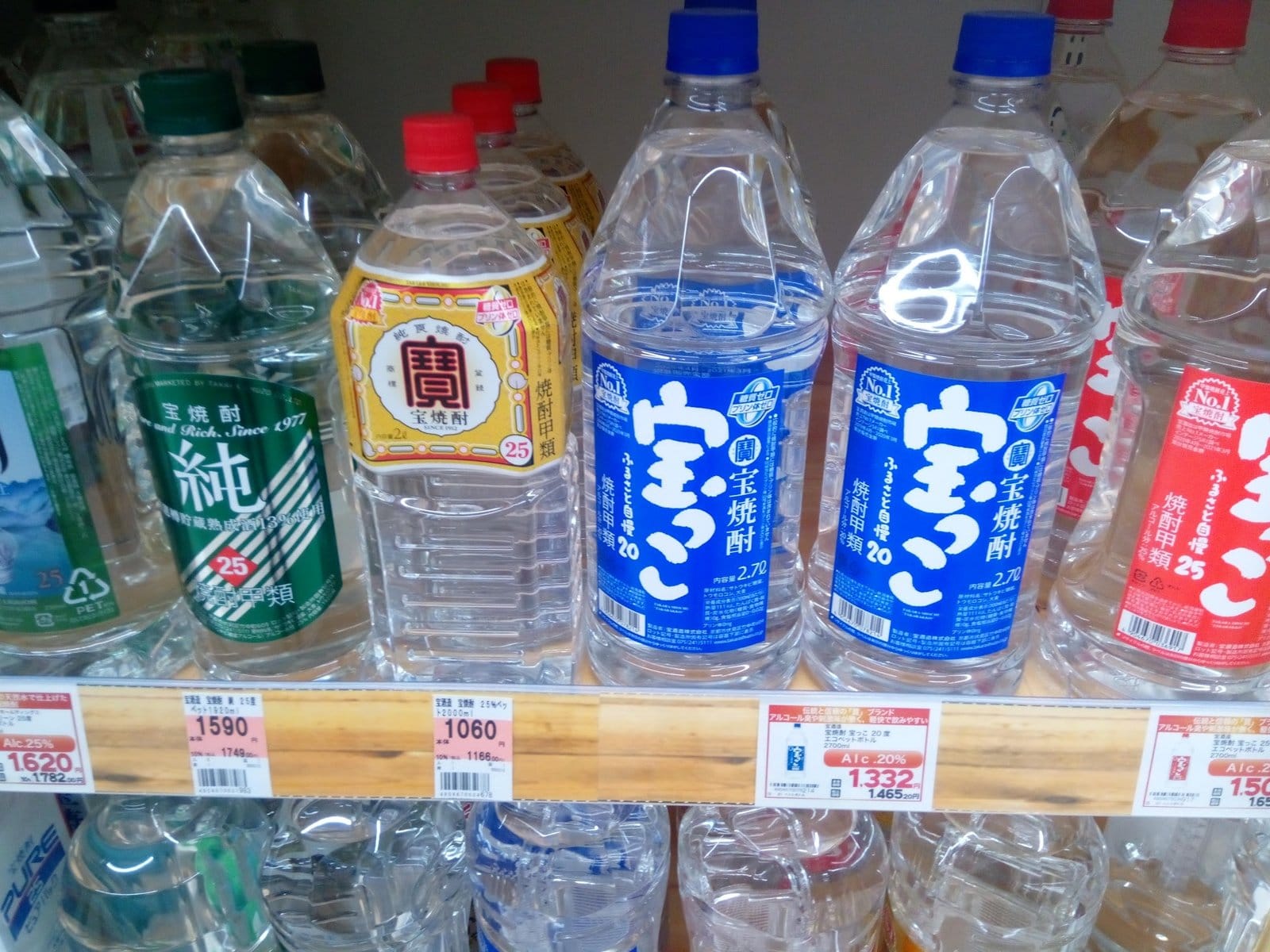
The alcohol content of shochu straight from the bottle is around 25% (some varieties are 20% or 30%), but people in Japan rarely drink it neat. Popular serving styles include mixing it with hot water (oyuwari) in winter, mixing it with cold water (mizuwari), serving it over ice (rokku), or mixing it with soda. Once diluted, a typical glass of shochu contains only around 10–15% alcohol, making it gentle enough for a long, leisurely evening. Shochu pairs well with strongly flavored dishes: braised meats, tare-glazed grilled chicken, fried foods, and Kyushu-style cuisine—the region this spirit comes from.
Umeshu: sweet and easy to drink, but don’t underestimate it
Umeshu is plum liqueur, made by steeping green plums with sugar in a base spirit, usually clear shochu. It has a balanced sweet-and-sour flavor, a fragrant ripe-plum aroma, and an alcohol content of around 8–15%—the lowest in this group. It is the perfect gateway drink for anyone who is not used to alcohol, and is also a liquid dessert especially beloved by Japanese women.
Umeshu is best served over ice, mixed with soda for a refreshing drink, or mixed with hot water on cold days. It works better as an aperitif or after-dinner drink than as an accompaniment throughout the meal, since its sweetness can overpower the main dishes. That said, umeshu soda is an excellent match for fried foods such as karaage. The only thing to watch out for is that its sweetness and easy-drinking nature can make you forget you are drinking alcohol—take it slowly.
Highballs: Japan’s go-to whisky and soda
A highball is simply whisky mixed with soda water and served over ice, with a finished alcohol content of only around 5–9%—about the same as a strong beer. Once considered old-fashioned, the highball has made a comeback in Japan thanks to its refreshing, lightly dry flavor and low sweetness, which suit modern tastes. At izakaya, highballs are often the cheapest alcoholic drinks on the menu, costing around 300–500 yen per glass; some chains even sell them for less than soft drinks.
The carbonation and dry flavor of a highball are excellent at cutting through rich, greasy foods, making it a classic partner for fried dishes: karaage, French fries, tonkatsu, and especially yakitori. If you have no idea what to order at your first drinking session in Japan, you can almost never go wrong with “highball kudasai.”
Quick comparison table and food-pairing tips
Here’s the easy-to-remember summary:
- Sake: fermented from rice, 14–16% alcohol, served chilled or warm – pairs with sashimi, sushi, and delicately flavored Japanese dishes.
- Shochu: distilled from sweet potatoes/barley/rice, ~25% alcohol, usually mixed with water or soda – pairs with braised dishes and richly flavored grilled foods.
- Umeshu: plum liqueur infused with sugar, 8–15% alcohol, served over ice or mixed with soda – pairs with aperitifs, desserts, and lightly fried foods.
- Highball: whisky mixed with soda, 5–9% alcohol, served cold over ice – pairs with all kinds of fried foods and yakitori.
A situation-based tip: choose sake for a refined seafood dinner; if you’re settling in for a long drinking session and want something easy to pace yourself with, choose diluted shochu or a highball; and if you want something gently sweet to start or end the evening, order umeshu. And don’t hesitate to ask the staff, “osusume wa?” (What do you recommend?)—Japanese people are always happy to introduce you to local drinks.
Take a tour around Japan, one drink at a time
These four drinks are like four doors leading into four different culinary climates of Japan: sake belongs to elegant kaiseki meals, shochu to the free-spirited culture of Kyushu, umeshu to summer plum gardens, and highballs to lively after-work izakaya. The best way to understand them is still to taste them where they are made, in the atmosphere they belong to—and a Japanese culinary journey with OlaChill can help you arrange the experience from start to finish. You can also read more about Japanese dining culture on the OlaChill blog.
One important reminder: Japanese law requires you to be 20 years old to drink alcohol. Whether it is gently sweet umeshu or robust shochu, drink responsibly, have food and water alongside it, and never drive after raising a glass.