Osaka Standing Bars: A Tachinomi Guide to Tenma and Tennoji
How to drink like a local at Osaka's tachinomi standing bars: where to go around Tenma and Tennoji, how ordering and paying work, and counter etiquette.
May 4, 2026·✍️ olablog·⏱ 6 min read
How to drink like a local at Osaka's tachinomi standing bars: where to go around Tenma and Tennoji, how ordering and paying work, and counter etiquette.
Tap a region to browse articles
Much of Osaka's everyday drinking happens on its feet. A tachinomi (literally "stand and drink") is a bar or small eatery built around a counter with no stools, or only a couple. Drinks come fast, plates are small, and nobody expects you to stay long. The crowd is whoever happens to be passing: office workers heading home, retirees, couples warming up before dinner. Two parts of the city are especially good for a first try. One is the maze of lanes around JR Tenma Station in the north; the other runs from Tennoji Station down into the old Shinsekai district in the south.
What makes a tachinomi different
Without chairs, people drift in for one drink and a snack, then move on, so turnover is quick and it is easy to find a gap even in a busy place. Many standing bars skip the table charge that sit-down izakaya often add, although some still hand you a small starter dish and put it on the bill.
Menus are usually short and handwritten, on paper strips along the wall or on a whiteboard behind the counter. Expect quick, cheap dishes: sashimi, potato salad, pickles, simmered oden in winter, fried skewers and doteyaki, beef sinew stewed slowly in sweet miso, which is an Osaka favourite. Some bars work on a pay-as-you-go system: you put cash in a small basket or tray on the counter and staff take payment as each drink or plate arrives. Others keep a running tally and you settle at the end.
Tenma: lanes full of counters
Tenma sits one stop from Osaka Station on the JR Osaka Loop Line (station signs spell it Temma), and Ogimachi Station on the Osaka Metro Sakaisuji Line is right next door. Step out and the narrow streets on both sides of the elevated tracks are lined with small bars, yakitori grills, oden pots and seafood counters, many of them standing-only or close to it. Locals sometimes call the backstreets here Ura-Tenma, "back Tenma".
Running north to south right beside the station is Tenjinbashisuji, a covered shopping street often described as the longest in Japan. Near its southern end stands Osaka Tenmangu, the shrine behind the Tenjin Matsuri each July. A good plan is to visit the shrine in the late afternoon, wander north through the arcade as the shops start to close, and arrive in the station lanes just as the after-work crowd fills them.
Tenma rewards hopping. Have a beer and something from the grill at one counter, move a few doors down for sashimi and a glass of sake, and finish somewhere with oden.
Tennoji and Shinsekai: the south side
Tennoji is one of Osaka's big rail hubs, served by the JR Loop Line and the Osaka Metro Midosuji and Tanimachi lines, with Kintetsu's Osaka-Abenobashi Station alongside. From Namba it is a few minutes on the Midosuji Line; from Tenma the Loop Line gets you there in about 20 minutes. The glass tower of Abeno Harukas rises over the station, but standing counters in the surrounding backstreets keep things firmly old-fashioned.
Walk west past Tennoji Park and you reach Shinsekai, a retro entertainment district built around the Tsutenkaku tower. This is the heartland of kushikatsu, deep-fried skewers of meat, seafood and vegetables. Between Shinsekai and Dobutsuen-mae Station runs Janjan Yokocho, a narrow covered alley of kushikatsu shops, cheap standing bars and old shogi parlours. Two rules apply almost everywhere: never dip a skewer you have already bitten into the shared sauce pot, and use the free raw cabbage to scoop up more sauce if you want it.
If you have time before dark, Shitennoji, one of Japan's oldest Buddhist temples, is within walking distance north of Tennoji Station and makes a calm prelude to an evening at the counters.
How to order and pay
Find a gap at the counter, catch the eye of whoever is behind it, and you will usually be waved in. Order a drink first. Draft beer (nama), a highball, a lemon sour or a glass of sake are all standard; sake can come chilled or warmed, and some bars serve it in a glass set in a wooden box, deliberately filled until it overflows. For food, pointing at the wall menu or at a neighbour's plate and saying "kore kudasai" ("this one, please") works fine.
Many small bars take cash only, so carry coins and small notes. When you are ready to leave, "okaikei onegaishimasu" asks for the bill. Tipping is not expected.
Counter etiquette
Stand side-on so more people fit, and shuffle along without being asked when someone new comes in. Keep bags off the counter; if there are hooks underneath, use them. When the place is packed, one or two drinks is a polite stay. Ask before photographing the counter or other customers, and bear in mind that some small bars still allow smoking; a sign at the entrance usually tells you. Osaka is famously chatty, and a simple "kanpai" to your neighbour often starts a conversation.
When to go
Weekday evenings are the easiest time, when the after-work crowd is lively but not crushing. Friday and Saturday nights in Tenma can be shoulder to shoulder. Many small bars close one day a week, and not always the same day, so keep a backup in mind. Winter is the season for oden and warm sake. In late July the Tenjin Matsuri fills Tenma with people, which is great fun but not the night for a quiet counter.
Plan your trip
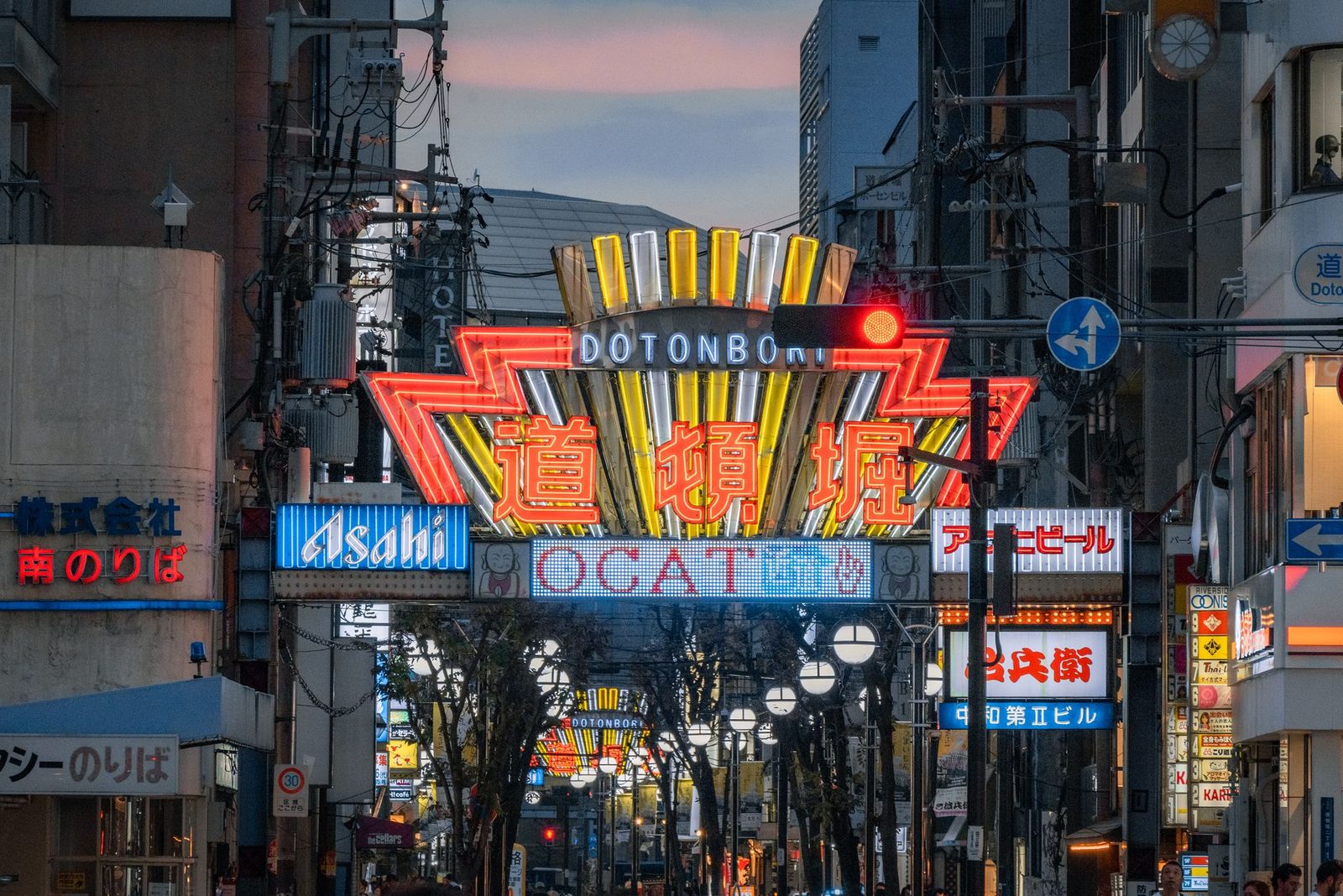
Tenma pairs well with an evening in Umeda, while Tennoji and Shinsekai slot neatly after an afternoon at Shitennoji and Tennoji Park. The Loop Line links the two areas, so a double-header in one long night is possible if you pace yourself. For the rest of Osaka's food scene, including kushikatsu and Dotonbori's street snacks, see our Osaka street food guide, and if you are visiting in summer, read up on the Tenjin Matsuri before you go.